10 Pieces of Advice For Dealing With Depression
Depression can be scary and awkward to talk about
Let’s discuss it here and share helpful advice for one another
A Personal (Non-Scientific) Guide To Dealing With Depression
Depression is scary. Most of the time it's invisible and if it isn’t, people try their best to keep it hidden. It’s estimated that roughly 1 in 5 adults in the US have a mental health condition. If it isn’t you, then likely a family member or friend can be dealing with depression and fighting the battle alone.
Like many others, I have experienced depression. However, instead of hiding it from the world, I’m going to do the opposite. I want to bring attention to the topic and figure out what advice people have for one another. Of course, there are different types of depression and each person has a unique reason for their condition (maybe a close friend passed away, a relationship failed or the person lost their job), but I’d like to share what has worked for me and learn what others know.

Ignoring a problem is not a solution to treating it.
I believe this is the part where I state for the record that I’m neither a doctor nor a mental health expert and if you are in the deep end then please call a depression hotline or seek professional help.
The advice below is simply my personal (non-scientific) guide to dealing with depression. I hope that you can find at least one piece of advice here that will make your life better.
Have a consistent sleep schedule
- Go to sleep and wake up at the same time each day
- Aim for 7-8 hours of sleep
- Too much sleep makes you lazy and too little is unhealthy
- If you have trouble waking up, find ways to get more natural light into your room (slightly open blinds/curtains before bed)
Shower and change into proper clothes
- Showering in the morning forces you to get out of bed
- Also gets you out of your pajamas and you'll feel more clean/fresh
- More likely to do something positive once you’re in a decent pair of clothes
Eat fruits and healthy fats for breakfast
- Avoid fruit juices (loaded with sugar) instead have real fruits
- Eat eggs, wild salmon, and grass-fed beef (all are good sources of healthy protein and fats)
- Drink a lot of water to stay hydrated (Think 3-5 cups of water daily)

Try to have real fruits along with healthy fats for breakfast. Your breakfast doesn't have to look like this picture, a simple egg with avocado and cherries on the side is good enough.
Avoid sugar and processed foods
- Processed foods and fast foods are linked to depression
- White sugar and commercial baked goods are also linked to depression
- We all know too much sugar and fake food isn't good for us, try your best to avoid it
Avoid Using Your Phone In The Morning
- Specifically avoid using social media apps, you don't want to compare someone's highlight reel to your life, especially when you're going through a rough time
- Avoid dating apps, you don't need to be reminded you're single
- Avoid email, 95% of emails are likely ads, spam, or other unimportant messages
Go outside during the day
- Something about being in the sun makes people happy
- Being outside you see how awesome life is (birds in the trees, plants all around, fascinating inventions like cars, people watching is also fun)
- Look at the sky and realize how small our problems actually are compared to the world and how lucky we are to be alive

Try to go outside early in the day and take a moment to "stop and smell the roses" (appreciate life).
Get some form of exercise
- There are tons of books and studies that talk about the wide-range of benefits of exercising
- Go for a walk, jog, lift weights, swim, buy an iron gym and workout at home, or just even 10 pushups to get your blood flowing
Have a TD&T NotebooK
- TD stands for To-Do (write down 3 things you want to accomplish that day)
- &T stands for And Thankfulness (write down 3 things you’re thankful for)
- It’s fine to start small in both areas (ex: Hit the gym today, Thankful for a sunny day)
Listen to Music and Do Some Chores
- There’s something special about music
- It can lift a person’s mood and inspire people to great things
- I enjoy listening to music while doing chores becomes it makes an unpleasant task (doing the dishes, dusting the apartment) into less work and more fun
Read a Book
- There are books on every topic imaginable
- If you’re depressed because you’ve lost a job, there are books that teach how to prepare a resume, ace interviews, use your network, etc.
- People have been around for millions of years and have been writing books for the past thousand years or so, it’s likely that at least one person in the past has experienced a similar situation to yours and wrote a book about how people can overcome that obstacle and at least provide some kind of helpful knowledge

Better yet, read a book outside. You'll gain some knowledge and Vitamin D.
I don’t want to list a million pieces of advice because it may seem overwhelming, plus I’m not sure if anyone will actually read this, but start small and take it day-by-day. Take one piece of advice here and apply it today. Then apply it every day for a week. Then once it becomes a part of your life, add another piece of advice.
Your goal should be to make yourself a little bit stronger each day and by doing so, you’ll be able to win the battle against depression. If you fall down, that’s fine. Dust yourself off, focus back on the fundamentals, and continue to get better. Best of luck everyone!
P.S. If you have any advice that worked for you, please comment below so that others may benefit.
If you're looking for a new book to read, check out my list of recommended books!
If you enjoyed this article, consider supporting our site or signing up for our monthly newsletter. Thank you!
Reader freebies:
The 45+ Books James Altucher Recommends Reading
It’s always a good idea to learn from smart people and know which books they recommend.
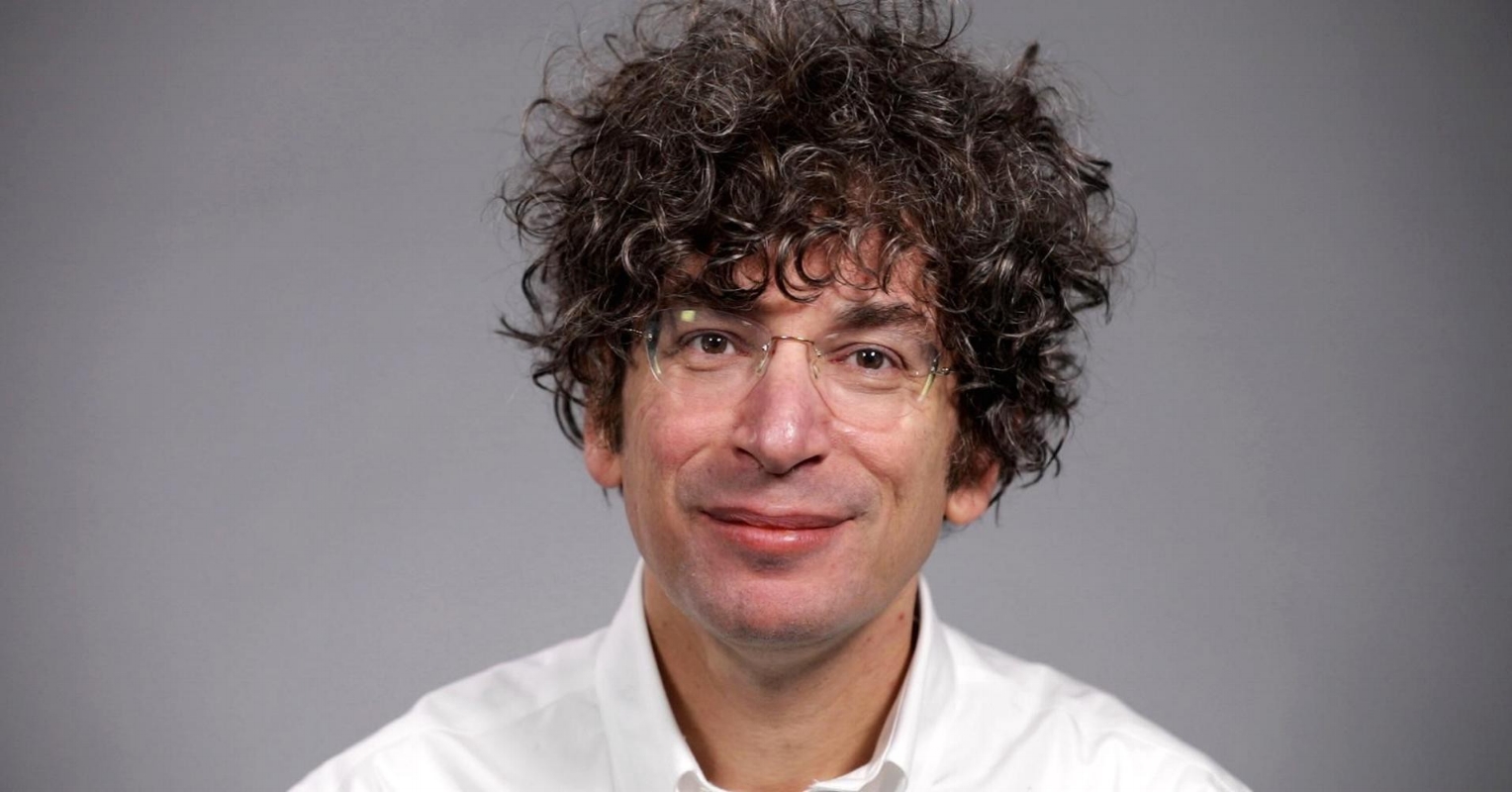
James Altucher has founded or co-founded over 20 companies and written over 10 books.
This is someone you want to learn from.
One of the most important things to do in life is to remain a student and learn from people smarter than you. That's why it's a good idea to read books that smart people, such as Stephen King or Ernest Hemingway, recommend.
I recently learned about another smart person, James Altucher, and dived deeply into his articles, podcasts and books.

For those unfamiliar with Altucher, here is a short bio:
He is an American hedge fund manager, entrepreneur, best-selling author, venture capitalist, and podcaster. He studied at Cornell University and Carnegie Mellon University, and founded or co-founded more than 20 companies. He’s also written over 10 books. Here are a few of his best-selling books:


Now that’s an impressive resume.
Altucher attributes part of his success to reading many books. In fact, here is what he said:
“For each one of these books: either they made me a better person, or I felt, even as I was reading them, that my IQ was getting better. Or, in the case of fiction, I felt like my writing was getting better by reading the book.
Or I simply escaped to another world. I like to travel to other worlds. To pretend to be a character in someone else’s story.
I think if you can find even one takeaway in a book that you remember afterwards, then it’s a great book.
”
So without further ado, here is his list of books worth reading:
“Antifragile” by Nassim Taleb (and “The Black Swan” and “Fooled by Randomness” by him)
“Jesus’ Son” by Denis Johnson (a collection of short stories, not a religious book)
“The Rational Optimist” by Matt Ridley (and the Evolution of Everything by him)
“The Surrender Experiment” by Michael Singer (along with The Untethered Soul by him)
“How We Got to Now” by Stephen Johnson (and his book on ideas)
“The Power of Now” by Eckhart Tolle (and “Practicing the Power of Now” by him)
“What We Talk About When We talk about Running” by Haruki Murakami

Serial entrepreneur and best-selling author James Altucher.


"Everyone worries. 20 million people in the US suffer from some sort of untreated clinical anxiety disorder.
Worry is ok. It helps me make deadlines, care about people, care about improving myself. But “toxic worry” is when things spin out of control.
When you wake up at 3am and can’t get that thought out of your head: why did they do that? How will I live? Does she/he love me? And on and on and on and on.
The book, “Worry” helped me."


"First, Judd is one of the most comic directors of all time. So anything he says about comedy is a must-read.
Second, why comedy?
Learning the skills of standup comedy has helped me in so many other areas of my life: insights into life, dealing with others, overcoming fears, negotiating, sales, influence, confidence, and least of all…humor."


"Just look at the table of contents:


"The idea: if you have “skin in the game” on major life decisions (and even smaller ones), that means you take both risk and reward on your decisions.
You’ll do more research, you’ll take better care of yourself to have the energy to make good decisions and be creative, and ultimately you will live a more real and brave life.
The title alone is worth it. And the rest of the book is a good read."
"It’s about when I went totally broke and lost everything and had to bounce back.
It doesn’t tell you how to bounce back. It describes how I bounced back.
How I internally had to strengthen physically, emotionally, creative, and spiritually.
But also it’s about the most important topic: Freedom.
We only get one life to be free, to make the decisions we want (not in a selfish way, but in a way that can allow us to create the life with the biggest impact).
The path to freedom, for me, was learning to “choose myself”: not allow anyone else to make the decisions that would define my happiness and well-being.
The actions we make today, become our biography tomorrow."
Altucher ends his article by saying:
“When I read any of these books, I feel like a vampire. Like I’m sucking all of the blood out of the author. I’m stealing his soul and consuming it.
Thank you, author, for giving me your soul. For giving me immortality.
That’s why reading is great. It’s like I’ve lived 100s of lives as well as just my own.
One of these days someone will eat my soul also. I hope I have enough seasoning to taste good.”
And I agree.
For literally 5 bucks and a few hours of time, you get an enormous amount of valuable information that can help you in life. It’s practically high-robbery. So take advantage of this and read as much as you can.
Also, if you want to check out my list of recommended books, you can find that here.
If you enjoyed this article, consider supporting our site or signing up for our monthly newsletter. Thank you!
*The links of this site are Amazon affiliate links. Amazon pays me a small fee from each purchase which helps keep this website up and running ad-free. It does not affect the price of your purchase in any way.*

"Mastering Fear" by Brandon Webb & John Mann
Brandon Webb, an ex-Navy SEAL, pilot, and media CEO draws on his personal experiences to demonstrate how people can master fear in everyday life
Fear is often the obstacle blocking people from success, read this book to learn how to overcome it and achieve a new level of growth
Summary:
"Mastering Fear: A Navy SEAL's Guide" by Brandon Webb and John David Mann is a book aimed mastering the natural instinct of fear. Webb draws on his experience as a Navy SEAL, pilot and media CEO as well as several successful figures to demonstrate how people can overcome fear to reach new levels of success.
For those unfamiliar with the authors: Brandon Webb is a former United States Navy SEAL and was the Head Instructor for SEAL snipers. He was deployed to both Afghanistan and Iraq. After his military career he started a media and e-commerce company that is now worth millions. He is also a New York Times bestselling author and has written several books.
The co-author, John Mann is an award-winning author whose written over 20 books that have been published in more than two dozen languages and sold more than 2 million copies. He’s also built a multi-million dollar business and has worked with Brandon Webb on several of his book.

Authors Brandon Webb and John David Mann.
Lessons:
1) Prepare More Than You Need
“In the course of one season an oak tree will drop thousands of acorns. Why? All it takes to safely reproduce itself and continue to oak species is a single acorn. So what are all those others? Rough drafts.”
When directors film a movie, they spend many hours and sometimes days filming a 1-minute scene over and over again. The same scene can be shot over twenty times, but eventually, only one clip is chosen.
So does this mean that everything else was a waste?
Not at all.
That is what it takes to make a great movie: Practice, practice, practice.
Brandon tells a story of when he was flying with his old flight instructor in a little plane he had just bought. He planned to fly it from Fort Lauderdale to Miami.
Brandon went through all the safety checks and took off. While taking off, something didn’t sound right to him. Something also smelled funny. Brandon then looked down and saw that his leg was soaking wet and fuel was squirting out into the cockpit.
This meant that Brandon and his friend were sitting in a puddle of highly flammable plane fuel in a 50+ year old plane. If even one of the radios decided to spark, Brandon and his co-pilot would be stuck in a cockpit fire.
Brandon writes that part of pilot training is the mastery of contingency plans. This means pilots run dozens or even hundreds of what-if scenarios: What to do if an engine goes out; if there’s an electrical problem; if communications go down and more.
It took Brandon only a couple of seconds to react, he immediately shut down all electrical systems, the plane was mechanical so it could still fly without it and turned the plane around towards their starting point.
Brandon writes that he didn’t have to spend time thinking about what to do because he had rehearsed this situation several times.
The same thing was done during the Osama bin Laden raid. When one of the helicopters crashed during the mission, the SEALs had planned and practiced what to do in case such a situation happens.
They had timed the mission to exactly 40 minutes, and during the actual operation, they got in and out in 38 minutes.
When you prepare more than you need and rehearse worst-case scenarios, you get one step closer to mastering fear.

The helicopter that crashed during the bin Laden raid. The SEALs still completed the mission ahead of time because of their countless hours of practice.
2) True Safety is an Illusion
“Fear is awareness of danger, right? And naturally, you want to keep yourself safe, correct? Ah, but that’s a trap! And within that trap is a secret, one that might be uncomfortable to hear but will liberate you if you let it: You’re never safe.
”
Everyone has a natural impulse for self-preservation. Fear makes us believe danger is right around the corner and we should do everything possible to protect ourselves from it. However, this isn’t possible.
There is no such thing as absolute safety. And if you try to live life as safely as possible, you’ll never really live.
Webb recalls the 2017 NYC terrorist truck attack that plowed down joggers and pedestrians and killed eight people. Webb points out that he lives just a few blocks from there and he could have been walking his dog that day. One second he could have been on the phone and hanging out with his dog, and the next boom! He’s gone.
It doesn’t even have to be a terrorist attack, people get hit by distracted drivers all the time. There are a million different ways a person’s life can end just by leaving their house.
At the end of the day, humans have no genuine control over the outcome, we all end up in the ground eventually. This doesn’t mean you don’t look both ways when crossing the street, but it does mean staying home because you’re afraid of crossing the street isn’t the solution.
“Every great gain, for humanity as a whole or for you or me in our own lives, has come about only through risk.
”

Brandon Webb with one of his planes.
3) Trust Your Gut and Jump
“Sometimes when it comes time to jump, even though you may feel the universe giving you a nudge in the ass, the world around you may be shouting at you that you’re wrong, you’re not ready, you can’t do it. Sometimes the world is right. Sometimes, though, it’s wrong. That’s a judgment call that only you can make.
”
A lot of times in life people find themselves in a situation where they know what they have to do and it feels like the universe is telling them to do it, but the people around them may try to stop them. This is why it’s important to trust your gut and jump when things feel right.
Brandon tells the story of a young mechanic named Douglas Corrigan who was inspired to fly after Charles Lindbergh flew his plane across the Atlantic. Lindbergh became an American hero and became Time magazine’s first “person of the year.”
Douglas Corrigan, on the other hand, worked for the company that built Lindbergh’s plane. He too wanted to fly solo across the Atlantic. However, the young man faced many problems. For one, he didn’t have a plane. He also didn’t have a pilot’s license or money.
So he worked on getting his license and then started working as a pilot taking people up for rides. He saved up his earnings and eventually bought himself a little plane.
Once he had his plane, he asked the Bureau of Air Commerce to approve his trip from New York to Ireland. However, they said his plane wasn’t in proper condition for the flight and denied him.
So Corrigan worked on his plane and applied again. Once again he got denied. He went on to apply five more times and got turned down each time.
But that didn’t stop Douglas Corrigan.
On July 1938, Corrigan was approved for a flight from New York to California. Except that he flew in the other direction, ‘accidentally’ of course.
Eight hours later he landed in Dublin. When flight officials questioned him, he said he must have misread his compass and simply flown in the wrong direction. When Corrigan returned to New York he was greeted as a hero and the New York Post printed a giant headline saying “HAIL TO WRONG WAY CORRIGAN!”
Corrigan is a great example of someone trusting their gut, ignoring fear and naysayers, and taking the jump into greatness. And as it turns out, Brandon Webb is actually related Douglas Corrigan (he was his great-grandmother’s cousin).
Conclusion:
"Mastering Fear: A Navy SEAL's Guide" by Brandon Webb and John Mann went above and beyond my expectations. The authors have done an excellent job with this book. Webb outlines the five steps needed to master fear and gives examples that demonstrate each step. He finishes each chapter with practice points that gives readers actionable advice and tips.
Webb does a wonderful job drawing on his combat, business, and personal experiences to illustrate his lessons and keep readers hooked. Fear will always be a part of our lives, heck it’s even part of Webb’s life and he’s a former US Navy SEAL, that is why it’s important to understand the tactics needed to overcome it.
This book is a must-read a manual to mastering fear. Each and every one of us is able to grow as a person and achieve more than we ever thought possible by triumphing over fear.
Rating: 5/5 Stars
You can get the book here or by clicking on the image below.

If you liked "Mastering Fear" or are interested in learning about Navy SEALs and Brandon Webb's life, I recommend the two books below.


If you enjoyed this article, consider supporting our site or signing up for our monthly newsletter. Thank you!
Reader freebies:

Reading Books About Auschwitz Vs Visiting It
Reading books about Auschwitz are one thing, actually visiting is another
Both are important and teach different lessons
Overview:
Books are a fantastic resource at our disposal; they’re cheap, portable, and filled with knowledge. However, as with all things, books have their limitations. They are written by other people and are a secondary source of information.
Some people are non-believers until they see things with their own eyes. Some things are so hard to imagine, that the reader feels the author is writing about a non-existent place until they finally visit it themselves.

Entrance into Auschwitz I. The sign translates to "Work Will Set You Free" a common lie told by many concentration camps.
That is partly how I felt before I visited Auschwitz. I’ve seen videos of the camps and read books such as “Man’s Search for Meaning” and “This Way for the Gas, Ladies and Gentlemen” but it isn’t until I actually visited this horrible place that I began to truly grasp, or at least attempt to understand, the horrors that occurred there.
It’s well known that millions of people were murdered at Auschwitz, but it’s difficult to comprehend that massive number. That is until one walks the hall were thousands upon thousands of shoes lay piled up to the ceiling. Shoes of men, women, and sadly children as well.
But more than that, their personal belongings are still there too. There are thousands of cups that people brought because they were told they would be living in the camps. Thousands of suitcases because people believed they were going to need a decent set of clothes.
They didn’t. Most people had all their belongings taken from them, including their lives.

Thousands of cups and bowls brought by prisoners to Auschwitz.
One of the most shocking realizations from visiting the camp is the sheer size of the camp. Auschwitz consisted of three camps: Auschwitz I, Auschwitz II-Birkenau and Auschwitz III-Monowitz.
Auschwitz II-Birkenau was the largest of the three and could hold 100,000 prisoners. The camps are filled with barracks that had multiple three-level bunk beds crammed inside. There was little to none ventilation and no bathrooms in the barrack. The barracks were often filled with rats, flies, lice and other unwelcoming creatures.

Prisoner barracks at Auschwitz. There were about 8 people on each level of the bunk bed.
Birkenau is also where the infamous railroad tracks and Gate of Death are found.

"The Gate of Death."
Once people arrived inside the camp, they were told to separate their belongings, and form into a line. An S.S. guard would make a split-second decision of who was healthy enough to work and who wasn’t.
Roughly 80% of newly arrived prisoners were told to get into a line that would go and take a shower. This line consisted of women, children, old adults and handicapped individuals. They marched into a shower room with fake shower heads where gas was released instead of water.

Railroad tracks leading to the center of Auschwitz II.
Visiting the camp in-person helps “put a face to a name” so to speak. You see the setting used for so many books. You see just how cramped the barracks were, the massive size of the camp and the barbed-wire fences that mean it nearly impossible to escape.
Books, on the other hand, provides in-depth stories of the people that lived and suffered. It’s like having a story in your head and then when you visit the camp, you know the setting of each scene.
When Borowski wrote in his book which directions elderly women and handicapped men walked towards the gas chambers, I knew which direction they went. When he wrote about the building where women were experimented on by Nazi scientists, I knew which building it was.
I don't claim to fully understand the life of an Auschwitz prisoner and I never will. But if people can make sense of even a small piece of the horrors that took place here and what was done to prisoners, that should be enough to teach a lesson that will not soon be forgotten.

"Those who do not remember the past are condemned to repeat it."-George Santayana
To learn more about life in concentration camps, what it took to survive, and lessons learned from survivors, I recommend reading these books:
“This Way for the Gas, Ladies and Gentlemen” & "Man’s Search for Meaning"


If you enjoyed this article, consider supporting our site or signing up for our monthly newsletter. Thank you!
Reader freebies:

"This Way for the Gas, Ladies and Gentlemen" by Tadeusz Borowski
180 Pages
A series of short stories based on Tadeusz Borowski’s experience in the Nazi concentration camps
Step into the shoes of not just one, but multiple prisoners as well as S.S. guards in this masterpiece of literature
Summary:
“This Way for the Gas, Ladies and Gentlemen” by Tadeusz Borowski is a series of short stories based on Borowski’s personal experience in the Nazi concentration camps.
Tadeusz Borowski was born in Ukraine to Polish parents and was imprisoned in Auschwitz and Dachau from 1943 to 1945. He was arrested in April 1943 and was held in the Pawiak prison, Auschwitz, Dautmergen-Natzweiler, and finally the Dachau-Allach camp, which was liberated by the US Army in May 1945.
While much of his pre-war work was comprised of poetry, his subsequent works detailing life in concentration camps were written in prose.
His most famous work, a series of short stories called Farewell to Maria, was given the English title “This Way for the Gas, Ladies and Gentleman”. He published the book in Poland after the Second World War and since then, the stories have been classified as a masterwork of literature.
Borowski committed suicide in 1951, at the age of 28.
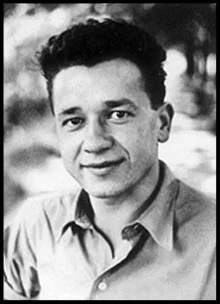
Author Tadeusz Borowski.
Lessons:
1) Hope Is A Double-Edged Sword
“It is hope that breaks down family ties, makes mothers renounce their children, or wives sell their bodies for bread, or husbands to kill. It is hope that compels a man to hold on to one more day of life, because that day may be the day of liberation.”
Borowski writes that although the prisoners were aware they were living in hell, they longed for a better world and hung on to that idea. Hope helped many prisoners hang out to life and not quit even though they didn’t know if they’d ever make it out of the concentration camps.
That hope is also what made wives sell their bodies for bread and husbands to kill; because they believed tomorrow may be the day of liberation.
However, Borowski says that hope had a dark side.
People didn’t want to give up hope when they’ve heard most people would end up in the gas chambers. Even while walking with hundreds of others towards the chambers, people still believed they were going someplace else other than the gas chambers.
They weren’t.
Hundreds, and later on thousands, of people, were sent to the gas chambers to be killed every hour. At its peak, Auschwitz alone killed 2,000-3,000 people every hour.
“It is camp law: people going to their death must be deceived to the very end” (pg 37) writes Borowski.
The majority of those people never rebelled, never attempted escape, and never fought back. They hoped for a better tomorrow, but for many, it never came.

Prisoners at the Dachau concentration camp. Borowski was held here and at Auschwitz.
2) Nazis Ran Concentration Camps Like An Assembly Line
“A number tattooed on it to save on dog tags, with just enough sleep at night to work during the day, and just enough time to eat. And just enough food so it will not die wastefully.
”
As Borowski writes, prisoners were given tattoos instead of dog tags to save money and got just enough sleep and food to survive. Everything was done in an assembly line method to maximize efficiency. The Nazis applied this strategy in the worst way possible, to kill as many people as efficiently as possible.
The Nazis rallied Jews and other ‘lesser races’ into train carts and shipped them to concentration camps. They overfilled the carts on purpose because if the people died from heat exhaustion or suffocation, it contrinbuted to their final goal.
Once at the camps, people were advised to leave their luggage in the correct pile. This way the Nazis didn’t have to spend time organizing the items. The prisoners were split up into two groups, those that could work and those that couldn’t.
The non-workers were told they were going to take a ‘shower’ and asked to undress and put their clothing and personal belongings in a pile. Again, it was easier for the guards to have the prisoners organize their own items than it would have been for the guards to organize the items from each dead prisoner.
The prisoners were collectively gassed and for maximum efficiency, furnaces were built in the same building as the gas chambers so bodies would not have to be carried far for disposal.
The Nazis then used the ashes to “fertilize the fields or fill in the ponds” (pg 131). Then, the process started over again.

Prisoners sort their belongings before being led to the gas chambers.
3) Nazi Guards Were Blind To Their Actions
““O Gott, mein Gott, was hab’ ich getan, dass ich so leiden muss?”, which means–O God, my God, what have I done to deserve such suffering?
”
This quote is from the story “The Death of Schillinger” who was the chief commander of Auschwitz. In the story, new prisoners are told to strip naked, including the women. One attractive naked woman caught the eye of Schillinger and he took her hand in hopes of having his way with her.
However, the woman grabs a handful of gravel and throws it in his face. Schillinger cries out in pain and drops his revolver; the woman then picks it up and fires several shots into him.
The entire crowd of naked prisoners goes wild and the S.S. guards beat the prisoners with clubs and drive them into the gas chambers. They then lock the doors and yell at the other guards to administer the gas.
The guards then go back to Schillinger and carry him to a car. As they are doing so, Schillinger is asking God what he did to deserve such suffering.
The story ends with the narrator talking about a prisoner revolt that occurred not too long ago. The prisoners managed to cut the barbed-wire fence and attempted to escape the camp, but the S.S. guards turned on the machine guns and killed every person without exception.
The guards that worked in these camps never thought that they were doing anything wrong. Stealing, raping and killing people became normal for the Nazis. They believed they were doing the right thing and that they didn’t deserve to get attacked by prisoners, even when they were on the edge of death.
Borowski sums it up quite well, “That man didn’t understand even to the very end...What strange irony of fate.”

Concentration camp prisoners at Dachau.
Conclusion:
“This Way for the Gas, Ladies and Gentlemen” by Tadeusz Borowski is a hard book to talk or even write about. Although the book is technically fiction, it is with no doubt based on Borowski’s personal experience in the concentration camps.
He spent two years there and saw unimaginable horrors. Children taken from mothers and led to gas chambers, young women being raped, men murdering one another, and more. Borowski manages to transport readers into the shoes of not just one Auschwitz prisoner, but many.
That is what makes this book so challenging to read. It’s only 180 pages but it took me two weeks to read. Why would anyone want to put themselves in such a horrible place?
I think it’s to remember what occurred in the past and to make sure these horrors are never repeated. Yes, reading the book is hard, but think about how hard life was for camp prisoners. Reading this book will give you a better understanding of what happened in the camps and will make you a hundred times more grateful for the life you have now.
Read it. Remember it. And make sure it never happens again.
Rating: 5/5 stars
If you’re interested in reading this book, click here or on the image below.

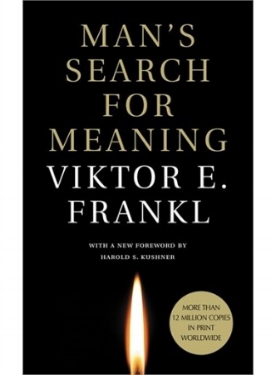
If you liked “This Way for the Gas, Ladies and Gentlemen” I'd recommend reading "Man’s Search for Meaning" by Viktor Frankl.
Please consider supporting our site here or signing up for our monthly newsletter here. Thank you!
Reader freebies:
Try Audible and get two FREE audiobooks!
Get a FREE month of unlimited kindle reading and listening here!

Alex and Books Shop Is Now Open
I’m opening up a shop with cool book-related merch.
Three different ways you can help support A&B.
Hey Everyone!
As I've mentioned in past articles, running a website can be costly and if you add in the price of books it adds up–total cost for last year was about $500. However, I want to continue to create educational content that is free to readers and doesn't have ads, because lets be honest no one likes ads and free is always great.
So this creates a dilemma, how can one break even if they give their content away for free and don't use ads to generate income?
Answer: Donations, Merch & Books.
I've already created a donate tab, and received a few donations (thank you for that, you guys are awesome). If you've read an interesting article or found a great book on this site and want to give something back–every dollar counts–you can do so by clicking on the button below.
Another great way to support is by visiting the Alex & Books shop.
You can purchase bookmarks at the shop–they are made from 100% recycled paper and have an inspiring quote on the front. So far I only have bookmarks but I thinking about putting up more book-related gear (if you have an suggestions, leave a comment below!).
The back on the bookmark is blank so you can use it to jolt down notes or write down important information. It's also very reasonably priced and I'm giving free shipping for people in the U.S.!

Get these cool bookmarks by visiting the A&B shop!
Lastly, you can support this site by buying books!
Yes, it's true. The links on this website are Amazon affiliate links; that means Amazon pays me a portion of each purchase made when someone uses my links to get to their site. Best part is that it won't affect the price of your purchase!
Here's an example.
Lets say you were going to buy two books for $15. If you don't use my link, Amazon gets the full $15. However, if you click on one of my links, Amazon gets $14 and they give me $1. It isn't much, but if everyone used my links, it would add up!
If you're looking for a new book to read, check out my list of great books below!
Please consider supporting this site and sharing this article. Thank you everyone!
Best regards,
Alex Wiec
If you enjoyed this article, consider supporting our site or signing up for our monthly newsletter. Thank you!
Reader freebies:

"The Aquariums of Pyongyang" by Chol-Hwan & Rigoulot
Pages: 238
For: People interested in learning about life in North Korea, concentration camps, and stories of survival
Lesson: Learn how one man spent ten years in a North Korean concentration camp, escaped and lived to tell his story
Summary:
“The Aquariums of Pyongyang” by Kang Chol-hwan and Pierre Rigoulot is a memoir that reveals the truth about North Korea’s concentration camps, government and life inside the hermit kingdom.
Author Chol-hwan was born in 1968 in Pyongyang, North Korea. At age 9, he was sent, along with his family, to Yodok Concentration Camp after his grandfather was accused of treason. He spent 10 years in the prison camp. Inside, he suffered from brutal living conditions, starvation and hard labor. To survive he had to eat whatever he could, including rats, insects and worms. As a child at camp, he witnessed unimaginable horrors and saw both children and adults die from work accidents and public executions.
After being released, Mr. Kang was suspected of illegally listening to South Korean radio stations and decided to escape to North Korea. He crossed into China in 1992 and eventually reached South Korea. In 2000, he published the autobiographical “The Aquariums of Pyongyang.”
Pierre Rigoulot is a journalist, historian, and human rights activist. He is the author of numerous books on the history of political repression and contributed the North Korean chapter to the bestselling “The Black Book of Communism.”

Authors Kang Chol-hwan (left) and Pierre Rigoulot.
1) North Korea is filled with police, Informants & surveillance
“In North Korea, a country of 22 million, the police survey every aspect of the citizenry’s life. No travel without authorization. No news that’s not vetted first. A single, mandated ideology, exalting self-sufficiency–even when calling for international aid. Extensive prisons and camps scattered throughout the country. Its economy, modeled after Stalin’s Soviet Union–controlled, centralized, collectivized.”
When I read this quote, “The Gulag Archipelago” by Aleksandr Solzhenitsyn popped into my mind, and it turns out these two books have a lot in common. Both authors talk about the constant state of surveillance and policing in their countries.
Chol-hwan writes that “Since North Korea has always maintained that war is imminent and that enemies are everywhere...little surprise, then, that our school buildings were under twenty-four-hour surveillance” (pg 64).
Even after being released from the concentration camp, Chol-hwan and his family were constantly being watched, by both security agents and “ubiquitous snitches, who were just as plentiful on the outside as they had been in the camp. Everyone in North Korea, of course, is under surveillance; as for former prisoners, ours was just a little tighter” (pg 162).
Just as in the Soviet Russia where Solzhenitsyn said one in four people were informants, Chol-hwan writes “informants were at every turn. There was no one to confide in, no way to tell who was who” (pg 77). Chol-hwan continues by saying that within a few months, he had developed a sixth sense–a snitched radar if you will.
He also says that prisoners were usually picked for the job of being an informant without being asked for his or her opinion and in most cases, the person is not proud of having that job. It took Chol-hwan some time to realizes that these snitches were more victims of the systems rather than agents of voluntary evil.

Political prison camps throughout North Korea (source).
2) Education in North Korea is Radically different from the West
“Training the revolution’s little soldiers was given first priority. Like students everywhere in the world...we studied arithmetic, drawing, music, performed gymnastics, and so on. But above all, we were taught about the morals of communism and the history of the revolution of Kim Il-Sung and Kim Jong-il.”
In addition to learning about communism and the history of the revolution, Chol-Hwan and his classmates were demanded to learn ‘important dates’ such as on what hour and day their leader was born and which speeches he gave on certain dates.
Chol-hwan and his friends were taught that “Kim Il-sung and Kim Jong-il were perfect beings, untarnished by any base human function.” He goes on to say that “I was convinced, as we all were, that neither of them urinated or defecated” (pg 3).
“I had been made to believe–and indeed wanted to believe–that the Democratic People’s Republic of Korea was the best country in the world. I looked up to Kim Il-sung as a god.”
For afterschool activities, students could join the Pupil’s Red Army, where students were given fake machine guns and learned how to form ranks and march. In high school, students were taught how to hide from enemy planes, memorized emergency air-raid instructions and how to steer the population to the nearest air-raid station.
However, once Chol-hwan entered the concentration camps, things got much worse. Teachers often beat the students for almost any reason. One teacher, sometimes punished his students by making them stand naked in the courtyard all day with their hands behind their backs. Another form of punishment was latrine duty where students had to empty and clean the septic tanks for a week.
Chol-hwan remembers an event when an instructor beat up a student so savagely that the student wobbled when he tried to stand up and fell into a septic tank. The student was so weak after being punched and kicked by the instructor, that he couldn’t get out of the tank. None of the students helped the poor kid, and after a long struggle, the student finally managed to crawl out. However, even when he got out, no one came to help him wash up or bandage his wounds. A few days later the student died.
When the student’s mother came to see the teacher, the teacher replied by saying her son deserved the punishment he got and that he wasn’t responsible for the child's death. Chol-hwan remembers that same teacher saying “Since your parents are counter-revolutionaries, they deserve to die, and you, their children, along with them” (pg 68).

Chol-hwan meets to President George W. Bush to discuss human rights abuses in North Korea.
3) A Strong Will Is Needed To Survive The Camps
“The key was to take advantage of the fall, when fruit and vegetables could still be found, to consume like bears in hibernation, eating enough to get through winter and fight through spring. That’s the most important thing I learned in school.”
Chol-hwan goes on to say that he didn’t learn that from his teachers, but rather from his fellow students, some of whom had been in the camp for close to three years. They also told him that to survive, he should steal corn and soybeans during the fall and save them for winter and spring.
The author and his classmates would eat whatever they could find in the camps. This included frogs and their eggs, salamanders, and rats...lots of rats. Since they reproduced so quickly, rats were the only food product in the camp that was never in short supply.
Chol-hwan writes that fighting malnutrition was more punishing than mistreatment by the guards, likely because guards would strike fast and quick while hunger was slow and lasted for days if not weeks.
To survive in the camps, Chol-hwan had to develop a strong will to live. He says that the more he rubbed shoulders with death, “the more I desired to stay alive, no matter the cost” (pg 103). He adds that he developed “a savage will to live” and although he was faced with constant hunger, cruelty from the guards and horrendous work conditions, his desire to live remained strong and he went on to survive life in the camp.
4) Corruption is rampant in North Korea
“North Korea is a total sham. Officially, it outlaws private business, but in the shadows it lets it thrive. Since there are hardly any markets, merchants warehouse their Chinese products at home and sell them to their neighbors and acquaintances. This farce is the only thing preventing the bankruptcy of the North Korean state and the pauperization of its citizenry.”
Throughout the book, Chol-hwan gives several examples of corruption in North Korea and how both residents and government authorities turn a blind eye to the matter.
When Chol-hwan’s family members from Japan came to visit North Korea, the government would have Security Force agents monitor the family to make sure no mention of the camps were made. However, Chol-hwan writes that if he wanted to have a private discussion, he “only needed to give the agent a little money to go for a walk” (pg 181).
Chol-hwan even had a connection with a certain Security Force agent that “usually took care of my bureaucratic needs in exchange for gifts and loans”. He goes on to say that the agents enjoyed sending people back to the camps and that “Gifts were the only way to keep the agents at bay, and by this point the gifts had to be both lavish and plentiful” (pg 184).
Not only could gifts buy agents, it could also buy judges.
Chol-hwan’s friend once ran over a group of soldiers while speeding in a car going 70 mph. He was then arrested and sentenced to death but was released after serving three months in prison. Chol-hwan writes that with the aid of refrigerators, color televisions, and large envelopes of cash, his friend was able to bribe the judge and get the case dismissed.

Chol-hwan talks about his time in North Korea's gulags.
5) Even concentration camps can be somewhat nostalgic
“I think I was actually afraid of leaving that place, of no longer seeing those mountain ridges all around me. Deep down, I had come to love them. They had been the bars of my prison and the framework of my life. They were my suffering and my being, bound indissolubly together.”
This was one of the most shocking parts of the book. In all of the books I’ve read about concentration and POWs camps, no one said they felt sad about leaving the camp. But for Chol-hwan I think it was different because he literally grew up in the Yodok concentration camp. He was sent to the camp at 9 years old and spent 10 years of his life there.
The camp contained many of his childhood memories.
He goes on to write, “My most poignant memories were attached to the place where I had suffered the most. It was a strange, complicated feeling, for Yodok was still a hellish, inhuman place” (pg 159).
Upon further contemplation, Chol-hwan identifies that “the day-to-day struggle for life at camp number 15 was no cause for nostalgic sentimentality” but “I was going to miss the places, the people, the friendships, the shared moments” (pg 159).
BONUS: North Korea’s National Soccer Team Was Sent To Camps

The 1966 North Korean soccer team.
Yes, you read that right.
Chol-hwan writes that he met Park Seung-jin–a North Korean soccer player who played in the 1966 FIFA World Cup–at the Yodok concentration who told him the story of the 1966 World Cup in England.
At the tournament, the North Korean team won 1-0 against Italy and the players went out on a wild drinking binge to celebrate their victory. The players drank long into the night and were seen out in public with some girls.
Two days later, the team hadn’t fully recovered and lost 5-3 to Portugal.
Upon arriving in Korea, the whole team–except for one player who was sick and stayed in the hotel that night–was sent to the camps. Chol-hwan writes that by the time he arrived at Yodok, the former soccer player had already been there almost twelve years.
The worst part is that he was still there when Chol-hwan left the camp. Meaning he was in a concentration camp for over 20 years. That’s 240 months of hell for losing one soccer game...
Conclusion:
“The Aquariums of Pyongyang” (2001) by Chol-Hwan and Rigoulot is an incredibly insightful book that reveals the truth about life in North Korea and its concentration camps. Overall, this book is packed with interesting stories and lessons. It’s well-written and the 230 or so pages fly by. There aren’t any dull moments and the author even manages to sprinkle humor throughout the book.
One of the most mind-numbing parts of this book is that the author was sent to the camps as a child and spent ten years of his life there. He literally grew up in the camps.
Most of us have fond memories of our childhood home, playing with kids in the neighborhood and going to school. Chol-Hwan had the same experiences, but his childhood took place in the Yodok concentration camp of North Korea.
Although I’ve read other books about concentration camps, this book offered new insights and a unique look into life in North Korea and how the state functions. The book also teaches readers how propaganda, education, and surveillance are all controlled by the state and used to keep North Korean leaders in power. Readers will also learn about the extreme corruption and poverty in the country.
Concentration camps are a horrible creation. Whether it is a Nazi, Soviet, or North Korean camp, it should not exist. I’m not suggesting we go fly to North Korea to protest or go to war with the country, but as Chol-Hwan writes in his book, the first thing we can all do is educate ourselves about the truth of North Korea and spread the facts about the country to as many people as possible.
People can also help by supporting Chol-hwan’s charity North Korea Strategy Center, that’s focused on providing a platform for North Korean voices. Their programs empower North Koreans within the country with access to information, while supporting defectors outside of North Korea with leadership development programs and international support networks.
Rating: 5/5 stars
If you're interested in getting the book, click on the book below!

- Book: “The Aquariums of Pyongyang”
- Pages: 238
- For: People interested in learning about life in North Korea, concentration camps, and stories of survival
- Lesson: Learn how one man spent ten years in a North Korean concentration camp, escaped and lived to tell his story
If you enjoyed "The Aquariums of Pyongyang" I recommend reading "The Forgotten Highlander" by Alistair Urquhart. Click on the book below to learn more.

If you enjoyed this article, consider supporting our site or signing up for our monthly newsletter. Thank you!
Reader freebies:

How Much I've Spent on Books in 2017
In 2017 I read 35 books, but I actually bought 52 books.
Find out how much each book cost and how much I ended spending on books last year.
In 2017 I read a total of 35 books, but I actually bought 52 books. I always try to buy used books to save money and the only book I've ever pre-ordered was "12 Rules for Life" by Jordan Peterson. By buying used books, I figured I'd save a ton of money and the amount I spent on books would be quite small.

A 'few' of my books.
To test this hypothesis, I decided to review all of my book purchases to find out exactly how much I've spent on books in 2017. Here is the cost of each book I've bought last year:
$6.44: The Man Who Mistook His Wife For A Hat: And Other Clinical Tales
$8.81: Man's Search for Meaning
$9.91: The War of Art: Break Through the Blocks and Win Your Inner Creative Battles
$8.29: The Gulag Archipelago Abridged: An Experiment in Literary Investigation (P.S.)
$5.05: Ernest Hemingway on Writing
$5.98: The First Five Pages: A Writer's Guide To Staying Out of the Rejection Pile
$13.40: The Emperor's Handbook: A New Translation of The Meditations
$11.41: The Denial of Death
$4.99: American Sniper: The Autobiography of the Most Lethal Sniper in U.S. Military History
$8.05: No More Mr Nice Guy: A Proven Plan for Getting What You Want in Love, Sex, and Life
$8.46: Competition Demystified: A Radically Simplified Approach to Business Strategy
$5.99: The Red Circle: My Life in the Navy SEAL Sniper Corps and How I Trained America's Deadliest Marksmen
$6.66: Perennial Seller: The Art of Making and Marketing Work that Lasts
$4.48: On Writing Well: The Classic Guide to Writing Nonfiction
$12.19: War and Peace (Vintage Classics)
$5.48: The Art of War for Writers: Fiction Writing Strategies, Tactics, and Exercises
$11.04: Trust Me, I'm Lying: Confessions of a Media Manipulator
$10.39: The Divine Comedy: Inferno; Purgatorio; Paradiso (Everyman's Library)
$8.95: Without Conscience: The Disturbing World of the Psychopaths Among Us
$6.13: Einstein's Dreams
$14.64: Pre-Suasion: A Revolutionary Way to Influence and Persuade
$5.99: The Innovators: How a Group of Hackers, Geniuses, and Geeks Created the Digital Revolution
$8.88: The Hero with a Thousand Faces (The Collected Works of Joseph Campbell)
$5.11: Purple Cow, New Edition: Transform Your Business by Being Remarkable
$5.99: How to Read Novels Like a Professor: A Jaunty Exploration of the World’s Favorite Literary Form
$6.79: What Every BODY is Saying: An Ex-FBI Agent’s Guide to Speed-Reading People
$10.46: Thus Spoke Zarathustra: A Book for Everyone and No One (Penguin Classics)
$7.24: 1984 (Signet Classics)
$11.97: Walt Disney: The Triumph of the American Imagination
$10.00: The Effective Executive: The Definitive Guide to Getting the Right Things Done
$11.35: Influence: The Psychology of Persuasion, Revised Edition
$6.29: Good to Great: Why Some Companies Make the Leap and Others Don't
$5.05: Tender Is the Night
$7.99: The Curious Case of Benjamin Button and Other Jazz Age Stories (Penguin Classics)
$5.33: David and Goliath: Underdogs, Misfits, and the Art of Battling Giants
$3.57: Rich Dad Poor Dad: What The Rich Teach Their Kids About Money That the Poor and Middle Class Do Not!
$7.38: Modern Romance
$5.35: 1984
$8.98: The Black Swan: The Impact of the Highly Improbable (Incerto)
Total Cost: $414.61
Interesting Figures:
Number of books purchased: 52
Average book price: $7.97
Most expensive book: $17.98: The New Encyclopedia of Modern Bodybuilding
Least expensive book: $1.79: The Storytelling Animal: How Stories Make Us Human

More books!
If you're interested in learning about my favorite books of 2017, you can find that here.
Keep in mind that the cost listed is just the total cost of the books and does not include shipping. In total, I think it’s safe to say that I’ve spent ~$500 or so on books in 2017.
As you can see the cost of books adds up, throw in the cost of maintaining a website and it comes out to several hundreds dollars a year. However, I truly enjoy reading and writing and want to continue sharing awesome lessons and knowledge with everyone. Thus, I ask viewers to consider donating to help keep this site up and running, every dollar counts!
If I’m able to turn this into a full-time career, I’d be able to read a lot more books and share many more important lessons learned from books. I also promise to keep the site ad-free and strive to provide interesting and educational content.
If you’re not able to donate but still want to support the cause, sign up for our newsletter here and follow AlexandBooks on social media (Facebook, Twitter, Instagram).
Thanks everyone and continue to read books and be awesome! -Alex
*PS: The links on my website are Amazon affiliate links, Amazon pays me a small fee for each item purchased. Important Fact: It doesn't affect the price of your purchase at all, and it helps keep this website up and running ad-free.*
If you enjoyed this article, consider supporting our site or signing up for our monthly newsletter. Thank you!
Reader freebies:

The 150+ Books Stephen King Recommends Reading
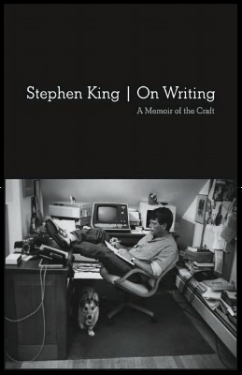
At the end of “On Writing” Stephen King lists 150+ books he believes are worth reading.
Check out the list and let me know whether or not you agree with his choices.
I used to think that I read a lot of books; last year I read 35 and this year I’m on track to read 42 books. However, when I read Stephen King’s book “On Writing” I began to think otherwise. In his book, King writes, “I’m a slow reader, but I usually get through seventy or eighty books a year.”
Let me repeat that.
He says he’s a SLOW READER, but he still gets through 70-80 BOOKS A YEAR.
At this point, you might be wondering why a best-selling author like King reads so many books. Well, it’s because he believes reading a lot makes you a better writer. King writes that every book has its own lessons, and for writers that don’t have time to read, King says “If you don’t have time to read, you don’t have the time to write” (pg 147).

Read my review of "On Writing" here.
At the end of “On Writing” King lists over a hundred books that are worth reading. It’s a long list, but an interesting one at the same time. So without further ado, here is King’s list of books worth reading:
Abrahams, Peter: A Perfect Crime
Abrahams, Peter: Lights Out
Abrahams, Peter: Pressure Drop
Abrahams, Peter: Revolution #9
Agee, James: A Death in the Family
Bakis, Kirsten: Lives of the Monster Dogs
Barker, Pat: Regeneration
Barker, Pat: The Eye in the Door
Barker, Pat: The Ghost Road
Bausch, Richard: In the Night Season
Blauner, Peter: The Intruder
Bowles, Paul: The Sheltering Sky
Boyle, T. Coraghessan: The Tortilla Curtain
Bryson, Bill: A Walk in the Woods
Buckley, Christopher: Thank You for Smoking
Carver, Raymond: Where I’m Calling From
Chabon, Michael: Werewolves in Their Youth
Chorlton, Windsor: Latitude Zero
Connelly, Michael: The Poet
Conrad, Joseph: Heart of Darkness
Constantine, K.C.: Family Values
DeLillo, Don: Underworld
DeMille, Nelson: Cathedral
DeMille, Nelson: The Gold Coast
Dickens, Charles: Oliver Twist
Dobyns, Stephen: Common Carnage
Dobyns, Stephen: The Church of Dead Girls
Doyle, Roddy: The Woman Who Walked into Doors
Elkin, Stanley: The Dick Gibson Show
Faulkner, William: As I Lay Dying
Garland, Alex: The Beach
George, Elizabeth: Deception on His Mind
Gerritsen, Tess: Gravity
Golding, William: Lord of the Flies
Gray, Muriel: Furnace
Greene, Graham: A Gun for Sale
Greene, Graham: Our Man in Havana
Halberstam, David: The Fifties
Hamil, Pete: Why Sinatra Matters
Harris, Thomas: Hannibal
Haruf, Kent: Plainsong
Hoeg, Peter: Smilla’s Sense of Snow
Hunter, Stephen: Dirty White Boys
Ignatius, David: A Firing Offense
Irving, John: A Widow for One Year
Joyce, Graham: The Tooth Fairy
Judd, Alan: The Devil’s Own Work
Kahn, Roger: Good Enough to Dream
Karr, Mary: The Liar’s Club
Ketchum, Jack: Right to Life
King, Tabitha: Survivor
King, Tabitha: The Sky in the Water
Kingsolver, Barbara: The Poisonwood Bible
Krakauer, Jon: Into Thin Air
Lee, Harper: To Kill a Mockingbird
Lefkowitz, Bernard: The Ignored
Maclean, Norman: A River Runs Through It and Other Stories
Maugham, W. Somerset: The Moon and Sixpence
McCarthy, Cormac: Cities of the Plain
McCarthy, Cormac: The Crossing
McCourt, Frank: Angela’s Ashes
McDermott, Alice: Charming Billy
McDevitt, Jack: Ancient Shores
McEwan, Ian: Enduring Love
McEwan, Ian: The Cement Garden
McMurtry, Larry: Dead Man’s Walk
McMurtry, Larry, and Diana Ossana: Zeke and Ned
Miller, Walter M.: A Canticle for Leibowitz
Oates, Joyce Carol: Zombie
O’Brien, Tim: In the Lake of the Woods
O’Nan, Stewart: The Speed Queen
Ondaatje, Michael: The English Patient
Patterson, Richard North: No Safe Place
Price, Richard: Freedomland
Proulx, Annie: Close Range: Wyoming Stories
Proulx, Annie: The Shipping News
Quindlen, Anna: One True Thing
Rendell, Ruth: A Sight for Sore Eyes
Robinson, Frank M.: Waiting
Rowling, J.K.: Harry Potter and the Chamber of Secrets
Rowling, J.K.: Harry Potter and the Prisoner of Azkaban
Rowling, J.K.: Harry Potter and the Sorcerer's Stone
Russo, Richard: Mohawk
Schwartz, John Burnham: Reservation Road
Seth, Vikram: A Suitable Boy
Shaw, Irwin: The Young Lions
Slotkin, Richard: The Crater
Smith, Dinitia: The Illusionist
Spencer, Scott: Men in Black
Stegner, Wallace: Joe Hill
Tartt, Donna: The Secret History
Tyler, Anne: A Patchwork Planet
Vonnegut, Kurt: Hocus Pocus
Waugh, Evelyn: Brideshead Revisited
Westlake, Donald E.: The Ax
And if this list of 100 books to read is too short, King added an updated list to his new edition of “On Writing.” So here are 50+ more books that King recommends:
Abrahams, Peter: End of Story
Abrahams, Peter: The Tutor
Adiga, Aravind: The White Tiger
Atkinson, Kate: One Good Turn
Atwood, Margaret: Oryx and Crake
Berlinski, Mischa: Fieldwork
Black, Benjamin: Christine Falls
Blauner, Peter: The Last Good Day
Bolano, Roberto: 2666
Carr, David: The Night of the Gun
Casey, John: Spartina
Chabon, Michael: The Yiddish Policemen’s Union
Child, Lee: The Jack Reacher novels, starting with Killing Floor
Connelly, Michael: The Narrows
Costello, Mark: Big If
Cunningham, Michael: The Hours
Danielewski, Mark: House of Leaves
Diaz, Junot: The Brief Wondrous Life of Oscar Wao
Dooling, Richard: White Man’s Grave
Downing, David: Zoo Station
Dubus, Andre: The Garden of Last Days
Enger, Leif: Peace Like a River
Exley, Frederick: A Fan’s Notes
Ferris, Joshua: Then We Came to the End
Franzen, Jonathan: Strong Motion
Franzen, Jonathan: The Corrections
Gaiman, Neil: American Gods
Gardiner, Meg: Crosscut
Gardiner, Meg: The Dirty Secret Club
Gay, William: The Long Home
Goddard, Robert: Painting the Darkness
Gruen, Sara: Water for Elephants
Hall, Steven: The Raw Shark Texts
Helprin, Mark: A Soldier of the Great War
Huston, Charlie: The Hank Thompson Trilogy
Johnson, Denis: Tree of Smoke
Keillor, Garrison: Good Poems
Kidd, Sue Monk: The Secret Life of Bees
Klosterman, Chuck: Fargo Rock City
Larsson, Stieg: The Girl with the Dragon Tattoo
Le Carre, John: Absolute Friends
Lehane, Dennis: The Given Day
Leonard, Elmore: Up in Honey’s Room
Lethem, Jonathan: The Fortress of Solitude
Lippman, Laura: What the Dead Know
Little, Bentley: Dispatch
Malamud, Bernard: The Fixer
Martel, Yann: Life of Pi
McCarthy, Cormac: No Country for Old Man
McEwan, Ian: Atonement
Meek, James: The People’s Act of Love
Niffenegger, Audrey: Her Fearful Symmetry
O’Brian, Patrick: The Aubrey/Maturin Novels
O’Nan, Stewart: The Good Wife
Oates, Joyce Carol: We Were the Mulvaneys
Pelecanos, George: Hard Revolution
Pelecanos, George: The Turnaround
Perrotta, Tom: The Abstinence Teacher
Picoult, Jodi: Nineteen Minutes
Pierre, DBC: Vernon God Little
Proulx, Annie: Fine Just the Way It Is
Robotham, Michael: Shatter
Roth, Philip: American Pastoral
Roth, Philip: The Plot Against America
Rushdie, Salman: Midnight’s Children
Russo, Richard: Bridge of Sighs
Russo, Richard: Empire Falls
Simmons, Dan: Drood
Simmons, Dan: The Terror
Sittenfeld, Curtis: American Wife
Smith, Tom Rob: Child 44
Snyder, Scott: Voodoo Heart
Stephenson, Neal: Quicksilver
Tartt, Donna: The Little Friend
Tolstoy, Leo: War and Peace
Wambaugh, Joseph: Hollywood Station
Warren, Robert Penn: All the King’s Men
Waters, Sarah: The Little Stranger
Winegardner, Mark: Crooked River Burning
Winegardner, Mark: The Godfather Returns
Wroblewski, David: The Story of Edgar Sawtelle
Yates, Richard: Revolutionary Road
I've read about ten books on this list so it looks like I have a lot of reading to do! But let me know how many books on this list you've read and tell me which books on this list you’d recommend reading and which you wouldn’t in the comments below!
*PS: The links on my website are Amazon affiliate links, Amazon pays me a small fee for each item purchased. Important Fact: It doesn't affect the price of your purchase at all, and it helps keep this website up and running ad-free.*
If you enjoyed this article, consider supporting our site or signing up for our monthly newsletter. Thank you!
Reader freebies:

5 Best Books of 2018 (so far)
Six months into 2018, I’ve read 21 books and written 34 articles.
A lot of the books that I’ve read this year have received 5 out of 5 stars, but a handful of these books really blew my mind and deserve extra recognition for being so awesome.
Summary:
My New Year’s resolution for 2018 was to read and write about a book every week. Six months into 2018, I’ve read 21 books and written 34 articles. A lot of the books that I’ve read this year have received 5 out of 5 stars, but a handful of these books really blew my mind and deserve extra recognition for being so awesome.
I highly recommend taking the time to read these books and absorbing the valuable lessons each one offers. So without delay, here’s a list of the 5 best books I’ve read in 2018 so far (in no particular order):
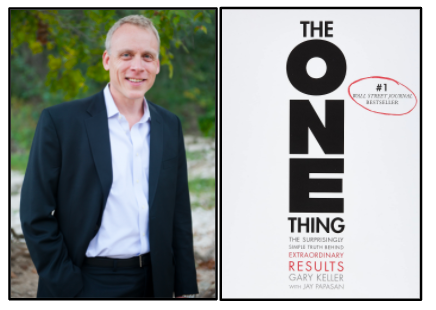
5) “The ONE Thing” by Keller & Papasan
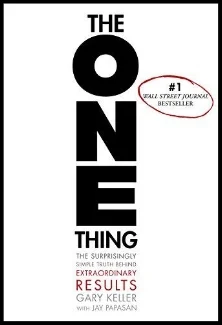
The title of this book sounds like clickbait, do this one thing to be successful, but this book is actually filled with an immense amount of valuable information.
The book provides advice backed by scientific studies, on how to be more productive and effective. It will teach you how to prioritize tasks, manage time, build good habits, use willpower properly, set goals and more. The book also debunks popular myths such as multitasking being great–which it is not–and that being busy is good–also not true.
The authors also provide readers with additional tools and information at their website here. I highly recommend reading this book if you want to be more productive and efficient in both your professional and personal life.
4) “The Third Door” by Alex Banayan

This book is filled with a lot of great business advice, but it’s also an amazing story. As a college student, the author hacked The Price Is Right and used the prize money to fund his quest to learn from the world's most successful people.
The author takes readers on a journey of how he chased Larry King in a grocery store, waited in a bathroom to talk to Tim Ferriss, used his network to meet with Bill Gates, and dozens more of the world's most successful people.
There’s also a lot of great advice from icons such as how Tim Ferriss cold-emails people, how Jessica Alba stays focused on her business, and how Pitbull believes people should always stay an intern.
The book was released this month and is already a national bestseller. The author has a very Tim Ferriss-like vibe and combines business with life advice. The book is less than 300 pages long and is quite addicting to read. Highly recommend it to college students, entrepreneurs, and people interested in business.
3) “Man’s Search for Meaning” by Viktor Frankl

After reading this book I recommended it to several people and every one of them has told me the book was incredible. What makes it such a great read is that the book constantly shifts from being absolutely amazing to drastically depressing and is an honest and truthful story.
Why?
The author retells his life at Auschwitz and several other concentration camps and talks about the horrible conditions he and other prisoners had to endure to survive. From working 10+ hours a day of physical labor in freezing temperatures to constantly walking past dead bodies.
At the same time, this book is a story of the human’s determination to live and Frankl teaches readers several important lessons about how humans can be the worst of people and also the nicest of people. The best part is that Frankl was a psychiatrist so he could really analyze both the prisoners and the guards and get to the center of what makes humans ticks and why they do what they do. From his experience, Frankl discovered life lessons that would have been near impossible to find anywhere else.
2) “Extreme Ownership” by Willink & Babin

“Extreme Ownership” was initially released as a leadership and management guide to help corporate leaders, but this book is so much more than that. The lessons learned from this book can be applied to almost every aspect of life.
For example, the title of the book refers to a trait that Willink and Babin believe all great leaders possess–the ability to go above and beyond by taking extreme ownership and responsibility of the situation.
People that take extreme ownership don’t go around blaming others for negative outcomes, they ask themselves what they could have done to prevent things from going bad or think about what they’ll do from now on to prevent the same negative event from happening in the future.
For instance, instead of blaming an employee for always being late with their work, perhaps you should train the employee better. If your wife calls you and says she forgot to pick up the kids from school, don’t yell at her and call her dumb–that doesn’t help anyone nor does it help the situation. Instead, teach your wife how to set reminders on her phone or teach her to write out her schedule the day before so she remembers.
If you’re a manager or leader then this book should be required reading for you. And even if you aren’t, there are a lot of great life lessons people can learn from reading this fantastic book.
If you’re interested in leadership, management, and lessons from war, check out Jocko’s podcast here.
Honorable mentions:
These are books that I’d highly recommend reading when you have some free time. Although they didn’t make it into the top five, these books are still spectacular and you can learn a ton from reading them.
Learn more about the books here:
Get the books here:
1) “12 Rules for Life” by Jordan Peterson

Every now and then you read a book that literally changes your life, for me, this is that book.
It’s hard to start talking about “12 Rules for Life” because so many aspects of this book are incredible. The book pulls interesting lessons from psychology, philosophy, anthropology, and sociology. It also talks about how religion, literature, and Disney movies have similar life lessons and how each one can teach people about the proper way to live a good life.
Nothing I write can do the book justice, but I will attempt to convey its main message.
Life is suffering. It is. There’s that old saying that the only thing guaranteed in life is death and taxes, but there will also be a lot of pain and suffering. So what can you do? Why is life worth living?
This leads people to believe in nihilism. People of this mindset believe life is pointless so nothing matters and they might as well commit suicide, take out their anger at the world through murder or other crimes, or just live life with no goal because it doesn’t matter.
Peterson argues that this is a horrible, horrible way of thinking and living life. It is the easy path to self-destruction and atrocities. Just because life is hard, it doesn’t mean we should get rid of it all together.
Instead, since life is hard, let’s try to make ourselves as strong as possible and as competent as possible to deal with the challenges life throws our way.
To do so, Peterson teaches readers how to stand up for themselves, how to take care of themselves and others, and several other lessons that teach people how to be a better person overall. If you want to change your life for the better, read this book.
Peterson also has a YouTube channel where you can watch his college lectures for free. He has over 1.2 million subscribers and also puts his interviews on his channel here.
If you enjoyed this article, consider supporting our site or signing up for our monthly newsletter. Thank you!
Reader freebies:
Enjoying A&B?
Consider donating to keep the site up and running!