How a Bike Crash Led Me to Create a Book Blog With 600k+ Page Views
Read about how a traumatic bike crash led me to create a book blog with 600K+ pageviews.
A Dark Beginning:
Why did I start a book blog?
Simple, I got into a mountain biking accident and separated my shoulder.

Smiling and enjoying the day, an hour or so later things went south.
It was the last bike run of the day and I could see the end of the trail. What I didn’t see, was a ditch that sent me flying only to be brought down by gravity and have my body tumble down the hill. The helmet I was wearing protected my head, but I didn’t have much protection for the rest of my body.
After blacking out for a few seconds, I looked at my arms and legs and noticed only a few small cuts. “Sweet, just a couple of small scratches,” I thought to myself. However, when I walked over to my bike and tried to pick it up, I couldn’t even lift it halfway.
I knew something was off but I couldn’t pinpoint what was wrong. So, I hobbled down the mountain to the emergency medical room.
The worker there didn’t do much. He put my arm in a makeshift sling and told me to head to the hospital. “This can’t be good,” I remember saying to myself.
A few hours later and some x-rays later, I would learn that I had suffered an acromioclavicular joint separation or AC separation.
(I swear this story is related to starting Alex & Books, just bear with me for a bit longer.)

At the emergency medical room a few minutes after my crash.
This injury proved to be one of the most painful events of my life, both physically and mentally.
Physically, I was temporarily handicapped. I couldn’t put on my socks by myself (try putting on a sock with one hand, it’s harder than it sounds), had major pain anytime I sneezed or moved my arm to put on clothing, and basically needed help with everyday simple tasks.
The real challenge, however, came from the mental pain. I started to feel depressed because I couldn’t do many of the activities that I loved. Basketball, lifting weights, snowboarding, swimming, and practically every other sport were out of the question.
Since I couldn’t do much of what I loved, I spent most of my time at home. For the first couple of weeks, I played a ton of video games, watched movies, and spent hours on Reddit. These activities brought me pleasure, but not fulfillment. After about three weeks of these indulgences, I started to feel empty inside–as if I was wasting my life.
A Passion for Books:
Prior to the biking incident, I rekindled my passion for reading books.
I had always loved reading in elementary and middle school, but the passion almost burned out from a series of bad English teachers in high school, and, let’s be honest here, like most teenage boys, I spent most of my time focusing on sports, video games, and girls.
However, once in college, I came to the realization that every professor taught their respective subject with, you guessed it, a book.
Whether the professor had 5 years of experience in a subject or 25, they still assigned books for students to read. Some professors even assigned their own books as reading material. “Why make students read books?” I thought to myself.
The answer: Books summarize decades of knowledge from one or more experts into a few hundred pages. In other words, someone in the world may have dedicated 30+ years of their life researching a particular domain and becoming an expert in it, and then decided to condense all of the most valuable lessons they’ve learned into a book that is available for anyone to buy and read.
This notion of books containing decades of wisdom from experts sparked my fascination with reading. It didn’t matter what subject I was interested in, be it psychology, entrepreneurship, writing, dating, productivity, etc, there was a book out there written by an expert in that area and I could learn almost everything they knew for about $10 and a few hours of my time.
When I wanted to understand body language, I read What Every BODY Is Saying by Joe Navarro
When I wanted to learn about startups, I read Zero To One by Peter Thiel
When I needed some life advice, I read The Emperor’s Handbook by Marcus Aurelius
This combination of having a ton of free time and a rediscovered passion for books is what finally pushed me to take the leap and do something I had never done before–create a book blog website.
I spent roughly two months learning how to use Squarespace and wrote a few articles for the site. You can read my first three articles here (warning: it isn’t my finest writing):
Launching A&B:
After about three months of work, I officially launched the site on March 13, 2017. I also created a few social media accounts.

Alex & Books website traffic and Instagram account (thank you for your support everyone!).
Since starting Alex & Books, I’ve read 200+ books, written nearly 100 articles, and received over 600K+ page views on the site. I’ve also been fortunate to meet several of my favorite authors along the journey.

Clockwise starting from top right: Ryan Holiday, Jocko Willink, and Simon Sinek.
The Story continues:
This journey is far from over.
Almost three years later, my passion for books is burning brighter than ever before. I have more books in my library that I haven’t read than I do books that I’ve completed. I even sold my Xbox and got rid of my TV to read more books.
Books have changed my life for the better in more ways than I could’ve ever imagined. Who would have thought that some words printed on pieces of paper would make me more productive and less distracted, better at socializing and dating, elevate my communication and writing skills, and give me a more valuable education than any educational institution I attended.
Now, my mission is to share the lessons learned from these incredible books and encourage as many people as I can to read more.
Although I’m not certain where this mission will take me, it’s still only the beginning and I hope you will join me on this journey. Just like many of the great books out there, the best part is often in the middle.
Read on!
Sincerely,
Alex Wieckowski


Jordan B. Peterson Shares The 5 Books That Had The Biggest Influence On Him
Jordan Peterson is a Canadian clinical psychologist, professor of psychology and bestselling author.
At the Q&A, I asked Dr. Peterson which 5 books influenced him the most.
Read more to find out his answer!
Last week I had the incredible fortune to meet the one and only Dr. Jordan B. Peterson–a Canadian clinical psychologist, professor of psychology and author of the bestselling book “12 Rules for Life.”
Peterson has been a virtual mentor of mine and was one of the key reasons I started Alex & Books. He also influenced me to stop wasting time on TV, video games and other distractions (Peterson has a great video on that topic here).
I met Dr. Peterson while he was in NYC for his book tour.
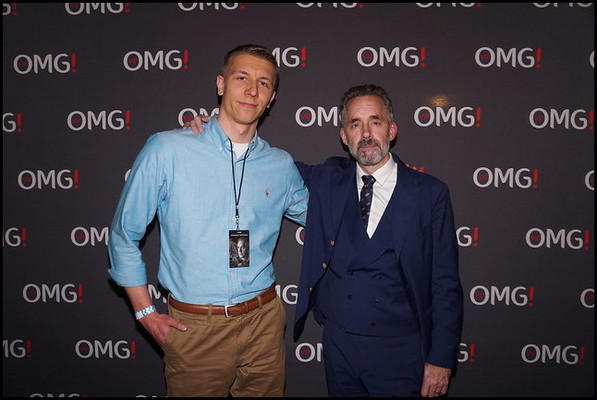
Incredibly humbled to have met the one and only Jordan Peterson.
Since I bought the VIP meet and greet tickets, I had the chance to briefly speak with Dr. Peterson, pose for a picture and participate in the VIP Q&A session (read about the full event here).
About 100 people stayed for the VIP Q&A, it only lasted about 20 minutes since Peterson had a plane to catch. Four people had the chance to ask him a question, luckily I was the fourth and last person he picked.
I wrote down my question on my phone earlier so I wouldn’t stutter or go blank if I got the chance to ask a question.

Jordan Peterson during the VIP Q&A, about 100 people stayed for this part of the show.
I asked:
You recommend over 100 books on your website, so I wanted to ask if you could apply the Pareto Principle to that list and share the 5 books that had the biggest influence on you?
Here is Peterson’s answer:
1) The Gulag Archipelago by Aleksandr Solzhenitsyn

It likely isn’t a surprise for JBP fans to learn that Dr. Peterson ranked “The Gulag Archipelago” as the No. 1 book that influenced him. Peterson constantly shares stories from the book during his lectures, as well as talking about Solzhenitsyn’s other great books. Peterson even wrote the foreword to the new 50th anniversary edition of “The Gulag Archipelago.”
Book Summary:
“The Gulag Archipelago” is a three-volume, non-fictional text written by Russian writer and historian Aleksandr Solzhenitsyn. It was first published in 1973 and covers life in the gulag (the Communist Soviet forced labour camp system) through a narrative constructed from various sources including reports, interviews, statements, diaries, legal documents, and Solzhenitsyn's own experience as a gulag prisoner.
2) Crime and Punishment & The Brothers Karamazov by Fyodor Dostoevsky (Tie)


Peterson said “Crime and Punishment” along with “The Brothers Karamazov” by Fyodor Dostoevsky would tie for second place as the books that most influenced him. Peterson is constantly referencing Dostoevsky’s work during his lectures and has called Dostoevsky one of his favorite authors and recommends reading all five of his great novels.
Book Summary:
“Crime and Punishment” focuses on the mental anguish and moral dilemmas of Rodion Raskolnikov, an impoverished ex-student in Saint Petersburg who formulates a plan to kill an unscrupulous pawnbroker for her money. Before the killing, Raskolnikov believes that with the money he could liberate himself from poverty and go on to perform great deeds. However, once it is done he finds himself racked with confusion, paranoia, and disgust for what he has done. His moral justifications disintegrate completely as he struggles with guilt and horror and confronts the real-world consequences of his deed.
Book Summary:
“The Brothers Karamazov” is a passionate philosophical novel set in 19th-century Russia, that enters deeply into the ethical debates of God, free will, and morality. It is a spiritual drama of moral struggles concerning faith, doubt, judgment, and reason, set against a modernizing Russia, with a plot which revolves around the subject of patricide. Dostoevsky composed much of the novel in Staraya Russa, which inspired the main setting. Since its publication, it has been acclaimed as one of the supreme achievements in world literature.
3) The Road To Wigan Pier by George Orwell

Peterson ranked “The Road To Wigan Pier” as number three and although he didn’t add why this book influenced him, Peterson has talked about this book in his lectures and said “He would highly recommend this book” and called it “A truly great book” in a Facebook post.
Book Summary:
“The Road to Wigan Pier” is a book by the British writer George Orwell, first published in 1937. The first half of this work documents his sociological investigations of the bleak living conditions among the working class in Lancashire and Yorkshire in the industrial north of England before World War II. The second half is a long essay on his middle-class upbringing, and the development of his political conscience, questioning British attitudes towards socialism. Orwell states plainly that he himself is in favor of socialism, but feels it necessary to point out reasons why many people who would benefit from socialism, and should logically support it, are in practice likely to be strong opponents.
4) Affective Neuroscience by Jaak Panksepp

Peterson ranked “Affective Neuroscience”as number four and commented that it is the best book on neuroscience that he’s read.
Book Summary:
“Affective Neuroscience” by Jaak Panksepp provides the most up-to-date information about the brain-operating systems that organize the fundamental emotional tendencies of all mammals. The book offers a comprehensive summary of the fundamental neural sources of human and animal feelings. The book includes chapters on sleep and arousal, pleasure and fear systems, the sources of rage and anger, and the neural control of sexuality, as well as the more subtle emotions related to maternal care, social loss, and playfulness. This book will be one of the most important contributions to understanding the biology of emotions since Darwins’ “The Expression of the Emotions in Man and Animals.”
5) The Neuropsychology of Anxiety by Gray & McNaughton

Fifth place belongs to “The Neuropsychology of Anxiety” by Jeffrey Gray and Neil McNaughton. Peterson said that this book was fascinating but also incredibly dense and each chapter would require the reader to take time to soak in all of the information. He added that it would take the average person probably a year or so to read, and even with Peterson’s background in psychology, he said it took him over 6 months to finish reading.
Book Summary:
“The Neuropsychology of Anxiety” first appeared in 1982 as the first volume in the Oxford Psychology Series, and it quickly established itself as the classic work on the subject. This completely updated and revised edition is essential for postgraduate students and researchers in experimental psychology and neuroscience, as well as for all clinical psychologists.
To summarize, here are the 5 (or technically the 6) books that had the biggest influence on Dr. Jordan B. Peterson:
Thank you everyone for reading my article, I hope you’ve found it helpful!
If you’re a fan of Jordan Peterson, I would definitely recommend going to one of his events, and for those who haven’t yet read Peterson’s book, I would highly recommend doing so.
You can get it here.

A few related articles:
What Dr. Peterson Got Right & Wrong About “A Billion Wicked Thoughts”
6 Profound Quotes from "12 Rules for Life" by Jordon Peterson
"12 Rules for Life" by Jordan B. Peterson -Book Review & Summary
Learn more about Jordan Peterson here:
If you enjoyed this article, consider supporting the site or signing up for my monthly newsletter. Thank you!

Meeting Jordan B. Peterson & "12 Rules for Life" Lecture Recap
Jordan Peterson is a Canadian clinical psychologist, professor of psychology and bestselling author.
I had the opportunity to attend Peterson’s “12 Rules for Life” book tour and meet Dr. Peterson.
Here is a recap of the event!
Dr. Jordan B. Peterson, a Canadian clinical psychologist, a professor of psychology and bestselling author of “12 Rules for Life”, has played an important mentorship role in my life.
His lectures teach valuable lessons such as the importance of responsibility, how to find meaning in life, the differences among human personalities and genders, how to understand ancient stories (Biblical and other classic tales) and much more.
When I found out that he was coming to NYC as part of his book tour, I jumped at the chance to meet him. Fortunately, I was able to buy a ticket before the event sold out.
“12 Rules for Life” Lecture
At the event, people could buy JBP merchandise such as posters and books. However, there were no signed copies for sale, instead, Peterson had signed a small piece of paper that was given to anyone who bought a copy of “12 Rules for Life” for $28.
The event started around 8 p.m. with Jordan Peterson’s daughter Mikahlia coming out on stage and talking about her father. She mentioned that neither her nor Dr. Peterson could have ever imagined that Dr. Peterson would be traveling the world to give lectures about meaning and responsibility to thousands of people.
After being introduced by Mikahlia, Dr. Peterson walked onto the stage and was greeted with a standing ovation.

Dr. Jordan Peterson takes the stage in NYC.
For about an hour and a half, Dr. Peterson elaborated on several lessons from his book. The talk was only slightly different from the hundreds of hours of lectures you can find on his YouTube channel, but it was a completely different experience seeing him in-person and being literally only a few feet away from him.
The audience remained remarkably respectful throughout the talk and there were no protestors or hecklers. Everyone was captivated by Peterson while he discussed the importance of responsibility, taking care of yourself and many more topics.

Peterson at the Beacon Theatre in NYC.
Lecture Takeaways
Two points that really grabbed my attention was when Peterson talked about the difficulty of having good friends, and suffering.
Good friends are people who will tell you the truth when you don’t want to hear it but need to hear it. Although this will hurt at times, it is better to know the truth and act on it than to be friends with people who turn a blind eye to each others shortcomings.
A bad friend will ignore your drinking problem as long as you ignore their smoking problem and both of you will pretend things are fine as if not talking about a problem will make it go away.
This is why it is so easy to be friends with bad influences, because they don’t point out your faults and make you feel that it is okay to not fix your faults.
A good friend however, will tell you that you need to stop getting drunk every weekend because it is bad for your health and unproductive.
A good friend will expect more out of you and push you to reach your full potential in life.
Having good friends is hard and challenging, but it is much better than surrounding yourself with people who ignore their problems and avoid responsibility.
The second point that stuck with me is Jordan Peterson’s classic line of “Life is suffering.” No matter what, you will suffer throughout your life. Even if somehow you manage to avoid almost all suffering in life, you still die in the end. If that’s the case is life worth living?
Yes, just because the journey has an fixed ending, it doesn’t mean the journey is pointless.
Everyone should try to make their life journey as positive as possible.
This means taking on personal responsibility to improve your life.
By doing so, you improve your life, the lives of those around you and possibly the lives of future generations.
No one knows whether Heaven or Hell exists, but we do know Earth exists and everyone of us has the power to make Earth a little more like Heaven or a little more like Hell–let’s go with Heaven.

Mikhaila Peterson and her father Dr. Peterson.
Dr. Peterson finished talking around 9:30 p.m. and then Mikhaila came back on stage to ask questions that were sent in by the audience. The Q&A ended around 10 p.m. and once again Peterson received a standing ovation as he left the stage.
Meeting Jordan Peterson
After the Q&A session, everyone left except for those with a VIP ticket. The VIP meet and greet started a little after 10 p.m. and went on till about 11 p.m. Approximately 150 people bought the VIP ticket to meet Dr. Peterson (myself included).
Each person got to speak with Peterson for about 10-15 seconds and get a picture with him. Unfortunately, Peterson wasn’t signing any books at the event. Many fans gave Peterson gifts such as books or custom artwork.
When it was my turn to meet Peterson, he greeted me with a firm handshake, a warm smile and asked me my name. I told him and thanked him for all his great work. I talked about Alex & Books, how he inspired me to start the site and handed him a few of my bookmarks.
He smiled and was glad to hear that I had been spending my free time reading books and educating myself. He wished me good luck with my site and said to keep at it. I thanked him again, posed for a picture and took a seat.
Incredibly humbled to have met the one and only Jordan Peterson.
The meet and greet ended at 11 p.m. and then the VIP Q&A session started. The session only lasted about 30 minutes since Peterson had a plane to catch. Only four people got the chance to ask him a question, luckily I was the fourth and last one.
I asked him which 5 books out of his 100+ book list influenced him the most, read his answer here.
Peterson also shared that he will be releasing his next book “12 More Rules for Life” in early 2020 and will be doing more Biblical lectures during late 2019/early 2020.
He also mentioned that he had finished a podcast with Milo Yiannopoulos and Joe Rogan, and will be releasing those soon.
The VIP Q&A ended around 11:30 p.m.

My copy of “12 Rules for Life” and the VIP pass.
Conclusion
In total, the entire show lasted about 3.5 hours and aside from the VIP tickets being a bit pricey (I sold my Xbox to help pay for it) and Peterson not signing books, I don’t have anything negative to say about the event.
It was a great experience to see Jordan Peterson in-person instead of on YouTube and I was super lucky to personally meet and talk with him.
If you’re a fan of Jordan Peterson, I would definitely recommend going to one of his events. Keep an eye out for more of his shows here.
Thank you everyone for reading my article, I hope you’ve found it helpful! -Alex
If you haven’t yet read Peterson’s book, I highly recommend it. You can get it here.

Here are a few related articles:
What Dr. Peterson Got Right & Wrong About “A Billion Wicked Thoughts”
6 Profound Quotes from "12 Rules for Life" by Jordon Peterson
"12 Rules for Life" by Jordan B. Peterson -Book Review & Summary
Learn more about Jordan Peterson here:
If you enjoyed this article, consider supporting the site or signing up for my monthly newsletter. Thank you!

Books Bought in 2018 (and total cost)
In 2018 I read 38 books, but I actually bought 66 books.
Find out how much each book cost and how much I spent on books last year.
In 2018 I read a total of 38 books, but I actually bought 66 books. Almost all of the books I bought were used (to save money) and very rarely do I buy new books (with the exception of author events). However, even by buying second hand books, the total cost of books can add up.

My ever growing library.
Similarly to what I did last year, I decided to review all of my book purchases to find out exactly how much I've spent on books in 2018.
In 2017, I bought 52 books which totaled $414.61 or $7.97 per book. Let’s check out the stats for 2018.
Here is the cost of Every book I bought in 2018:
$7.98 Living with a SEAL: 31 Days Training with the Toughest Man on the Planet
$7.57 Nudge: Improving Decisions About Health, Wealth, and Happiness
$4.99 When I Stop Talking, You'll Know I'm Dead: Useful Stories from a Persuasive Man
$11.98 A Billion Wicked Thoughts: What the Internet Tells Us About Sexual Relationships
Book review: "A Billion Wicked Thoughts” by Ogas & Gaddam
$4.99 A Million Little Pieces
$9.48 The Paradox of Choice: Why More Is Less, Revised Edition
$10.95 How to Fail at Almost Everything and Still Win Big: Kind of the Story of My Life
$18.89 The Dichotomy of Leadership: Balancing the Challenges of Extreme Ownership to Lead and Win
$10.87 Subliminal: How Your Unconscious Mind Rules Your Behavior
Book review: "Subliminal” by Leonard Mlodinow
$4.00 The Doctor and the Soul: From Psychotherapy to Logotherapy, Revised and Expanded
$16.63 Tribe of Mentors: Short Life Advice from the Best in the World
$12.57 Discipline Equals Freedom: Field Manual
Book review: "Discipline Equals Freedom" by Jocko Willink
$6.04 Tao Te Ching
$10.31 How to Read a Book: The Classic Guide to Intelligent Reading
$10.95 The Road to Wigan Pier
$10.19 The Alchemist
$7.96 The Undiscovered Self: With Symbols and the Interpretation of Dreams
$19.19 The Director's Manual: A Framework for Board Governance
$5.99 The Truth about Leadership: The No-fads, Heart-of-the-Matter Facts You Need to Know
$8.79 The Monk Who Sold His Ferrari: A Fable About Fulfilling Your Dreams & Reaching Your Destiny
Book review "The Monk Who Sold His Ferrari” by Robin Sharma
$9.56 The Aquariums of Pyongyang: Ten Years in the North Korean Gulag
A great book about life in North Korea: "The Aquariums of Pyongyang"
$11.75 This Way for the Gas, Ladies and Gentlemen (Penguin Modern Classics)
$10.71 The Compound Effect
An excellent book, learn more here: "The Compound Effect” by Darren Hardy
$12.09 Unit 731 Testimony
A horrifying book but necessary to remember: UNIT 731: A Book About Evil and War Crimes
$3.00 The Acts of King Arthur and His Noble Knights: (Penguin Classics Deluxe Edition)
$4.99 The Fault in Our Stars
$8.94 Man and His Symbols
$3.00 Essential English for Journalists, Editors and Writers (Pimlico)
$4.44 Modern Man in Search of a Soul
One of my all time favorites, read more here: "Man's Search for Meaning" by Viktor Frankl
$10.47 The Book of Five Rings
$4.99 Rogue Warrior
$8.71 Smarter Faster Better: The Secrets of Being Productive in Life and Business
Book review: "Smarter Faster Better” by Charles Duhigg
$6.07 On Writing: 10th Anniversary Edition: A Memoir of the Craft
Book review: "On Writing" by Stephen King
Find Stephen King’s favorite books here.
$9.37 Writing To Learn
$7.44 The Sense of Style: The Thinking Person's Guide to Writing in the 21st Century
$10.39 The Power of Myth
Book review: "The Power of Myth" by Joseph Campbell
$7.70 The Dragons of Eden: Speculations on the Evolution of Human Intelligence
Book review: "The Dragons of Eden" by Carl Sagan
$7.49 Wild at Heart: Discovering The Secret of a Man's Soul
Book review: "Wild At Heart" by John Eldredge
$10.80 Make Your Bed: Little Things That Can Change Your Life...And Maybe the World
Book review: "Make Your Bed" by William McRaven
$6.97 Lolita
$9.75 The ONE Thing: The Surprisingly Simple Truth Behind Extraordinary Results
An excellent book about productivity and time management, read my takeaways here.
$4.33 The Forgotten Highlander: An Incredible WWII Story of Survival in the Pacific
A great book about POWs in WWII, read more here.
$16.67 Extreme Ownership: How U.S. Navy SEALs Lead and Win (New Edition)
Highly recommend this book, read my takeaways here.
$15.57 12 Rules for Life: An Antidote to Chaos
Highly recommend this book, read my takeaways here.
Bonus: 6 Profound Quotes from "12 Rules for Life" by Jordon Peterson
Total Cost: $ 493. 22
Interesting Figures:
Number of books purchased: 66
Average book price: $7.47
Most expensive book: $19.19 The Director's Manual: A Framework for Board Governance
(Of course the most expensive book is a college textbook…)
Least expensive book: $3.00 Essential English for Journalists, Editors and Writers (Pimlico)
Well there you have it, I spent a little over $493 on books last year.
Keep in mind that the cost listed does not include shipping. In total, I think it’s safe to say that I spent $500+ or so altogether.
It may silly to spend this much on books, but I consider books to be an investment, not an expense.
Instead of spending cash on cable, beer, drugs or other hobbies, I spend my money on books. All hobbies cost money, but very few will give you a positive return and improve your life.
That’s why I recommend more people should start reading books, you won’t regret it!
Before you go:
As you can see the cost of books adds up, throw in the cost of maintaining a website and it comes out to several hundreds dollars a year. However, I truly enjoy reading and writing and want to continue sharing awesome lessons and knowledge with everyone. Thus, I ask viewers to consider donating to help keep this site up and running, every dollar counts!
If I’m able to turn this into a full-time career, I’d be able to read a lot more books and share many more important lessons learned from books. I also promise to keep the site ad-free and strive to provide interesting and educational content.
If you’re not able to donate but still want to support the cause, sign up for our newsletter here and follow AlexandBooks on social media (Twitter, Instagram).
Thanks everyone! -Alex
*PS: The links on my website are Amazon affiliate links, Amazon pays me a small fee for each item purchased. Important Fact: It doesn't affect the price of your purchase at all and it helps keep this website up and running ad-free.*

Alex & Books Annual Review: 2018
Annual review of Alex and Books.
Read about the lows and highs of Year 2.
Best books, articles, recommendations & more!
Reflection and review of 2018

I’d like to say thank you to everyone who visited Alex & Books, I hope you have found this site to be both interesting and educational.
Running a book blog has proven to be quite difficult, it takes a lot more time and money then most people would think: there’s reading the books, reviewing them, writing about them, editing the articles, finding images, the list goes on…
But, it has also been an incredible learning experience!
Just as in life, there will always be ups and downs, however, the journey must go on. Now, let’s reflect and review 2018:
Here’s what’s been achieved This Past Year:
63 articles have been written (100+ articles in total).
Read 38 books & wrote over 30 reviews.
Created a list of book recommendations from famous individuals (Ernest Hemingway, Elon Musk, J.K. Rowling, Stephen King).
Created Alex & Books bookmarks and a new freebies page.
Here are The 10 Most popular articles of 2018:
If you want to read the very first article I posted, you can read it here.
Also, my most popular articles from previous years can be found here.
On the site there has been a total of:
36,200+ Visits
42,600+ Unique Visitors
57,100+ Pageviews
A 1,141% increase from last year!

Website stats from Jan. 1 - Dec. 31 2018.
Social Media Stats:
Instagram
Twitter
YouTube
Quora
A Few Things I Learned From 2018:
As your Website grows, Make changes
Building a website is hard, but the work doesn’t stop there. As Alex & Books has grown and more articles have been written, I needed to reorganize the site. I also experimented with different text sizes, styles and spacing to make reading easier.
I look forward to adding more interesting book-related pages to the site, such as famous book recommendations, and I have a few more things in the pipeline (I’m constantly looking for ways to improve the website so if you have any suggestions, you can message me here.)
What Gets Measured Gets Done
I’ve been tracking my daily habits (reading, exercising and writing aka R.E.W.) for a few months now. I keep a calendar and write out the letters R E W, and before going to sleep, I circle each letter if I completed the task.
It’s a simple, yet very effective method to track important habits.
For instance, I used to think that I was working out 5-6x every week. However, once I started tracking my workouts, I realized it was closer to 3 times a week. Now if I look at my calendar, I can see my weekly progress and make sure I hit my goal of exercising 5 times a week. One thing that helped me hit this goal was making a home gym (for free), read about it here.
Whatever habits you’re trying to achieve, make sure to track it everyday (either on paper, in an app or on your computer).
Blogging will not make you rich (Part 2)
Last year I made less than $10 from the site, I’m happy to say that this year I made much more, but it is still no where near to the point of becoming a full-time job.
Owning a domain name and operating a website costs around $200 a year. The cost of all of the books adds up to several hundreds of dollars as well. But then again, no hobby is free.
Making Reading (And Writing) A Daily Habit
Reading is still very much like going to the gym. There are times when you don’t want to do it and times when it gets boring, but once you do it every day for long enough, it becomes almost effortless to start reading.
That is why it is important to turn it into a habit.
When you make something into a habit, it doesn’t require much energy or motivation. You just do it. For example, I do most of my reading in the morning. I eat breakfast and start reading afterwards. The best time to read is also before bed, it’s a great way to unwind after a long day and it will keep you away from social media or other distractions that may cause stress or anxiety before going to sleep.
Now I just have to focus on making writing into a daily habit.
Brief Lessons Learned from MY favorite Books of 2018:
Humans can survive even the most horrendous conditions.
Tiny actions, done daily, can compound over time and lead to radical results.
Men and women literally think differently and have different core desires.
Who you know is just as important as what you know.
Take extreme ownership of your life and work, avoid blaming others.
About 80% of your results come from 20% of your work, focus on that one thing.
Train the body and the mind, use each hour of the day wisely.
The more discipline you have in life, the more freedom you’ll have.
Habits make up your life, form good habits and you’ll have a good life.
Don’t suffer more than you need to, make yourself as competent as possible.

Thoughts on 2019
My goal for 2019 is to read and write about 52 books (one book every week).
Aiming for 10K+ page views each month.
Experiment with different writing styles and deeper articles.
Create book-related videos.
Reading all of these books, I learn over and over again that I know very little about the world and that I’m not an expert, nor do I have all the answers. However, I will continue to learn and share important lessons from great books and give (hopefully helpful) advice along the way. As always, it is a privilege to write for you.
To every single person that has read this article or any of my work, thank you.
Sincerely,
Alex W.
Read on!
If you’ve found my work helpful, please consider supporting Alex & Books.
Ways to support a&B

As mentioned earlier, running a website costs a lot more than I thought. Add in the cost of books, and the expenses of this site total to roughly $500+ a year.
If you found this site useful and would like it support it, the best way of doing so would be to give a contribution.
Every dollar will go towards this website and even small donations help.
For people who can't donate, the second best way to support is by signing up for the monthly newsletter. People who sign up will get access to exclusive articles and will be entered for book giveaways.
Freebies For You!
(If you don't see any images try turning off ad-blocker)
*The links above are affiliate links that help support this site with no additional cost to yourself*
If you want to stay up to date with the books I'm currently reading and get behind the scenes pictures, follow me on Instagram!




3 Reasons Why You Should Get A Home Gym
Would you pay $80 to get 52 days of extra work outs and 17 hours of free time?
Learn how getting a home gym improved my life and why you may want to get one yourself.
Having a home gym has greatly improved my life, here are a few reasons how it can benefit you too.
There are countless studies showing the wide range benefits of exercise, everyone knows this. Everyone also knows that they should be exercising every day for 30 minutes or so. At yet, not everyone does (myself included, no one is perfect) because life can get in the way.
I don’t have enough time today.
I don’t feel like going to the gym.
It’s too cold/hot out today.
It takes too long to get to the gym.
The gym is closed today.
There’s no shortage of excuses.
But, there’s actually a solution to ALL of these issues.
Sounds too good to be true? It’s really not.
The answer is a home gym.
And no, I’m not talking about having one of those fancy home gyms where an entire family can live in (like the one the Rock uses, although it is an awesome gym that goes with him wherever he shoots movies).

Dwayne “The Rock'“ Johnson’s traveling/home gym.
I’m talking about having a pull-up bar and a couple of dumbbells.
If you can afford a squat rack that you could also use to deadlift or bench press, or have a Body Solid home gym, that’s great. But, for the average person who doesn’t have a lot of extra space in their home or is short on cash, all you really need is a workout bar and some dumbbells.

You don’t need to spend $2,995 on fancy equipment like this to create a decent home gym.
Here’s a picture of my home gym.

My “home gym.”
That’s right, it’s just an iron gym workout bar, dumbbells, and a t-shirt that I lay on for ab workouts.
How much did this home gym cost me?
In total, $0. Well if you include the shirt it was $15, but the equipment was free.
My neighbors were moving apartments and made a big pile of things they were going to throw out. I saw the workout bar and figured I’d save it from going to the junkyard. The same thing happened with the dumbbells expect my dad got them from someone else that was moving out.
I’ll admit I got lucky, but even if you have to buy the workout equipment it will cost less than $80.
The workout bar goes for $25 and you can use it to do pull ups, chin ups, push ups and crunches. With this bar alone, you can work out your chest, arms, and abs–three very important body parts.

Here are a few exercises you can do with the iron gym bar, it goes for about $25 (link).
I’d also recommend getting some dumbbells–the ones with adjustable weights (you can add or subtract weights to the bar instead of buying multiple dumbbells of different weights).

Together, this will cost you about $80 for the bar and weights, but it’s well worth and here’s why. Having a home gym eliminates all of the excuses for not working out.
Reason 1: Convenience
The gym’s too far?
No worries, the home gym is in the next room.
Too cold or hot outside?
No problem, you can work out indoors and adjust the room temperature.
Gym's closed?
All good, the home gym is always open.
Don’t have enough time to workout?
Good thing the home gym is here and you don’t have to commute to and from a gym.
To make it even better, you can get some chores done around the house while you recover between workout sets. In my last workout, I managed to sweep all the floors in my apartment and dust the rooms as well.
At your home gym, you can also play whatever music you want or listen to podcasts or just workout without any noise or distractions found in a regular gym.
Reason 2: You’ll Workout More
Before I had a home gym, I only worked out 3 times a week. I’d do chest, legs and back. Since I hit the main body parts, I’d often slack off when it came to working out other body parts.
However, with the home gym, I consistently workout my arms, shoulders and abs, as my 4th workout of the week.
One additional workout a week may not seem like much, but it does add up if you do the math. Going from working out 3 times a week to 4 times is a 14% increase in my weekly workout. That still seems little, so here’s some bonus math.
1 additional workout every week.
There are 52 weeks in a year.
That’s 52 additional workouts every year.
One extra workout a week quickly adds up to 52 extra workouts a year. Imagine how much stronger and in-shape you’ll be with 52 extra days of exercise.
Reason 3: You’ll Save A Lot of Time
You will save time from not having to commute to and from the gym. Let’s say it takes the average person 10 minutes to get to the gym, so 20 minutes round trip.
Multiply 20 minutes by 52 weeks and you’ll get 1,040 minutes.
Divide that by 60 minutes and you’ll get 17.3 hours.
That’s right, you spend 17 hours a year just going to and from the gym.
That’s almost a full day that can be spent with friends, family, reading books or growing your business.
So who wouldn’t want to save 17 hours and get 52 extra days of workouts every year?
I know I would.
Two books that I’d recommend reading related to working out are:


The first book is by a book about weight lifting and diet by the legendary Arnold Schwarzenegger, and the second book is by a Navy SEAL who teaches people how working out and having more discipline actually leads to a better life.
In exchange for a few bucks and a couple hours, a book will give you an enormous amount of valuable information that can help you in life. It’s practically high-robbery. So take advantage of this and read as much as you can.
If you want to check out my list of recommended books, you can find that here.
If you enjoyed this article, consider donating to our site or signing up for our monthly newsletter. Thank you!

Work Looks Like An Enemy, But It's Actually A Friend
Work may sometimes seem like an enemy, but it is actually be your friend.
In this article, I talk about a personal experience and what it taught me about work and life.
Life is all work, but that may not be a bad thing.
A few days ago, my friend and I were driving to a friend’s house when we got into an honest conversation about life.
We talked about how, as we get older in life, more and more problems pile up that require us to work more.
Right now, we have to deal with working to supporting ourselves, but we also have a lot of other things, such as:
work on exercising and eating well to take care of our health
work to keep our apartments clean by vacuuming, doing the dishes, dusting and other chores
work to keep clean our cars clean and running well
work to maintain relationships with friends, family and significant others
work to take care of a pet
even planning a vacation often takes a lot of work
And more things will add on in the future.
Soon we’ll have all of that and work on supporting a family, work on raising children, work on cleaning up after kids, work on finding a place to live, work on taking care of our parents in old age and so on.
It’s just work, work, and more work.
But, here’s the thing, work is really the best, and perhaps the only option we have.
Take working out for example.
For the past few years, I’ve been working on getting in shape. This means lifting weights 3 to 4 times a week.
Now working to motivate yourself to get to the gym and working on actually lifting the weights is already difficult, but then try adding in injuries.
About two years ago, I finally achieved my goal of bench pressing 225 pounds, something I’ve been working on for a while. Then one day September day, I went mountain biking with a friend. It was a perfect sunny day. We had a lot of fun and we already talking about coming back sometime.
Then on the last run down, I hit a ditch and went flying about 15 feet down the mountain.

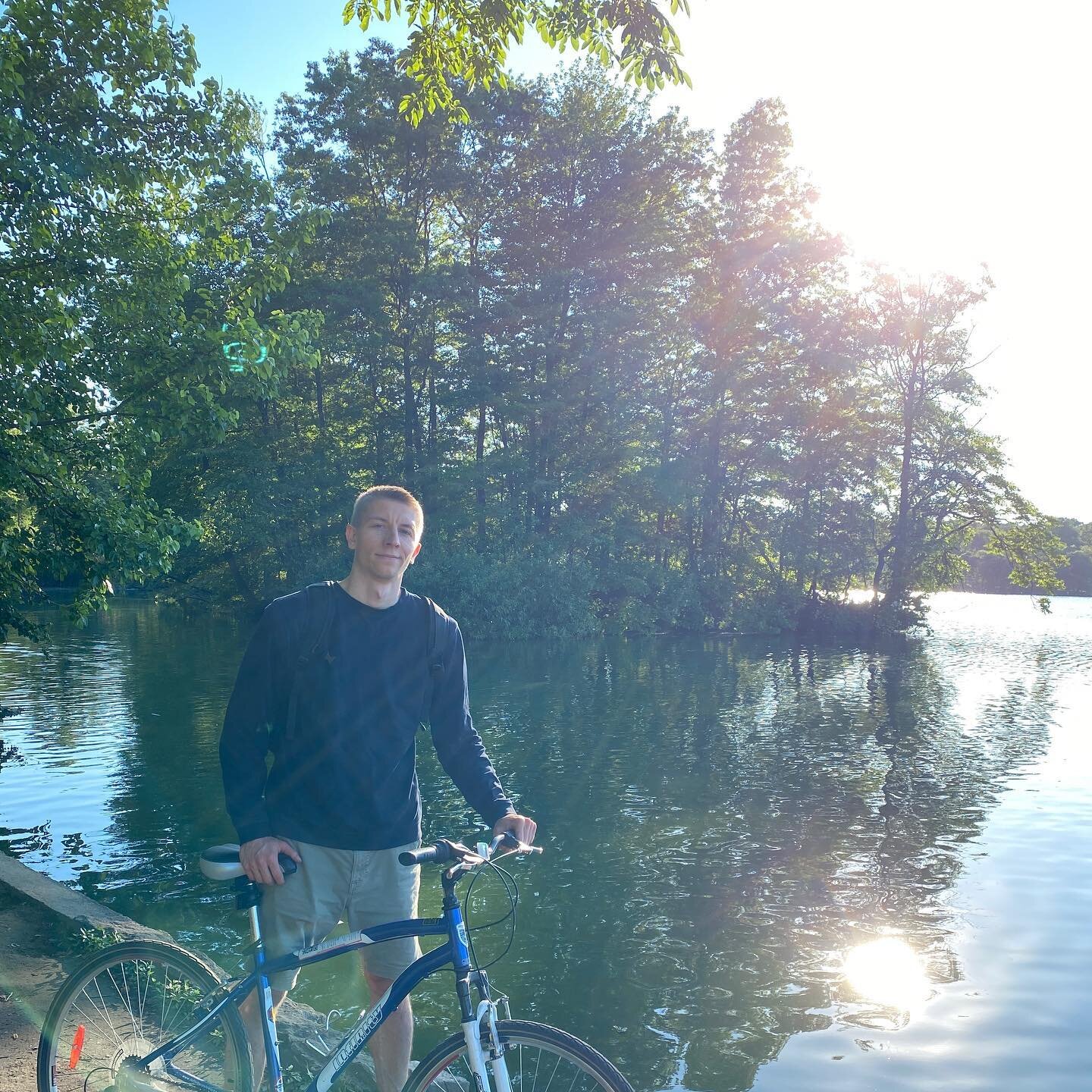
Picture taken a few hours before my crash.
When I opened my eyes, my head was in the dirt. I tried to pick up my bike with my right arm, but I couldn’t. Luckily my friend came to help me out and walked me down the mountain. I went to the first-aid office, but was told to go to the hospital.
There I learned I separated my shoulder. After the adrenaline wore off, anytime I moved my arm, the pain felt like a thousand needles going into my arm.

Post mountain-biking picture. I’m smiling because I couldn’t feel anything and thought I simply sprained my arm. I would soon learn that it was a bit worse.
Here I am, trying to get in shape and putting in the work to do so by constantly going to the gym, and I decide to have some fun and go mountain biking and now I have to deal with being injured and work on recovering.
For months I didn’t work out, which caused me to lose a lot of my strength and muscle mass that I spent years building. I also lost a lot of weight, about 20 pounds.
I was not able to lift weights or play basketball, two of my favorite activities.
Although it sucked (a lot), quitting or just doing nothing wasn’t going to do anything for me. Nor was complaining about life, being negative or angry at life.
I had only one option, and it was the best option to take: To work.
I worked on healing my shoulder by constantly icing it, taking multi-vitamins and supplements to help with healing, going to a physical therapist and actually doing the daily exercises he recommended.
It took me about a year to get to the point where my shoulder felt pain-free to move around. But, when I returned to the gym, I lost almost all of my strength. My bench had dropped from 225 lbs to 95 lbs.
It took another year of constantly hitting the gym and slowly building up my strength week after week, before I was finally able to bench 225 pounds again.
Since then, I’ve also hit new personal records in deadlifting, shoulder press, chest press, and other exercises.
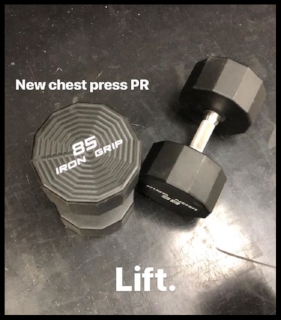
I recently hit a new chest press PR (personal record). When I first got back to the gym I could only do 25 pounds.
Now I could have used my shoulder as an excuse to never work out again or say I’ll never be as strong as I was before, but that wouldn’t have done anything for me.
Even today, injuries continue to happen. I had a go to a chiropractor for a back injury after someone elbowed me during a basketball game and I’m currently dealing with lateral epicondylitis (better known as tennis elbow).
But quitting isn’t going to help. Instead, work will: working on recovering and learning from my injuries, working on stretching, and working on lifting with proper form.
So although work can sometimes seem like a bad thing, it isn’t. Working to have a clean room is better than not working and having a dirty one; working on maintaining relationships is better than doing nothing and being all alone; working to build a good life is better than doing nothing and living a bad one.
Of course, when things go south in life work may seem like the last thing you should do, but give it a try. Push through, and get to work on making things better.
Two books that I’d recommend reading if life seems too difficult are:


The first book is by a well-known psychologist that talks about how changing your perspective can change your life, and the second book teaches people how working and having more discipline in life actually leads to more freedom.
In exchange for a few bucks and a couple hours, a book will give you an enormous amount of valuable information that can help you in life. It’s practically high-robbery. So take advantage of this and read as much as you can.
If you want to check out my list of recommended books, you can find that here.
If you enjoyed this article, consider supporting our site or signing up for our monthly newsletter. Thank you!

Meeting Jocko Willink & Leif Babin
Last week, I was fortunate to meet Jocko Willink & Leif Babin
The two are former Navy SEALs turned business consultants and authors
Read my story of how I met these two AWESOME guys
How I Met Jocko Willink & Leif Babin
I’ve been a big fan of Jocko and Leif ever since I read their book “Extreme Ownership.” Every now and then you read a book that is so impactful it literally changes your perspective on life, and this book did just that. If you haven’t read it, you can read my book review here and a separate article about it here.
I’ve been following Jocko and Leif on Twitter ever since I read their book and noticed that they were going to do a book signing event to promote their new book “The Dichotomy of Leadership.”

The book signing image Jocko tweeted out.
Since the two were only doing a few meet and greet events, I knew I had to attend. So when September 27th came, I drove an hour and a half to the Hilton Garden Inn at Staten Island. The venue was packed with people; I’d say there were around two or three hundred people. Interestingly, a lot of young kids were there as well.
I recorded part of the event; unfortunately, I only had my phone so the image and audio quality isn’t the best, but I figured something was better than nothing.
After Jocko and Leif were done speaking, there was a quick Q&A session. After that, it was the moment everyone had waited for–lining up to personally meet Jocko and Leif and have their books signed.
The line was incredibly long, I waited about an hour till I got to the front, but Echelon Front later tweeted that the last person had waited 3+ hours on the line to meet the two authors.
Here are a few pictures from the event!

Getting my books signed by Jocko while talking to Leif. Check out the huge line in the background.
When I got to the front of the line, Jocko greeted me with a firm handshake and I handed him my books. I then shook hands with Leif. These guys were super nice and humble, they asked me what I learned from the books and were glad to see I was getting after it.
I then took a picture with them, shook their hands again, thanked them for their work and moved along so others could get their chance to meet these two great men.
I brought “Extreme Ownership” and “The Dichotomy of Leadership” to the event.

Picture of my signed books.
If you haven’t read any of Jocko’s books, here are three that I HIGHLY recommend reading (you can get the book by clicking on the images):


“Extreme Ownership” focuses on leadership and taking responsibility in business and life.
“Dichotomy of Leadership” is a deeper dive of EO and focuses more on the balance leaders must have in business.
“Discipline Equals Freedom” focuses on motivating people to overcome obstacles, reach goals, fight weakness and procrastination, and Jocko’s personal workouts from beginner to advanced athletes.
Jocko has also written a couple books for kids. Although I haven’t personally read these books, they have received high remarks and reviews from a ton of people online.


If by any chance Jocko or Leif are reading this, just want to say it was awesome meeting you guys and thank you for all the incredible work you’ve done. I wish you all the best with Echelon Front and I hope you continue to write great books!
For just a few dollars and a couple hours, books can give you an enormous amount of valuable information that can help you in life. It’s practically high-robbery. So take advantage of this and read as much as you can.
If you want to check out my list of recommended books, you can find that here.
If you enjoyed this article, consider supporting our site or signing up for our monthly newsletter. Thank you!

An Update To Alex and Books Readers
Hi everyone! Here is an update on what’s been going on
From Key lesson posts to YouTube videos
Plus enter for book giveaways!
Hello everyone, Alex here!
Just wanted to give an update on everything that has been going on. For starters, I’m back in grad school, but I will still work on releasing a new article or video each week.
Here are some of the most popular recent articles:
Also, here are three books that I’ve recently read and highly recommend:
I’ve also updated my full-list of highly recommended books, you can find that here.
In addition to writing articles, I’m working on creating YouTube videos to make lessons more engaging. Here is one of my most recent videos.
It would mean a lot of me if you gave the video a thumbs up and subscribed!
Also, I’ve been creating key lessons posts on Instagram & Twitter. If you like these posts you can follow me on :
Instagram: Alexandbooks_
Twitter: Alexandbooks_
Key Lessons from ”Total Recall” by Arnold Schwarzenegger. 🔑📚
— Alex and Books (@AlexAndBooks_) September 17, 2018
.
Tag a friend that can benefit from these #lessons ! 💬👇
.
#books📚 #schwarzenegger #theterminator #mrolympia #arnoldschwarzenegger #hollywood #booklessons #keylessons #greatbooks pic.twitter.com/rP5zFUK4aI
I’ve also been doing book giveaways, so make sure to follow me on Instagram or sign up for my newsletter if you’d like to win a free book. Here is the last winner:

If you’d like more updates like these, sign up for the Alex & Books newsletter here!
Lastly, Alex & Books is a free website that doesn’t have any ads because I want learners to have a good experience, but it does cost money to run a website. It would mean the world to me if you would donate to keep this website up. Every $1 helps!
Thank you everyone for reading this article. Remember: keep reading, learning and improving. Stay positive, learn from your mistakes and keep working hard!
Cheers,
Alex W.

10 Pieces of Advice For Dealing With Depression
Depression can be scary and awkward to talk about
Let’s discuss it here and share helpful advice for one another
A Personal (Non-Scientific) Guide To Dealing With Depression
Depression is scary. Most of the time it's invisible and if it isn’t, people try their best to keep it hidden. It’s estimated that roughly 1 in 5 adults in the US have a mental health condition. If it isn’t you, then likely a family member or friend can be dealing with depression and fighting the battle alone.
Like many others, I have experienced depression. However, instead of hiding it from the world, I’m going to do the opposite. I want to bring attention to the topic and figure out what advice people have for one another. Of course, there are different types of depression and each person has a unique reason for their condition (maybe a close friend passed away, a relationship failed or the person lost their job), but I’d like to share what has worked for me and learn what others know.

Ignoring a problem is not a solution to treating it.
I believe this is the part where I state for the record that I’m neither a doctor nor a mental health expert and if you are in the deep end then please call a depression hotline or seek professional help.
The advice below is simply my personal (non-scientific) guide to dealing with depression. I hope that you can find at least one piece of advice here that will make your life better.
Have a consistent sleep schedule
- Go to sleep and wake up at the same time each day
- Aim for 7-8 hours of sleep
- Too much sleep makes you lazy and too little is unhealthy
- If you have trouble waking up, find ways to get more natural light into your room (slightly open blinds/curtains before bed)
Shower and change into proper clothes
- Showering in the morning forces you to get out of bed
- Also gets you out of your pajamas and you'll feel more clean/fresh
- More likely to do something positive once you’re in a decent pair of clothes
Eat fruits and healthy fats for breakfast
- Avoid fruit juices (loaded with sugar) instead have real fruits
- Eat eggs, wild salmon, and grass-fed beef (all are good sources of healthy protein and fats)
- Drink a lot of water to stay hydrated (Think 3-5 cups of water daily)

Try to have real fruits along with healthy fats for breakfast. Your breakfast doesn't have to look like this picture, a simple egg with avocado and cherries on the side is good enough.
Avoid sugar and processed foods
- Processed foods and fast foods are linked to depression
- White sugar and commercial baked goods are also linked to depression
- We all know too much sugar and fake food isn't good for us, try your best to avoid it
Avoid Using Your Phone In The Morning
- Specifically avoid using social media apps, you don't want to compare someone's highlight reel to your life, especially when you're going through a rough time
- Avoid dating apps, you don't need to be reminded you're single
- Avoid email, 95% of emails are likely ads, spam, or other unimportant messages
Go outside during the day
- Something about being in the sun makes people happy
- Being outside you see how awesome life is (birds in the trees, plants all around, fascinating inventions like cars, people watching is also fun)
- Look at the sky and realize how small our problems actually are compared to the world and how lucky we are to be alive

Try to go outside early in the day and take a moment to "stop and smell the roses" (appreciate life).
Get some form of exercise
- There are tons of books and studies that talk about the wide-range of benefits of exercising
- Go for a walk, jog, lift weights, swim, buy an iron gym and workout at home, or just even 10 pushups to get your blood flowing
Have a TD&T NotebooK
- TD stands for To-Do (write down 3 things you want to accomplish that day)
- &T stands for And Thankfulness (write down 3 things you’re thankful for)
- It’s fine to start small in both areas (ex: Hit the gym today, Thankful for a sunny day)
Listen to Music and Do Some Chores
- There’s something special about music
- It can lift a person’s mood and inspire people to great things
- I enjoy listening to music while doing chores becomes it makes an unpleasant task (doing the dishes, dusting the apartment) into less work and more fun
Read a Book
- There are books on every topic imaginable
- If you’re depressed because you’ve lost a job, there are books that teach how to prepare a resume, ace interviews, use your network, etc.
- People have been around for millions of years and have been writing books for the past thousand years or so, it’s likely that at least one person in the past has experienced a similar situation to yours and wrote a book about how people can overcome that obstacle and at least provide some kind of helpful knowledge

Better yet, read a book outside. You'll gain some knowledge and Vitamin D.
I don’t want to list a million pieces of advice because it may seem overwhelming, plus I’m not sure if anyone will actually read this, but start small and take it day-by-day. Take one piece of advice here and apply it today. Then apply it every day for a week. Then once it becomes a part of your life, add another piece of advice.
Your goal should be to make yourself a little bit stronger each day and by doing so, you’ll be able to win the battle against depression. If you fall down, that’s fine. Dust yourself off, focus back on the fundamentals, and continue to get better. Best of luck everyone!
P.S. If you have any advice that worked for you, please comment below so that others may benefit.
If you're looking for a new book to read, check out my list of recommended books!
If you enjoyed this article, consider supporting our site or signing up for our monthly newsletter. Thank you!
Reader freebies:
Enjoying A&B?
Consider donating to keep the site up and running!