"The Productivity Project" by Chris Bailey
Accomplish more by managing your time, attention and energy
Learn the truth about multitasking and the importance of the Rule of 3
Become more productive and a better time manager by reading this book
Book Summary:
"The Productivity Project: Accomplishing More by Managing Your Time, Attention, and Energy" by Chris Bailey is a result of a year-long series of productivity experiments Bailey conducted on himself. He also continued research and interviews with some of the world’s foremost experts, from Charles Duhigg to David Allen.
Among the experiments that he tackled: Bailey went several weeks with getting by on little to no sleep; he cut out caffeine and sugar; he lived in total isolation for 10 days; he used his smartphone for just an hour a day for three months; he gained ten pounds of muscle mass; he stretched his work week to 90 hours; a late riser, he got up at 5:30 every morning for three months—all the while monitoring the impact of his experiments on the quality and quantity of his work.
In an eye-opening and thoroughly engaging read, Bailey offers a treasure trove of insights and over 25 best practices that will help you accomplish more.
Author Bio:
Chris Bailey, a graduate of Carleton University in Ottawa, wrote over 216,000 words on the subject of productivity on his blog, ayearofproductivity.com, during a year long productivity project where he conducted intensive research, as well as dozens of productivity experiments on himself to discover how to become as productive as possible.
To date, he has written hundreds of articles on the subject, and has garnered coverage in media as diverse as The New York Times, The Huffington Post, New York magazine, TED, Fast Company, and Lifehacker.

Author Chris Bailey.
Lessons:
1) Identify Your 3 Most Important Tasks
“That may seem like an arbitrary number on the surface, but it’s large enough to fit the main things you want to accomplish, and small enough to make you think hard about what’s important. ”
Author Chris Bailey writes that the Rule of 3 is “the absolute best technique I’ve found to work deliberately and with intention.” And the good news is that this technique is super easy to implement.
At the beginning of each day, ask yourself “If I could only accomplish three things today, what would they be?” Do the same at the beginning of each week.
That’s it.
This technique will give you direction as to what important tasks need to be completed and will keep you from getting distracted.
Here’s an example of my 3 goals:
Today:
Edit and publish a new article for Alex and Books
Go to the gym to lift weights
Watch Joe Rogan Podcast with Elon Musk (Highly recommend watching)
This Week:
Create, publish and edit a new YouTube video
Invite close friends over and catch up with everyone
Finish reading “Tribe of Mentors” by Tim Ferriss
The goals should be simple, clear, and aligned with your values. Also, it doesn’t have to be all work goals. It’s called work-life for a reason. Make sure you include things like spending time with friends, family or your significant other.
Now why is it called the Rule of 3 and not the Rule of 2 or 5?
It’s because brains are trained early on to think in threes: the beginning, middle and end; the three bears; the three musketeers; gold, silver and bronze; our minds are wired to think in groups of threes.
Try to make this a daily ritual before you go to sleep each night. I find this works best on a calendar or you can also do it on your phone. At the end of each day and week, reflect on how realistic your three goals were.
Were they too small and easy? Or were they too large and intimidating? Reflecting on your goals and accomplishments will help you become better at using the Rule of 3 and will make you more productive than ever before.
2) Identify Procrastination Triggers
“The reasons you feel so much less mental resistance to watching Netflix than you do with doing your taxes is Netflix is far less boring, frustrating, and difficult, and it’s more stimulating and structured. Because watching Netflix has almost no procrastination triggers, we don’t put it off. ”
Procrastination is human. Simply put, the more unattractive a task or project is to you, the more likely you are to put it off. There are 6 main triggers that lead to procrastination:
Boring
Frustrating
Difficult
Unstructured or ambiguous
Lacking in personal meaning
Lacking in intrinsic rewards (i.e. it’s not engaging)
The more of these attributes a task has, the less attractive it becomes and the more likely you are to procrastinate.
For example, doing your taxes likely hits at least half of these triggers. That’s probably why about 7 million taxpayers fail to file their taxes on time each year.
Here are a few ways the author fights back against these procrastination triggers:
Boring: Go to my favorite cafe and have a fancy drink while working.
Frustrating: Work for 30 minutes then take a break.
Difficult: Research ways to make the work easier.
Unstructured or ambiguous: Make a detailed plan that lists very next steps needed to finish the task.
Lacking in personal meaning: Think about how this tasks will benefit you.
Lacking in intrinsic rewards: Reward yourself $5 to spend on anything for every 30 minutes of work.
Bailey finishes the chapter by saying that readers should also be aware of the costs of not doing the thing they are procrastinating. Not doing a project will lower your GPA, not doing your taxes will result in fines, etc.
Also keep in mind that every task, no matter how intimidating, can be broken down into smaller ones, which makes it a lot easier to get started. Cleaning an entire basement can be daunting, but cleaning one-tenth of it can be easy.
So remember to ask yourself why you are procrastinating, find out your procrastination trigger, and look for ways to flip that trigger and get started on the task.
3) Have A Maintenance Day
“My Maintenance Day ritual is incredibly simple, and incredibly powerful: throughout the week, I simply collect all of my low-return maintenance tasks on a list–everything from going grocery shopping to cutting my nails–and instead of doing them throughout the week, I do them all at once.”
Similarly to the Rule of 3, this productivity technique is easy to do and very beneficial to your life. You simply collect a list of little household chores, errands, and tasks, and do them all in one day.
This can include:
Grocery shopping
Meal prepping
Trimming beard and shaving
Cutting nails
Doing laundry
Watering plants
Reviewing Rule of 3 goals
Cleaning the bathroom
Vacuuming the house
To make it even easier, you can perform your maintenance tasks while listening to music or a podcast. For me, my maintenance day is usually Saturday mornings. I like to get all of these small tasks out of the way so I can enjoy my weekend and get a fresh start for the new week.
4) Have A Brain Dump
“To summarize decades’ worth of complex neurological research in one sentence, our brains are built for solving problems, connecting dots, and forming new ideas–not for holding on to information that we can simply externalize.
”
Through his research, Bailey concludes that the brain isn’t meant to store information but rather it’s meant to solve problems. Think about it, people would rather write down phone numbers on paper or save it on their phone rather than memorize the contact info of all of their friends and family members.
Readers should apply the same method to their work. A few simple examples include:
Making a to-do list to get the information out of your brain and onto paper to give your brain more room to solve problems
Putting appointments and meetings on calendars so you don’t have to memorize the person, place and time of the event
Writing down the grocery list so you don’t forget to buy the things you needed
This is what Bailey calls a “Brain Dump.” Write down all of the things that you need to get done, it can be on a notepad, phone, or laptop. And if something new pops into your head during the day, add it to your list. Instead of memorizing that you need to buy milk, eggs and paper towels after work, just write it down to remind yourself. Your head is not for holding ideas–it’s for having ideas and solving problems.
By externalizing your tasks and writing them down, you’ll free up mental space, get organized, reduce stress and increase your focus on important tasks.
5) Multitasking Is A Myth
“Unless you’re doing totally mindless work...your brain is simply not built to focus on more than one thing at once. In fact, your brain can’t focus on two things simultaneously–instead it rapidly switches between them, which creates the illusion that you’re doing more than one thing at a time.
”
Here’s a counterintuitive truth people need to understand, just you feel productive doesn’t mean you are–and the opposite is often true. Multitasking may make you feel like you’re completing four tasks at once, but the truth is the brain doesn’t work that way.
What is actually happening, is that your brain is rapidly switching between each task which creates the illusion of doing more than one thing. The only exception where multitasking works is if the other task requires very little attention. Such as doing chores and listening to music or watching a movie and eating.
Bailey points out that several research studies all come to the same conclusion: multitasking actually makes people less productive, more prone to errors and takes longer because it costs time and attention to switch between tasks.
However, when you only do one thing at a time, you give your work the attention it deserves.
Think about it, when you finished a project or assignment that did really well, you were likely completely focused on it and not listening to music, texting a friend, watching YouTube videos and working on the project at the same time.
This can be a difficult habit to develop because of all the external stimuli in the world: social media, text notifications, emails, and other things that try to steal your attention, but remember when you invest all your attention to one task, you’ll be able to accomplish a lot more in a shorter amount of time.
Make a conscious effort to push back against a wandering mind and continually bring your attention back to your most important activity. This will actually strengthen your attention muscle over time and help you control your brain instead of it being the other way around.
Conclusion:
This is one of the best books about productivity books that I’ve read for two reasons. First, the author has put in a lot of research and talked to several experts in the field and secondly, he has a Tim Ferriss-like style where he actually performs the experiments on himself to test the research.
The author also starts each chapter with a takeaway and ends with a summary and actionable item for the reader. Both are extremely helpful to readers and make it easier to absorb the important information found in the chapter.
The book is less than 300 pages and can be read in two or three days since it is told as a story rather than a textbook style work. If you’re looking to become more productive, I’d highly recommend reading this book. And make sure to apply what you learn!
Rating: 5/5 Stars
You can get the book here or by clicking on the image below.

If you've enjoyed "The Productivity Project" or are looking for another book about productivity, I highly recommend reading "The ONE Thing: The Surprisingly Simple Truth Behind Extraordinary Results" by Gary Keller & Jay Papasan.

For literally 5 bucks and a few hours of time, a book will give you an enormous amount of valuable information that can help you in life. It’s practically highway-robbery. So take advantage of this and read as much as you can.
If you want to check out my list of recommended books, you can find that here.
If you enjoyed this article, consider supporting our site or signing up for our monthly newsletter. Thank you!
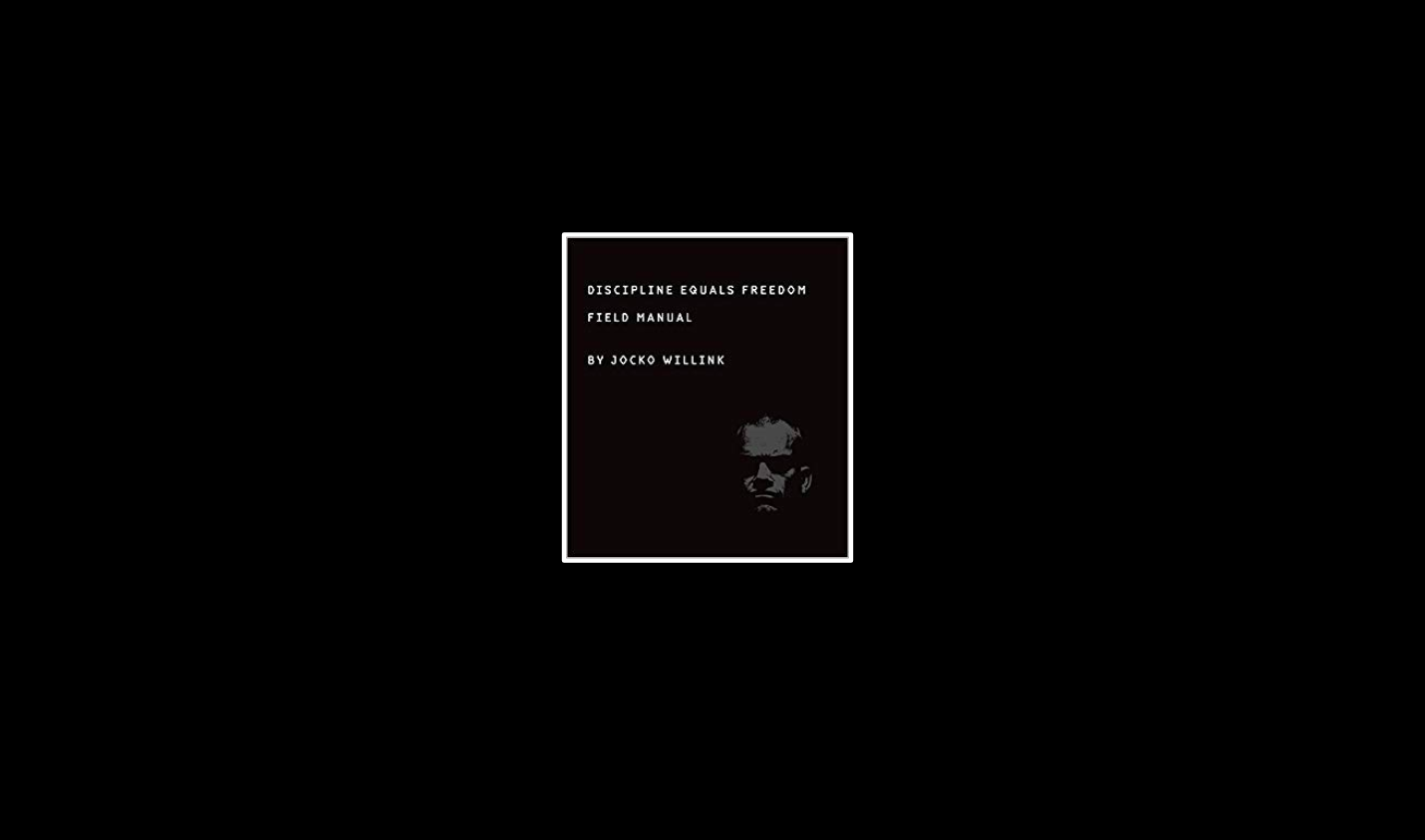
"Discipline Equals Freedom" by Jocko Willink
Life advice and thoughts from Jocko Willink–a 20 year Navy SEAL veteran turned business consultant and podcaster.
This manual will tell it to you straight, it cares only about making you better.
Book Summary:
“Discipline Equals Freedom: A Field Manual” by Jocko Willink is unlike any motivational or self-improvement book I’ve read. This manual will tell it to you straight–it doesn’t care about your feelings or about making you feel good. It cares only about making you better. Jocko doesn’t waste time talking nonsense or using filler words, he gets to the point and then moves on.
This book covers strategies and tactics for conquering weakness, procrastination, and fear, and specific physical training workouts for beginner, intermediate, and advanced athletes, and even the best sleep habits and food intake recommended to optimize performance.
Within these pages, readers will discover the keys to becoming stronger, smarter, faster, and healthier. There is only one way to achieve true freedom: The Way of Discipline. Read this book and find The Way.

Author Jocko Willink at TEDx. He gave an awesome talk, you can watch it here.
Author Bio:
JOCKO WILLINK is a decorated retired Navy SEAL officer, author of the book Extreme Ownership: How U.S. Navy SEALs Lead and Win, and co-founder of Echelon Front, where he is a leadership instructor, speaker, and executive coach. Jocko spent 20 years in the U.S. Navy SEAL Teams, starting as an enlisted SEAL and rising through the ranks to become a SEAL officer.
As commander of SEAL Team Three's Task Unit Bruiser during the battle of Ramadi, he orchestrated SEAL operations that helped the "Ready First" Brigade of the US Army's First Armored Division bring stability to the violent, war-torn city. Task Unit Bruiser became the most highly decorated Special Operations Unit of the Iraq War.
During his career, Jocko was awarded the Silver Star, the Bronze Star, and numerous other personal and unit awards. In 2010, Jocko retired from the Navy and launched Echelon Front where he teaches the leadership principles he learned on the battlefield to help others lead and win.
Lessons:
1) Discipline Equals Freedom

The title of this book is also one of its most important lessons. It may seem like a contradiction at first, but having more discipline in your life will give you more freedom.
When you have discipline, you don’t let outside factors influence your life. You will be in control of your life, not your impulses, addictions or anything else.
For example:
If you want financial freedom, you have to have financial discipline.
If you want more free time, you have to follow a disciplined schedule.
If you want to have high levels of energy and be free to go hiking or rock climbing, you need to have the discipline to eat a healthy diet.
So discipline is good, but where do you get it?
Discipline comes from within. Sure you can have someone like a drill instructor or coach force discipline on you, but that will go away once the person leaves. Instead, you need self-discipline. You need to create a fire inside you that won’t go out.
Now you might be asking, “How do I do that?”
The answer is simple. Every action you take, gives you a chance at building self-discipline.
Do you eat an apple or chocolate bar for a snack?
Do you go to the gym or stay home and watch TV?
Do you read a book before bed or do you scroll through social media?
Every decision you take, gives you a chance to build your self-discipline muscle.
2) Sugarcoated lies

Don't fall for the lies (source).
This is one of my favorite lessons and it has reached meme status on the internet.
Jocko writes about how sweet and soft donuts can be and how a lot of the time they are free. Birthday celebrations, office parties, free breakfast Fridays, free donuts are everywhere.
So if someone offers you a nice sugary donut for free, it’s basically a sign from the universe that you should eat it right?
Wrong. Dead wrong.
Jocko says that donuts aren’t food. They are poison.
It’s the same with chocolate chip cookies, cake, soda...all junk food is JUNK. It doesn’t fuel you, it literally kills you. One bite at a time.
Think about it. You get a short ‘high’ feeling, but junk food won’t help you get stronger, faster, smarter, healthier or in any way better in life.
You don’t need junk food in your life. It will tempt you, but remember, these are SUGAR COATED LIES. Use your self-discipline to say NO to junk food.
3) GOOD Mindset

How does Jocko deal with a setback, failure or defeat?
Simple, he says the word “Good.”
Jocko tells a story of when he was in the SEAL teams and one of the younger guys came to Jocko to tell him about a problem or issue, and Jocko would just say to him: “Good.”
This happened a couple of times, but then one day as the young soldier was telling Jocko about a problem, and he said “I already know what you’re going to tell me.”
So Jocko asked, “What am I going to say?”
And the young soldier replied, “You’re going to say good. That’s what you always say.”
Jocko said “Well I mean it.”
Mission got cancelled? Good. We can focus on another one.
Didn’t get the new high-speed gear we wanted? Good. We can keep it simple.
Didn't get promoted? Good. More time to get better.
Didn’t get funded? Good. We own more of the company.
Got injured? Good. Needed a break from training.
That’s it says Jocko. When things go bad, don’t get frustrated–that won’t do anything–instead say “Good.”
Jocko makes a distinction to say that being positive is better than being negative, but that still isn’t enough to solve the problem. What will solve the problem, is action.
So whatever you may be going through, if you can say the word “Good,” then guess what? It means you’re still alive and you still have the energy to fight and make things better.
“So get up, dust off, reload, recalibrate, re-engage–and go out on the attack. ”
Conclusion:
This book doesn’t have any secrets to life, but that’s the point. THERE ARE NO SECRETS or SHORTCUTS. It’s just hard work, day-in and day-out.
The entire book is also in black and white, perhaps to convey the fact that the world isn’t all sunshine and rainbows. I believe it’s also to show that there is darkness and light in the world, and it’s up to you to decide which one you will follow.
People already know a lot of lessons in this book, such as work out often and don’t eat sugar, but when it comes from Jocko, there’s a much higher chance of it sticking in your mind. I think part of it is the amount of respect people have for him. This guy wakes up a 4:30 AM every day–even on Christmas and New Years– and works out, and posts a picture on social media as proof for everyone to see.
In the end, readers will have learned at least two valuable lessons from this book. The need to build self-discipline and the need to do. Don’t just read this article and read his book, but go and do. Do the work, do what needs to be done even if you don’t feel like doing it, do what will make you a smarter, stronger and a better person in life. Now, go and GET AFTER IT!
Rating: 5/5 Stars
You can get the book here or by clicking on the image below.

If you enjoyed this book or you're a fan of Jocko, I recommend reading his other book "Extreme Ownership."

For a ten bucks and a few hours of reading, a book will give you an enormous amount of valuable information that can help you in life. It’s practically highway-robbery. So take advantage of this and read as much as you can.
If you want to check out my list of recommended books, you can find that here.
If you enjoyed this article, consider supporting our site or signing up for our monthly newsletter. Thank you!

"Mastering Fear" by Brandon Webb & John Mann
Brandon Webb, an ex-Navy SEAL, pilot, and media CEO draws on his personal experiences to demonstrate how people can master fear in everyday life
Fear is often the obstacle blocking people from success, read this book to learn how to overcome it and achieve a new level of growth
Summary:
"Mastering Fear: A Navy SEAL's Guide" by Brandon Webb and John David Mann is a book aimed mastering the natural instinct of fear. Webb draws on his experience as a Navy SEAL, pilot and media CEO as well as several successful figures to demonstrate how people can overcome fear to reach new levels of success.
For those unfamiliar with the authors: Brandon Webb is a former United States Navy SEAL and was the Head Instructor for SEAL snipers. He was deployed to both Afghanistan and Iraq. After his military career he started a media and e-commerce company that is now worth millions. He is also a New York Times bestselling author and has written several books.
The co-author, John Mann is an award-winning author whose written over 20 books that have been published in more than two dozen languages and sold more than 2 million copies. He’s also built a multi-million dollar business and has worked with Brandon Webb on several of his book.

Authors Brandon Webb and John David Mann.
Lessons:
1) Prepare More Than You Need
“In the course of one season an oak tree will drop thousands of acorns. Why? All it takes to safely reproduce itself and continue to oak species is a single acorn. So what are all those others? Rough drafts.”
When directors film a movie, they spend many hours and sometimes days filming a 1-minute scene over and over again. The same scene can be shot over twenty times, but eventually, only one clip is chosen.
So does this mean that everything else was a waste?
Not at all.
That is what it takes to make a great movie: Practice, practice, practice.
Brandon tells a story of when he was flying with his old flight instructor in a little plane he had just bought. He planned to fly it from Fort Lauderdale to Miami.
Brandon went through all the safety checks and took off. While taking off, something didn’t sound right to him. Something also smelled funny. Brandon then looked down and saw that his leg was soaking wet and fuel was squirting out into the cockpit.
This meant that Brandon and his friend were sitting in a puddle of highly flammable plane fuel in a 50+ year old plane. If even one of the radios decided to spark, Brandon and his co-pilot would be stuck in a cockpit fire.
Brandon writes that part of pilot training is the mastery of contingency plans. This means pilots run dozens or even hundreds of what-if scenarios: What to do if an engine goes out; if there’s an electrical problem; if communications go down and more.
It took Brandon only a couple of seconds to react, he immediately shut down all electrical systems, the plane was mechanical so it could still fly without it and turned the plane around towards their starting point.
Brandon writes that he didn’t have to spend time thinking about what to do because he had rehearsed this situation several times.
The same thing was done during the Osama bin Laden raid. When one of the helicopters crashed during the mission, the SEALs had planned and practiced what to do in case such a situation happens.
They had timed the mission to exactly 40 minutes, and during the actual operation, they got in and out in 38 minutes.
When you prepare more than you need and rehearse worst-case scenarios, you get one step closer to mastering fear.

The helicopter that crashed during the bin Laden raid. The SEALs still completed the mission ahead of time because of their countless hours of practice.
2) True Safety is an Illusion
“Fear is awareness of danger, right? And naturally, you want to keep yourself safe, correct? Ah, but that’s a trap! And within that trap is a secret, one that might be uncomfortable to hear but will liberate you if you let it: You’re never safe.
”
Everyone has a natural impulse for self-preservation. Fear makes us believe danger is right around the corner and we should do everything possible to protect ourselves from it. However, this isn’t possible.
There is no such thing as absolute safety. And if you try to live life as safely as possible, you’ll never really live.
Webb recalls the 2017 NYC terrorist truck attack that plowed down joggers and pedestrians and killed eight people. Webb points out that he lives just a few blocks from there and he could have been walking his dog that day. One second he could have been on the phone and hanging out with his dog, and the next boom! He’s gone.
It doesn’t even have to be a terrorist attack, people get hit by distracted drivers all the time. There are a million different ways a person’s life can end just by leaving their house.
At the end of the day, humans have no genuine control over the outcome, we all end up in the ground eventually. This doesn’t mean you don’t look both ways when crossing the street, but it does mean staying home because you’re afraid of crossing the street isn’t the solution.
“Every great gain, for humanity as a whole or for you or me in our own lives, has come about only through risk.
”

Brandon Webb with one of his planes.
3) Trust Your Gut and Jump
“Sometimes when it comes time to jump, even though you may feel the universe giving you a nudge in the ass, the world around you may be shouting at you that you’re wrong, you’re not ready, you can’t do it. Sometimes the world is right. Sometimes, though, it’s wrong. That’s a judgment call that only you can make.
”
A lot of times in life people find themselves in a situation where they know what they have to do and it feels like the universe is telling them to do it, but the people around them may try to stop them. This is why it’s important to trust your gut and jump when things feel right.
Brandon tells the story of a young mechanic named Douglas Corrigan who was inspired to fly after Charles Lindbergh flew his plane across the Atlantic. Lindbergh became an American hero and became Time magazine’s first “person of the year.”
Douglas Corrigan, on the other hand, worked for the company that built Lindbergh’s plane. He too wanted to fly solo across the Atlantic. However, the young man faced many problems. For one, he didn’t have a plane. He also didn’t have a pilot’s license or money.
So he worked on getting his license and then started working as a pilot taking people up for rides. He saved up his earnings and eventually bought himself a little plane.
Once he had his plane, he asked the Bureau of Air Commerce to approve his trip from New York to Ireland. However, they said his plane wasn’t in proper condition for the flight and denied him.
So Corrigan worked on his plane and applied again. Once again he got denied. He went on to apply five more times and got turned down each time.
But that didn’t stop Douglas Corrigan.
On July 1938, Corrigan was approved for a flight from New York to California. Except that he flew in the other direction, ‘accidentally’ of course.
Eight hours later he landed in Dublin. When flight officials questioned him, he said he must have misread his compass and simply flown in the wrong direction. When Corrigan returned to New York he was greeted as a hero and the New York Post printed a giant headline saying “HAIL TO WRONG WAY CORRIGAN!”
Corrigan is a great example of someone trusting their gut, ignoring fear and naysayers, and taking the jump into greatness. And as it turns out, Brandon Webb is actually related Douglas Corrigan (he was his great-grandmother’s cousin).
Conclusion:
"Mastering Fear: A Navy SEAL's Guide" by Brandon Webb and John Mann went above and beyond my expectations. The authors have done an excellent job with this book. Webb outlines the five steps needed to master fear and gives examples that demonstrate each step. He finishes each chapter with practice points that gives readers actionable advice and tips.
Webb does a wonderful job drawing on his combat, business, and personal experiences to illustrate his lessons and keep readers hooked. Fear will always be a part of our lives, heck it’s even part of Webb’s life and he’s a former US Navy SEAL, that is why it’s important to understand the tactics needed to overcome it.
This book is a must-read a manual to mastering fear. Each and every one of us is able to grow as a person and achieve more than we ever thought possible by triumphing over fear.
Rating: 5/5 Stars
You can get the book here or by clicking on the image below.

If you liked "Mastering Fear" or are interested in learning about Navy SEALs and Brandon Webb's life, I recommend the two books below.


If you enjoyed this article, consider supporting our site or signing up for our monthly newsletter. Thank you!
Reader freebies:

AlexandBooks + YouTube
I hope to continue sharing knowledge and fantastic books with all of you throughout 2018. In addition to writing articles, I’m also working on creating YouTube videos about some of my favorite books.
Hi everyone!
I hope to continue sharing knowledge and important books with all of you throughout 2018. In addition to writing articles, I’m also working on creating YouTube videos about some of my favorite books. As mentioned before, I’m teaching myself as I go along, but I'm constantly working to get better.
Please leave both positive and constructive comments either in the comment section at the bottom of this page or on YouTube. I will read every comment. If there's a book you want me to make a video on, comment below as well. Once again, thank you for the continuous support and I hope you enjoy these videos and learn something new!
Best regards,
Alex from alexandbooks.com
- Book: "Zero to One" by Peter Thiel
- Pages: 244
- For: Entrepreneurs, founders, people that want to change the world
- Lesson: Get a new perspective on business, learn why certain startups succeed while others fail
- Book: “Ernest Hemingway on Writing" edited by Larry Phillips
- Pages: 140
- For: Anyone interested in Hemingway's writing, aspiring writers
- Lesson: Learn Hemingway's thoughts on being a writer, his work habits and advice for aspiring writers
- Book: “The Emperor’s Handbook” by Marcus Aurelius
- Pages: 160 pages
- For: Anyone interested in philosophy, living a good life or looking for meaning in life
- Lesson: Learn to live a fulfilling life while being a virtuous person
- Book: "On Writing Well" by William Zinsser
- Length: 336 Pages
- Lesson: Learn how to write better
- For: Anyone who wants to improve their writing
- Book: “Extreme Ownership” by Jocko Willink and Leif Babin
- Pages: 322
- For: Business managers, leaders, people interested in military tactics and improving their leadership skills
- Lesson: The leadership lessons from life-and-death combat can be applied to the business world to make your team and company successful
If you enjoyed this article, consider supporting our site here or signing up for our monthly newsletter here. Thank you!

"Extreme Ownership" by Jocko Willink and Leif Babin
- Book: “Extreme Ownership” by Jocko Willink and Leif Babin
- For: Business managers, leaders, people interested in military tactics and improving their leadership skills
- Lesson: The leadership lessons from life-and-death combat can be applied to the business world to make your team and company successful
- Book: “Extreme Ownership” by Jocko Willink and Leif Babin
- Pages: 322
- For: Business managers, leaders, people interested in military tactics and improving their leadership skills
- Lesson: The leadership lessons from life-and-death combat can be applied to the business world to make your team and company successful
Summary:
Since the creation of mankind, there have been wars and warriors. Those warriors risk their lives for their country by putting themselves in combat zones in hopes of defeating the enemy. They often find themselves in life-or-death situations and must make decisions under pressure, under fire, and undermanned.
In these types of extreme high-risk situations, leadership and execution are crucial to achieving success. And the same strategies that are successful in battle can often be translated to business. Two thousand years ago, the war strategist Sun Tzu wrote “The Art of War” which became widely read by both military generals and business leaders.
The same can be said about the book “Extreme Ownership” by Jocko Willink and Leif Babin. These two U.S. Navy Seals officers led the most highly decorated special operation unit of the Iraq war. They now run a leadership consulting firm that teaches people how to apply powerful leadership principles from the battlefield to business and life.

Jocko Willink (left) and Leif Babin, authors of "Extreme Ownership."
The title of the book, “Extreme Ownership,” refers to one of the most important things that the authors learned from their 33 years of combined military experience.
They found that the key trait that made great leaders was taking extreme ownership of their job. That meant being responsible for everything related to their mission. These leaders didn’t cast blame or make excuses if something went wrong, they owned it all. This is the mindset leaders must have to lead their team and achieve success.
Every chapter in the book follows the formula of starting with a military story, then talking about the principle learned and ending with how the lesson can be applied to the business world.
Here are three important lessons from the book:
“Believe”
- Story:
The chapter begins with Jocko learning that his team, which was filled with Navy SEALs, had to fight alongside Iraqi Army soldiers. This may not seem like an issue, but remember, Navy SEALs are like a professional sports team. They are a tight-knit group of soldiers with hundreds of hours of training, in peak physical condition, and had access to some of the best and most technologically advanced equipment in the world.
Meanwhile, the Iraqi soldiers were mostly uneducated, untrained, undernourished and unmotivated. Most of the soldiers had joined just for a paycheck and more often than not, when there was a real firefight, they ran away from the fight. To make it even worse, some Iraqi soldiers were still loyal to Saddam and, at times, attacked U.S. soldiers.
Now, Jocko's commanding officer was saying that to go on missions, the SEALs had to work with the Iraqi soldiers. Jocko wondered why his boss made such a bad decision. After taking a step back and questioning his leaders, he began to see the logic behind the decision. In order for Iraq to become a stabilized country, they needed to have well-trained soldiers that could handle problems on their own. If they didn’t learn, once the U.S. soldiers left the country, the terrorist groups would retake the entire area.
When Jock first told his troops about the new rule, the team was furious. But, after explaining the reason behind it, they too realized the logic of the decision and agreed it had to be done, even if it was risky and unpleasant.
- Principle
To be a great leader, one must truly believe in the mission. If a leader doesn’t understand a decision made by senior command, they must ask why and learn the reason behind the decision. Once the leader understands why, he can then communicate the mission with confidence to those below them.
- Business Application
A company recently implemented a new compensation structure for their sales force but it created stress and fragmentation among employees because none of them understood why it was changed.
The employees complained to Jocko and said that they believed the new structure would drive a large part of their salesforce away. Jocko asked the group why leadership changed the compensation structure, but no one could answer the question. Jocko then asked if they thought the CEO was unreasonable or inexperienced. The group said “no” and added that the CEO is smart and that they feel stupid questioning the CEO.
As it turned out, none of the employees understood the reason behind the CEO’s decision and all of them were too scared to ask why. Meanwhile, the CEO with all her years of business experience, thought it was easy to understand why the changes were necessary. The next day, the CEO held a meeting that went over the new plan and answered all the questions that the employees had.
Leadership falls on not just the CEO but also the employees. If they don’t understand the mission, they must ask questions to understand the reason behind it. Once the why is understood, then the information can be passed down the chain with confidence so that everyone understands what needs to be done.
“Ask questions until you understand why so you can believe in what you are doing and you can pass that information down the chain to your team.”
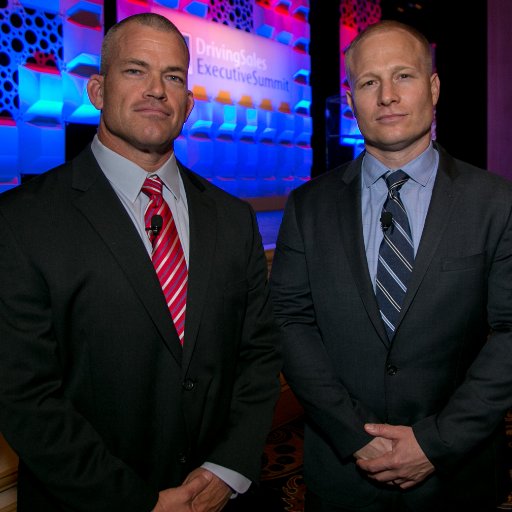
After their military career, Willink and Babin created Eheleon Front, a consulting firm that offers solutions in businesses and leadership strategies.
“Prioritize and Execute”
- Story
Leif Babin and his SEAL team were in enemy territory on a wide-open rooftop with no cover. Earlier in the day, they had been engaged in a firefight and were firing from inside a small building. When they tried to exit, they saw a possible IED (improvised explosive device) near the building entrance. They placed their own explosive nearby to destroy it. It was set on a timer and the clock was ticking. Now they had to find another way out of the building and get away from the blast radius. They decided to head to the roof, but while on the roof, one of the SEALs walked over a plastic tarp that covered a hole and fell twenty feet to the ground.
Now they were exposed out in the open, with an IED set to explode, and a SEAL separated from the team and in need of medical support. In this high risk and unforgiving environment, every second counted.
Babin thought back to his training and remembered that when there are multiple challenges, the most important thing to do is to remain calm, take a step back and determine the greatest priority for the team.
In this situation, it meant setting up security because if they didn’t protect themselves, they wouldn’t be able to help the wounded SEAL. Next, he had to find a way to get everyone off the rooftop. They found a locked stairwell and broke it open. After making their way down to the wounded SEAL, they took a headcount to make sure they had everyone and moved to safety. As they made it to the safe zone, the explosive went off and destroyed the IED so that no soldiers would be killed.
- Principle
Whether on the battlefield or the business world, when there are countless problems and challenges, it is important to relax, look around, and make a decision.
“Leaders must determine the highest priority task and execute. When overwhelmed, fall back upon this principle: Prioritize and Execute.”
- Business Application
As a consultant to a pharmaceutical company, Jocko spoke with the CEO and went over the list of new initiatives the CEO planned to implement to help the company improve its performance.
Here are the things the CEO wanted to accomplish:
- Launch several new products, each with its own marketing plan
- Create new distribution centers in a dozen new markets in the next two years
- Enter the laboratory-equipment market
- Start a new training program
- Rebuild the company website
- Restructure the sales force
With some much to do, it can become confusing to know which task is the most important. Jocko asked the CEO which initiative had the highest priority and if the CEO believed his team knew which task was of highest priority.
The CEO admitted that they probably didn’t know and that if they did focus mainly on just the highest priority, it would make a huge difference to the company. Jocko recommended that the CEO focus on one task and once completed, move onto the next highest priority.
“This focus on a singular initiative unified the efforts of the entire company. Progress was seen quickly and gained momentum. The CEO recognized the traction, and the effectiveness of the method: Prioritize and Execute.”
“Decisiveness and Uncertainty”
- Story
While on a rooftop with Chris Kyle (the Most Lethal Sniper in U.S. Military History and author of American Sniper), Chris told Leif that he saw a guy with a scoped weapon in a building. The man stepped behind the window and then disappeared behind a curtain.
Not too far away, there was a group of U.S. soldiers on the ground. Chris wanted to protect his fellow soldiers and take out the sniper, but he couldn’t positively identify the man and wasn’t sure if it was an enemy or a friendly. Chris asked Leif what he should do.
If they waited too long, they worried that the man might shoot one of the U.S. soldiers. But if they took the shot and it turned out to be a friendly soldier, it would be just as bad.
Leif radioed the other platoon and asked if he had placed any soldiers inside the building. The company commander replied “no” and said to take the shot.
The man behind the curtain came out again but neither Chris nor Leif were certain it was an enemy. However, Leif couldn’t just wait there and risk the possibility of the man shooting other soldiers.
Instead, he radioed the commander and asked him to send troops to check out the building.
The soldiers went in to clear the building and came rushing out. It turned out that the man in the window was, in fact, a U.S. soldier. The building number had been miscommunicated. In Ramadi, there were no address numbers nor street signs and the buildings were constantly changing due to destruction from bombs and bullets. All of these factors made it difficult to properly communicate building locations. An event that happened often in this chaotic environment.
- Principle
Even in times of uncertainty, leaders cannot be paralyzed by fear. This results in inaction. Leaders must make the best decisions they can based on the information that they have. Leaders must also be ready to adjust those decisions as the situation evolves and new information is discovered.
- Business Application
While advising a software company, Jocko met with the CEO. The CEO had two senior engineers that were constantly butting heads and insisted that the other person be fired or they would quit.
The CEO wasn’t sure what to do because she didn’t want to lose either one but knew that both employees were creating a harmful environment for the company's employees. The CEO tried to take the engineers to dinner to discuss the situation and solve the issue, but nothing worked.
The CEO was unsure of what to do and instead chose to do nothing. Jocko informed her that a CEO must be decisive and willing to make choices or she will be seen as a weak leader by her peers.
Jocko also told the CEO that these two employees had bad attitudes and are probably spreading negativity among other employees. This was not the role model behavior that a leader should have. Even if only one employee was fired, it was highly possible that the one that stayed would cause problems with the next senior engineer.
With all this information, the CEO decided to take action. She spoke with the lead developer and asked for two candidates that were ready and eager to step up. The CEO discovered two workers that had critical knowledge of the projects and were excited and happy to work together. She then contacted HR and told them to terminate the two badly behaved senior engineers. Now, the company was back on track and it was game on.
Implement these principles in your job and personal life to become a better leader and achieve greater success. Get some y'all. Out!
Thank you for reading. If you enjoyed this article, consider reading the book. I highly recommend it, click here to get it!
If you enjoyed this article, consider supporting our site or signing up for our monthly newsletter. Thank you!
Reader freebies:

"On Writing Well" by William Zinsser
- Book: "On Writing Well" by William Zinsser
- For: Anyone who wants to improve their writing
- Lesson: Learn how to write better
- Book: "On Writing Well" by William Zinsser
- Pages: 336
- Lesson: Learn how to write better
- For: Anyone who wants to improve their writing
Most people that know English can read and speak the language with ease but almost everyone has trouble when it comes to writing.
But whether you’re a businessman, politician or high school student, it is important to know how to write well so that you can express yourself, communicate clearly, and make sure people read what you’ve written.
This is what William Zinsser teaches in his book “On Writing Well,” which has sold millions of copies.
Zinsser worked at The New York Tribune and at Yale where he taught students how to write. By the end of his career, he had written 15 books.

Author William Zinsser
So what lessons can we learn from Zinsser’s book?
The first part of the book begins by teaching the principles of good writing. Just like in sports, before you want to play the game, you must learn the rules to it.
The principles include learning how to make your writing simple, free of clutter, and which words you should use and avoid.
“You must know what the essential tools are and what job they were designed to do.”
One way to accomplish this is by studying famous writers.

Ernest Hemingway and Leo Tolstoy
“Make a habit of reading what is being written today and what has been written by earlier masters…and trying to figure out how they did it. ”
In part two of the book, Zinsser shares lessons on writing in unity, having a good lead and ending, and writing with proper grammar and punctuation.
Zinsser writes that “the most important sentence in any article is the first one. If it doesn’t induce the reader to proceed to the second sentence, your article is dead” (Page 55).
When it comes time to end the piece Zinsser writes, “if you presented all the facts and made the point you want to make, look for the nearest exit” (Page 66).
The third part of the book is focused on specific forms. Here Zinsser teaches readers how to write about people you’re interviewing, places you’re traveling to and writing about yourself in a memoir.
When writing a travel piece Zinsser advises readers to not ask the tourists what they think of the attraction, but instead ask those who work there or the locals. The tourists visiting have only been there for a few hours or days, but the people who live there have been there for years or sometimes decades.
“By interviewing local men and women…I tapped into one of the richest veins waiting for any writer.”
Zinsser also goes into detail on how to write about science, business, art, sports, and humor.
When writing about movies, books or art, Zinsser believes only people who love the medium should review it.
“The reader deserves a movie buff who will bring along a reservoir of knowledge, passion and prejudice. It’s not necessary for the critic to like every film; criticism is only one person’s opinion. But he should go to every movie wanting to like it. If he is more often disappointed than pleased, it’s because the film has failed to live up to its best possibilities.”
In the last part of the book, Zinsser gives advice on how to find your voice, face the fear and enjoyment of being a writer, and what it means to be a nonfiction writer.
To find your voice, Zinsser tells readers to once again, study great writers.
“Don’t worry that by imitating them you’ll lose your own voice and your own identity. Soon enough you will shed those skins and become who you are supposed to become.”
And when it comes to being an excellent nonfiction writer, one must chase their interests.
“If a subject interests you, go after it, even if it’s in the next county or the next state or the next country. It’s not going to come looking for you.”
Overall, whether you’re a student, scientist, or businessman, Zinsser’s book can help everyone become a better writer!

If you enjoyed this article, consider supporting our site or signing up for our monthly newsletter. Thank you!
Reader freebies:

7 Lessons from "The Emperor's Handbook"
Imagine a boy being born in Rome in 121 A.D. At three years old, the boy's father dies and he is raised by his mother. At seventeen years old, the boy is adopted by the emperor of Rome. A few years later, he marries the emperor's daughter. By 139 A.D., he assumes the title of Caesar. Afterward, he soon becomes the emperor of Rome and thus, one of the most wealthy and powerful individuals in the world.
- Book: “The Emperor’s Handbook” by Marcus Aurelius
- Pages: 160 pages
- For: Anyone interested in philosophy, living a good life or looking for meaning in life
- Lesson: Learn to live a fulfilling life while being a virtuous person
Imagine a boy being born in Rome in 121 A.D. At three years old, the boy's father dies and he is raised by his mother. At seventeen years old, the boy is adopted by the emperor of Rome. A few years later, he marries the emperor's daughter. By 139 A.D., he assumes the title of Caesar. Afterward, he soon becomes the emperor of Rome and thus, one of the most wealthy and powerful individuals in the world.
How do you think this story ends?
If the phrases "power corrupts and absolute power corrupts absolutely" and "money is the root of all evil" are true, then if this boy was like most people, he would have succumbed to the evils of money, and power. However, this boy was different.
He would rule the Roman empire at its height without becoming tainted by the seduction of wealth or power that had corrupted many of his predecessors. This boy knew how to live the good life, how to find happiness, and how to make the right decisions.
That boy was Marcus Aurelius.

Marcus Aurelius as a boy (image link).
Towards the end of his life, Marcus wrote down notes to remind him of his guiding principles and to hold himself accountable to them. These notes have become The Emperor's Handbook.
Here are 7 important lessons learned from The Emperor's Handbook by Marcus Aurelius:
1) Purge Your Mind of Idle Thoughts
“Do not waste the rest of your life speculating about others in ways that are not to your mutual advantage. Think of all that might be accomplished in the time you throw away–distracted from the voice of your own true and reasonable self–wondering what the next man is up to and why, what he’s saying, or thinking, or plotting. Purge your mind of all aimless and idle thoughts, especially those that pry into the affairs of others or wish them ill. ”
Think of all the time you've spent today thinking negative thoughts or wondering what others think of us. It's something we all do, although we all know it is a bad habit. We spend time overthinking and overanalyzing certain conversations or arguments we've had in our day.
We've all had arguments with a friend or spouse where we replay the conversation in our heads for hours thinking of the perfect comeback or insult.
Is this really the best use of our time?
Marcus doesn't believe it is. He encourages us to not waste our time with these idle thoughts. Nor should we spend time wishing others ill. Focus on improving your life, not damaging the lives of others.
2) Avoid The Inferior Loves Of Life
“Nothing whatsoever–neither popularity, nor wealth, nor power, nor the pleasures of the flesh, nor anything of the sort–should compete in your affection for the good that flows from reason and neighborliness. Although for awhile these inferior loves may seem quite compatible with an orderly life, they will soon overpower and destroy you.”
We all know people that spend their time chasing popularity, wealth, power or pleasure. However, Marcus advises us against chasing these inferior loves. He believes that the only thing people should pursue is goodness and kindness.
Although Marcus Aurelius had fame, wealth, and power due to being the emperor of Rome, he didn't pursue or indulge in these traits.
It seems almost every day there is a news report on a new celebrity, government official or business leader that has been involved in a scandal. Celebrities are constantly having meltdowns due to all the media attention and paparazzi (e.g. Britney Spears). Government officials chasing power can be corrupted by it (e.g. Bill Clinton). Business leaders chasing wealth lose focus of other priorities (e.g. Wells Fargo CEO John Stumpf).

Emperor Marcus Aurelius.
3) Your Mind Is Your Vacation Home
“Everyone dreams of the perfect vacation–in the country, by the sea, or in the mountains. You too long to get away and find that idyllic spot, yet how foolish…when at any time you are capable of finding that perfect vacation in yourself. Nowhere is there a more idyllic spot, a vacation home more private and peaceful, than in one’s own mind.”
Most of us take vacations to get away and to relax. But how many of us have gone on vacation and it was the opposite of relaxing. Perhaps, you went to Mexico and it rained all week. Or maybe you traveled to England only to find out there is construction going on right next to your hotel room.
Marcus argues that a person doesn't need to travel across the country or sea to find their vacation home. The perfect vacation spot is in our minds and we can reach it anytime. Sometimes meditating during your lunch break can be more peaceful and relaxing that being on a crowded beach in Cancun.
Many people have come to this same conclusion. Yoga spots are popping up in almost every neighborhood, corporate offices have meditation rooms, and more business leaders and health officials talk about the importance of finding time to meditate daily.

4) Remove What Is Unnecessary
“Is it not better simply to do what is necessary and no more, to limit yourself to what reason demands of a social animal and precisely in the manner reason dictates? This adds to the happiness of doing a few things the satisfaction of having done them well. Most of what we say and do is unnecessary anyway; subtract all that lot, and look at the time and contentment you’ll gain. On each occasion, therefore, a man should ask himself, ‘Do I really need to say or do this?’”
A lot of us spend our days being busy but when the day is almost over, we feel as if we didn't accomplish much and wish for more time. Marcus' advice solves both of these problems.
He advises us to only do what is necessary and do it well instead of doing many tasks, much of which are probably unnecessary anyway. If this advice sounds familiar, it is because Peter Drucker was also an advocator of this technique.
Before performing an activity, take a second and ask yourself, do I really need to do this? This will allow you to spend your time focusing on only important matters.
5) Be Like The Third Fellow
“There are three kinds of men in this world. The first, when he helps someone out, makes it known that he expects something in return. The second would never be so bold, but in his mind he knows what he has done and considers the other person to be in his debt. The third somehow doesn’t realize what he has done, but he’s like a vine that bears fruit and asks for nothing more than the pleasure of producing grapes. A horse gallops, a dog hunts, a bee makes honey, one man helps another, and the vine bears fruit in due season. You ought to be like that third fellow, who does good without giving it a second thought. ”
The first type of man is the kind that will help you but will want something in return. The second isn't as obvious but he also would like something in response to helping. However, the third fellow helps simply because it is his nature.
Just like it is a horse's nature to gallop, it should be human nature to help others. Help simply because it is your nature, not because you expect something in return.
6) Overlook The Wrongs Of Others
“When someone wrongs you, ask yourself: What made him do it? Once you understand his concept of good and evil, you’ll feel sorry for him and cease to be either amazed or angry. If his concept is similar to yours, then you are bound to forgive him since you would have acted as he did in similar circumstances. But if you do not share his ideas of good and evil, then you should find it even easier to overlook the wrongs of someone who is confused and in a moral muddle. ”
There are two things to take away from this quote. First, if someone wrongs you, ask yourself if you would have acted the same way if you were in their shoes. If yes, forgive the way they act.
For example, imagine you were in a crowded subway and someone shoves you to get into the train. If you were in their position would you act the same way? If you had an important business meeting with a CEO and needed to get on the train to make the meeting on time, would you shove your way onto the train? If so, do not get mad at that person for you would act the same way in their position.
Secondly, understand that not all individuals have the same ideas of right and wrong. People are all raised differently from different cultures, environments, and religions. Thus, there is no universal sense of good and evil.
For example, imagine you're walking home at night and a man comes up to you and threatens to stab you unless you give him your wallet. From your perspective, you see this as an act of evil. However, the thief might have a different perspective. Say he grew up in an orphanage and spent much of his life homeless. Say it's winter and he hasn't eaten all day. Say he has never actually stabbed someone but knows it's a quick way to get money to buy food. This doesn't justify the act of stealing, however, it is important to realize the thief is in a moral muddle and doesn't have the same ideas of good and evil.
7) Accept Corrections And Adjust
“Remember that you don’t lose any freedom by changing your mind and accepting the correction of someone who points out your errors. After all, it’s your initiative, your judgement, indeed your intelligence that makes change and acceptance possible.”
Life is complex and filled with information. Sometimes we make decisions and are afraid to change our position even when new information suggests a better solution. Often, it is our ego that fears being wrong (Ryan Holiday elaborates on this idea). Especially when someone points out any mistakes we may have made.
However, Marcus points out that changing our mind is our decision. It would be unwise to stick to your original position if presented with information that outlines your mistakes. It is better to correct our mistakes and make a better decision moving forward. This is what makes change possible.
These are just a few lessons learned from The Emperor's Handbook. To learn more about leading a good life, finding happiness and making the right decision, I recommend reading the whole book. It's less than 150 pages long, click the link below to learn more.

If you enjoyed this article, consider supporting our site or signing up for our monthly newsletter. Thank you!
Reader freebies:







5 Business Lessons from "Zero to One"
When Elon Musk and Mark Zuckerberg give a book positive praise, you know it is worth reading. Zero to One is that book. Written by Peter Thiel, the billionaire who co-founded PayPal (he and Elon worked at PayPal together) and Palantir. He also made the first outside investment in Facebook and funded companies like LinkedIn and SpaceX.
When Elon Musk and Mark Zuckerberg give a book positive praise, you know it is worth reading. Zero to One is that book. Written by Peter Thiel, the billionaire who co-founded PayPal (he and Elon worked at PayPal together) and Palantir. He also made the first outside investment in Facebook and funded companies like LinkedIn and SpaceX.
Thiel's book is about creating something new and fresh, instead of making an existing product better. To make something out of nothing, hence the meaning of the book's title.
Here are 5 business lessons learned from Zero to One:
1) Go From 0 to 1, Not 1 to n
“Of course, it’s easier to copy a model than to make something new. Doing what we already know how to do takes the world from 1 to n, adding more of something familiar. But every time we create something new, we go from 0 to 1”
Going from 1 to n is copying an existing model, but going from 0 to 1 is creating something new and fresh. When Bill Gates created Microsoft Word, his company went from 0 to 1. When Larry Page and Sergey Brin created Google, their company went from 0 to 1.
However, when Microsoft tried to copy Google and created Bing, that was a 1 to n moment. Similarly, when Google tried to copy Microsoft and created Google Docs, that was a 1 to n moment.
Thiel notes the importance of startups because most startups focus on creating something new, going from 0 to 1. Startups embrace risk and have a mission to improve the world, while established corporations shy away from risk and have a mission to improve their revenue.

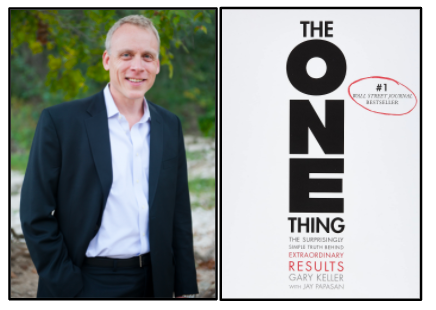
Peter Thiel, the author of Zero to One.
2) Avoid Competition
“Your company could create a lot of value without becoming very valuable itself. Creating value is not enough–you also need to capture some of the value you create. This means that even very big businesses can be bad business”
Thiel uses the airline industry vs Google to demonstrate his idea.
Airlines create hundreds of billions of dollars of value each year but the airlines only made 37 cents per passenger trip. Compare that to Google, which creates less value but captures more of it. In 2012, Google brought in $50 billion in revenue while airlines brought in $160 billion. However, Google kept 21% of those revenues as profits.
In fact, Google makes so much money that it's worth 3x more than every U.S. airline combined. This is because airlines compete with each other while Google has little to no competition.
If you've ever taken an economics class, you've learned about perfect competition.
In perfect competition, the market achieves equilibrium when producer supply meets consumer demand. If there is money to be made, new firms will enter the market, increase supply, drive prices down and thus eliminate profits for others.
This is what is happening to the airline industry. Last year 18 airlines were established; the year before that, 38 airlines were established.
Because airlines are, for the most part, an undifferentiated commodity business (many carriers can get you to the same destination), they compete mainly on the basis of price and availability.
This benefits the consumer in the short term because it keeps prices low but it hurts the company in the long term. No company can make a significant economic profit because if there is money to be made new companies will enter and eat away at any additional profit.
3) Why Monopolies Are Good
“Monopolies drive progress because the promise of years or even decades of monopoly profits provides a powerful incentive to innovate. Then monopolies can keep innovating because profits enable them to make the long-term plans and to finance ambitious research projects that firms locked in competition can’t dream of”
When Thiel mentions monopolies, he isn't referring to illegal bullies or government favorites, but rather creative monopolies. These monopolies give customers more choices by adding new categories of abundance to the world.
The government knows this, that's why they work hard to create monopolies (by granting patents to inventors).
Take Apple's iPhone as an example. Apple helped create the smartphone market with the iPhone and was rewarded with a monopoly share of the smartphone industry. Customers were happy to pay more to get a smartphone that actually worked.
Google is another good example. They have a monopoly on the search market. In May 2014, Google had 68% of the market while Microsoft had 19% and Yahoo had 10%. Since Google has a safe and reliable stream of revenue, they have been able to invest in new products and services. Google has expanded into wearable computers, Android phones, and driverless cars.

The airline industry depicts a perfect competition scenario, the top 3 U.S. airlines are all basically the same and thus have almost equal market share. Google, on the other hand, has been able to monopolize the search market and owns more than two-thirds of the market.
4) Characteristics of a Monopoly
“Every monopoly is unique, but they usually share some combination of the following characteristics: proprietary technology, network effects, economies of scale and branding”
The first characteristic, proprietary technology, is the most important. It is the most sustainable advantage a company can have because it makes your product difficult or impossible to replicate. Your technology should be 10 times or 10x better than your closest competitor.
PayPal's technology was 10x better because instead of having to mail a check that could take 10 days, PayPal let buyers pay the very same day.
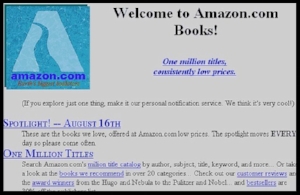
Amazon's homepage in 1995. It had over one million titles to offer to customers.
Similarly, Amazon was 10x better than bookstores because they had 10x more books than a typical retail store. A large retailer could have 100,000 titles in their store, meanwhile, Amazon offered millions of titles. This is because Amazon didn't have any inventory, instead, they simply requested the title from its supplier whenever a customer made an order.
The second characteristic is network effects. This means the product becomes more useful as more people use it. For example, if all your friends and co-workers are on LinkedIn, it wouldn't make sense for you to join a different professional social network.
The third characteristic is economies of scale. As a business gets bigger, the fixed costs of creating a product can be spread out and the cost per unit decreases. This is especially beneficial for software companies. Once the product is created, the marginal cost of producing another copy of the product is close to zero.
The last characteristic is branding. Creating a strong brand is a powerful way to claim a monopoly because you want consumers to think of your brand and feel connected to it. However, a monopoly cannot be built on brand alone. In 2012, the new CEO of Yahoo! rebranded the company in hopes of making it cool again but didn't announce any new product improvements. Yahoo! has since been sold to Verizon.
5) Building a Monopoly
“Brand, scale, network effects, and technology in some combination define a monopoly; but to get them to work, you need to choose your market carefully and expand deliberately”
Your company should start with a very small market, this doesn't mean a nonexistent one. An ideal market is a small group of people concentrated together and served by few or no competitors.
In 1999, eBay had a few thousand users who were high-volume "Powersellers." PayPal focused on serving these individuals, and within three months, 25% of them were using PayPal.
The next goal is to scale up. Once your startup dominates a niche market, then you should expand into a related or slightly broader market. Amazon started with selling books. It then expanded into CD's, videos and software. It continued to add new categories and is now known as the everything store.
Today, eBay sells everything from toys to clothing to cars. But, it didn't jump straight into selling sports cars. EBay launched it auction marketplace in 1995 and focused on niche markets such as Beanie Babies.
Lastly, being the first mover is good, but being the last mover is better. When a company is the first entrant into a market, they take significant market share while other companies scramble to catch up. But this is only a tactic, not a goal.
The last mover is the company that makes the last great development in a specific market and enjoys years or even decades of monopoly profits. Contrary to popular belief, Google wasn't the first search engine. WebCrawler was created in 1994, Yahoo in 1995, and Ask Jeeves in 1996.

It wasn't until two years later, in 1998, that Google was founded. And the rest, as they say, is history.
These are just a few of the lessons learned from Zero to One. If you're interested in learning more, click the link below.
Get the book here: Zero to One

If you enjoyed this article, consider supporting our site or signing up for our monthly newsletter. Thank you!
Reader freebies:
Enjoying A&B?
Consider donating to keep the site up and running!