5 Lessons From "What Every BODY Is Saying"
Have you ever been in a social situation where you wished you had telepathic powers and could read the other person’s mind? Although the ability to read minds is impossible, we can do the second-best thing, read body language.
Have you ever been in a situation where you wished you had telepathic powers and could read the other person’s mind? I’m sure everyone can relate. Perhaps this happened to you at a job interview, or on a first date. We all wish we knew how the person across from us really felt at that time. Although the ability to read minds is impossible, we can do the second-best thing, read body language.
Having spent 25 years as an FBI counterintelligence special agent and supervisor specializing in nonverbal communications, Joe Navarro provides an insightful book on how to read body language.
Here is some advice from Navarro’s book “What Every Body Is Saying.”
1) Establish Baseline Behavior
One of the first lessons that Joe teaches is to establish a baseline behavior of the person you’re observing. This is important because if you don’t have a baseline, it becomes quite easy to misinterpret the person's body language.
Imagine you’re having a conversation with a close friend and you ask him about his relationship with his spouse, he reacts by rubbing his eyes. This signal can mean several different things. It’s possible he’s having problems in his relationship, or perhaps your friend has allergies, or maybe his eyes are tired from spending all day looking at a computer screen.
If the friend has been rubbing their eyes and sneezing, it's safe to assume that he has allergies. If he's been rubbing his eyes the whole conversation, it's possible he is tired from work.
“Even in a single encounter with someone, you should attempt to note his or her “starting position” at the beginning of your interaction. Establishing a person’s baseline is critical because it allows you to determine when he or she deviates from it, which can be very important and informative.”
2) Look at The Distance
One nonverbal cue that is easy to read, is the distance between two individuals. In almost all scenarios, the closer two individuals are to each other, the more comfortable they are with one another.
When you’re talking and walking with your best friend, you’ll often notice that you rub shoulders or bump into each other now and then.
However, when two people aren’t fond of each other, they will keep their distance from the person.
This applies also to strangers. Look at how people sit on a public train or bus; two strangers are going to lean away from each other, while two friends usually lean towards one another.

People may also lean away from each other when they disagree while discussing business.
3) Focus on The Legs
Most people assume that the face is most likely to reveal a person’s true intentions and that this the prime place to look for nonverbal signals that reflect what the person is thinking. However, that is incorrect. The feet, along with the legs, is the most honest body part.
Since childhood, all of us have learned to lie with our words and our faces. When we see a relative we don’t like at an annual family gathering, we smile and tell them that it’s nice to see him or her, even though we despise them.
The same goes for poker matches. People learn to hide their facial expressions and talk in a neutral tone.
However, people rarely remember to hide their nonverbal behavior involving their feet and legs.
When an individual is wiggling and bouncing their feet and legs this is described as happy feet. This is a high-confidence tell that signals that a person is in an advantageous position or is getting what he wants.
Feet can also indicate a negative emotion since we tend to turn away from things that we don’t like or disagree with.

Feet can also tell us when it’s time to leave. If you’re having a conversation with someone and the person starts to turn one foot away or pointing it towards the door, it is a sign that the person wants to leave.
4) Signs of Dominance
In most cases, people who want to demonstrate dominance do so by spreading out and claiming territory. This can include spreading one’s arms apart on a surface or having your arm spread out on a chair.


Poses of dominance usually leave the individual open and not covering vital organs including the heart and genitals.

5) Facial Expressions
The face has the ability to display a variety of feelings, both positive and negative, and even fake emotions.
When someone hears something they don’t like or are angry, they will often squint their eyes. The more negative the news or event, the tighter one’s eyes compress.

When a person hears information they don’t believe, they may “roll their eyes” or move their eyes to the corner.

On the flip side, when a person is excited or filled with positive emotions, their eyes open up completely and look directly at the other person while smiling.
Navarro points out that a real smile forces the corners of the mouth up toward the eyes, while a fake smile moves the corners of the mouth toward the ears.

Body language is a fascinating form of communication that not many people are able to read. However, to completely understand what each body is saying, one must observe individuals and practice often.
Joe Navarro’s book is incredibly insightful and complete with images to help you better understand nonverbal cues. To learn more get the book by clicking the link below!


5 Fantastic Unrelated Books
Hey everyone, I apologize for not writing more articles these past few weeks. I’ve been studying for the GRE in hopes of applying to graduate school. Now that I completed the exam, I hope to be more consistent with these posts. Thank you for your support! – Alex W.
Hey everyone, I apologize for not writing more articles these past few weeks. I’ve been studying for the GRE in hopes of applying to graduate school. Now that I completed the exam, I hope to be more consistent with these posts. Thank you for your support! –Alex W.
Nothing in life stays the same. The Greek philosopher, Heraclitus, said over 2,000 years ago, “The only thing that is constant is change.” For that reason, I find it wise to try new things and take the road less traveled. So instead of discussing business books in this article, I will write about five unrelated but fantastic books.
Here are 5 fantastic unrelated great books I recommend:
5) The Art Of War For Writers by James Bell
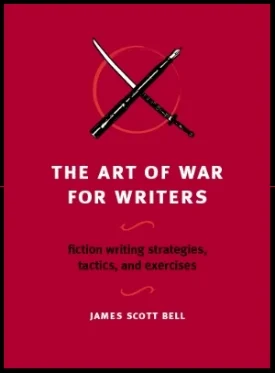
James Bell takes lessons from the famous military book, “The Art of War” by Sun Tzu, and applies it to writing. Bell provides tactics and strategies for everything from character building to editing to dealing with rejection.
In his book, Bell also covers the “dirty” or business side of being a writer. This includes finding an agent, submitting drafts to publishers and promoting your novel. The book is filled with insightful quotes and at approximately 260 pages it can be read in a day.
4) The Innovators by Walter Isaacson
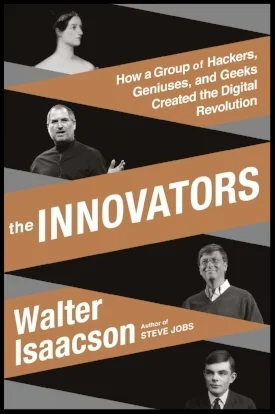
If you’re reading this, chances are you’re on your smartphone surfing the web. But exactly how are you doing this? How does your smartphone or laptop work? How does the internet work? Who invented the internet?
If you’ve ever been curious about finding out the answers to these questions, this is a book worth reading. Isaacson explains how computers, the internet, the mouse, smartphones are other internet related tools came to be. He goes on to talk about how innovation really occurs and how many of the greatest inventions of our time were a result of decades of collaboration.
3) Awaken The Giant Within by Anthony Robbins
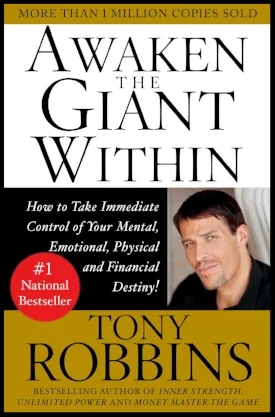
The terms “self-help guru” or “life coach” often have a negative connotation to them because of the outrageous claims made by these individuals. They claim they can change your life, increase your level of happiness and other extreme statements.
However, Tony Robbins is able to deliver on several of his promises. The book provides ways to improve your quality of life by using certain methods developed by Robbins. His methods are based on psychology, personal experiences, and research. He gives readers several examples to support each of his ideas and gives the reader exercises to help them achieve results.
2) Modern Romance by Aziz Ansari

If you’re a fan of Ansari’s stand-up or his Netflix series “Masters of None”, you’ll likely enjoy this book.
Technology, such as the Internet and smartphones, has had a major impact on dating. In his book, Aziz teams up with scientists to learn how technology has changed dating for men and women around the globe.
Through his research and personal experiences, Aziz provides tips for navigating the world of online dating. Being a comedian, Aziz manages to achieve a comedic tone throughout the book while providing insightful and interesting facts from his research.
1) The New Encyclopedia of Modern Bodybuilding by Arnold Schwarzenegger
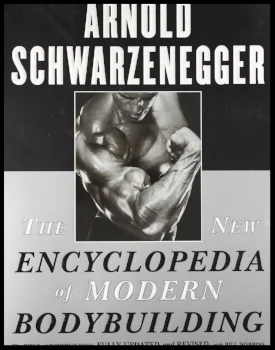
Although the title says bodybuilding, this book is more of a guide to anyone who lifts weight or is trying to get in shape. Arnold covers everything from finding the right gym to proper nutrition and diet, to treating injuries.
He also provides multiple workout regimens and tells readers how to properly train each muscle group for maximum results. The book is filled with images and shows how Arnold went from being a skinny young kid to one of the most famous bodybuilders in the world.
Arnold also writes about the importance of the mind in achieving your goals, whether you strive to lose weight or gain muscle. By reading this book you’ll have a deeper understanding of how to take control of your body and you’ll become more motivated to get in shape.
If you're interested in reading any of these books click the links below!

3 Lessons from "The War of Art"
Almost everyone has heard of the book The Art of War; the famous strategy book about winning military battles. However, there is a great book by a similar title; The War of Art, that is about winning creative battles. If you’ve ever wanted to write a novel, become an artist, start a business or run a marathon, then I’d recommend reading The War of Art by Steven Pressfield.
Almost everyone has heard of the book The Art of War; the famous strategy book about winning military battles. However, there is a great book by a similar title; The War of Art, that is about winning creative battles.
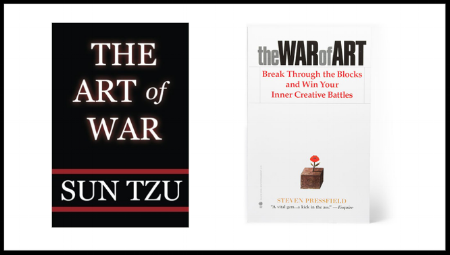
Two fantastic books. To read my article on The Art of War, click here.
If you’ve ever wanted to write a novel, become an artist, start a business or run a marathon, then I’d recommend reading The War of Art by Steven Pressfield. Pressfield is a bestselling author and screenwriter who knows a lot about winning creative battles.
This book shows readers how to identify, defeat, and unlock the inner barriers to creativity. Here are 3 lessons learned from The War of Art:
1) Define The Enemy
Pressfield begins the book by telling readers a secret:
“There’s a secret that real writers know that wannabe writers don’t, and the secret is this: It’s not the writing part that’s hard. What’s hard is sitting down to write. What keeps us from sitting down is Resistance.”
Before I began typing this article, I faced Resistance. I told myself I’d start writing right after eating breakfast. I made myself a large bowl of oatmeal. This filled me up, but for some reason, I decided to cook an egg afterward. Then I had a craving for a bagel, so I walked down to the deli to get one. Even though I was full after eating oatmeal, for some reason I kept putting off starting this article. This is exactly what Resistance does to people.
Resistance is what prevents people from achieving their goals and living a fulfilled life. It stops writers from writing, painters from painting, and entrepreneurs from starting a new ventures. If you’ve ever bought a treadmill or workout gear from your home and never used it, you’ve encountered Resistance.
Resistance comes in many shapes and forms. It is an invisible and repelling force. It’s negative and tries to distract and prevents us from doing our work.

Resistance has many faces.
“In other words, any act that rejects immediate gratification in favor of long-term growth, health or integrity. Or, expressed another way, any act that derives from our higher nature instead of our lower. Any of these will elicit Resistance. ”
As mentioned before, Resistance comes in many forms. Sometimes it takes the shape of anxiety or nervousness. Pressfield writes about Henry Fonda, the American film and stage actor with a career spanning five decades. Henry would throw up before each stage performance, even when he was 75 years old.
“In other words, fear doesn’t go away. The warrior and the artist live by the same code of necessity, which dictates that the battle must be fought anew every day. ”
Another common form of Resistance is procrastination. We end up convincing ourselves that we will do something, but just not today. We don’t say, “I’m never going to start my novel.” Instead, we say, “I’m going to write my novel; I’m just going to start it tomorrow.” And as we all know, tomorrow almost always means never.
Resistance can also be associated with fear. Pressfield says that fear is good because it can be used as an indicator of what we should be doing.
“Remember our rule of thumb: The more scared we are of a work or calling, the more sure we can be that we have to do it[...]If it meant nothing to us, there’d be no Resistance. ”

Author Steven Pressfield.
2) Combating Resistance
Now that we’ve identified the enemy, it is time to find ways to defeat it. Pressfield says that one of the first steps people must take is going pro.
“The amateur plays for fun. The professional plays for keeps. To the amateur, the game is his avocation. To the pro it’s his vocation. The amateur is a weekend warrior. The professional is there seven days a week. ”
Turning pro means you’re willing to commit. If you want to start a business or write a novel, you need to commit to the process. This is a difficult hill for most people to get over because they know that once they get to the other side, they will encounter a mountain of pain.
“The artist committing himself to his calling has volunteered for hell, whether he knows it or not. He will be dining for the duration on a diet of isolation, rejection, self-doubt, despair, ridicule, contempt, and humiliation. ”
Although war can be hell, Pressfield provides 10 principles to help us win this war:
1) We show up every day.
2) We show up no matter what.
3) We stay on the job all day.
4) We are committed over the long haul.
5) The stakes for us are high and real.
6) We accept remuneration for our labor.
7) We do not overidentify with our jobs.
8) We master the technique of our jobs.
9) We have a sense of humor about our jobs.
10) We receive praise or blame in the real world.
Pressfield, a former marine, knows that war can be tough. It took him 17 years to get his first professional writing job. He worked on a major film and believed it would be a blockbuster hit. Unfortunately, it fell flat. Pressfield knew that this was the price he had to pay for being in the game. He made the decision to not give up and keep working. This was the moment he realized he had become a pro.
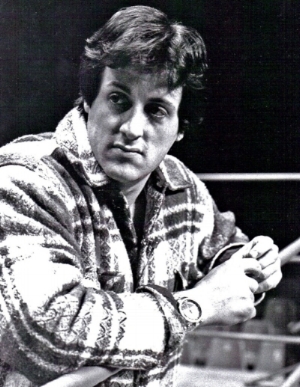
Sylvester Stallone fought Resistance and won. His film, Rocky (1976) won 3 Oscars.
Another screenwriter that didn’t give up, was Sylvester Stallone. After writing the script for Rocky, he received several large offers for it but turned them down because he also wanted to play the main character. Eventually, Stallone managed to find a studio that bought the script and allowed him to play the part of Rocky Balboa.
Stallone faced rejection multiple times before he won his war with art. Likewise, most artists will face similar hurdles. The war of art is filled with rejection and criticism.
When we get rejected we feel it in our gut. The pain, although mental, feels like a punch in the stomach. Pressfield writes about a friend who worked on a novel for years and after finishing it, couldn’t find the energy to send it. His fear of rejection held him back. Resistance uses fear of rejection to paralyze and prevent us from doing our work, and then from showing it to others.
“The professional cannot take rejection personally because to do so reinforces Resistance. Editors are not the enemy; critics are not the enemy. Resistance is the enemy. The battle is inside our own heads. We cannot let external criticism, even if it’s true, fortify our internal foe. ”
To win the battle with Resistance, the professional must be open to criticism. Use it to learn and grow. Detach your ego from your work and seek constant feedback to improve your craft.
3) Beyond Resistance
If you’re still having trouble with Resistance, Pressfield offers a final thought to help win the war. First, ask yourself, what you were put on this earth to be? Are you meant to be an artist, a scientist or perhaps a diplomat? And what would happen if you didn’t pursue your destiny?
“If you were meant to cure cancer or write a symphony or crack cold fusion and you don’t do it, you not only hurt yourself, even destroy yourself. You hurt your children. You hurt me. You hurt the planet. ”
J.K. Rowling was rejected several times before she finally got her book published. She was 32 when the first Harry Potter novel was released. Reid Hoffman had a Ph.D. in Philosophy and worked in academia. It wasn't until he was 36 that he founded LinkedIn.
Both of these individuals made significant contributions to the world. Imagine if you were destined to make the next positive impact but you let Resistance hold you back.

Gandhi started his career as a lawyer. If he had remained a lawyer, who knows if India would have become an independent country.
Pressfield ends his book with the following paragraph:
“Creative work is not a selfish act or bid for attention on the part of the actor. It’s a gift to the world and every being in it. Don’t cheat us of your contribution. Give us what you’ve got. ”
Thank you for reading my article. These are just a few lessons from The War of Art. To learn more, click the button below.
If you enjoyed this article, consider supporting our site or signing up for our monthly newsletter. Thank you!
Reader freebies:




5 Business Lessons from "Zero to One"
When Elon Musk and Mark Zuckerberg give a book positive praise, you know it is worth reading. Zero to One is that book. Written by Peter Thiel, the billionaire who co-founded PayPal (he and Elon worked at PayPal together) and Palantir. He also made the first outside investment in Facebook and funded companies like LinkedIn and SpaceX.
When Elon Musk and Mark Zuckerberg give a book positive praise, you know it is worth reading. Zero to One is that book. Written by Peter Thiel, the billionaire who co-founded PayPal (he and Elon worked at PayPal together) and Palantir. He also made the first outside investment in Facebook and funded companies like LinkedIn and SpaceX.
Thiel's book is about creating something new and fresh, instead of making an existing product better. To make something out of nothing, hence the meaning of the book's title.
Here are 5 business lessons learned from Zero to One:
1) Go From 0 to 1, Not 1 to n
“Of course, it’s easier to copy a model than to make something new. Doing what we already know how to do takes the world from 1 to n, adding more of something familiar. But every time we create something new, we go from 0 to 1”
Going from 1 to n is copying an existing model, but going from 0 to 1 is creating something new and fresh. When Bill Gates created Microsoft Word, his company went from 0 to 1. When Larry Page and Sergey Brin created Google, their company went from 0 to 1.
However, when Microsoft tried to copy Google and created Bing, that was a 1 to n moment. Similarly, when Google tried to copy Microsoft and created Google Docs, that was a 1 to n moment.
Thiel notes the importance of startups because most startups focus on creating something new, going from 0 to 1. Startups embrace risk and have a mission to improve the world, while established corporations shy away from risk and have a mission to improve their revenue.

Peter Thiel, the author of Zero to One.
2) Avoid Competition
“Your company could create a lot of value without becoming very valuable itself. Creating value is not enough–you also need to capture some of the value you create. This means that even very big businesses can be bad business”
Thiel uses the airline industry vs Google to demonstrate his idea.
Airlines create hundreds of billions of dollars of value each year but the airlines only made 37 cents per passenger trip. Compare that to Google, which creates less value but captures more of it. In 2012, Google brought in $50 billion in revenue while airlines brought in $160 billion. However, Google kept 21% of those revenues as profits.
In fact, Google makes so much money that it's worth 3x more than every U.S. airline combined. This is because airlines compete with each other while Google has little to no competition.
If you've ever taken an economics class, you've learned about perfect competition.
In perfect competition, the market achieves equilibrium when producer supply meets consumer demand. If there is money to be made, new firms will enter the market, increase supply, drive prices down and thus eliminate profits for others.
This is what is happening to the airline industry. Last year 18 airlines were established; the year before that, 38 airlines were established.
Because airlines are, for the most part, an undifferentiated commodity business (many carriers can get you to the same destination), they compete mainly on the basis of price and availability.
This benefits the consumer in the short term because it keeps prices low but it hurts the company in the long term. No company can make a significant economic profit because if there is money to be made new companies will enter and eat away at any additional profit.
3) Why Monopolies Are Good
“Monopolies drive progress because the promise of years or even decades of monopoly profits provides a powerful incentive to innovate. Then monopolies can keep innovating because profits enable them to make the long-term plans and to finance ambitious research projects that firms locked in competition can’t dream of”
When Thiel mentions monopolies, he isn't referring to illegal bullies or government favorites, but rather creative monopolies. These monopolies give customers more choices by adding new categories of abundance to the world.
The government knows this, that's why they work hard to create monopolies (by granting patents to inventors).
Take Apple's iPhone as an example. Apple helped create the smartphone market with the iPhone and was rewarded with a monopoly share of the smartphone industry. Customers were happy to pay more to get a smartphone that actually worked.
Google is another good example. They have a monopoly on the search market. In May 2014, Google had 68% of the market while Microsoft had 19% and Yahoo had 10%. Since Google has a safe and reliable stream of revenue, they have been able to invest in new products and services. Google has expanded into wearable computers, Android phones, and driverless cars.

The airline industry depicts a perfect competition scenario, the top 3 U.S. airlines are all basically the same and thus have almost equal market share. Google, on the other hand, has been able to monopolize the search market and owns more than two-thirds of the market.
4) Characteristics of a Monopoly
“Every monopoly is unique, but they usually share some combination of the following characteristics: proprietary technology, network effects, economies of scale and branding”
The first characteristic, proprietary technology, is the most important. It is the most sustainable advantage a company can have because it makes your product difficult or impossible to replicate. Your technology should be 10 times or 10x better than your closest competitor.
PayPal's technology was 10x better because instead of having to mail a check that could take 10 days, PayPal let buyers pay the very same day.
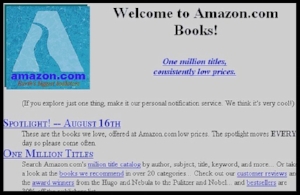
Amazon's homepage in 1995. It had over one million titles to offer to customers.
Similarly, Amazon was 10x better than bookstores because they had 10x more books than a typical retail store. A large retailer could have 100,000 titles in their store, meanwhile, Amazon offered millions of titles. This is because Amazon didn't have any inventory, instead, they simply requested the title from its supplier whenever a customer made an order.
The second characteristic is network effects. This means the product becomes more useful as more people use it. For example, if all your friends and co-workers are on LinkedIn, it wouldn't make sense for you to join a different professional social network.
The third characteristic is economies of scale. As a business gets bigger, the fixed costs of creating a product can be spread out and the cost per unit decreases. This is especially beneficial for software companies. Once the product is created, the marginal cost of producing another copy of the product is close to zero.
The last characteristic is branding. Creating a strong brand is a powerful way to claim a monopoly because you want consumers to think of your brand and feel connected to it. However, a monopoly cannot be built on brand alone. In 2012, the new CEO of Yahoo! rebranded the company in hopes of making it cool again but didn't announce any new product improvements. Yahoo! has since been sold to Verizon.
5) Building a Monopoly
“Brand, scale, network effects, and technology in some combination define a monopoly; but to get them to work, you need to choose your market carefully and expand deliberately”
Your company should start with a very small market, this doesn't mean a nonexistent one. An ideal market is a small group of people concentrated together and served by few or no competitors.
In 1999, eBay had a few thousand users who were high-volume "Powersellers." PayPal focused on serving these individuals, and within three months, 25% of them were using PayPal.
The next goal is to scale up. Once your startup dominates a niche market, then you should expand into a related or slightly broader market. Amazon started with selling books. It then expanded into CD's, videos and software. It continued to add new categories and is now known as the everything store.
Today, eBay sells everything from toys to clothing to cars. But, it didn't jump straight into selling sports cars. EBay launched it auction marketplace in 1995 and focused on niche markets such as Beanie Babies.
Lastly, being the first mover is good, but being the last mover is better. When a company is the first entrant into a market, they take significant market share while other companies scramble to catch up. But this is only a tactic, not a goal.
The last mover is the company that makes the last great development in a specific market and enjoys years or even decades of monopoly profits. Contrary to popular belief, Google wasn't the first search engine. WebCrawler was created in 1994, Yahoo in 1995, and Ask Jeeves in 1996.

It wasn't until two years later, in 1998, that Google was founded. And the rest, as they say, is history.
These are just a few of the lessons learned from Zero to One. If you're interested in learning more, click the link below.
Get the book here: Zero to One

If you enjoyed this article, consider supporting our site or signing up for our monthly newsletter. Thank you!
Reader freebies:

"Indispensable! Becoming The Obvious Choice In Business" by David Cottrell
This book was recommended to me by my management professor who worked for IBM for over 25 years.
Written by bestselling author David Cottrell and sales guru Robert Nix, Indispensable! Becoming The Obvious Choice In Business And Life, teaches how to project strength, smarts, competence and leadership.
This book was recommended to me by my management professor who worked for IBM for over 25 years.
Written by bestselling author David Cottrell and sales guru Robert Nix, Indispensable! Becoming The Obvious Choice In Business And Life, teaches how to project strength, smarts, competence and leadership.
The book begins with a quote from Winston Churchill.

The authors wrote this book in hopes of helping readers prepare for their finest hour and thus becoming indispensable.
Here are 7 important lessons from Indispensable! Becoming The Obvious Choice In Business And Life:
1) Becoming Indispensable Begins Now
Most people believe that managers don’t start evaluating employees until a new position opens. They believe that once a new position opens, then they’ll start working hard. But this is mindset is incorrect.
“You see, you are interviewing and competing today and tomorrow and the next week too” (Pg ix)
Employees are assessed for new opportunities long before a new position is announced. If you only start working hard when a new position opens, it may already be too late. Accept the mindset that every day you are being evaluated.
2) Visualize Yourself Being Better
Ask yourself, what do I want? Is it a promotion or a new position at a different company? Find someone who has the position you want and observe them. Learn how they look, act and speak.
“Beginning today, act on your positive vision and begin separating yourself from your competition” (Pg 10)
Think about how successful individuals interact with others. Maintain a positive and dynamic attitude and start visualizing yourself incorporating changes in your life.
3) Don’t Make Excuses
No one has a perfect life or an easy path to becoming indispensable. There will always be bumps and roadblocks. The key is to not make excuses.
“Franklin D. Roosevelt was paralyzed, Beethoven was deaf, Stevie Wonder was born blind, and John McCain was an injured prisoner of war for over five years” (Pg 18)
If you’re facing a difficult situation, research individuals who have been in similar positions and learn how they overcame their problems.
4) Be The Best You Can Be
Everyday try being the best that you can be. Being better requires you to identify weaknesses and areas of improvement and deal with them.
“It is better to understand your weaknesses, acknowledge them, and deal with them than it is to mask them” (Pg 19)
First, admit any weaknesses or areas that might need improvement. This could be anything from lacking a skill like coding to constantly being late to work. Identify possible solutions; in this example, it could be taking an evening coding class or buying a better alarm clock. If you need extra help, seek it. Ask a fellow colleague, mentor or career coach.

Authors David Cottrell and Robert Nix.
5) Take Action And Set Goals
We’ve all heard how important it is to set goals yet most people don’t do it. Some feel it isn’t necessary or they expect to fail so they don’t bother writing it down. Now’s the time to change that.
“Writing down your goals will clarify what you are trying to accomplish. It marks the beginning of your commitment to accomplishing those goals” (Pg 22)
Do not fall into the trap of believe you don’t need to write down your goals. To become indispensable requires you to have specific and measurable goals. They give you direction and provide confidence and momentum when you accomplish a goal.
6) Become A Great Listener
A key skill to becoming indispensable, is making connections with people. Connecting begins with listening.
“Listening effectively is not easy. It requires three things that most people lack: time, patience, and concentration” (Pg 67)
Take the time to have meaningful conversations and let the other person do most of the talking while you listen. Be patient and wait for your turn to respond. Concentrate on what the person is saying and engage by asking thoughtful questions. The speaker will be delighted to have your complete attention and fascination.
7) Become A Great Speaker
Now that you’ve learned how to be a great listener, it is time to become a great speaker. The hardest part of becoming a great speaker, is being able to give public speeches.
“Speaking to groups–of two or three or even a roomful–is required for advancement in almost any industry” (Pg 73)
Politicians, CEOs, and other successful individuals all know how to speak in public. Public speaking is a required skill for people who wish to become indispensable. With effort and practice, you can improve your verbal communication skills and become a great speaker.
These are just a few of the lessons learned from the book Indispensable. If you’re interested in learning more, click the link below.

If you enjoyed this article, consider supporting our site or signing up for our monthly newsletter. Thank you!
Reader freebies:

5 Lessons from "Ego Is The Enemy"
Early in our careers, ego impedes learning and the cultivation of talent. With success, it can blind us to our faults and sow future problems. In failure, it magnifies each blow and makes recovery more difficult. At every stage, ego holds us back. In his WSJ bestseller book, Ryan Holiday gives advice on how people can combat their ego to achieve more in life.
Ryan Holiday, the author of Ego Is The Enemy, has written several books on topics ranging from business to philosophy. His latest book is a combination of the two subjects.
In his book, Holiday writes that early in our careers, ego impedes learning and the cultivation of talent. With success, it can blind us to our faults and sow future problems. In failure, it magnifies each blow and makes recovery more difficult. At every stage, ego holds us back. In this WSJ bestseller book, Holiday gives advice on how people can combat their ego to achieve more in life.
Here are 5 important lessons from Ego Is The Enemy:
1) Plus, Minus and Equal
Holiday writes about a multi-title mixed martial arts champion named Frank Shamrock, who uses a system called plus, minus and equal to train his fighters.
“Each fighter, to become great...needs to have someone better that they can learn from, someone lesser who they can teach, and someone equal that they can challenge themselves against” (Pg 39).
By training against someone who is better than us, it purges the ego from thinking we are the best. By training against someone lesser than us, it humbles the ego to think of ourselves as teachers. And by training against someone of equal skill, it reminds us to stay competitive and not become complacent.
The plus, minus, and equal principle can be applied to any field. If you’re a manager, seek out a mentor, train an intern and collaborate with co-workers. If you play varsity soccer, learn from the best player on the team, help train the worst player, and compete with all other teammates during practice.
2) Forever a Student
It is easy to be a student before one becomes successful and great. The real challenge is staying a student even after achieving greatness.
“A student is self-critical and self-motivated, always trying to improve his understanding so that he can move onto the next topic, the next challenge” (Pg 41).
A student must be able to take harsh and critical feedback to learn where they can improve. The ego, however, avoids such feedback at all costs. This stops us from improving by convincing us that we don’t need to improve. Then, when we don’t get the results we were expecting, we wonder what happened.
Today, books are available in stores and online. Ivy league college courses can be found online. Smartphones give us 24/7 access to the internet. There is more information than ever before. One must remain a student throughout their lives to achieve true success.
3) Stay on Course
According to the philosopher Seneca, the Greek word euthymia, is the sense of our own path and staying on it without getting distracted by all the others that intersect it.
“It’s about being what you are, and being as good as possible at it, without succumbing to all the things that draw you away from it” (Pg 117).
Ego is constantly telling people they can have it all. It rejects trade-offs. One must remember what is important and ignore the other paths. Do not get distracted by those around you. Find out what matters and what doesn’t. Only then can a person say no to all other paths and concentrate on staying on course.

Author Ryan Holiday
4) Do your Best, Forget the Rest
Life is not a fairy-tale. The path to success will have ups and downs, victories and failures, happiness and disappointment. However, it is important to focus on the effort and not the outcome.
“We have only minimal control over the rewards for our work and effort–other people’s validation, recognition, rewards. So what are we going to do? Not be kind, not work hard, not produce, because there is a chance it wouldn’t be reciprocated? C’mon” (Pg 178).
Do not attach your ego to rewards and accolades. We can’t let that be what motivates us. There will be failures and disappointments in life. How then, do we carry on?
John Wooden, the famous basketball coach gives us the answer, “Success is peace of mind…knowing you made the effort to do your best to become the best that you are capable of becoming” (Pg 180). Do your best and forget the rest.
5) Always Love
On the path to success, one will encounter individuals who may deceive, offend, or hurt you. This causes us to become angry and seek retribution. However, this is short-term thinking from the ego.
“Hate at any point is a cancer that gnaws away at the very vital center of your life and your existence. It is like eroding acid that eats away the best and the objective center of your life” (Pg 204).
It is easy to hate. It is our ego attempting to seek payback. However, this is a distraction. If we’re busy getting revenge, we aren’t focusing on our course and our work. Hate doesn’t get us to our goal, and can even set us back.
Instead, one must always love. Love is egoless. It is positive, peaceful and productive. Hate focuses on the past while love focuses on the present and most importantly, the future. Stay positive, stay focused and always show love.
Hopefully, these five lessons help you defeat your ego and reach new levels of success.
If you’re interested in learning more, click here for a link to the book.

.

10 Management Lessons from "The Effective Executive"
Peter Drucker is the often called the "founder of modern management" and for good reason. He wrote over 35 books, contributed frequently to the WSJ and Harvard Business Review, and worked as a consultant for Fortune 500 CEO's and Heads of States. Here are 10 managements lessons from The Effective Executive.
Published in 1967, Peter Drucker’s book The Effective Executive still holds many management lessons that can be applied today, 50 years later.
Here are 10 tips to help you become The Effective Executive.
1. Effectiveness Is a Skill
“I have not come across a single “natural”: an executive who was born effective. All the effective ones have had to learn to be effective. And all of them then had to practice effectiveness until it became habit” (Preface pg 1).
From the first page, Drucker lets the reader know that effectiveness is a skill. It is not an innate ability; effectiveness can be learned if a person dedicates their time and energy to practice it.
2. Do What Needs to Be Done
“The first practice is to ask what needs to be done. Note that the question is not “What do I want to do?” Asking what has to be done and taking the question seriously, is crucial for managerial success” (Introduction pg XII).
It’s great to get a lot of things done at work but it’s more important to get the right things done. Sometimes the most important thing isn’t the most exciting or pleasant project. However, the effective executive identifies what needs to be done and gets to work on the task.
3. Ask What Must Be Done Now
“However, after completing the original top-priority task, the executive resets priorities rather than moving on to number two from the original list. He asks, “What must be done now?”” (Introduction pg XIII).
After completing the first project that needs to be done, it is important to look at your list of things to-do and asks yourself, if anything has changed. Perhaps the second most important thing is being handled by another employee or maybe there is a new major issue that needs to be taken care of right away. Identify what needs to be done, and ask what needs to be done now.
4. Focus on Opportunities
“Problem solving, however necessary, does not produce results. It prevents damage. Exploiting opportunities produces results” (Pg XVIII).
A good executive should focus on opportunities rather than problems. Problems, of course, must be taken care of, but it does not move the company or organization forward. Rather, it prevents it from moving backward. Unless there is a true catastrophe, the effective executive focuses on exploiting opportunities.
5. Know Thy Time
“If we rely on our memory, therefore, we do not know how time has been spent.[…] The effective executive therefore knows that to manage his time, he first has to know where it actually goes” (Pg 27).
The supply of time is totally inelastic. It can neither be stored nor bought. A manager once told me, “Time is our most precious resource, in fact, you can say it is our only resource.” A person must first record time before one can know where it goes and how to better manage it. The effective executive knows this and keeps a journal to record how they spend their time.

The Michael Jordan of Management, Peter Drucker.
6. Identify and Eliminate
“One has to find the nonproductive, time-wasting activities and get rid of them if one possibly can” (Pg 36).
Look at your time journal and identify where time is being wasted and on what tasks. Then, either eliminate. If you don’t have the time to finish homework every week but you find time to watch TV for two hours a day, cut out watching TV. Other time-wasting activities can include checking your phone or email every five minutes or constantly checking social media. If the things you’re doing aren’t contributing to accomplishing the tasks on your list, eliminate it.
7. Change and Adapt
“The most common cause of executive failure is inability or unwillingness to change with the demands of a new position” (Pg 58).
A person who has been successful in one role but then keeps doing what they have done before they moved into a new role, is almost certain to fail. Things are constantly changing. Whether it’s a change in a job position, a company or an industry. Change is the only constant. One must be willing to adapt and try to methods to find success.
8. Have Effective Meetings
“Effective executives know what they expect to get out of a meeting” (Pg 69).
Before putting together, a meeting, report or presentation ask what the purpose of it is. Is there a decision that needs to be made, or perhaps a project needs to be outlined? Insist that the meeting has a purpose before the meeting is called and at the end of the meeting identify is the purpose has been achieved or if further steps are needed.
9. Concentration is Key
“If there is any one “secret” of effectiveness, it is concentration. Effective executives do first things first and they do one thing at a time” (Pg 100).
The most important tasks are usually large and long projects that require a long stretch of time. It is easy to get distracted with small quick tasks that make one feel busy but in fact accomplishes very little. The effective executive has self-discipline and says “No” to unrelated activities. One must concentrate and stay focused on the task at hand.
10. Understand Then Decide
“The executive who wants to make the right decision forces himself to see opposition as his means to think through the alternatives” (Pg 155).
No matter how certain one is of the other person being wrong, the effective executive takes time to understand the opposite opinion. This is a way of making sure all major aspects of an important matter have been assessed before a decision has been made.
Hopefully, these 10 lessons help you become a more effective executive.
If you're interested in learning more, click here for a link to the book.


5 GREAT AUTOBIOGRAPHIES TO READ
Autobiographies are great sources of knowledge because it gives a first person perspective of an individual's life. You take a journey with the author through all their ups and down and learn how they overcame their challenges and became successful.
Here are the 5 autobiographies/biographies that I'd recommend everyone (especially people interested in business) to read:

1) Elon Musk: Tesla, SpaceX, and the Quest for a Fantastic Future by Ashlee Vance
Elon Musk is the Steve Jobs of our time. He disrupted the finance industry with PayPal and is now revolutionizing the auto industry, energy industry and space industry. Musk is the man behind PayPal, Tesla Motors, SpaceX, and SolarCity (now a part of Tesla).
Musk is a 45-year old, self-made billionaire (14 billion to be exact). However, he has humble origins as a kid from South Africa who simply loved technology. This book is a must read.

2) Steve Jobs by Walter Isaacson
Before Musk, Steve Jobs was the original disruptor of Silicon Valley. Jobs disrupted the computer industry with the Apple Computer, the phone industry with the iPhone, and the music industry with iTunes.
Everyone knows that Jobs created Apple (most valuable company in the World) but the story of how he did it is truly an incredible journey. He founded the company, get fired from it, and then later became the CEO. Fun fact: Jobs enjoyed doing psychedelics, traveling to India to learn more about spirituality, and time at an apple farm.
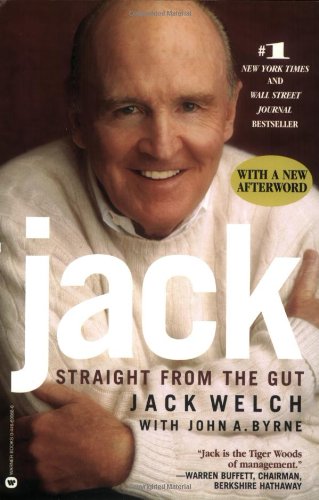
3) Jack: Straight from the Gut by Jack Welch, JohnByrne, Mike Barnicle
In 1999, Fortune named Jack Welch "Manager of the Century." Even Warren Buffett (world's 3rd richest man) admires Welch.
Jack started at General Electric as a junior chemical engineer in 1960. By 1981, he worked his way up to CEO. He was the CEO of GE for 20 years and turned the company from a $14 billion company to a $410 billion conglomerate.
This book is filled with great business and leadership lessons.
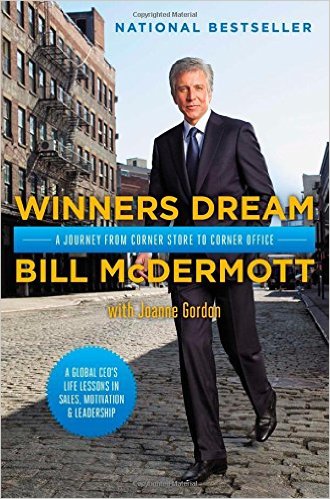
4) Winners Dream by Bill McDermott with Joanne Gordon
Bill McDermott was born in NYC and has a great rags to riches story. As a teenager he bought and ran a deli to help pay for college. After college, he worked for Xerox and became the company's youngest Division President. He later became the CEO of SAP (a Fortune 500 company).
Having worked at SAP and seen Bill in person, I can say he is a very humble and hard working individual. His book offers advice on sales, motivation and managing people.
(Bonus: When starting a new job, check to see if the CEO or other executives have written books on the company. It's a great way to learn about the company, its culture and values.)
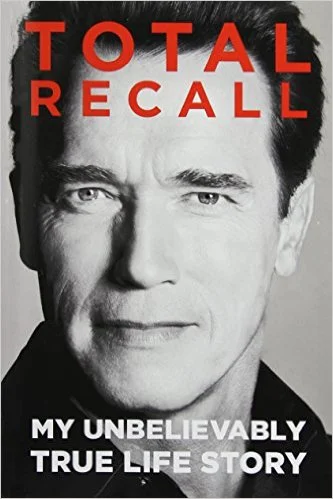
5) Total Recall by Arnold Schwarzenegger
If a movie was made about Arnold Schwarzenegger's life, most people would think it was a fiction film. This man became the world's top bodybuilder, then one of the most famous and highest paid movie stars AND THEN served two terms as the Governor of California. He was also the boss of Celebrity Apprentice for a season.
Schwarzenegger gives advice on just about everything: bodybuilding, diet, workout routine, acting, politics and more. This guy works like hell and after reading his book it's no surprise he's been so successful in life.
If you've read any of these books, feel free to comment and share your opinion below. If you're interested in reading the books, click the titles below:
Enjoying A&B?
Consider donating to keep the site up and running!