I Published My First Book!
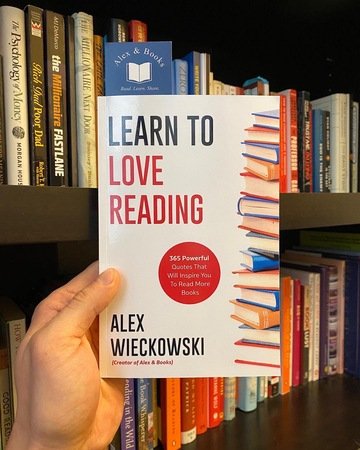
Learn To Love Reading is now available on Amazon!
All of us know reading is good for us and something we should do more often, but for whatever reason, it's never our top priority. This book will change that.
Learn To Love Reading is a collection of quotes that will help you develop a passion for books. It's a pick-me-up for those days when you need a little extra motivation to grab a book instead of your phone. Inside this book, you'll find 365 amazing quotes that will remind you of the wonderful treasures books hold, show you the magical places books can take you, teach you why books are the key to success in any domain, and inspire you to become a lifelong reader.
You'll discover quotes from:
Wise philosophers like Cicero and Socrates
Billionaire entrepreneurs like Elon Musk and Bill Gates
World leaders like Nelson Mandela and Barack Obama
Brilliant investors like Naval Ravikant and Warren Buffett
Bestselling authors like Jordan Peterson and James Clear
Legendary writers like Ernest Hemingway and Victor Hugo
And many more extraordinary people.
Here are a few quotes from the book:
“How can we better employ our time than by reading books?”
–A. EDWARD NEWTON
“Reading is essential for those who seek to rise above the ordinary.”
–JIM ROHN
“Read what you love until you love to read.”
–NAVAL RAVIKANT
“If you love to read, or learn to love reading, you will have an amazing life. Period.”
–ANNE LAMOTT
PS: If you want to learn more about my book, listen to this podcast.
So if you want to develop a love for reading, want to start reading more books, or are already a bibliophile, this book is for you.

The Incredible Story of How Fredrick Douglass Learned To Read & Write
The book, Narrative of the Life of Frederick Douglass is an eloquent memoir written by Frederick Douglass. In it, Douglass shares the hardships he endured as a slave and his heroic escape to the free state of Massachusetts. One part of his story that I found especially fascinating was how he taught himself how to read and write, and how he used those two skills to impact the lives of millions.


Let’s start from the beginning
Frederick Douglass was born in Tuckahoe, Maryland around 1818 and had a life that was anything but easy.
Douglass was separated from his mother before he was a year old (a common practice by slave owners during those times). She was moved to a farm that was 12-miles away and Douglass only saw her four or five times before she got ill and passed away.
As a slave, Douglass was treated poorly. He was often overworked and underfed. He was given almost no clothing and slept in a sack to stay warm, “In the hottest summer and coldest winter, I was kept almost naked...I had no bed,” Douglass wrote in his memoir.
One would think growing up in an unjust world would break a person, but Douglass survived, and would soon thrive.
When Douglass was eight-years-old, he was sent to live with another master in Baltimore.
His new master’s wife had never had a slave before and taught Douglass the alphabet before the master found out and told his wife that such an activity was illegal. Not only was it unlawful, but the master added that if a slave learned to read, “It would forever unfit him to be a slave. He would at once become unmanageable, and of no value to his master.”
That moment was an inflection point in Douglass’s life and those words would change his destiny forever. “These words sank deep into my heart...and called into existence an entirely new train of thought,” Douglass wrote.
““From that moment, I understood the pathway from slavery to freedom.””
Learning How To Read
Douglass knew that reading would lead to his freedom, and although he had lost his teacher, he was determined to learn how to read: “I set out with high hope, and a fixed purpose, at whatever cost of trouble, to learn how to read.”
So how did he do it?
Douglass carried a book with him anytime he was sent out for errands, and if he had extra time, would make friends with young white boys and ask them for lessons.
““The plan which I adopted, and the one by which I was most successful, was that of making friends of all the little white boys whom I met in the street. As many of these as I could, I converted into teachers.””
Sometimes the boys would offer lessons for free, and other times Douglass would pay them for lessons with bread.
““This bread I used to bestow upon the hungry little urchins, who, in return, would give me that more valuable bread of knowledge.” ”
After learning how to read, Douglass came across a book containing speeches by Richard Sheridan. Sheridan’s work produced in Douglass a deep love of liberty and hatred of oppression. He read them over and over again, and became inspired to get involved in human rights.
““I read them over and over again with unabated interest...What I got from Sheridan was a bold denunciation of slavery, and a powerful vindication of human rights. ”
Learning How To Write
Once Douglass learned to read, he set out on to acquire another valuable skill, writing.
He first learned how to write while working at a ship-yard. He watched carpenters write on timber the part of the ship the piece was intended for, and copied it down.
“L.” was for larboard.
“S.” for starboard.
“A.” for aft.
“F.” for forward.
“I immediately commenced copying them, and in a short time was able to make the four letters named,” Douglass wrote. After learning those four letters, Douglass once again sought out white boys for lessons, this time for writing.
Douglass told white boys that he could write as well as them, however, they wouldn’t believe him and told Douglass to prove it. Douglass would then write the letters he knew and tell the white boys to write letters that they knew. Thus learning new letters every time he played the game.
““In this way I got a good many lessons in writing, which it is quite possible I should never have gotten in any other way.””
Not only was Douglass clever, he was also resourceful.
“ “During this time, my copy-book was the board fence, brick wall, and pavement; my pen and ink was a lump chalk. With these, I learned mainly how to write.” ”
He also waited until everyone had left the house to practice writing in his master’s son’s old spelling books.
““When left thus, I used to spend the time in writing in the spaces left in Master Thomas’s copy-book, copying what he had written. I continued to do this until I could write a hand very similar to that of Master Thomas.” ”
All in all, it took Douglass seven-years to teach himself how to read and write.
““I lived in Master Hugh’s family about seven years. During this time, I succeeded in learning how to read and write.””
Teaching Others How To Read
But it wasn’t enough that Douglass had taught himself these valuable skills, he wanted others to have the power of reading as well. He created a strong desire in his fellow slaves to learn how to read and taught lessons every Sunday.
““Instead of spending the Sabbath in wrestling, boxing, and drinking whiskey, we were trying to learn how to read.””
Slaves from neighboring farms found out about the lessons and Douglass’s class grew from a handful of individuals to nearly 40 people.
““I had at one time over forty scholars, and those of the right sort, ardently desiring to learn....They were great days to my soul. The work of instructing my dear fellow-slaves was the sweetest engagement with which I was ever blessed.””
Douglass was making a positive influence on his local community, but he had bigger dreams in mind.
Life as a free man
He planned an escape and successfully made it to New York, and then up to Massachusetts. As a literate, free man living in the North, Douglass continued to educate himself and networked with others working for the abolition of slavery.
He read The Liberator, an abolitionist newspaper, and became more acquainted with the anti-slavery movement. He attended speeches by William Lloyd Garrison, publisher of The Liberator, and eventually Garrison became a mentor to Douglass.
Douglass would go on to become a national leader of the abolitionist movement, a respected American diplomat, a counselor to four presidents, a highly regarded orator, and an influential writer. He accomplished all of these feats without any formal education.
In 1845, Douglass published his autobiography, Narrative of the Life of Frederick Douglass, which became a bestseller. Douglass stood as a living counter-example to slaveholders' arguments that slaves lacked the intellectual capacity to function as independent American citizens. Even many Northerners at the time found it hard to believe that such a great orator had once been a slave.
Douglass ends his book by saying, “Sincerely and earnestly hoping that this little book may do something toward throwing light on the America slave system, and hastening the glad day of deliverance to the millions of my brethren in bonds.”
And by teaching himself how to read and write, Douglass was able to write his “little book” and impact of the lives of millions and steer America towards a better society.
I highly recommend reading Douglass’s book to get the full story.
You can get a copy here: Narrative of the Life of Frederick Douglass

My Favorite Books from August & September
A list of my favorite books from August and September.
A few notable reads: “When” by Daniel Pink, “The 5 Love Languages” by Gary Chapman, and “Trillion Dollar Coach.” by Eric Schmidt, Jonathan Rosenberg, And Alan Eagle.
My favorite books from August & September:
When by Daniel Pink


In this book, Pink explores the scientific secrets of good timing and provides tips to help readers succeed in work, school, and life. He looks at dozens of neuroscience and psychology experiments to reveal that perfect timing is more science than just plain luck.
A few interesting lessons:
The most productive naps are 10-20 minutes long. Anything under 10 minutes doesn’t really restore energy and napping over 20 minutes will have you feeling sleepy when you wake up.
People make major life changes after their (x)9th birthday (29, 39, etc) because they realize they are entering a new decade and reflect on their lives more than they would on any other birthday. For instance, people are more likely to run their first marathon at age 29 than any other age.
Get the book here.
The 5 Love Languages by Gary Chapman


Simply put, there are 5 languages that partners use to communicate their love.
Words of Affirmation: This includes compliments, words of appreciation and encouragement.
Quality Time: Focusing on your partner and giving them your undivided attention while doing activities together.
Receiving Gifts: Visual symbols of love and giving objects of deep emotional significance (gifts can be free, hand-made or store-bought).
Acts of Service: Doing things you know your spouse would appreciate (cleaning the dishes, cooking dinner, picking up the kids, etc).
Physical Touch: Holding hands, kissing, hugging, etc.
People usually have two love languages (there’s a quiz in the back of the book that you can take to find out your languages), and it’s important to remember that your two languages can be different from your partner’s love languages. Try to channel the language of your partner and ask them to do the same for you.
Get the book here.
Men Are From Mars, Women Are From Venus by John Gray, Ph.D.


Although many people view dating books as a waste of time, when an author has sold 50+ million copies I say it’s worth giving them a chance, and I’m glad I did. Gray does an excellent job of explaining the different styles of communication between men and women.
For instance, men try to fix every problem that they hear and rather spend less time talking about the issue, but women love to talk about their problems because it helps them think through the situation. Sometimes just listening to a woman talk about her problems is the solution!
This book dives into how men and women argue differently, how each side seeks a separate form of apology, and the unique emotional needs of each gender.
Get the book here.
Trillion Dollar Coach by Eric Schmidt, Jonathan Rosenberg, and Alan Eagle


This book shares coaching and leadership advice from the legendary Bill Campbell–the man who mentored Steve Jobs, Larry Page, Eric Schmidt, and many more visionaries. The book is filled with tons of great lessons such as:
Value people and make people feel valued
Give people room to debate
Build trust with everyone you work with
Your title makes you a manager but your people make you a leader
Be generous to those you fire
People who want to be coached seek criticism and feedback
And many more helpful lessons. I love this quote from Bill: “I don’t take cash, I don’t take stock, and I don’t take shi*t.”
Get the book here.
More book recaps from from August & September:
One Million Followers by Brandon Kane


Author Brandon Kane shares his story of how he got one million followers on Facebook and the strategies he used to get there. The book also covers tips on how to gain followers on Instagram, Twitter, and YouTube, as well as how to use social media ads as a growth hacking technique.
A few tips on how to grow your Instagram following:
If high-profile accounts (verified accounts or those with large followings) like or comment on your post, it will be shown to more people.
You need to have a good caption and relevant hashtags, but the most important part is to have a high-quality image.
Instagram favors accounts that engage with their audience and other people’s content.
Be consistent with your posts and try to provide value to your followers.
Lots of great advice in this book, if you’re building a social media following or want to advertise of a social media platform, give this book a read.
Get the book here.
Dataclysm by Christian Rudder


The author of this book is also the cofounder of OkCupid. He looked at the online dating profiles of millions of OkCupid users to identify how people truly act on the internet.
A few interesting takeaways:
Women usually desire men who is 1-3 years older than them while men, regardless of age, most desire women who are between the ages of 20-24.
“Women want men to age with them. And men always head towards youth.”
Women rarely message men, even the most attractive men only get about 2-3 messages a week while the most attractive women get 25+ messages a week.
Research shows that the more mutual friends two people share, the stronger their relationship will be.
Mutual friends = more time spent together with common interests and people.
Although this book did have a few eye-opening facts, when it comes to understanding men and women, I’d recommend reading Men Are From Mars, Women Are From Venus.
Get the book here.
The Heart To Start by David Kadavy


David Kadavy wrote this book to show readers how to overcome fear, self-doubt, and distractions to stop procrastinating on their creative projects and start their art. Through a combination of stories from famous artists and personal experiences, Kadavy provides readers with dozens of pieces of wisdom to guide them on their creative journey.
This book has a similar vibe to The War of Art by Steven Pressfield. If you enjoyed Pressfield’s work, consider reading this book.
Get the book here.
The Male Brain by Louann Brizendine


If you’ve ever wondered how the brains of guys differ from girls, this is the book for you. Author Louann Brizendine, M.D. shares scientific research that examines the changes in the male brain during infancy, childhood, adulthood, and beyond.
A few interesting takeaways:
The dorsal premammillary nucleus contains the circuits for territorial defense and aggression and is larger in male brains.
The amygdala is the alarm system for threats and danger and is larger in men than women.
The mirror-neuron system or the emotional empathy system is larger and more active in women. This helps explain why women tend to be better at reading emotions and understanding how other people feel than men.
Although I did learn several new facts from this book, I’d recommend reading The Female Brain instead. It’s a more engaging read and is by the same author.
Get the book here.
Do The Work by Steven Pressfield


In this book, the great Steven Pressfield identifies the predictable resistance points artists encounter on their creative journey and provides words of advice on how to overcome them.
A few interesting takeaways:
Start before you’re ready. If you wait for the perfect time, you’ll never start. Begin right now.
Do not judge the first draft. The first version of anything (book, app, song, etc) will always suck. It’s about getting it done, not getting it perfect. Editing will come later.
Keep working! Resistance, self-doubt, and procrastination will al try to stop you. Show them no mercy.
Failure equals growth. Perhaps you failed, but you’re still alive. Learn from your mistakes, find areas for improvement, and keep working towards your goal.
I did enjoy this book, but if you haven’t read any of Pressfield’s work you should definitely start with The War of Art.
Get the book here.
I Will Teach You To Be Rich by Ramit Sethi


This book is a no-BS guide that teaches people how to control their finances in order to live a rich life. The book provides proven get-rich-slow tactics instead of the ridiculous get-rich-fast schemes people try to sell.
Lessons from the book:
Find credit cards that reward you for your purchases and pay your bills on time to avoid interest payments.
Set up a no-fee, high-interest bank account and open a Roth IRA or 401(k).
Create a conscious spending plan that puts 50-60% of your paycheck towards fixed costs, 10% towards long-term investments, 5-10% towards savings, and 20-35% towards guilt-free purchases.
Instead of picking stocks, find target-date funds that diversified and will provide a steady return. The market gains about 8% per year so the earlier you start investing, the longer you keep your money there, the more time it will have to grow.
Lots of practical advice in this book, I’d recommend reading this book if you’ve never read any personal finance books. Also, check out Rich Dad Poor Dad.
If you’re interested in learning about personal finance or get out of debt and start investing, this is a great book for you.
Read more about the book here. | Get the book here.
Read on everyone! -Alex W.
Please consider supporting A&B or signing up for our monthly newsletter. Thank you!

The 50+ Books Mark Manson Recommends Reading
Mark Manson is a self-help author, personal development consultant, entrepreneur, and blogger.
He is best known for writing “The Subtle Art of Not Giving a F*ck” and “Everything is F*cked.”
Here’s a list of books Manson recommends reading!
Mark Manson is a self-help author, personal development consultant, entrepreneur, and blogger. He blogs under his own name at MarkManson.net, and has authored three books:


Not only is Manson a successful author (“The Subtle Art of Not Giving a F*ck” alone sold 3+ million copies), he is also an avid reader–he read 66 books in 2017 and 63 books in 2018.
I was curious to find out which books he loved the most, so I did some research and compiled together this list of all his book recommendations:

Author Mark Manson and myself.
TO UNDERSTAND LIFE:
War and Peace by Leo Tolstoy
The Old Man and the Sea by Ernest Hemingway
The Road by Cormac McCarthy
The Republic by Plato
Meditations by Marcus Aurelius
Leviathan by Thomas Hobbes
An Enquiry Concerning Human Understanding by David Hume
Fundamental Principles of the Metaphysics of Morals by Immanuel Kant
The Structure of Scientific Revolutions by Thomas Kuhn
The Denial of Death and Escape from Evil by Ernest Becker
Man’s Search for Meaning by Viktor Frankl
Fooled by Randomness, The Black Swan, and Antifragile by Nassim Nicholas Taleb
Why Information Grows by Cesar Hidalgo
TO UNDERSTAND THE WORLD:
The Origins of Political Order and Political Order and Decay by Francis Fukuyama
Lessons of History by William Durant and Ariel Durant
Guns, Germs and Steel by Jared Diamond
Cows, Pigs, Wars and Witches by Marvin Harris
Zealot by Reza Aslan
Debt: The First 5000 Years by David Graeber
On the Genealogy of Morals by Friedrich Nietzsche
Civilization and Its Discontents by Sigmund Freud
Marriage: A History by Stephanie Coontz
The Swerve by Stephen Greenblatt
The Better Angels of Our Nature by Steven Pinker
The Dictator’s Handbook by Bruce Bueno de Mesquita and Alastair Smith
Race Against the Machines by Eric Brynjolfsson and Andrew McAfee
Democracy for Realists by Christopher Achen and Larry Bartels
Average is Over by Tyler Cowen
TO UNDERSTAND HUMAN NATURE:
The Selfish Gene by Richard Dawkins
The Red Queen by Matt Ridley
The Blank Slate by Steven Pinker
The Evolving Self by Robert Kegan
The True Believer by Eric Hoffer
Stumbling on Happiness by Daniel Gilbert
Influence by Robert Cialdini
Thinking, Fast and Slow by Daniel Kahneman
Mindset by Carol Dweck
Predictably Irrational by Dan Ariely
This is Water by David Foster Wallace
FAVORITE BOOKS OF 2017:
Fundamental Principles of the Metaphysics of Morals by Immanuel Kant
Why Information Grows by Cesar Hidalgo
Godel, Escher and Bach: An Eternal Golden Braid by Douglas Hofstadter
The Sixth ExtinctionL An Unnatural History by Elizabeth Kolbert
The Swerve by Stephen Greenblatt
FAVORITE BOOKS OF 2018:
I Am Dynamite!: A Life of Nietzsche by Sue Prideaux
The Evolving Self by Robert Kegan
The Three-Body Problem Trilogy by Cixin Liu
Democracy for Realists by Christopher Aachens and Larry Bartels
The Happiness Hypothesis by Jonathan Haidt
FAVORITE BOOKS OF 2019 (so far):
Circe by Madeline Miller
This Life: Secular Faith and Spiritual Freedom by Martin Hagglund
Born a Crime by Trevor Noah
The Second Mountain: A Quest for a Moral Life by David Brooks
Educated: A Memoir by Tara Westover
How many books on Manson’s list have you read?
If there’s a book on here that you think is a must-read, let me know in the comments below!
You may also want to check out book recommendations from these great authors:
If you enjoyed this article, consider supporting our site or signing up for our monthly newsletter. Thank you!
This article was based on several articles. The sources can be found here, here and here.
*The links throughout this site are Amazon affiliate links. Amazon pays me a small fee from each purchase which helps keep this website up and running ad-free. It does not affect the price of your purchase in any way.*

"I Will Teach You To Be Rich" by Ramit Sethi
Book summary, review and lessons from "I Will Teach You To Be Rich" by Ramit Sethi.
Learn key lessons about how to live a Rich Life and gaining control over your finances.
Book Summary:
“I Will Teach You To Be Rich” is by Ramit Sethi, a personal finance expert. His updated book delivers a simple and powerful, no-BS 6-week program that just works.
It will show you:
How to crush your debt and student loans faster than you thought possible
How to set up no-fee, high-interest bank accounts that won’t gouge you for every penny
How Ramit automates his finances so his money goes exactly where he wants it to
A set-it-and-forget-it investment strategy that’s dead simple and beats financial advisors at their own game
How to handle buying a car or a house, paying for a wedding, having kids, and other big expenses—stress free.
And amazing stories of how previous readers used the book to create their rich lives. Master your money—and then get on with your life.

Book Lessons:
10 Rules for a Rich Life:
A Rich Life means you can spend extravagantly on the things you love as long as you cut costs mercilessly on the things you don’t.
Focus on the Big Wins–the 5-10 things that get you disproportionate results, including automating your savings and investing, finding a job you love, and negotiating your salary. Get the Big Wins right and you can order as many lattes as you want.
Investing should be very boring–and very profitable–over the long term.
There’s a limit to how much you can cut, but no limit to how much you can earn.
Your friends and family will have lots of “tips” once you begin your financial journey. Listen politely, then stick to the program.
Build a connection of “spending frameworks” to use when deciding on buying something. For example, Ramit’s book-buying rule: If you see an interesting book buy it, one book might just change your life (like this one).
Beware of the endless search for “advanced” tips. Sometimes the most advanced thing you can do is the basics, consistently.
You’re in control, no one is coming to rescue you. Take control of your finances and build your Rich Life.
Part of creating your Rich Life is the willingness to be unapologetically different. Once money isn’t a primary constraint, you’ll have the freedom to design your own Rich Life. Embrace it, this is the fun part!
Live life outside the spreadsheet. Once you automate your money using the system in the book, you’ll see that the most important part of a Rich Life involves relationships, new experiences, and giving back.
Ramit’s 6 Week Program To Becoming Rich:
Week 1:
Get your credit score and credit report
You can access your report and score at myfico.com
You can also get your free credit report from annualcreditreport.com
Set up your credit card
Get a no-fee card, check out bankrate.com to find the best card for you
Make sure you’re handling your credit cards effectively
Set up automatic payments so your credit card bill is paid off in full every month
If you have debt, start paying it off
Figure out how much you owe, call the lender to negotiate down the APR or restructure your payments, and set up your automatic payment with more money than you’re paying now
Week 2:
Open a checking account or assess the one you already have
Find an account with no-fees and no-minimum
Open an online high-interest savings account
Higher interest = Higher savings
Fund your online savings account
Leave 1-2 months of living expenses in your checking account
Week 3:
Open a 401(k)
Contribute enough to get a full match
Come up with a plan to pay off your debt
Run a calculation by paying an extra $100 or $200 per month
Open a Roth IRA and set up automatic payments
Send as much as you can, even $50 per month is fine
Find out if you’re eligible for an HSA and, if you are, open your account
Week 4:
Get your paycheck, determine what you’ve been spending, and figure out what your Conscious Spending Plan should look like
Break down your take-home income into chunks of fixed costs (50-60%), long-term investments (10%), savings goals (5-10%), and guilt-free spending money (20-35%).
Optimize your spending
Examine your savings goals and monthly fixed costs
Break down expenses into monthly chunks and then recalculate your plan
Pick your Big Wins
Open an account at You Need A Budget or Personal Capital
Assume you wan to cut your spending by $200 per month, what one or two Big Wins will you target?
Start using the envelope system where you allocate a fixed amount of cash each month for a certain activity or expense
Maintain your Conscious Spending Plan
Enter any cash receipts into your system each week
Adjust the percentages to each part of your spending plan
Make sure your system is realistic enough that you’ll stick with it for the long term
Week 5:
List all your accounts in one place
By linking your accounts, you’ll make your life easier and get all the information you need all in one place
Set up your Automatic Money Flow
Have a system that automatically sends money to your investment accounts, savings account, fixed costs, and leave you money for guilt-free spending.
Week 6:
Figure out your investing style
Decide whether you want the simple investment options of a target date fund or the increased control of index funds
Research your investments
Research funds from Vanguard, T. Rowe Price, and Schwab
Buy your funds
Buying a target date fund is easy:
Transfer money to your investment account, log in to your account, enter the ticker symbol and click buy
That’s it! You’re now on your way to becoming rich.
P.S: Don’t try to time the market:
Over the past 15 years, the performance of the S&P 500 earned an annualized return of 7.7%
However, during that 15-year period, if you missed 10 of the best trading days, your returns would drop to 2.96%
And if you missed the 30 best trading days, your returns would be -2.47% (negative returns!)
In other words, if you invested $10,000 you would have:
$30,711 if you kept your money in the market the whole time
$15,481 if you missed the 10 best trading days
$6,873 if you missed the 30 best trading days
Book Review:
“I Will Teach You To Be Rich” by Ramit Sethi is a simple and clear guide to gaining control of your finances. The title may sound gimmicky, but this isn’t a get-rich-quick scheme, rather it is the opposite. Get out of debt, start saving, put your money to work by investing, and you’ll eventually get rich, or at least live a Rich Life (have financial freedom).
If you’re interested in learning about personal finance or get out of debt and start investing, this is a great book for you.
Rating: 4/5 Stars
If you’re interested in this book, you can get it here.
If you want the audiobook version, click here for 2 free audiobooks here.

After reading 100+ books, here are the books I recommend reading:
Please consider supporting A&B or signing up for our monthly newsletter. Thank you!

"The Female Brain" by Louann Brizendine
Book summary, review and lessons from "The Female Brain" by Louann Brizendine.
Learn key lessons about the differences between male and female brains, and how men and women experience the world differently.
Book Summary:
“The Female Brain” by Louann Brizendine serves as a scientific guide to better understanding the nature and experience of the female brain as it guides women through the different stages of life.
Dr. Brizendine distills all her findings and the latest information from the scientific community into this highly accessible book that educates readers and helps them better understand the differences between male and female brains. A few lessons readers will learn:
Why are women more verbal than men
Why women go to the bathroom together
Why women remember details of fights that men can’t remember at all
Why women tend to form deeper bonds with their female friends than men do with their male counterparts
And more.

Book Lessons:
More than 99% of male and female genetic coding is exactly the same. Out of 30,000 genes in the human genome, the less than 1% of variation between the sexes is small, but that percentage accounts for countless differences:
Women:
The part of the brain that weighs options and makes decisions is larger in women than men.
The prefrontal cortex (which rules emotions) is larger in women.
The insula (center that processes gut feelings) is larger and more active in women.
The hippocampus (part of the brain that is responsible for memory) is larger and more active in women.
Women are, on average, better at expressing emotions and remembering the details of emotional events.
Girls are better at reading faces and hearing emotional vocal tones than boys.
By being able to read faces, women can predict what bigger, more aggressive males are going to do and plan ahead to stay safe.
Girl’s social, verbal, and relationship skills develop years earlier than boys’.
On average, girls speak two to three times more words per day than boys.
Why do girls go to the bathroom to talk?
They’re trading secrets and gossiping to create connection and intimacy with their female peers.
When females are competing with other females, they often use more subtle tools, such as spreading rumors to undermine a rival.
Women are less concerned with a potential husband’s visual appeal and more interested in his material resources and social status.
Some research shows that women, on average, look for mates who are at least 4 inches taller and 3.5 years older.
Women do reach the same or higher romantic end point, but they’re often slower to confess to being in love and more careful than males in the beginning weeks and months of a relationship.
The state of romantic love can be reignited by the threat of fear of losing one’s partner–of being dumped.
Being dumped heightens the phenomenon of passionate love in the brain circuits of both men and women.
Women have evolved to cry four times more easily than men–displaying an unmistakable sign of sadness and suffering that men can’t ignore.
Research shows that women typically remember emotional events–such as first dates, vacations and big arguments–more vividly and retain them longer than men.
Men:
Men have two and a half times the brain space devoted to sexual drive as well as larger brain centers for action and aggression.
Men’s self-esteem derives more from their ability to maintain independence from others, while women’s self-esteem is maintained, in part, by the ability to sustain intimate relationships with others.
Abandoned men are 3-4 times more likely to commit suicide, while women, by constant, sink into depression.
Foreplay for men is usually minutes before the act while foreplay for women is usually hours in advance.
Women must get into the mood by first relaxing and reconnecting positively with her partner.
When stress levels are high, men will bond quickly and sexually with the first willing female while women, by contrast, will rebuff advances or expressions of affection and desire when under stress.
Men have evolved over millions of years to scan women for quick visual clues to their fertility:
Age and health are the two main factors, along with symmetrical physical features, smooth skin, and curvy, hourglass figure.
Book Review:
“The Female Brain” by Louann Brizendine gives both men and women an interesting look into understanding how males and females, although 99% genetically alike, have evolved different brains and see the world through a unique lens.
The book is less than 200 pages long, is easy to read (even with a lot of scientific terms) and covers the development of women’s brains from birth through teen years, to dating, pregnancy, childbirth and beyond.
If you’re interested in learning about neuroscience or want to better understand how women think, this is a great book for you.
Rating: 3.5/5 Stars
If you’re interested in this book, you can get it here.
If you want the audiobook version, click here for 2 free audiobooks here.

After reading 100+ books, here are the books I recommend reading:
Please consider supporting A&B or signing up for our monthly newsletter. Thank you!

"Coming Apart" by Charles Murray
Book summary, review and lessons from “Coming Apart: The State of White America, 1960-2010” by Charles Murray.
Learn key lessons about the differences between upper and lower class Americans, the 4 drivers of the new upper class, and more.
Book Summary:
“Coming Apart: The State of White America, 1960-2010” by Charles Murray explains why white America has become fractured and divided by education and class.
Drawing on five decades of statistics and research, this book demonstrates that a new upper class and a new lower class have diverged so far in core behaviors and values that they barely recognize their underlying American kinship—divergence that has nothing to do with income inequality and that has grown during good economic times and bad.
The top and bottom of white America increasingly live in different cultures, Murray argues, with the powerful upper class living in enclaves surrounded by their own kind, ignorant about life in mainstream America, and the lower class suffering from erosions of family and community life that strike at the heart of the pursuit of happiness. That divergence puts the success of the American project at risk.

Book Lessons:
1) Lifestyle differences between upper & lower class Americans
Author Charles Murray writes that to see the lifestyles differences between Americans, all one has to do is visit one public elementary school and one private elementary school:
At the public school, most of the cars will be American brands, while at the elite school, the majority will be foreign.
At the public school, most mothers will be in their late 20s or early 30s, in the private school, most will be in their 40s and almost no mothers will be in their 20s.
At the mainstream school, most parents will be overweight, while at the elite school, the parents will be a lot thinner since the upper class pays a lot of attention to health and fitness.
Additionally, the upper class parents rarely eat fast food or smoke.
Upper class parents are also usually well-informed and read the WSJ, NYT or listen to NPR.
The average American watches about 35 hours of TV per week while upper class American usually watch less than 10 hours per week.
For mainstream Americans, a trip to Europe or Asia is a big deal and something that they many never do even once, for upper class Americans, foreign vacations are a normal part of their lives–they are usually traveling the globe either for business or pleasure.
Upper class Americans can usually work from anywhere as long as they have a cell phone and laptop, meanwhile for the average American, they have a time to punch in and out and a physical location where they have to be during that time.
2) The 4 Drivers of the New Upper Class
1) The increasing market value of brains:
Over the last century, brains have become much more valuable in the marketplace. And since the growth of higher-tech, there has been an increasing demand for people who can improve and exploit the technology.
Secondly, as business decisions become more and more complex, the more businesses rely on people who can navigate through difficult situations that require an advanced cognitive ability.
Lastly, the bigger the stakes, the greater the value of marginal increments in skills. The dollar value of a manager who can increase his division’s profits by 10% instead of 5% will be rewarded handsomely over the manager who can only increase it by half.
2) Wealth:
Given the information above, it’s no surprise to learn that people working in managerial occupations and professions have made a lot more money in 2010 than in 1960. Meanwhile, real family income for families in the middle was flat. Just about all of the benefits of economic growth from 1970-2010 went to people in the upper half of the income distribution.
More wealth gave the upper class more access to privacy–in the form of concierge and security guards, a gated community or a high-end suburb insulated from average Americans.
3) The College Sorting Machine:
Murray writes that people like to be around other people who understand them and whom they can talk to. This creates a cognitive segregation as smart people seek out other smart people and this is exactly what happens in colleges.
About 80% of students at “Tier 1” schools came from families in the top quartile of socioeconomic status, while only 2% came from the bottom quartile. To put bluntly, the children of parents who are well-educated and affluent get into the best schools because their parents are well educated and can afford to pay for a better education.
4) Homogamy:
Homogamy refers to the interbreeding of individuals with like characteristics. Recent trends show that college graduates are more likely to marry college graduates and high school dropouts are more likely to marry other high school dropouts.
Since college brings people together around the time they begin to look for marriage partners, students tend to marry those of a similar level of education and thus the very smart men are more likely to marry the very smart women and have very smart kids and the cycle repeats.
3) A tale of two neighborhoods
Imagine two fictional neighborhoods, one called Belmont–where the people are mostly in the upper-middle class, and the other called Fishtown–where most of the residents are part of the working-class.
What are some differences between the two classes?
In Belmont, nearly 90% of people (whites ages 30-49) were married, compared to approximately 50% in Fishtown.
About 8% of people in Belmont never married, compared to nearly 25% of people in Fishtown.
Roughly 5% of people in Belmont have gone through a divorce, compared to nearly 30% of people in Fishtown.
About 70% of married couples in Belmont describe their marriage as very happy, compared to about 55% of married couples in Fishtown.
About 80% of whites in state and federal prisons came from Fishtown while fewer than 2% came from Belmont.
About 55% of Belmont citizens attend worship services, compared to 45% for Fishtown residents.
Nearly 35% of men in Fishtown don’t make enough to put themselves and one other adult above the poverty line, compared to 5% of men in Belmont.
The book goes on to compare the residents of Belmont and Fishtown in many more categories including self-reported happiness, helpfulness, trustworthiness, fairness and more.
Throughout all of the surveys a common theme emerges. Life is better in almost every aspect imaginable in the upper class community of Belmont, while the working-class citizens of Fishtown experience more hardships and difficulties.
Book Review:
The book may be called, “Coming Apart: The State of White America, 1960-2010” but it is actually about class in America, not race. Author Charles Murray explores the increasing polarization between classes and how each group is becoming radically different.
Essentially, the book highlights the different lifestyles between the top and bottom of Americans, with the powerful upper class surrounded only by their own kind and ignorant about life in mainstream American, while the lower class suffers the erosion of sustainable jobs, core family values and a good community life.
Overall this book was easy to read and understand, especially since the author has graphs throughout the book to help readers visualize the data from surveys and research.
If you’re interested in learning about the current state of America and how different classes live their lives in the U.S., then this book is for you.
Rating: 4/5 Stars
If you’re interested in this book, you can get it here.
If you want to get the audiobook version, click here for 2 free audiobooks here.

After reading 100+ books, here are the books I recommend reading:
Please consider supporting A&B or signing up for our monthly newsletter. Thank you!

"How To Be A 3% Man" by Corey Wayne
Book summary, review and lessons from "How To Be A 3% Man" by Corey Wayne.
Learn key lessons on how to become better at understanding and dating women.
Book Summary:
“How To Be A 3% Man, Winning The Heart Of The Woman Of Your Dreams” by Corey Wayne teaches readers the hidden secrets to understanding women. The book covers both dating and long term relationships.
As an adult, Corey Wayne reached financial success early in his life but still struggled in the dating department. He would get 2-3 dates max and then the women would never want to see him again or just wanted to be friends with him. So, he spent several years reading, researching, practicing, and interviewing men who were successful with women to learn their secrets.
He now shares the lessons he’s learned through his book, blog posts and YouTube channel (which has over 300K+ subscribers).

Key Book Lessons:
Dates are opportunities to get to know one another and get intimate.
BAD dates: loud clubs, movies, concerts
GOOD dates: bars, coffee, art museums, mini-golf (you need places where you can talk and build a connection–go to nice, fun and inexpensive places).
On the date, look for signs of growing attraction: eye contact, touching, questions from her. The more physical touch there is from a woman, the more likely it is she wants to kiss you.
Allow women to do the majority (70-80%) of the talking.
You are there to get to know her and relationships are built on sharing personal details about oneself.
Unless a woman directly asks you a question about yourself, don’t talk much about yourself. Women who are interested in you will want to know more about you and ask you questions.
Keep the conversation positive, uplifting and interesting.
Positive topics elicit positive feelings. Even if a girl asks about your ex and your ex was crazy, say something nice about her and change the topic.
It’s good to share personal details but don’t dump all of your emotional baggage on her at once.
Women are like cats, men are like dogs.
Women need more time to build up a level of attraction and many will run away if pursued too quickly. Guys fall in love quickly because they are visual creatures but remember it isn’t the same for women. Give her time to get to know you and develop an emotional connection.
Women enjoy a challenge and a chase. Often times, the harder it is to get something, the more value we feel it has.
Common mistakes guys make:
Falling in love with women they haven’t even met or known for less than a week– women are likely much different than the fantasy image playing in your mind.
Don’t pressure her into a commitment, when she feels ready, she’s bring up the “what are we” or “marriage” conversation.
Buying gifts for women early on–it comes off as a bribe for sex and may be showing too much attraction when she hasn’t had time to grow her feelings for you.
If you’re not in a relationship with her, don’t buy her any gifts.
Don’t be needy or desperate.
Wait a few days before you text or call her, or until she reaches out to you. You should be busy with life and have other priorities.
If a woman’s attraction level towards you lowers, so should your interest and attention towards her. Give her space and time, don’t over pursue or put too much pressure on her.
The strongest negotiation position is the ability to walk away and not look back.
If a woman cancels a date without bringing up another time or rescheduling, it’s a sign of low attraction.
The more a woman likes you, the easier she will make it for you two to get together and the less “games” she will play.
If she tries to change plans, unless it is an emergency, it’s probably best to cancel the date: “It sounds like it’s not a good time to get together so let’s just do it another night.”
After a date, wait 2-3 days before planning the next one.
You want to give her time to think and wonder about you.
Aim to date once a week until she starts to initiating contact and reaching out to you.
Many women test men by not calling or responding to their texts:
They are trying to find out if you’re needy. It can be a few days or 2 weeks before they get back to you. (I found this to be true on multiple occasions).
If a woman is contacting you, assume she wants to see you.
Minimize talking on phone or text:
Men are more likely to talk themselves out of a woman’s attraction than into it.
Also, talking on the phone also gives you a 0% chance of becoming physical or intimate. You can’t kiss her over the phone. Once you’re girlfriend/boyfriend, then feel free to spend time communicating over the phone.
When a woman is talking about her problems say: “Do you want my advice or do you just want me to listen?”
When a woman says “everything is fine” it likely isn’t. Try to think if you’ve done anything wrong recently and ask her to communicate her feelings.
Communication is the most important part of a relationship. If a woman doesn’t communicate, keeps things to herself or gets physically violent, all are red flags and she may not be worth dating long term.
It is not what a woman says, but what she does that you must pay attention to.
Read her actions, not her words.
Woman have developed subtle ways to reject men to avoid direct conflict and aggressive recoil from men.
Attraction is not a destination, it is a journey that lasts forever. You must be a good man and boyfriend for as long as you two are together.
Keep dating a woman until she brings up the girlfriend conversation. Keep treating her as your girlfriend till she brings up the marriage conversation. Once married, keep dating her and watch her attraction level for as long as you two are together.
Book Review:
“How To Be A 3% Man, Winning The Heart Of The Woman Of Your Dreams” by Corey Wayne may seem like a sketchy book, and trust me I was skeptical at first, but I went into it with an open mind and was thoroughly surprised by the number of valuable lessons I learned from it.
Think about it, there are improvement book in every field, whether it is becoming a better artist, musician, or writer, why can’t people also read books on dating and become better at dating and relationships?
Dating is one of those things most parents don’t teach, nor is it a class taught in high school or college. But everyone deserves a chance at finding love and being with their soulmate, so why not read books on dating and become better at it?
And this isn’t only my point of view here, Corey Wayne’s book has 1,600+ reviews on Amazon with an average rating of 4.7/5 stars. Give this book a chance before you judge it, I’m positive you’ll enjoy reading it and also learn valuable lessons along the way.
Rating: 4.5/5 Stars
If you’re interested in this book, you can get it here.
I highly recommend getting audiobook version, you can get 2 free audiobooks here.

Here are a few similar articles:
After reading 100+ books, here are the books I recommend reading:
Please consider supporting A&B or signing up for our monthly newsletter. Thank you!

"Agent of Influence" by Jason Hanson
Book summary, review and lessons from "Agent of Influence" by Jason Hanson.
Learn key lessons from an ex-CIA officer, and how you can apply spy skills to grow and develop your business.
Book Summary:
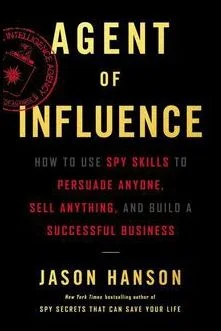
“Agent of Influence: How to Use Spy Skills to Persuade Anyone, Sell Anything, and Build a Successful Business” by Jason Hanson is a practical guide on how to use proven spy techniques to bolster your business strategies.
Bestselling author Jason Hanson, a former CIA special agent and founder of Spy Escape School, reveals how anyone can use spy tactics for increased success. Hanson teaches readers how to develop a winning sales personality and target the perfect business opportunity using the SADR cycle—spotting, assessing, developing, and recruiting. With this invaluable and unique handbook, you will become a more productive and confident professional.
Book Lessons:
1) Key Spy Lessons
Know your contacts contacts.
Spies don’t just know their contacts, they take the time to learn who their contacts are connected to. Who are their relatives, their neighbors or co-workers, expand your network by figuring out your contacts know.
Look at their feet.
Any time you notice someone’s feet pointing away from the person to whom they are talking to, it’s a clear signal that they do not want to engage in the conversation any longer. If their feet are pointing towards the exit, they likely want to head that way.
Hold proper eye contact.
Research shows that most people are comfortable with eye contact that lasts about 3.2 seconds, any more and people begin to feel too intimate or even threatening.
Listen for key words.
When you’re developing a connection with someone, listen to words they emphasize or frequently repeat. These key words will often give you insight into the person’s life.
Repeat their name.
It’s said that a person’s name is the sweetest and most important sound in any language. Make it a point to purposefully repeat the person’s name throughout a conversation to create the feeling that they are interesting and the center of attention.
Own your mistakes.
When something goes wrong in a business, the person in charge should take full responsibility, no matter whose fault it technically was. Take extreme ownership of the situation and set an example by fixing the problem, even if it wasn’t your wrongdoing.
2) Use the hourglass conversation to extract information
“By starting with a broad general topic, narrowing in on a specific topic, and then going broad again, you can quickly pull incredibly valuable information from someone without them suspecting you’re prying.”
One of the most important skills a spy needs to have in their arsenal, is the ability to extract information from people without them becoming suspicious.
This is done through a technique called “the hourglass conversation.”
It starts with the spy talking about a broad general topic, then narrowing the conversation to a specific topic where they can learn valuable information, and then going to a broad topic.
This method works extremely well because people tend to only remember the start and end of a conversation and often forget what happened in the middle.
For example, lets say a spy is at a global conference and wants to extract information from a chemical engineer about the kind of work he does.
The spy would start by making small talk about the atmosphere of the conference and the lectures, then ask about the line of work the engineer does and what he enjoys about his job and then finish by asking if the engineer knows any good places to get food around town.
“People often remember the beginning and end of a conversation–but not the middle. This is why spies ask the probing question in the middle of the conversation. This is how they can determine if their target has what they want without coming off as suspicious.”
Here’s how author Jason Hanson used the Hourglass conversation to land a gig with a billionaire businessman:
Hanson was at an exclusive event and knew a billionaire who had been receiving death threats was at the event. Hanson figured he could provide the businessman with personal security and having him in his network would lead to more lucrative jobs.
However, Hanson couldn’t just walk up to the businessman and announce that he should hire him. In fact, almost everyone in the room wanted to talk to the businessman.
Instead, Hanson took a different approach and talked to the billionaire’s girlfriend. He opened the conversation by talking about the food and event (general broad topic). He shifted the conversation to work and told her about his security company (narrow topic). The girlfriend then mentioned that she had been worried about her boyfriend’s safety and was looking to bring people in since he wasn’t going to do it himself.
After receiving this gem of information, Hanson took the conversation broad again and talked about their favorite hobbies. The two then exchange contact info and went back to the event.
Hanson reconnected with the girlfriend two days later and she was glad to hear from him. She ended up hiring his security company to provide training to her billionaire boyfriend as well as his entire board of directors!
3) Build Alliances, Not Contacts
“There’s a big difference between having a Rolodex full of powerful names and actually being able to put the names to good use.”
Hanson argues that finding a way to access someone isn’t the hardest part of networking, the real challenge is taking that relationship to a higher level.
Instead of having contacts, one should have alliances–an alliance is someone who views you as an asset in their own life, respects you as a peer and values your knowledge and expertise.
Alliances are built by making connections, finding commonalities and making the person feel comfortable.
The first main tactic intelligence officers use to build a relationship is matching and mirroring:
Spies will match and mirror the behavior of someone with whom they want to build an alliance since, generally speaking, people often feel more comfortable with others who are like them.
This technique involves observing the person’s posture, eye contact, physical proximity and other body language cues. “Mirroring cements the feeling that this person is a positive influence and someone we would like to have in our lives.”
A key point to remember is that you don’t have to mirror every behavior a person exhibits and to choose behaviors that feel natural and comfortable for you.
The second tactic is to create a bridge or establish commonalities with the person:
By sharing common interests you build rapport while gaining key insights into the person’s life.
Here are a few tips for building a bridge with someone:
Avoid one-upmanship where you try to be better than the person you’re talking to, don’t judge the person or they will avoid telling you personal information, don’t give advice unless specifically asked for, do not interrupt the person, make sure you’re an extraordinary listener, and use flattery but don’t over do it.
The third and last tactic is give to get to find common ground:
Most people aren’t going to openly share their fears or deep dark secrets with people they don’t know unless the other person opens up first or creates a warm, inviting outlet.
This doesn’t mean you dump your personal life story on a person you just met, but feel free to share bits and pieces of your personal life or your concerns about your business to get the other person to open up and start talking about their life or business.
Sincerity is equally as important as making useful connections so make it your goal to connect with people over a genuine commonality to achieve the best results. As Warren Buffet said, “It takes twenty years to build a reputation and five minutes to ruin it.”
Never risk your brand or personal reputation to make a connection based on a lie, it’s not worth it.
Book Review:
“Agent of Influence” by Jason Hanson is an easy-to-read guide on how business owners and entrepreneurs can apply lessons from the spy world towards business.
The book has a similar vibe to “Extreme Ownership" by Jocko Willink and Leif Babin, while also adding key lessons about negotiation, sales, and even has a bonus chapter explaining how to get on TV.
Overall, I’ve found this book to be both interesting and practical. The author does get a bit irritating since he tends to constantly self-promote himself, but aside from that he provides engaging stories, useful pieces of advice, and summarizes important takeaways and the end of each chapter.
Thank you Dey St. for sending me a copy of this book!
Rating: 4/5 Stars
Get the book here.

After reading 100+ books, here are the books I recommend reading.
Please consider supporting A&B or signing up for our monthly newsletter. Thank you!

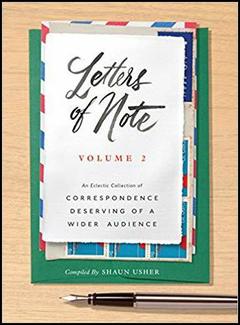
"Letters of Note: Volume 2" by Shaun Usher
Book summary and lessons from "Letters of Note: Volume 2” by Shaun Usher.
Get life advice from W.E.B. Du Bois, learn why you wouldn’t want to cross Michelangelo, and Kurt Vonnegut’s advice for high school students.
Book Summary:
“Letters of Note: Volume 2: An Eclectic Collection of Correspondence Deserving of a Wider Audience” by Shaun Usher is the companion volume to the instant classic “Letters of Note.”
Volume 2 follows a similar formula as the original and contains a collection of more than 125 captivating letters written by authors, scientists, celebrities, and ordinary people. Relive history with this beautifully designed book and gain insight into the personal lives of incredible figures.
There is an image of each letter and a transcript to go with it–the book is also filled with photographs, portraits and relevant artwork that adds a visual treat to this collection of text.
The book contains letters from:
Abraham Lincoln
Carl Jung
David Bowie
Dr. Seuss
J.K. Rowling
John Lennon
W.E.B. Du Bois
Winston Churchill
And many more.
Book Lessons:
1) Life advice from W.E.B. Du Bois
W. E.B. Du Bois was the first African American to earn a PhD at Harvard and cofounded the National Association for the Advancement of Colored People, an organization that fought for racial equality since its inception.
In 1914, his daughter, Yolande, who was soon turning fourteen, left home to study at Bedales School in England. Shortly after arriving, her father wrote a letter with some words of advice for her.

“You are in one of the world’s best schools, in one of the world’s greatest modern empires. Millions of boys and girls all over this world would give almost anything they possess to be where you are. You are there by no desert or merit of yours, but only by lucky chance.
”
“Deserve it, then. Study, do your work. Be honest, frank and fearless and get some grasp of the real values of life.
”
“The main thing is the YOU beneath the clothes and skin–the ability to do, the will to conquer, the determination to understand and know this great, wonderful, curious world. Don’t shrink from new experiences and custom. Take the cold bath bravely.
”
“Enjoy what is and not pine for what is not. Read some good, heavy, serious books just for discipline: Take yourself in hand and master yourself. Make yourself do unpleasant things, so as to gain the upper hand of your soul.
”
2) Don’t ever cross Michelangelo
Michelangelo di Lodovico Buonarroti Simoni, better known as simply Michelangelo, is one of the greatest artists of all-time. His work has become legendary and millions of people travel every year to see his paintings, sculptures, and artwork.
Michelangelo worked tirelessly and was well rewarded for his work, and shared his fortune with his family. However, one of his brothers, Giovan Simone, mistreated their father, which greatly upset Michelangelo. Michelangelo responded furiously by letter.
“It is said that when one does good to a good man, he makes him become better, but that a bad man becomes worse...You grow continually worse.
”
“I do not say that you are a scoundrel; but you are of such sort that you have ceased to give satisfaction to me or anybody. I could read you a long lesson on your ways of living; but they would be idle words.
”
“Now, I am sure that you are not my brother, else you would not threaten my father. Nay, you are a beast; and as a beast I mean to treat you.
”
“I have gone twelve years past drudging about through Italy, borne every shame, suffered every hardship, worn my body out in every toil, put my life to a thousand hazards, and all with the sole purpose of helping the fortunes of my family.
”
“Now that I have begun to raise it up a little, you only, you alone, choose to destroy and bring to ruin in one hour what is has cost me so many years and such labour to build up. By Christ’s body this shall not be; for I am the man to put to the rout ten thousand of your sort, whenever it be needed.”
3) Kurt Vonnegut’s advice for high school students
In 2006, a group of high school students were tasked with writing a letter to their favorite author and asking them to come visit their school. Five students decided to write to Kurt Vonnegut, the American writer who published 14 novels, three short story collections, five plays, and five works of non-fiction.
Although Vonnegut never made the trip to visit the school, he did write a wonderful letter to the students. Here are a few quotes from his response:
“I thank you for your friendly letters. You sure know how to cheer up a really old geezer (84) in his sunset years.”
“What I had to say to you, moreover, would not take long...Practice any art, music, singing, dancing, acting, drawing, painting, sculpting, poetry, fiction, essays, reportage, no matter how well or badly, not to get money and fame, but to experience becoming, to find out what’s inside you, to make your soul grow.
”
“Seriously! I mean starting right now, do art and do it for the rest of your lives.
”
“Here’s an assignment for tonight...Write a six line poem, about anything, but rhymed...Make it as good as you possibly can. But don’t tell anybody what you’re doing...Tear it up into teeny-weeny pieces, and discard them into widely separated trash recepticals.
You will find that you have already been gloriously rewarded for your poem. You have experienced becoming, learned a lot more about what’s inside you, and you have made your soul grow.
”
Book Review:
“Letters of Note: Volume 2” by Shaun Usher is just as aesthetically pleasing as Usher’s first book, however, I found Volume 2 much less interesting than the first. Out of the 125+ letters in this book, I’d say about only a dozen really caught my attention and made the book worth reading.
This opinion is of course biased and I would have loved to have seen more letters from writers offering advice on their craft or more letters such as the one W.E.B. Du Bois wrote, where readers could gain valuable life advice.
My recommendation would be to get the first volume of “Letters of Note” and if you truly love the book, then feel free to pickup the second volume.
You can also read the letters for free on Usher’s website here.
Rating: 2.5/5 Stars
If you’re interested in getting the book, you can do so here.
After reading 100+ books, here are the books I recommend reading.
Please consider supporting A&B or signing up for our monthly newsletter. Thank you!
Enjoying A&B?
Consider donating to keep the site up and running!