Top 10 Favorite Books of 2017
A lot of reading was done in 2017, in fact, I’ve managed to read 35 books. Here are my top ten favorite books of 2017 (in no particular order), enjoy!
A lot of reading was done in 2017, in fact, I managed to read 35 books. Most of the books were great, but a select few were truly amazing. These books were engaging, informative, and insightful. Here are my top ten favorite books of 2017 (in no particular order), enjoy!
10)

Book: "Zero To One" by Peter Thiel
Pages: 224
For: Anyone interested in creating or investing in startups, and understanding what successful startups have in common
Lesson: Gain a new perspective on business, learn what makes certain startups successful while others fail
9)

Book: "How To Win Friends & Influence People" by Dale Carnegie
Pages: 288
For: People interested in making a good first impression and building social relationships
Lesson: Learn how to become a great conversationalist, build social bonds, and communicate your ideas in a positive manner
8)

Book: "What Every BODY Is Saying" by Joe Navarro
Pages: 272
For: Anyone interested in psychology and wants to understand people's true thoughts and intentions
Lesson: Learn the meaning of body language and people's true feelings from an ex-FBI recognized expert on nonverbal behavior
7)

Book: "Grit" by Angela Duckworth
Pages: 352
For: People interested in learning about the traits and mindset needed to become successful in life
Lesson: Learn how people can become successful in life regardless of talent or I.Q., and the traits that help people accomplish incredible achievements
6)

Book: "Mindset" by Carol Dweck
Pages: 320
For: Anyone who wants to learn how to realize their own potential to the fullest
Lesson: Learn about the different mindsets of people and how you can change your mindset to fulfill your potential from one of the world's leading researchers in the field of motivation
5)

Book: "The War Of Art" by Steven Pressfield
Pages: 190
For: Anyone who is in a creative career or wishes to become a professional in a creative field
Lesson: Tips and advice on how to defeat fear and self-doubt and achieve your creative goals
4)

Book: "The Subtle Art Of Not Giving A F*ck" by Mark Manson
Pages: 224
For: Anyone interested in self-development or seeking a new perspective on life
Lesson: Embrace your faults, define your values and purpose and live a fulfilling life
3)

Book: "Trust Me I'm Lying" by Ryan Holiday
Pages: 352
For: Anyone interested in learning about the truth about online media
Lesson: Learn how online media, such as blogs, can be easily manipulated, how fake news spreads, and how corporations take advantage of the news
2)

Book: "How To Read Literature Like A Professor" by Thomas Foster
Pages: 336
For: Anyone interested in learning how to interpret literature and its deeper meanings
Lesson: Learn how to properly read and interpret literature to understand the deeper meaning behind literary devices such as setting, symbols, themes and more.
1)

Book: "Tools of Titans" by Tim Ferriss
Pages: 736
For: There is something for everyone in this book
Lesson: Learn the stories and strategies to success from billionaires, famous authors, professional athletes, business leaders, and icons.
Thank you for reading. If you're looking for more book recommendations, click here!





10 Powerful Quotes from “The Emperor’s Handbook”
- Book: “The Emperor’s Handbook” by Marcus Aurelius
- For: Anyone interested in philosophy, living a good life or looking for meaning in life
- Lesson: Learn to live a fulfilling life while being a virtuous person
- Book: “The Emperor’s Handbook” by Marcus Aurelius
- Pages: 160
- For: Anyone interested in philosophy, living a good life or looking for meaning in life
- Lesson: Learn to live a fulfilling life while being a virtuous person
Marcus Aurelius is known for his role as Emperor of Rome during the 2nd century AD when he ruled Rome at the height of its power and was, in many ways, the figure described in Plato’s dream of a philosopher-king.
When Marcus was three years old, his father passed away. Marcus was raised by his mother, and they moved in with their grandfather. When Hadrian, the emperor of Rome, visited the house, he believed Marcus was destined for greatness. In his will, Hadrian wrote that the next ruler should adopt Marcus. The new emperor, Antoninus Pius, did just that.
Marcus spent twenty years working with the emperor, learning how to rule and become a leader. After Antoninus Pius died, Marcus would assume the role of emperor of Rome.
Although Marcus became one of the most powerful men in the world, he did not chase wealth, power or fame. Nor did he fall to any other temptation of evil. He would rule Rome in a just and virtuous manner. He kept a journal where he wrote all the important lessons he learned during his life. This journal would become known as the “Meditations” or “The Emperor’s Handbook.” Here are ten powerful quotes from his book.

Sculpture of Marcus Aurelius
“Do not waste the rest of your life speculating about others in ways that are not to your mutual advantage. Think of all that might be accomplished in the time you throw away–distracted from the voice of your own true and reasonable self–wondering what the next man is up to and why, what he’s saying, or thinking, or plotting. Purge your mind of all aimless and idle thoughts, especially those that pry into the affairs of others or wish them ill.
”
2.
“If you pursue the matter at hand along the straight path of reason...if you keep your divine spirit pure and blameless, as though this were the moment to give it back; if expecting nothing and fearing nothing, you are content to act in accord with nature and to speak with heroic honesty–then you will live well. And no power on earth can stop you.”
3.
“Everyone dreams of the perfect vacation...you too long to get away and find that idyllic spot, yet how foolish...when at any time you are capable of finding that perfect vacation in yourself. Nowhere is there a more idyllic spot, a vacation home more private and peaceful, than in one’s own mind...take this vacation as often as you like, and so charge your spirit.
”
4.
“Is it not better simply to do what is necessary and no more, to limit yourself to what reason demands...this adds to the happiness of doing a few things the satisfaction of having done them well. Most of what we say and do is unnecessary anyway; subtract all that lot, and look at the time and contentment you’ll gain.
”
5.
“Look around you and see how everything is perpetually changing, and get used to the idea that nature loves nothing more than to change the things that are and to make more things like them come into being. In a way, everything is a seed of the thing that grows out of it.
”
6.
“Persuade me or prove to me that I am mistaken in thought or deed, and I will gladly change–for it is the truth I seek, and the truth never harmed anyone. Harm comes from persisting in error and clinging to ignorance.
”
7.
“The happiness of those who want to be popular depends on others; the happiness of those who seek pleasure fluctuates with moods outside their control; but the happiness of the wise grows out of their own free acts.
”
8.
“One thing alone troubles me: the thought that I might do what my true self does not will or that I might do what it wills in the wrong way or at the wrong time.
”
9.
“Don’t hanker after what you don’t have. Instead, fix your attentions on the finest and best that you have, and imagine how much you would long for these if they weren’t in your possession. At the same time, don’t become so attached to these things that you would be distraught if you were to lose them.
”
10.
“Why do you hesitate or second-guess yourself when you know perfectly well what ought to be done? If you know where you need to go, make a considerate but determined effort to get there. If you don’t, wait and seek the best advice you can find...Relaxed but alert, cheerful but determined–such is reason’s faithful follower.
”
Thank you for reading! If you're interested in getting the book, click here.

If you enjoyed this article, consider supporting our site or signing up for our monthly newsletter. Thank you!
Reader freebies:


5 Lessons From "What Every BODY Is Saying"
Have you ever been in a social situation where you wished you had telepathic powers and could read the other person’s mind? Although the ability to read minds is impossible, we can do the second-best thing, read body language.
Have you ever been in a situation where you wished you had telepathic powers and could read the other person’s mind? I’m sure everyone can relate. Perhaps this happened to you at a job interview, or on a first date. We all wish we knew how the person across from us really felt at that time. Although the ability to read minds is impossible, we can do the second-best thing, read body language.
Having spent 25 years as an FBI counterintelligence special agent and supervisor specializing in nonverbal communications, Joe Navarro provides an insightful book on how to read body language.
Here is some advice from Navarro’s book “What Every Body Is Saying.”
1) Establish Baseline Behavior
One of the first lessons that Joe teaches is to establish a baseline behavior of the person you’re observing. This is important because if you don’t have a baseline, it becomes quite easy to misinterpret the person's body language.
Imagine you’re having a conversation with a close friend and you ask him about his relationship with his spouse, he reacts by rubbing his eyes. This signal can mean several different things. It’s possible he’s having problems in his relationship, or perhaps your friend has allergies, or maybe his eyes are tired from spending all day looking at a computer screen.
If the friend has been rubbing their eyes and sneezing, it's safe to assume that he has allergies. If he's been rubbing his eyes the whole conversation, it's possible he is tired from work.
“Even in a single encounter with someone, you should attempt to note his or her “starting position” at the beginning of your interaction. Establishing a person’s baseline is critical because it allows you to determine when he or she deviates from it, which can be very important and informative.”
2) Look at The Distance
One nonverbal cue that is easy to read, is the distance between two individuals. In almost all scenarios, the closer two individuals are to each other, the more comfortable they are with one another.
When you’re talking and walking with your best friend, you’ll often notice that you rub shoulders or bump into each other now and then.
However, when two people aren’t fond of each other, they will keep their distance from the person.
This applies also to strangers. Look at how people sit on a public train or bus; two strangers are going to lean away from each other, while two friends usually lean towards one another.

People may also lean away from each other when they disagree while discussing business.
3) Focus on The Legs
Most people assume that the face is most likely to reveal a person’s true intentions and that this the prime place to look for nonverbal signals that reflect what the person is thinking. However, that is incorrect. The feet, along with the legs, is the most honest body part.
Since childhood, all of us have learned to lie with our words and our faces. When we see a relative we don’t like at an annual family gathering, we smile and tell them that it’s nice to see him or her, even though we despise them.
The same goes for poker matches. People learn to hide their facial expressions and talk in a neutral tone.
However, people rarely remember to hide their nonverbal behavior involving their feet and legs.
When an individual is wiggling and bouncing their feet and legs this is described as happy feet. This is a high-confidence tell that signals that a person is in an advantageous position or is getting what he wants.
Feet can also indicate a negative emotion since we tend to turn away from things that we don’t like or disagree with.

Feet can also tell us when it’s time to leave. If you’re having a conversation with someone and the person starts to turn one foot away or pointing it towards the door, it is a sign that the person wants to leave.
4) Signs of Dominance
In most cases, people who want to demonstrate dominance do so by spreading out and claiming territory. This can include spreading one’s arms apart on a surface or having your arm spread out on a chair.


Poses of dominance usually leave the individual open and not covering vital organs including the heart and genitals.

5) Facial Expressions
The face has the ability to display a variety of feelings, both positive and negative, and even fake emotions.
When someone hears something they don’t like or are angry, they will often squint their eyes. The more negative the news or event, the tighter one’s eyes compress.

When a person hears information they don’t believe, they may “roll their eyes” or move their eyes to the corner.

On the flip side, when a person is excited or filled with positive emotions, their eyes open up completely and look directly at the other person while smiling.
Navarro points out that a real smile forces the corners of the mouth up toward the eyes, while a fake smile moves the corners of the mouth toward the ears.

Body language is a fascinating form of communication that not many people are able to read. However, to completely understand what each body is saying, one must observe individuals and practice often.
Joe Navarro’s book is incredibly insightful and complete with images to help you better understand nonverbal cues. To learn more get the book by clicking the link below!


5 Fantastic Unrelated Books
Hey everyone, I apologize for not writing more articles these past few weeks. I’ve been studying for the GRE in hopes of applying to graduate school. Now that I completed the exam, I hope to be more consistent with these posts. Thank you for your support! – Alex W.
Hey everyone, I apologize for not writing more articles these past few weeks. I’ve been studying for the GRE in hopes of applying to graduate school. Now that I completed the exam, I hope to be more consistent with these posts. Thank you for your support! –Alex W.
Nothing in life stays the same. The Greek philosopher, Heraclitus, said over 2,000 years ago, “The only thing that is constant is change.” For that reason, I find it wise to try new things and take the road less traveled. So instead of discussing business books in this article, I will write about five unrelated but fantastic books.
Here are 5 fantastic unrelated great books I recommend:
5) The Art Of War For Writers by James Bell
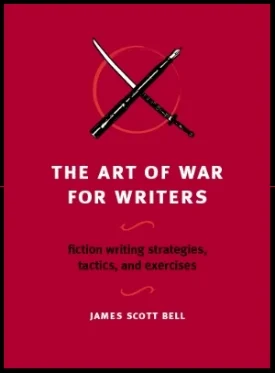
James Bell takes lessons from the famous military book, “The Art of War” by Sun Tzu, and applies it to writing. Bell provides tactics and strategies for everything from character building to editing to dealing with rejection.
In his book, Bell also covers the “dirty” or business side of being a writer. This includes finding an agent, submitting drafts to publishers and promoting your novel. The book is filled with insightful quotes and at approximately 260 pages it can be read in a day.
4) The Innovators by Walter Isaacson
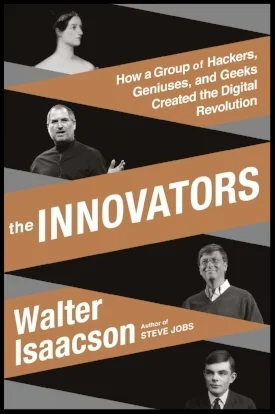
If you’re reading this, chances are you’re on your smartphone surfing the web. But exactly how are you doing this? How does your smartphone or laptop work? How does the internet work? Who invented the internet?
If you’ve ever been curious about finding out the answers to these questions, this is a book worth reading. Isaacson explains how computers, the internet, the mouse, smartphones are other internet related tools came to be. He goes on to talk about how innovation really occurs and how many of the greatest inventions of our time were a result of decades of collaboration.
3) Awaken The Giant Within by Anthony Robbins
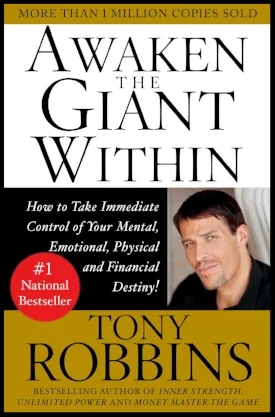
The terms “self-help guru” or “life coach” often have a negative connotation to them because of the outrageous claims made by these individuals. They claim they can change your life, increase your level of happiness and other extreme statements.
However, Tony Robbins is able to deliver on several of his promises. The book provides ways to improve your quality of life by using certain methods developed by Robbins. His methods are based on psychology, personal experiences, and research. He gives readers several examples to support each of his ideas and gives the reader exercises to help them achieve results.
2) Modern Romance by Aziz Ansari

If you’re a fan of Ansari’s stand-up or his Netflix series “Masters of None”, you’ll likely enjoy this book.
Technology, such as the Internet and smartphones, has had a major impact on dating. In his book, Aziz teams up with scientists to learn how technology has changed dating for men and women around the globe.
Through his research and personal experiences, Aziz provides tips for navigating the world of online dating. Being a comedian, Aziz manages to achieve a comedic tone throughout the book while providing insightful and interesting facts from his research.
1) The New Encyclopedia of Modern Bodybuilding by Arnold Schwarzenegger
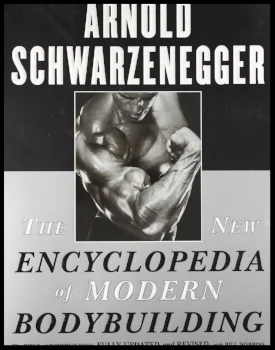
Although the title says bodybuilding, this book is more of a guide to anyone who lifts weight or is trying to get in shape. Arnold covers everything from finding the right gym to proper nutrition and diet, to treating injuries.
He also provides multiple workout regimens and tells readers how to properly train each muscle group for maximum results. The book is filled with images and shows how Arnold went from being a skinny young kid to one of the most famous bodybuilders in the world.
Arnold also writes about the importance of the mind in achieving your goals, whether you strive to lose weight or gain muscle. By reading this book you’ll have a deeper understanding of how to take control of your body and you’ll become more motivated to get in shape.
If you're interested in reading any of these books click the links below!

5 Lessons from "High Output Management"
The world is filled with mysteries and questions we may never know the answers too. Such as, why are we here on Earth, what is the purpose of our lives, and what do managers do? Management is a complex but necessary part of any organization. It is an essential skill needed to create and maintain a business. Luckily, there's book that serves as an excellent guide to navigating the world of management.
The world is filled with mysteries and questions we may never know the answers too. Such as, why are we here on Earth, what is the purpose of our lives, and what do managers do?
Management is a complex but necessary part of any organization. It is an essential skill needed to create and maintain a business. However, most books lack clear actions and examples to help readers become better managers.
Under the Business & Money book category on Amazon, Management & Leadership is the 2nd largest category with over 290,000 titles.
Luckily, there's a book that serves as an excellent guide to navigating the world of management.
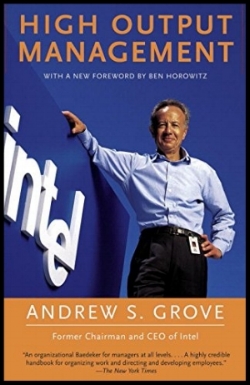
That book is High Output Management, by Andrew S. Grove.

Author Andrew S. Grove
If you haven't heard of Mr. Grove, here is a short summary.
He emigrated to the United States from Hungary because the country was occupied by Nazis. He arrived in New York and enrolled himself at the City College of New York despite not being able to speak English. He went on to get a Ph.D. from UC Berkeley. He helped build and run Intel as its president and CEO. He also taught at Stanford University Graduate School of Business for 24 years.
Grove's book has earned an almost legendary status. Ben Horowitz, the extremely successful entrepreneur and capital investor, says all the best managers know about the book, top venture capitalists give copies to their entrepreneurs, and aspiring leaders read it all the time.
In his book, Grove covers techniques for managing one's time, holding productive meetings, the proper way to train employees, and much more.
Below are only a few of the great lessons Andy Grove provides to readers:
1) Identify The Limiting Step In Your Activity
Groove starts his book in a unique way, by asking the reader to imagine they were a waiter serving breakfast. A customer asks for a boiled egg, toast and coffee.
What does this have to do with management?
Well whether you're making breakfast or microprocessors the principles are the same.
One of Grove's principles for better management is to identify the limiting step in your activity. The limiting step is the step in production that determines the overall shape of the operation.
In the breakfast example, the limiting step is the component that takes the longest to prepare. Since the coffee is already brewed and the toast only takes a minute, the answer is boiling the egg.
Since it takes the longest time to prepare, we should plan the entire job around the time needed to boil the egg. Grove provides a helpful diagram depicting the steps and time needed to make the breakfast.

“The key idea is that we construct our production flow by starting with the longest (or most difficult, or most sensitive, or most expensive) step and work our way back. ”
It would be inefficient to make the toast, pour the coffee, then boil the eggs because much more time would be spent and thus wasted. By identifying the limiting step and planning everything else around it, the process becomes much more effective.
The idea of a limiting step can also be applied to other scenarios, such as recruiting college graduates. To hire college graduates, Intel sends managers to visit colleges, conduct interviews and invites students to visit the company.
Intel pays the expenses (hotel, flight, etc.) for students visiting the company, therefore this becomes the most expensive and time-consuming part of the recruiting process. Thus, this becomes the limiting step for Intel.
Before issuing invitations to visit Intel, the company performs additional interviews by telephone to screen for the best candidates. This reduces the number of potential candidates that receive invitations to visit the company and therefore helps Intel save time and money.
2) Information Gathering Is Fundamental
According to Andy Grove, the three major kinds of managerial activities are: collecting information, conveying information and making decisions.
In order to conduct activities two and three well, a manager must first start by collecting information. There are a variety of ways to collect info. A manager can read books, magazines or visit sites online. They can also speak with analysts and customers. Andy however, favors a different method.
“The information most useful for me, and I suspect most useful to all managers, comes from quick, often casual verbal exchanges. This usually reaches a manager much faster than anything written down. And usually the more timely the information, the more valuable it is.”
Once a manager has gathered information, they must then convey it to others. A manager must communicate his objectives, priorities, and preferences. The last major task is decision-making. Grove points out that managers do make decisions every now and then but, the large part of their time is spent participating in the decision-making process rather than simply making decisions.
He continues by saying that the decision-making process depends on how well one comprehends the facts and issues facing the company. This ties back to the information gathering step. Conveying information and making decisions requires a base of information that a manager must have to face the issues, needs, and problems the company is facing.
“Information-gathering is the basis of all other managerial work, which is why I choose to spend so much of my day doing it.”
3) Delegate & Inspect
If you're successful at your job, you will be promoted to a manager. And as your team's performance increases, so will the number of employees you manage. As your team grows, you will have to review more of their work and delegate more tasks.
Given the choice, do you think it's better to delegate activities that you are familiar with or those that you aren't?
Grove believes the wise choice is to delegate tasks that you've done before. He says it is easier to monitor something which is familiar. Since you know about the task and how to perform it, you'll be better equipped to explain it to your subordinate. You'll also be able to see if they are performing the tasks correctly.
If you delegate tasks you aren't familiar with, it will be hard to know whether your employee is doing a good job or not.
After delegating, the next step is to inspect and monitor their work. Inspecting the work of your employees is similar to performing quality assurance tests in a production planet. The key is to monitor at the lowest-added-value stage of the process.
If you ran a furniture plant that made tables, you wouldn't make a table using rotten wood only to have customers say they won't buy it. Instead, you review the wood before you start production to make sure it will meet customer satisfaction.
The same principle can be applied to subordinates.
“Review rough drafts of reports…don’t wait until your subordinates have spent time polishing them into final form before you find out that you have a basic problem with the contents.”
As your employee's work gets better over time, decrease the time spent monitoring them.

4) Holding A Proper Meeting
Like going to the dentist or doing taxes, meetings have gained a reputation as an unpleasant but necessary part of life.
Before calling a meeting, it is important to identify what you're trying to accomplish. Make sure the meeting is necessary and justifiable.
“The chairman must have a clear understanding of the meeting’s objective–what needs to happen and what decision has to be made. The absolute truth is that if you don’t know what you want, you won’t get it.”
Grove writes that a manager's time plus overhead is about $100 per hour. So if a meeting involves ten managers and lasts two hours, it costs the company $2,000. If a single employee wanted to spend two grand on office equipment, they would most likely require approval from a supervisor. But, anyone can call a meeting and cost the company two-thousand dollars without any approval.

Meetings are an essential part of management.
The first step in calling a meeting is identifying who should attend and getting those people to commit to a time and place. The more people a meeting has the longer and harder it will be to accomplish the task at hand. Therefore, it is best to have no more than eight people in the meeting, say Grove.
The person organizing the meeting should send out an agenda of what will be discussed and what they hope to accomplish. The organizer must keep participants on track and on topic. If the task is accomplished early, end the meeting. If time is almost up but more discussion is needed, plan another meeting at a different date.
Once the meeting is over, send out an email summarizing the discussion that occurred, the decision made, and actions to be taken. Try to be as clear as possible, and tell participants what needs to be done, by whom, and by when.
5) The Importance Of Training
Andy begins his last chapter by talking about a new employee who was trained to operate a machine at their silicon fabrication plant. During the day, the machine shifted slightly out of tune, which resulted in defective finished products. Although the employee knew how to work the machine, she hadn't been taught to recognize the signs of an out-of-tune machine.
Grove says that by the time the situation was discovered, over a million dollars worth of material had been processed. It took two weeks to make up for the loss. This resulted in a delay in customer deliveries.
Whether you're a manager at a silicon fabrication plant or diner, proper training of employees is crucial to grow and maintain a successful business.
“Most managers seem to feel that training employees is a job that should be left to others, perhaps to training specialists. I, on the other hand, strongly believe that the manager should do it himself.”
Grove says that there are two ways a manager can raise the level of performance in their employees. The first is by increasing their motivation. The second is by increasing their capability, which is where training comes in.
Imagine a manager puts together 4-one hour training lectures for ten employees. Let's say it takes three hours to prepare for each lecture, therefore taking twelve hours in total to prepare. If those ten employees work full-time, then work approximately a combined total of twenty thousand hours for the company. If the training lectures result in even a 1% improvement in the subordinates' performance, the company will gain around two hundred hours of work as a result of the twelve hours the manager put in.
In other words, training can have an incredible ROI.
Grove goes on to say that Intel has a class catalog similar to that which you would find in a university. It lists over fifty different classes, ranging from proper telephone etiquette to complicated production courses. There are even classes for managers such as strategic planning.
Not only do employees learn new skills, the managers that teach often learn new things themselves. Preparing for lectures and presenting can improve the communication skills of a manager. Also, having to deal with a wide array of questions helps make the manager a master of their subject.
I hope you've enjoyed learning a few lessons from Andrew S. Grove's book, High Output Management. I recommend this book to anyone who manages employees (whether it's 1 or 1000+ employees). It is also great for entrepreneurs who wish to start their own company.
If you enjoyed this article, consider supporting our site or signing up for our monthly newsletter. Thank you!
Reader freebies:







How To Find Time For Reading
Books are wonderful tools that can educate and inspire people. Reading gives individuals new perspectives on life and allows them to travel time and space without ever leaving the comfort of their living room.
Most people I’ve talked to said they stopped reading books after high school or college. Of course, they wished they read more but they blame a lack of time as the culprit. Hearing this repeatedly, I decided to write an article to help others find time to read.
If there are two things everyone knows, it is that cigarettes are bad for you and reading books are good for you. Although smoking is bad for you, it seems people are able to start this habit without a guide or how-to article. Humans, unfortunately, tend to find it easier to pick up bad habits instead of good ones.
There are no how-to articles on becoming a chain-smoker, being obese or becoming addicted to Candy Crush. For some reason, our species picks up bad habits with ease.
Chain-smoking and obesity are both serious health issues that we can visibly see in our everyday lives. However, there is another prominent issue in our society, and that is the lack of reading books.
Books are wonderful tools that can educate and inspire people. Reading gives individuals new perspectives on life and allows them to travel time and space without ever leaving the comfort of their living room.
Most people I’ve talked to said they stopped reading books after high school or college. Of course, they wished they could read more but they blame a lack of time as the culprit. Hearing this repeatedly, I decided to write an article to help others find time to read.
If you’re wondering why reading is so important, here are 5 science-backed reasons:
1) Reading increases intelligence
2) Reading can make you more empathetic
3) Reading can help fight Alzheimer’s disease
4) Reading can help you relax
5) Reading can help you sleep
Below are 3 steps to help you find time for reading:
1) Record Your Time
Before you can ‘find time’ you must first find out where all your time is going. As the legendary management writer Peter Drucker says in his book The Effective Executive, “The effective executive therefore knows that to manage his time, he first has to know where it actually goes” (Page 27).
I’d recommend drawing out your day in a 24-hour time frame and breaking it down in 1 hour or 30-minute intervals. The more detailed your breakdown, the more you’ll benefit from this exercise.
2) Analyze Your Time
An average day consists of sleeping for 7 hours and working from 9 am to 5 pm. Here’s a breakdown of my day:
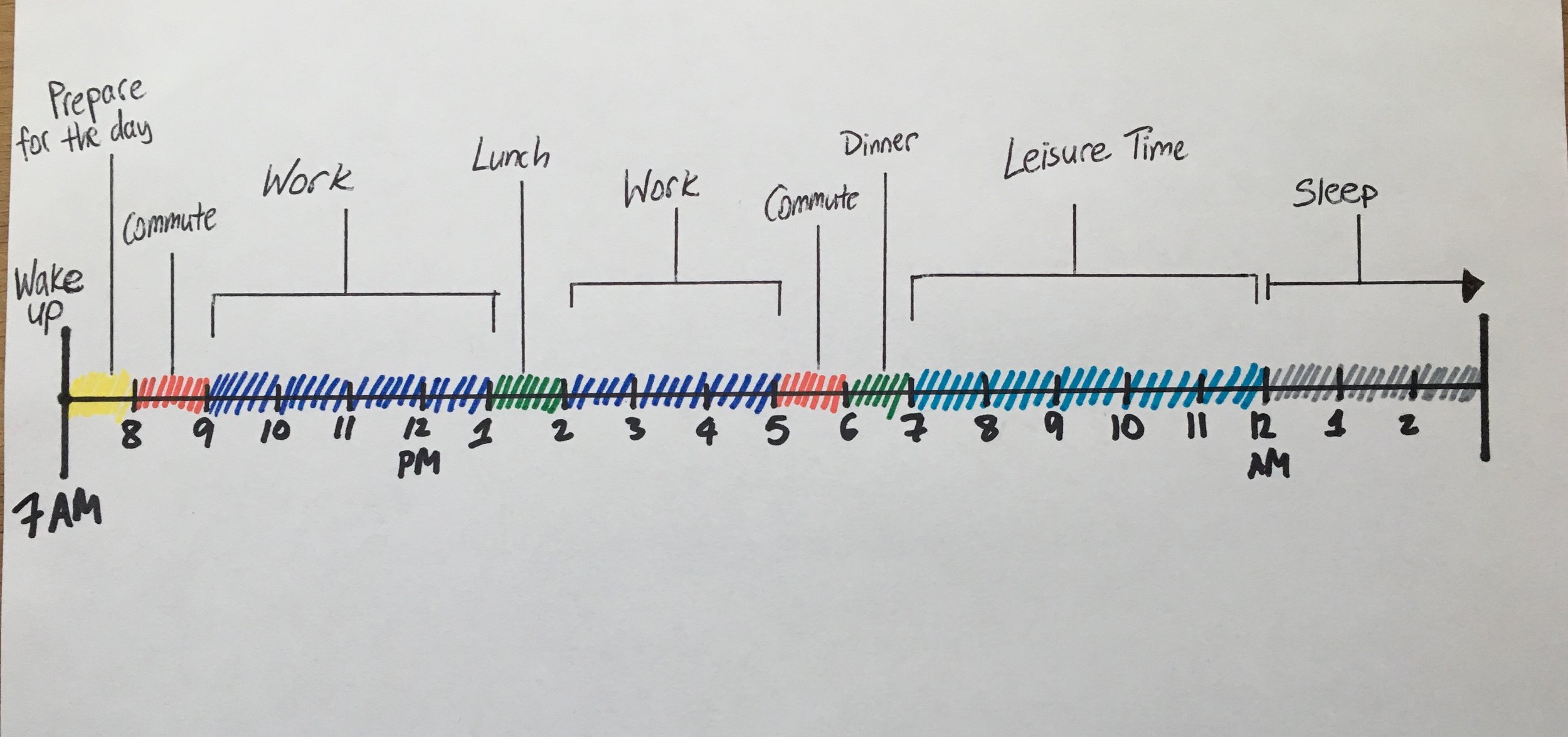
7 am – 8 am: Wake up and prepare the day
8 am – 9 am: Commute to work
9 am – 1 pm: Work
1 pm – 2 pm: Lunch
2 pm – 5 pm: Work
5 pm – 6 pm: Commute home
6 pm – 7 pm: Dinner
7 pm – 12 am: Leisure time
12 am – 7 am: Sleep
The ideal day would have 8 hours of sleep, 8 hours of work and 8 hours of free time. However, the truth is most people sleep less than 8 hours, work more than 8 hours and have less than 8 hours of free time.
After accounting for commuting and dinner, I have 5 hours left of free time. It’s recommended that everyone exercise daily for 30 minutes, plus traveling to and from the gym also takes up time. That leaves about 4 hours of leisure time that could be spent reading books. However, most people spend this time watching Netflix, playing video games, or hanging out with friends.
It isn’t the lack of time that is a problem, it’s the lack of priority. People watching Netflix tend to binge-watch, and playing video games whether it’s on your Xbox or iPhone tend to be extremely addictive.
One tip that’s helped me get more reading done is forcing myself to read for at least an hour before engaging in other leisure activities. Also, keep devices such as your phone and laptop in another room so you aren’t distracted by texts or tempted to check social media.
3) Look For Hidden Pockets of Time

According to the U.S. Census Bureau, the average travel time to work in the United States is 25.4 minutes. That means a round trip is approximately 50 minutes long. My commute is about an hour-long trip. Thus, I usually spend two hours on the train every day.
It may be hard sometimes to read a book on a train if you aren’t sitting down, but there's also the option of reading a book on your phone or kindle since it requires only one hand. This allowed me to get an extra hour of reading in every day.
Most employers give an hour lunch break but no one needs an hour to eat a sandwich. Instead, have a 30-minute lunch and spend the remainder of the time reading. This adds an extra 30 minutes of reading into your day.

Try to find pockets of time in your daily schedule for extra reading time.
Everyone should be exercising for physical and mental benefits. The Mayo Clinic says that as a general goal, adults should aim for 30 minutes of physical activity each day. However, this time could also be used for reading. Listen to an audio book while running or lifting weights.
Lastly, create a bedtime ritual of reading before going to bed. The National Sleep Foundation points out that scientists have found evidence that suggests light from electronics have the potential to disrupt sleep. They recommend turning off all devices for at least an hour before bed. Instead, spend time winding down with a good book. You’ll get some reading done and sleep better!
Hopefully by following these 3 steps you’ll be able to find plenty of time for reading. If you’re looking for a book to read I’d recommend checking out this list of 100 Books to read in a lifetime. Click the button below!
If you enjoyed this article, consider supporting our site or signing up for our monthly newsletter. Thank you!
Reader freebies:

3 Lessons from "The War of Art"
Almost everyone has heard of the book The Art of War; the famous strategy book about winning military battles. However, there is a great book by a similar title; The War of Art, that is about winning creative battles. If you’ve ever wanted to write a novel, become an artist, start a business or run a marathon, then I’d recommend reading The War of Art by Steven Pressfield.
Almost everyone has heard of the book The Art of War; the famous strategy book about winning military battles. However, there is a great book by a similar title; The War of Art, that is about winning creative battles.
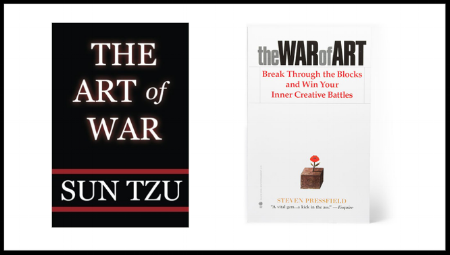
Two fantastic books. To read my article on The Art of War, click here.
If you’ve ever wanted to write a novel, become an artist, start a business or run a marathon, then I’d recommend reading The War of Art by Steven Pressfield. Pressfield is a bestselling author and screenwriter who knows a lot about winning creative battles.
This book shows readers how to identify, defeat, and unlock the inner barriers to creativity. Here are 3 lessons learned from The War of Art:
1) Define The Enemy
Pressfield begins the book by telling readers a secret:
“There’s a secret that real writers know that wannabe writers don’t, and the secret is this: It’s not the writing part that’s hard. What’s hard is sitting down to write. What keeps us from sitting down is Resistance.”
Before I began typing this article, I faced Resistance. I told myself I’d start writing right after eating breakfast. I made myself a large bowl of oatmeal. This filled me up, but for some reason, I decided to cook an egg afterward. Then I had a craving for a bagel, so I walked down to the deli to get one. Even though I was full after eating oatmeal, for some reason I kept putting off starting this article. This is exactly what Resistance does to people.
Resistance is what prevents people from achieving their goals and living a fulfilled life. It stops writers from writing, painters from painting, and entrepreneurs from starting a new ventures. If you’ve ever bought a treadmill or workout gear from your home and never used it, you’ve encountered Resistance.
Resistance comes in many shapes and forms. It is an invisible and repelling force. It’s negative and tries to distract and prevents us from doing our work.

Resistance has many faces.
“In other words, any act that rejects immediate gratification in favor of long-term growth, health or integrity. Or, expressed another way, any act that derives from our higher nature instead of our lower. Any of these will elicit Resistance. ”
As mentioned before, Resistance comes in many forms. Sometimes it takes the shape of anxiety or nervousness. Pressfield writes about Henry Fonda, the American film and stage actor with a career spanning five decades. Henry would throw up before each stage performance, even when he was 75 years old.
“In other words, fear doesn’t go away. The warrior and the artist live by the same code of necessity, which dictates that the battle must be fought anew every day. ”
Another common form of Resistance is procrastination. We end up convincing ourselves that we will do something, but just not today. We don’t say, “I’m never going to start my novel.” Instead, we say, “I’m going to write my novel; I’m just going to start it tomorrow.” And as we all know, tomorrow almost always means never.
Resistance can also be associated with fear. Pressfield says that fear is good because it can be used as an indicator of what we should be doing.
“Remember our rule of thumb: The more scared we are of a work or calling, the more sure we can be that we have to do it[...]If it meant nothing to us, there’d be no Resistance. ”

Author Steven Pressfield.
2) Combating Resistance
Now that we’ve identified the enemy, it is time to find ways to defeat it. Pressfield says that one of the first steps people must take is going pro.
“The amateur plays for fun. The professional plays for keeps. To the amateur, the game is his avocation. To the pro it’s his vocation. The amateur is a weekend warrior. The professional is there seven days a week. ”
Turning pro means you’re willing to commit. If you want to start a business or write a novel, you need to commit to the process. This is a difficult hill for most people to get over because they know that once they get to the other side, they will encounter a mountain of pain.
“The artist committing himself to his calling has volunteered for hell, whether he knows it or not. He will be dining for the duration on a diet of isolation, rejection, self-doubt, despair, ridicule, contempt, and humiliation. ”
Although war can be hell, Pressfield provides 10 principles to help us win this war:
1) We show up every day.
2) We show up no matter what.
3) We stay on the job all day.
4) We are committed over the long haul.
5) The stakes for us are high and real.
6) We accept remuneration for our labor.
7) We do not overidentify with our jobs.
8) We master the technique of our jobs.
9) We have a sense of humor about our jobs.
10) We receive praise or blame in the real world.
Pressfield, a former marine, knows that war can be tough. It took him 17 years to get his first professional writing job. He worked on a major film and believed it would be a blockbuster hit. Unfortunately, it fell flat. Pressfield knew that this was the price he had to pay for being in the game. He made the decision to not give up and keep working. This was the moment he realized he had become a pro.
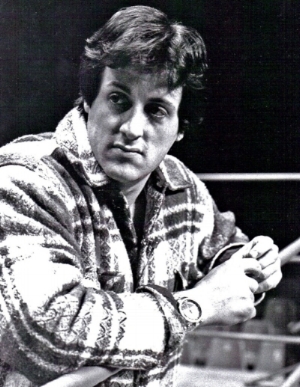
Sylvester Stallone fought Resistance and won. His film, Rocky (1976) won 3 Oscars.
Another screenwriter that didn’t give up, was Sylvester Stallone. After writing the script for Rocky, he received several large offers for it but turned them down because he also wanted to play the main character. Eventually, Stallone managed to find a studio that bought the script and allowed him to play the part of Rocky Balboa.
Stallone faced rejection multiple times before he won his war with art. Likewise, most artists will face similar hurdles. The war of art is filled with rejection and criticism.
When we get rejected we feel it in our gut. The pain, although mental, feels like a punch in the stomach. Pressfield writes about a friend who worked on a novel for years and after finishing it, couldn’t find the energy to send it. His fear of rejection held him back. Resistance uses fear of rejection to paralyze and prevent us from doing our work, and then from showing it to others.
“The professional cannot take rejection personally because to do so reinforces Resistance. Editors are not the enemy; critics are not the enemy. Resistance is the enemy. The battle is inside our own heads. We cannot let external criticism, even if it’s true, fortify our internal foe. ”
To win the battle with Resistance, the professional must be open to criticism. Use it to learn and grow. Detach your ego from your work and seek constant feedback to improve your craft.
3) Beyond Resistance
If you’re still having trouble with Resistance, Pressfield offers a final thought to help win the war. First, ask yourself, what you were put on this earth to be? Are you meant to be an artist, a scientist or perhaps a diplomat? And what would happen if you didn’t pursue your destiny?
“If you were meant to cure cancer or write a symphony or crack cold fusion and you don’t do it, you not only hurt yourself, even destroy yourself. You hurt your children. You hurt me. You hurt the planet. ”
J.K. Rowling was rejected several times before she finally got her book published. She was 32 when the first Harry Potter novel was released. Reid Hoffman had a Ph.D. in Philosophy and worked in academia. It wasn't until he was 36 that he founded LinkedIn.
Both of these individuals made significant contributions to the world. Imagine if you were destined to make the next positive impact but you let Resistance hold you back.

Gandhi started his career as a lawyer. If he had remained a lawyer, who knows if India would have become an independent country.
Pressfield ends his book with the following paragraph:
“Creative work is not a selfish act or bid for attention on the part of the actor. It’s a gift to the world and every being in it. Don’t cheat us of your contribution. Give us what you’ve got. ”
Thank you for reading my article. These are just a few lessons from The War of Art. To learn more, click the button below.
If you enjoyed this article, consider supporting our site or signing up for our monthly newsletter. Thank you!
Reader freebies:
7 Lessons from "The Emperor's Handbook"
Imagine a boy being born in Rome in 121 A.D. At three years old, the boy's father dies and he is raised by his mother. At seventeen years old, the boy is adopted by the emperor of Rome. A few years later, he marries the emperor's daughter. By 139 A.D., he assumes the title of Caesar. Afterward, he soon becomes the emperor of Rome and thus, one of the most wealthy and powerful individuals in the world.
- Book: “The Emperor’s Handbook” by Marcus Aurelius
- Pages: 160 pages
- For: Anyone interested in philosophy, living a good life or looking for meaning in life
- Lesson: Learn to live a fulfilling life while being a virtuous person
Imagine a boy being born in Rome in 121 A.D. At three years old, the boy's father dies and he is raised by his mother. At seventeen years old, the boy is adopted by the emperor of Rome. A few years later, he marries the emperor's daughter. By 139 A.D., he assumes the title of Caesar. Afterward, he soon becomes the emperor of Rome and thus, one of the most wealthy and powerful individuals in the world.
How do you think this story ends?
If the phrases "power corrupts and absolute power corrupts absolutely" and "money is the root of all evil" are true, then if this boy was like most people, he would have succumbed to the evils of money, and power. However, this boy was different.
He would rule the Roman empire at its height without becoming tainted by the seduction of wealth or power that had corrupted many of his predecessors. This boy knew how to live the good life, how to find happiness, and how to make the right decisions.
That boy was Marcus Aurelius.

Marcus Aurelius as a boy (image link).
Towards the end of his life, Marcus wrote down notes to remind him of his guiding principles and to hold himself accountable to them. These notes have become The Emperor's Handbook.
Here are 7 important lessons learned from The Emperor's Handbook by Marcus Aurelius:
1) Purge Your Mind of Idle Thoughts
“Do not waste the rest of your life speculating about others in ways that are not to your mutual advantage. Think of all that might be accomplished in the time you throw away–distracted from the voice of your own true and reasonable self–wondering what the next man is up to and why, what he’s saying, or thinking, or plotting. Purge your mind of all aimless and idle thoughts, especially those that pry into the affairs of others or wish them ill. ”
Think of all the time you've spent today thinking negative thoughts or wondering what others think of us. It's something we all do, although we all know it is a bad habit. We spend time overthinking and overanalyzing certain conversations or arguments we've had in our day.
We've all had arguments with a friend or spouse where we replay the conversation in our heads for hours thinking of the perfect comeback or insult.
Is this really the best use of our time?
Marcus doesn't believe it is. He encourages us to not waste our time with these idle thoughts. Nor should we spend time wishing others ill. Focus on improving your life, not damaging the lives of others.
2) Avoid The Inferior Loves Of Life
“Nothing whatsoever–neither popularity, nor wealth, nor power, nor the pleasures of the flesh, nor anything of the sort–should compete in your affection for the good that flows from reason and neighborliness. Although for awhile these inferior loves may seem quite compatible with an orderly life, they will soon overpower and destroy you.”
We all know people that spend their time chasing popularity, wealth, power or pleasure. However, Marcus advises us against chasing these inferior loves. He believes that the only thing people should pursue is goodness and kindness.
Although Marcus Aurelius had fame, wealth, and power due to being the emperor of Rome, he didn't pursue or indulge in these traits.
It seems almost every day there is a news report on a new celebrity, government official or business leader that has been involved in a scandal. Celebrities are constantly having meltdowns due to all the media attention and paparazzi (e.g. Britney Spears). Government officials chasing power can be corrupted by it (e.g. Bill Clinton). Business leaders chasing wealth lose focus of other priorities (e.g. Wells Fargo CEO John Stumpf).

Emperor Marcus Aurelius.
3) Your Mind Is Your Vacation Home
“Everyone dreams of the perfect vacation–in the country, by the sea, or in the mountains. You too long to get away and find that idyllic spot, yet how foolish…when at any time you are capable of finding that perfect vacation in yourself. Nowhere is there a more idyllic spot, a vacation home more private and peaceful, than in one’s own mind.”
Most of us take vacations to get away and to relax. But how many of us have gone on vacation and it was the opposite of relaxing. Perhaps, you went to Mexico and it rained all week. Or maybe you traveled to England only to find out there is construction going on right next to your hotel room.
Marcus argues that a person doesn't need to travel across the country or sea to find their vacation home. The perfect vacation spot is in our minds and we can reach it anytime. Sometimes meditating during your lunch break can be more peaceful and relaxing that being on a crowded beach in Cancun.
Many people have come to this same conclusion. Yoga spots are popping up in almost every neighborhood, corporate offices have meditation rooms, and more business leaders and health officials talk about the importance of finding time to meditate daily.

4) Remove What Is Unnecessary
“Is it not better simply to do what is necessary and no more, to limit yourself to what reason demands of a social animal and precisely in the manner reason dictates? This adds to the happiness of doing a few things the satisfaction of having done them well. Most of what we say and do is unnecessary anyway; subtract all that lot, and look at the time and contentment you’ll gain. On each occasion, therefore, a man should ask himself, ‘Do I really need to say or do this?’”
A lot of us spend our days being busy but when the day is almost over, we feel as if we didn't accomplish much and wish for more time. Marcus' advice solves both of these problems.
He advises us to only do what is necessary and do it well instead of doing many tasks, much of which are probably unnecessary anyway. If this advice sounds familiar, it is because Peter Drucker was also an advocator of this technique.
Before performing an activity, take a second and ask yourself, do I really need to do this? This will allow you to spend your time focusing on only important matters.
5) Be Like The Third Fellow
“There are three kinds of men in this world. The first, when he helps someone out, makes it known that he expects something in return. The second would never be so bold, but in his mind he knows what he has done and considers the other person to be in his debt. The third somehow doesn’t realize what he has done, but he’s like a vine that bears fruit and asks for nothing more than the pleasure of producing grapes. A horse gallops, a dog hunts, a bee makes honey, one man helps another, and the vine bears fruit in due season. You ought to be like that third fellow, who does good without giving it a second thought. ”
The first type of man is the kind that will help you but will want something in return. The second isn't as obvious but he also would like something in response to helping. However, the third fellow helps simply because it is his nature.
Just like it is a horse's nature to gallop, it should be human nature to help others. Help simply because it is your nature, not because you expect something in return.
6) Overlook The Wrongs Of Others
“When someone wrongs you, ask yourself: What made him do it? Once you understand his concept of good and evil, you’ll feel sorry for him and cease to be either amazed or angry. If his concept is similar to yours, then you are bound to forgive him since you would have acted as he did in similar circumstances. But if you do not share his ideas of good and evil, then you should find it even easier to overlook the wrongs of someone who is confused and in a moral muddle. ”
There are two things to take away from this quote. First, if someone wrongs you, ask yourself if you would have acted the same way if you were in their shoes. If yes, forgive the way they act.
For example, imagine you were in a crowded subway and someone shoves you to get into the train. If you were in their position would you act the same way? If you had an important business meeting with a CEO and needed to get on the train to make the meeting on time, would you shove your way onto the train? If so, do not get mad at that person for you would act the same way in their position.
Secondly, understand that not all individuals have the same ideas of right and wrong. People are all raised differently from different cultures, environments, and religions. Thus, there is no universal sense of good and evil.
For example, imagine you're walking home at night and a man comes up to you and threatens to stab you unless you give him your wallet. From your perspective, you see this as an act of evil. However, the thief might have a different perspective. Say he grew up in an orphanage and spent much of his life homeless. Say it's winter and he hasn't eaten all day. Say he has never actually stabbed someone but knows it's a quick way to get money to buy food. This doesn't justify the act of stealing, however, it is important to realize the thief is in a moral muddle and doesn't have the same ideas of good and evil.
7) Accept Corrections And Adjust
“Remember that you don’t lose any freedom by changing your mind and accepting the correction of someone who points out your errors. After all, it’s your initiative, your judgement, indeed your intelligence that makes change and acceptance possible.”
Life is complex and filled with information. Sometimes we make decisions and are afraid to change our position even when new information suggests a better solution. Often, it is our ego that fears being wrong (Ryan Holiday elaborates on this idea). Especially when someone points out any mistakes we may have made.
However, Marcus points out that changing our mind is our decision. It would be unwise to stick to your original position if presented with information that outlines your mistakes. It is better to correct our mistakes and make a better decision moving forward. This is what makes change possible.
These are just a few lessons learned from The Emperor's Handbook. To learn more about leading a good life, finding happiness and making the right decision, I recommend reading the whole book. It's less than 150 pages long, click the link below to learn more.

If you enjoyed this article, consider supporting our site or signing up for our monthly newsletter. Thank you!
Reader freebies:

5 Business Lessons from "Zero to One"
When Elon Musk and Mark Zuckerberg give a book positive praise, you know it is worth reading. Zero to One is that book. Written by Peter Thiel, the billionaire who co-founded PayPal (he and Elon worked at PayPal together) and Palantir. He also made the first outside investment in Facebook and funded companies like LinkedIn and SpaceX.
When Elon Musk and Mark Zuckerberg give a book positive praise, you know it is worth reading. Zero to One is that book. Written by Peter Thiel, the billionaire who co-founded PayPal (he and Elon worked at PayPal together) and Palantir. He also made the first outside investment in Facebook and funded companies like LinkedIn and SpaceX.
Thiel's book is about creating something new and fresh, instead of making an existing product better. To make something out of nothing, hence the meaning of the book's title.
Here are 5 business lessons learned from Zero to One:
1) Go From 0 to 1, Not 1 to n
“Of course, it’s easier to copy a model than to make something new. Doing what we already know how to do takes the world from 1 to n, adding more of something familiar. But every time we create something new, we go from 0 to 1”
Going from 1 to n is copying an existing model, but going from 0 to 1 is creating something new and fresh. When Bill Gates created Microsoft Word, his company went from 0 to 1. When Larry Page and Sergey Brin created Google, their company went from 0 to 1.
However, when Microsoft tried to copy Google and created Bing, that was a 1 to n moment. Similarly, when Google tried to copy Microsoft and created Google Docs, that was a 1 to n moment.
Thiel notes the importance of startups because most startups focus on creating something new, going from 0 to 1. Startups embrace risk and have a mission to improve the world, while established corporations shy away from risk and have a mission to improve their revenue.

Peter Thiel, the author of Zero to One.
2) Avoid Competition
“Your company could create a lot of value without becoming very valuable itself. Creating value is not enough–you also need to capture some of the value you create. This means that even very big businesses can be bad business”
Thiel uses the airline industry vs Google to demonstrate his idea.
Airlines create hundreds of billions of dollars of value each year but the airlines only made 37 cents per passenger trip. Compare that to Google, which creates less value but captures more of it. In 2012, Google brought in $50 billion in revenue while airlines brought in $160 billion. However, Google kept 21% of those revenues as profits.
In fact, Google makes so much money that it's worth 3x more than every U.S. airline combined. This is because airlines compete with each other while Google has little to no competition.
If you've ever taken an economics class, you've learned about perfect competition.
In perfect competition, the market achieves equilibrium when producer supply meets consumer demand. If there is money to be made, new firms will enter the market, increase supply, drive prices down and thus eliminate profits for others.
This is what is happening to the airline industry. Last year 18 airlines were established; the year before that, 38 airlines were established.
Because airlines are, for the most part, an undifferentiated commodity business (many carriers can get you to the same destination), they compete mainly on the basis of price and availability.
This benefits the consumer in the short term because it keeps prices low but it hurts the company in the long term. No company can make a significant economic profit because if there is money to be made new companies will enter and eat away at any additional profit.
3) Why Monopolies Are Good
“Monopolies drive progress because the promise of years or even decades of monopoly profits provides a powerful incentive to innovate. Then monopolies can keep innovating because profits enable them to make the long-term plans and to finance ambitious research projects that firms locked in competition can’t dream of”
When Thiel mentions monopolies, he isn't referring to illegal bullies or government favorites, but rather creative monopolies. These monopolies give customers more choices by adding new categories of abundance to the world.
The government knows this, that's why they work hard to create monopolies (by granting patents to inventors).
Take Apple's iPhone as an example. Apple helped create the smartphone market with the iPhone and was rewarded with a monopoly share of the smartphone industry. Customers were happy to pay more to get a smartphone that actually worked.
Google is another good example. They have a monopoly on the search market. In May 2014, Google had 68% of the market while Microsoft had 19% and Yahoo had 10%. Since Google has a safe and reliable stream of revenue, they have been able to invest in new products and services. Google has expanded into wearable computers, Android phones, and driverless cars.

The airline industry depicts a perfect competition scenario, the top 3 U.S. airlines are all basically the same and thus have almost equal market share. Google, on the other hand, has been able to monopolize the search market and owns more than two-thirds of the market.
4) Characteristics of a Monopoly
“Every monopoly is unique, but they usually share some combination of the following characteristics: proprietary technology, network effects, economies of scale and branding”
The first characteristic, proprietary technology, is the most important. It is the most sustainable advantage a company can have because it makes your product difficult or impossible to replicate. Your technology should be 10 times or 10x better than your closest competitor.
PayPal's technology was 10x better because instead of having to mail a check that could take 10 days, PayPal let buyers pay the very same day.
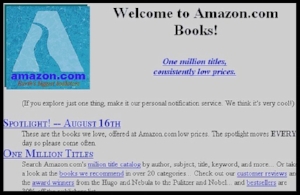
Amazon's homepage in 1995. It had over one million titles to offer to customers.
Similarly, Amazon was 10x better than bookstores because they had 10x more books than a typical retail store. A large retailer could have 100,000 titles in their store, meanwhile, Amazon offered millions of titles. This is because Amazon didn't have any inventory, instead, they simply requested the title from its supplier whenever a customer made an order.
The second characteristic is network effects. This means the product becomes more useful as more people use it. For example, if all your friends and co-workers are on LinkedIn, it wouldn't make sense for you to join a different professional social network.
The third characteristic is economies of scale. As a business gets bigger, the fixed costs of creating a product can be spread out and the cost per unit decreases. This is especially beneficial for software companies. Once the product is created, the marginal cost of producing another copy of the product is close to zero.
The last characteristic is branding. Creating a strong brand is a powerful way to claim a monopoly because you want consumers to think of your brand and feel connected to it. However, a monopoly cannot be built on brand alone. In 2012, the new CEO of Yahoo! rebranded the company in hopes of making it cool again but didn't announce any new product improvements. Yahoo! has since been sold to Verizon.
5) Building a Monopoly
“Brand, scale, network effects, and technology in some combination define a monopoly; but to get them to work, you need to choose your market carefully and expand deliberately”
Your company should start with a very small market, this doesn't mean a nonexistent one. An ideal market is a small group of people concentrated together and served by few or no competitors.
In 1999, eBay had a few thousand users who were high-volume "Powersellers." PayPal focused on serving these individuals, and within three months, 25% of them were using PayPal.
The next goal is to scale up. Once your startup dominates a niche market, then you should expand into a related or slightly broader market. Amazon started with selling books. It then expanded into CD's, videos and software. It continued to add new categories and is now known as the everything store.
Today, eBay sells everything from toys to clothing to cars. But, it didn't jump straight into selling sports cars. EBay launched it auction marketplace in 1995 and focused on niche markets such as Beanie Babies.
Lastly, being the first mover is good, but being the last mover is better. When a company is the first entrant into a market, they take significant market share while other companies scramble to catch up. But this is only a tactic, not a goal.
The last mover is the company that makes the last great development in a specific market and enjoys years or even decades of monopoly profits. Contrary to popular belief, Google wasn't the first search engine. WebCrawler was created in 1994, Yahoo in 1995, and Ask Jeeves in 1996.

It wasn't until two years later, in 1998, that Google was founded. And the rest, as they say, is history.
These are just a few of the lessons learned from Zero to One. If you're interested in learning more, click the link below.
Get the book here: Zero to One

If you enjoyed this article, consider supporting our site or signing up for our monthly newsletter. Thank you!
Reader freebies:

5 Great Classic Books To Read
Business books are awesome. There is so much to learn from marketing to strategy to management. However, every now and then I like to read a new genre to widen my perspective on life. One genre that has helped me expand my outlook is classic books.
Business books are awesome. There is so much to learn from marketing to strategy to management. However, every now and then, I like to read a new genre to widen my perspective on life. One genre that has helped me expand my outlook is classic books.
Here are the 5 great classic books I recommend:
5) The Old Man and The Sea by Ernest Hemingway
Hemingway wrote this novel with great simplicity and power. It played a large part in winning him the 1954 Nobel Prize for Literature.

The story revolves around an old fisherman who hasn’t caught a fish in months. So, he heads far out in hope of landing a large catch. Eventually, he hooks a giant marlin but it is too big to get into his small fishing boat. He ties the marlin to the boat and attempts to bring it back to town while fighting off sharks that are eating his catch.
This book teaches how one can find success in failure and why perseverance is so important in life.
4) The Prince by Niccolo Machiavelli
When someone mentions Machiavelli, people automatically think of a villain or master manipulator. However, most people haven’t even read his book or understand the context of his writings.

Machiavelli lived during the dark ages in a time when there was civil unrest in Italy and wars in other parts of the world. As a government official, Machiavelli traveled frequently on diplomatic missions and studied the art of ruling a state.
Throughout the book, Machiavelli talks about what it takes to be a great and respected leader.
If you’re interested in philosophy, politics or power, this book is a must read.
3) Fahrenheit 451 by Ray Bradbury
Written over 60 years ago, this sci-fi novel takes place in the future which when described, is a bizarrely accurate depiction of our modern-day society. In the book, people have remarkably fast cars, wireless communication devices, and virtual reality system in their homes.

However, one main difference is that in Bradbury’s future, instead of firemen putting out fires, they start them. Books have been outlawed and firemen are ordered to burn all books.
One firefighter, Guy Montag, finds something missing from his life and thus starts reading books. Realizing that books are critical for learning and living, Montag rebels against the firefighters and attempts to reintroduce books into society.
2) The Picture of Dorian Gray by Oscar Wilde
If you’ve ever wondered how different life would be if you were immortal then look no further. Everyone thinks immortality is a gift, but it can also be a curse.

In this novel, Dorian Gray meets a painter who insists on creating a portrait of Dorian. Once the painting is completed, Dorian is amazed by the artwork. However, he becomes depressed once he realizes that the portrait will be forever beautiful while he will grow old and ugly. Dorian wishes to trade places with the picture and his wish is granted. Dorian ends up going down a path filled with drama, lust, murder and revenge.
Oscar Wilde is a brilliant writer and the book is filled with quotable lines in every chapter. The book is also filled with many moral lessons from which everyone can learn a thing or two.
1) The Great Gatsby By F. Scott Fitzgerald
Children are constantly showed films and television shows where in the end, everyone lives a wonderful life and things end happily ever after. However, as kids mature, they learn the truth about life. Life is a never-ending roller-coaster of emotions. At times, it can be horrible or it can be wonderful. None of us know whether there will be a happy ending in our lives or not. And that is exactly why this book is timeless.

Gatsby grew up poor on a farm but had big dreams of becoming rich and successful. He enlisted in the army but before he was sent off, he found his soulmate, Daisy, and fell in love with her. When he returned home he learned that she had married some wealthy businessman. Gatsby worked hard and became a rich man although his business operated illegally. He then attempts to rekindle Daisy’s love for him, however, Daisy’s husband isn’t fond of simply letting her go.
This novel is generally considered to be F. Scott Fitzgerald’s finest work and one of the great novels of the twentieth century.
If you're interested in reading any of these books, please click on the title below:
Enjoying A&B?
Consider donating to keep the site up and running!