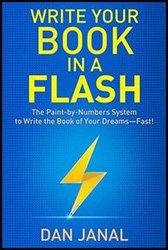
"Write Your Book In A Flash" by Dan Janal
Book summary and lessons from "Write Your Book In A Flash" by Dan Janal
Learn how to outline your book, overcome imposter syndrome and more.
Dan Janal has written more than a dozen book and is an award-winning reporter and editor.
Book Summary:
“Write Your Book in a Flash: A Paint-by-Numbers System to Write the Book of Your Dreams—FAST!” by Dan Janal provides readers with an easy to follow step-by-step guide on how to write a non-fiction business book.
Janal gives readers a clear system for writing a book and provides several examples along the way. Whether you are a business executive, thought leader or entrepreneur, this book will act as your personal Virgil and show you the path to finishing that book you’ve always wanted to share with the world.
Here are a few lessons the book teaches readers:
How to write a simple outline that makes the writing process faster and easier
How to research interesting ideas, stories, and facts so you never run out of ideas or information
How to overcome “The Imposter Syndrome” and other limiting beliefs that stifle nearly every would be author
And much, much more.

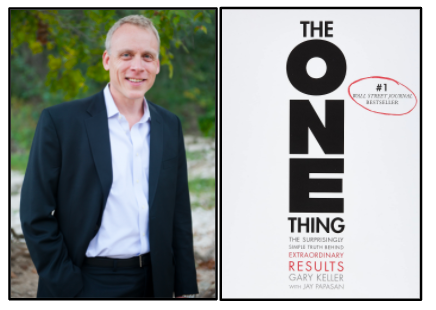
Author Dan Janal (source).
Dan Janal has written more than a dozen books. He is an award-winning daily newspaper reporter and business newspaper editor. He holds a master’s degrees in journalism from Northwestern University’s famed Medill School of Journalism.
Book Lessons:
1) How to overcome imposter syndrome
“It’s not unusual for an author to suffer from a horrible condition known as Imposter Syndrome. Even highly successful people in business and education think they are not worthy of success because there is someone better out there.”
It is not uncommon for first-time writers to feel like imposters. They might think that there are better writers or smarter people in the world which is true, but that doesn’t mean you yourself aren’t smart or can’t write.
You don’t have to be the smartest person in the world or write like Hemingway to be an author, if that were true almost no one would write books.
Author Dan Janal says that even Lin-Manuel Miranda, the creator of the hit show “Hamilton” dealt with Imposter Syndrome. He said: “Anytime you write something, you go through so many phases. You go through the ‘I’m a fraud’ phase. You go through the ‘I’ll never finish’ phase.”
And if you truly are a rotten writer, you can always hire a writing coach to guide you through the process, work with a ghostwriter or have a professional editor look over your drafts.
2) How to overcome limiting beliefs
“Here’s a wonderful exercise to overcome limiting beliefs...Think of a limiting belief, and write it in the space below. Think of five reasons why this belief is not true, and write them in the spaces below.”
Another obstacle writers will face on their journey to create a book is the self-doubt and limits they put on themselves.
A writer might have the belief that they don’t have anything to say. If this or another limiting belief pops into your mind, Janal recommends that you come up with 5 reasons that prove the opposite.
“I write a blog every week, so I must have something to say.”
“People respond to my blogs, so they must like what I say.”
“My blog readers ask if I’m writing a book.”
And so on.
Another limiting belief is “I don’t have time to write a book.”
Here is what Janal says:
“I can wake up an hour earlier to write.”
“Instead of watching TV, I can write.”
“I can go to sleep an hour later and use that time to write.”
“I can write while I’m waiting for my kids to finish their soccer practice.”
“I can hire a ghostwriter or work with a book coach.”
If you ever find yourself in a situation where self-doubt or limiting belief start taking over your head, remember to list 5 things you can do to overcome that limiting belief.
3) How to finish and edit your first draft
“The research is the easiest. The outline is the most fun. The first draft is the hardest because every word of the outline has to be fleshed out. -Ken Follett
”
When it comes to finishing your first draft, the most important part is getting it done.
As Janal writes, “It doesn’t have to be perfect. It doesn’t have to look pretty. It doesn’t even need to have all your facts and stories. It just has to get done.”
Janal says that writers shouldn’t expect their first draft to be a masterpiece. In fact, many of his first drafts are disorganized and filled with holes, but that is okay.
Like Anne Lamott, the author of “Bird by Bird” the classic book about writing, said, all first drafts are “shitty first drafts.”
However, it is only once you’ve completed the first draft that you can begin cleaning and polishing it.
That is where editing comes in.
But remember that writing and editing are two separate activities.
Jean Feingold, the author of “The Benefits of Concrete Block Homes” said:
““Don’t edit while you write. Writing and editing are two different activities. Just keep writing as long as ideas come to you. When you reach a stopping point, go back, run spell-check, correct any grammatical errors, and repair any holes in your thinking. This first edit is only designed to fix the rough edges. You will do many more edits before your book is ready for people to read.” ”
During the editing process, your aim should be to cut useless words that dilute your message.
It may be hard to cut words after putting in the time and sweat to write them, but Janal assures writers that it will make their book better.
Janal says that for “Write Your Book In A Flash” he cut more than a thousand words from the first draft.
Here are a few editing tips:
“That” can usually be removed. If it sounds good without it, cut it.
The same goes for the word “the” and “of.”
You can usually cut words like very, just, and only.
Janal writes that a typical editor can cut 2-3% of your draft. However, it is important to remember that editing occurs multiple times on the road to publishing. As Feingold wrote above, “You will do many more edits before your book is ready for people to read.”
So finish your first draft and get to editing!
Conclusion:
“Write Your Book in a Flash” does an excellent job of providing readers with a proven system for writing a business book. It doesn’t debate the pros and cons of self-publishing and traditional publishing, but instead, it shows people how to write the book that always wanted to share with the world.
The book answers many questions first-time authors will have, such as how to outline their book and overcome imposter syndrome. Janal provides exercises to empower novice authors and examples to help readers who may be stuck in a rut.
Overall, if you’re someone who would like to write a non-fiction business book, this book is worth picking up.
Rating: 4/5
If you’re interested in getting the book, click here or on the images below.

Learn more about Dan Janal here:
Here are a few similar books:
After reading 100+ books, here are the books I recommend reading.
Please consider supporting A&B or signing up for our monthly newsletter. Thank you!

"Tribe" by Sebastian Junger
Book summary and lessons from "Tribe: On Homecoming and Belonging” by Sebastian Junger.
Learn why being richer doesn’t equal being happier, why war boosts mental health and why soldiers miss war.
A fantastic book about tribes, PTSD, war and more.
Book Summary:
The book “Tribe: On Homecoming and Belonging” by Sebastian Junger combines history, psychology, and anthropology, to explore what people can learn from tribal societies about loyalty, belonging, and the eternal human quest for meaning.
“Tribe” explains the irony that-for many veterans as well as civilians–war feels better than peace, adversity can turn out to be a blessing, and disasters are sometimes remembered more fondly than weddings or tropical vacations. It also explains why people are stronger when they come together, and how that can be achieved even in today's divided world.

Sebastian Junger is a New York Times bestselling author of Tribe, War, The Perfect Storm, Fire, and A Death in Belmont.
Book Lessons:
1) Richer doesn’t often equal happier
“People in countries with large income disparities–like the United States–run a much higher lifelong risk of developing severe mood disorders. ”
Most people assume that as a country gets richer, it’s citizens get happier.
While there is some truth in that belief, it’s also true that “people in wealthy countries suffer depression at as much as eight times the rate they do in poor countries, and people in countries with large income disparities–like the United States–run a much higher lifelong risk of developing severe mood disorders” (20).
And it gets worse, “urban North American women–the most affluent demographic of the study–were the most likely to experience depression.”
Why is this the case?
Poor people tend to share their time and resources with one another more often while wealthy people often isolate themselves which can lead to a “greatly increaded risk of depression and suicide” (21).
The same effect can be seen in the legal profession.
More than 6,000 lawyers were surveyed in 2015 and the study found that successful lawyers (those with the most billable hours) had zero correlation with levels of happiness and well-being reported by the lawyers themselves. “In fact, public defenders, who have far lower status than corporate lawyers, seem to lead significantly happier lives.”
Another interesting fact is that “Mexicans born in the United States are wealthier than Mexicans born in Mexico but far more likely to suffer from depression” (22).
However, the deeper one dives into the subject, it becomes clear that it’s not the war military members miss, but the feeling of being in an incredibly tight-knit tribe.
Why do wealthier countries and people tend to be less happy?
It’s because modern society seems to emphasize extrinsic values (money, status, beauty) over intrinsic ones (family, relationships, well-being).
Instead of chasing wealth, people should aim for the three basic needs described by self-determination theory:
The need to feel competent at what they do
The need to feel authentic in their lives
The need to feel connected to others
2) How war boosts mental health
“Communities that have been devastated by natural or man-made disasters almost never lapse into chaos and disorder; if anything, they become more just, more egalitarian, and more deliberately fair to individuals. ”
During World War II, English authorities predicted that German attacks would produce 35,000 casualties a day in London alone.
During the war, waves of German bombers flew over London for 57 consecutive days and dropped thousands of tons of explosives, killing hundreds of people at a time.
London residents would see the dead lying in ruble or watch as a bomb vanquished dozens of people in seconds.
And yet, there was no mass hysteria or widespread mental illnesses. “Psychiatric hospitals around the country saw admissions go down...admissions to psychiatric wards noticeably declined, and even epileptics reported having fewer seizures.” (47-48).
These positive effects of war on mental health weren’t just in England, “when European countries went to war, suicide rates dropped. Psychiatric wards in Paris were strangely empty during both world wars, and that remained true even as the German army rolled into the city in 1940” (48).
One possible explanation for this phenomenon is that “When people are actively engaged in a cause their lives have more purpose...with a resulting improvement in mental health” (49).
Interestingly, just a bombing London didn’t slow down its citizens when the Allies bombed the Germans, they found that “Industrial production actually rose in Germany during the war. And the cities with the highest morale were the ones...that were bombed the hardest” (51).
This doesn’t mean violence is the answer to improving mental health, but it does show that people feel better when they have more involvement with their community and a clear purpose.
3) Why soldiers often miss war
“In combat, soldiers all but ignore differences of race, religion, and politics within their platoon. It’s no wonder many of them get so depressed when they come home.”
War is a paradox. It is a complex operation, but it also simple to understand.
There are the “good guys” and “bad guys.” As Junger notes, in combat, it doesn’t matter what skin color or political views a soldier holds, as long as he’s on your side, he’s part of the team.
However back in the United States, people divide themselves among political parties, religion, and other ideologies.
In the war, there is also a strong sense of a tribe. Soldiers are constantly with one another, they eat together, they work together, they sleep near several other soldiers, rarely is one alone.
The tribal bond is so strong that in times of extreme combat, a soldier may risk his life or sacrifice himself to save his brothers. But when these men return from war and enter the civilian world, that tribal bond is no longer there.
Junger brilliantly explains this feeling by saying, “Soldiers experience this tribal way of thinking at war, but when they come home they realize that the tribe they were actually fighting for wasn’t their country, it was their unit” (110).
Conclusion:
“Tribe: On Homecoming and Belonging” by Sebastian Junger finally explains the many paradoxes about war and soldiers.
By combining history, psychology and personal experiences, Junger teaches readers the many lessons of why people seek belonging and crave the chance to be part of a strong and connected tribe.
The book shines light and the positive effects of war, why PTSD develops and how to best combat it, and how people can come together in today’s divided world.
This book is a must read for anyone who has served in the military, knows someone with PTSD or is looking to learn more about war and soldiers.
Rating: 4.5/5
If you’re interested in getting the book, click here or on the images below.


After reading 100+ books, find my most recommended books here.
Please consider supporting A&B or signing up for our monthly newsletter. Thank you!

Books Bought in 2018 (and total cost)
In 2018 I read 38 books, but I actually bought 66 books.
Find out how much each book cost and how much I spent on books last year.
In 2018 I read a total of 38 books, but I actually bought 66 books. Almost all of the books I bought were used (to save money) and very rarely do I buy new books (with the exception of author events). However, even by buying second hand books, the total cost of books can add up.

My ever growing library.
Similarly to what I did last year, I decided to review all of my book purchases to find out exactly how much I've spent on books in 2018.
In 2017, I bought 52 books which totaled $414.61 or $7.97 per book. Let’s check out the stats for 2018.
Here is the cost of Every book I bought in 2018:
$7.98 Living with a SEAL: 31 Days Training with the Toughest Man on the Planet
$7.57 Nudge: Improving Decisions About Health, Wealth, and Happiness
$4.99 When I Stop Talking, You'll Know I'm Dead: Useful Stories from a Persuasive Man
$11.98 A Billion Wicked Thoughts: What the Internet Tells Us About Sexual Relationships
Book review: "A Billion Wicked Thoughts” by Ogas & Gaddam
$4.99 A Million Little Pieces
$9.48 The Paradox of Choice: Why More Is Less, Revised Edition
$10.95 How to Fail at Almost Everything and Still Win Big: Kind of the Story of My Life
$18.89 The Dichotomy of Leadership: Balancing the Challenges of Extreme Ownership to Lead and Win
$10.87 Subliminal: How Your Unconscious Mind Rules Your Behavior
Book review: "Subliminal” by Leonard Mlodinow
$4.00 The Doctor and the Soul: From Psychotherapy to Logotherapy, Revised and Expanded
$16.63 Tribe of Mentors: Short Life Advice from the Best in the World
$12.57 Discipline Equals Freedom: Field Manual
Book review: "Discipline Equals Freedom" by Jocko Willink
$6.04 Tao Te Ching
$10.31 How to Read a Book: The Classic Guide to Intelligent Reading
$10.95 The Road to Wigan Pier
$10.19 The Alchemist
$7.96 The Undiscovered Self: With Symbols and the Interpretation of Dreams
$19.19 The Director's Manual: A Framework for Board Governance
$5.99 The Truth about Leadership: The No-fads, Heart-of-the-Matter Facts You Need to Know
$8.79 The Monk Who Sold His Ferrari: A Fable About Fulfilling Your Dreams & Reaching Your Destiny
Book review "The Monk Who Sold His Ferrari” by Robin Sharma
$9.56 The Aquariums of Pyongyang: Ten Years in the North Korean Gulag
A great book about life in North Korea: "The Aquariums of Pyongyang"
$11.75 This Way for the Gas, Ladies and Gentlemen (Penguin Modern Classics)
$10.71 The Compound Effect
An excellent book, learn more here: "The Compound Effect” by Darren Hardy
$12.09 Unit 731 Testimony
A horrifying book but necessary to remember: UNIT 731: A Book About Evil and War Crimes
$3.00 The Acts of King Arthur and His Noble Knights: (Penguin Classics Deluxe Edition)
$4.99 The Fault in Our Stars
$8.94 Man and His Symbols
$3.00 Essential English for Journalists, Editors and Writers (Pimlico)
$4.44 Modern Man in Search of a Soul
One of my all time favorites, read more here: "Man's Search for Meaning" by Viktor Frankl
$10.47 The Book of Five Rings
$4.99 Rogue Warrior
$8.71 Smarter Faster Better: The Secrets of Being Productive in Life and Business
Book review: "Smarter Faster Better” by Charles Duhigg
$6.07 On Writing: 10th Anniversary Edition: A Memoir of the Craft
Book review: "On Writing" by Stephen King
Find Stephen King’s favorite books here.
$9.37 Writing To Learn
$7.44 The Sense of Style: The Thinking Person's Guide to Writing in the 21st Century
$10.39 The Power of Myth
Book review: "The Power of Myth" by Joseph Campbell
$7.70 The Dragons of Eden: Speculations on the Evolution of Human Intelligence
Book review: "The Dragons of Eden" by Carl Sagan
$7.49 Wild at Heart: Discovering The Secret of a Man's Soul
Book review: "Wild At Heart" by John Eldredge
$10.80 Make Your Bed: Little Things That Can Change Your Life...And Maybe the World
Book review: "Make Your Bed" by William McRaven
$6.97 Lolita
$9.75 The ONE Thing: The Surprisingly Simple Truth Behind Extraordinary Results
An excellent book about productivity and time management, read my takeaways here.
$4.33 The Forgotten Highlander: An Incredible WWII Story of Survival in the Pacific
A great book about POWs in WWII, read more here.
$16.67 Extreme Ownership: How U.S. Navy SEALs Lead and Win (New Edition)
Highly recommend this book, read my takeaways here.
$15.57 12 Rules for Life: An Antidote to Chaos
Highly recommend this book, read my takeaways here.
Bonus: 6 Profound Quotes from "12 Rules for Life" by Jordon Peterson
Total Cost: $ 493. 22
Interesting Figures:
Number of books purchased: 66
Average book price: $7.47
Most expensive book: $19.19 The Director's Manual: A Framework for Board Governance
(Of course the most expensive book is a college textbook…)
Least expensive book: $3.00 Essential English for Journalists, Editors and Writers (Pimlico)
Well there you have it, I spent a little over $493 on books last year.
Keep in mind that the cost listed does not include shipping. In total, I think it’s safe to say that I spent $500+ or so altogether.
It may silly to spend this much on books, but I consider books to be an investment, not an expense.
Instead of spending cash on cable, beer, drugs or other hobbies, I spend my money on books. All hobbies cost money, but very few will give you a positive return and improve your life.
That’s why I recommend more people should start reading books, you won’t regret it!
Before you go:
As you can see the cost of books adds up, throw in the cost of maintaining a website and it comes out to several hundreds dollars a year. However, I truly enjoy reading and writing and want to continue sharing awesome lessons and knowledge with everyone. Thus, I ask viewers to consider donating to help keep this site up and running, every dollar counts!
If I’m able to turn this into a full-time career, I’d be able to read a lot more books and share many more important lessons learned from books. I also promise to keep the site ad-free and strive to provide interesting and educational content.
If you’re not able to donate but still want to support the cause, sign up for our newsletter here and follow AlexandBooks on social media (Twitter, Instagram).
Thanks everyone! -Alex
*PS: The links on my website are Amazon affiliate links, Amazon pays me a small fee for each item purchased. Important Fact: It doesn't affect the price of your purchase at all and it helps keep this website up and running ad-free.*

The 40+ Books Leo Tolstoy Recommends Reading
Count Lev Nikolayevich Tolstoy, better known as Leo Tolstoy, is one of the greatest authors of all time.
He is best known for writing “War and Peace” and “Anna Karenina.”
Here’s a list of books Tolstoy recommends reading!
Count Lev Nikolayevich Tolstoy, better known as Leo Tolstoy, was a renowned Russian writer and perhaps one of the greatest authors of all time. Best known for his two novels “War and Peace” and “Anna Karenina”, Tolstoy also wrote several short stories and a semi-autobiographical trilogy.
Author Virginia Woolf once called Tolstoy “the greatest of all novelists.” Even today, over a hundred years after his death, Tolstoy’s thousand long page books are still in print and continue to sell well.

Portrait of Leo Tolstoy (source).
A few of Tolstoy’s bestselling books.


“Rest, nature, books, music, love for one’s neighbor — such is my idea of happiness.”
Being one of the greats is no easy feat so I began to research which books Tolstoy loved most during his life in an attempt to gain insight into what influenced this genius writer.
According to an article by Russia Beyond, Tolstoy decided to compile a list of his own 100 must-read books after reading and being dissatisfied with author John Lubbock’s list which was published in 1891.
However, Tolstoy found that creating a list of the 100 greatest books to be difficult, so instead, he sent a letter to his publisher Mikhail Lederle with 45 books that impressed him the most. Tolstoy’s list contains a wide range of books from religious texts to Chinese philosophy, and is divided into five ages of man with their actual degree of influence ("enormous," "v. great," or merely "great").
Tolstoy’s list of the 45 books he recommends reading:
Childhood to the age of 14 or so:
Pushkin’s poems: Napoleon - Great
The Little Black Hen by Pogorelsky - V. great
The story of Joseph from the Bible - Enormous
Dobrynya Nikitich, Ilya Muromets, Alyosha Popovich. Folk Tales - Enormous
Age 14 to 20:
History of the Conquest of Mexico by William Prescott - Great
The Overcoat, The Two Ivans, Nevsky Prospect by By Nikolai Gogol - Great
Dead Souls by Nikolai Gogol - V. great
Die Räuber by Friedrich Schiller - V. great
Polinka Sachs by Aleksandr Druzhinin - V. great
Yevgeny Onegin by Alexander Pushkin - V. great
A Sportsman’s Sketches by Ivan Turgenev - V. great
The Hapless Anton by Dmitry Grigorovich - V. great
A Sentimental Journey by Laurence Sterne - V. great
A Hero for our Time by Mikhail Lermontov - V. great
Nouvelle Héloise by Jean-Jacques Rousseau - V. great
Viy by Nikolai Gogol - Enormous
Emile by Jean-Jacques Rousseau - Enormous
David Copperfield by Charles Dickens - Enormous
Confessions by Jean-Jacques Rousseau - Enormous
Age 20 to 35:
Afanasy Fet’s poems - Great
Aleksey Koltsov’s poems - Great
Fyodor Tyutchev’s poems - Great
The Odyssey and The Iliad by Homer (read in Russian) - Great
Phaedo and Symposium by Plato (in Cousin’s translation) - Great
Victor Hugo. Notre Dame de Paris - V. great
Hermann and Dorothea by Johann Wolfgang von Goethe - V. great
Age 35 to 50:
George Eliot. Novels - Great
Anthony Trollope, Novels - Great
Mrs. [Henry] Wood. Novels - Great
The byliny - V. great
Anabasis by Xenophon - V. great
The Odyssey and The Iliad by Homer (in Greek) - V. great
Les Misérables by Victor Hugo - Enormous
Age 50 to 63:
Book of Genesis (in Hebrew) - V. great
Progress and Poverty by Henry George - V. great
Epictetus - Enormous
Pensées by Blaise Pascal - Enormous
All the Gospels (in Greek) Enormous
Lao-Tzu. Julien [S. Julien, French translator] - Enormous
On the Buddha. Well-known Frenchman [“Lalita Vistara”] - Enormous

Portrait of Tolstoy, 1887 (source).
How many books on Tolstoy’s list have you read?
I’ve read only a couple books on this list (the English versions), but it looks like I have a lot more reading to do. If there’s a book on here that you think is a must-read, let me know in the comments below!
You may also want to check out these book recommendations from:
If you want to check out my list of recommended books, you can find that here.
If you enjoyed this article, consider supporting our site or signing up for our monthly newsletter. Thank you!
This article was based on several articles. The sources can be found here, here and here.
*The links throughout this site are Amazon affiliate links. Amazon pays me a small fee from each purchase which helps keep this website up and running ad-free. It does not affect the price of your purchase in any way.*

The Best Quotes from "The Alchemist" by Paul Coelho
Book summary and my favorite quotes from “The Alchemist” by Paulo Coelho
At 197 pages, this book can be read quickly in as little as two or three days.
However, the passages you read from this book will likely stick with you for years or decades to come.
Book Summary:
The book tells the magical story of Santiago, a shepherd boy who longs to travel in search of a worldly treasure. Santiago experiences a recurring dream of a great treasure hidden thousands of miles away at the base of the Egyptian Pyramids.
Along the way, he meets a Gypsy woman, a man who calls himself a king, and an alchemist, all of whom point Santiago in the direction of his quest. No one knows exactly what the treasure is or if Santiago will be able to overcome the obstacles on his path.
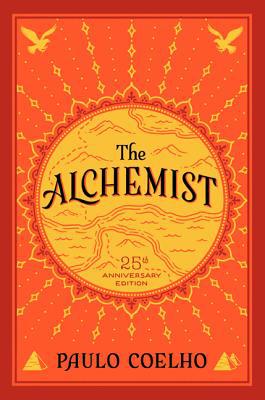
Early into his journey, Santiago finds himself in a town where he doesn’t speak the language, is robbed and left completely alone. He contemplates giving up and turning around, but decides to carry on. He finds a job in a crystal shop and saves up money to return home, but then decides to risk it and continue his quest for the treasure.
Santiago meets a girl named Fatima who he falls in love with but must leave her to continue his journey. On his way to the pyramids, Santiago is taken prisoner by a local tribe. Santiago’s friend on this journey, tells the tribesmen that Santiago is a powerful magician and then tribe offers to set them free if he can prove it.
Santiago then asks the elements (stick with me here) to help him turn himself into the wind (yes, the wind) and somehow does it. This scares the tribesmen so they free Santiago and his friend.
Santiago finally makes his way to the Pyramid and finds some gold when he is attacked by robbers. When asked what he is doing there, Santiago replies that he had a dream of a treasure buried at the base of the Pyramids. One of the robbers laughs at him, and mentions that he has had the exact same dream, except that in his dream, the treasure was buried in an abandoned church in Spain (which is where Santiago first started his journey).
The story then jumps forward in time and finds Santiago digging a hole at the base of the tree where he had had his first dream. Sure enough, he finds a trunk full of gold–enough for him and Fatima to live happily for a long time.
The book is essentially a tale of the journey being equally important as the end goal, because of all the experiences and lessons one learns throughout their quest. Just like Santiago, the book encourages readers to find and pursue their life purpose, no matter how discouraged they may at times feel.
Santiago shows readers how to earn to trust their hearts, read the seemingly inconspicuous signs, and understand that as we look to fulfill a dream, the universe works with us to do the same.

Author Paulo Coelho.
Book Quotes:
The “The Alchemist” by Paulo Coelho was published over 25 years ago and has sold over 65 million copies to date. Although every reader will have their own opinion of what they enjoyed about the book, here are my personal favorite quotes from it:
“The problem is that they don’t even realize that they’re walking a new road every day. They don’t see that the fields are new and the seasons change. All they think about is food and water. Maybe we’re all that way, the boy mused.”
““What’s the world’s greatest lie?” the boy asked, completely surprised. “It’s this: that at a certain point in our lives, we lose control of what’s happening to us, and our lives become controlled by fate. That’s the world’s greatest lie.” ”
“People say strange things, the boy thought. Sometimes it’s better to be with the sheep, who don’t say anything. And better still to be alone with one’s books. They tell their incredible stories at the time when you want to hear them. But when you’re talking to people, they say some things that are so strange that you don’t know how to continue the conversation.”
““When you want something, all of the universe conspires in helping you to achieve it,” he had said.”
““I don’t want to change anything, because I don’t know how to deal with change. I’m used to the way I am.””
““When someone makes a decision, he is really diving into a strong current that will carry him to places he had never dreamed of when he first made the decision.” ”
““In pursuit of the dream, he was being constantly subjected to tests of his persistence and courage.” ”
““People are afraid to pursue their most important dreams, because they feel that they don’t deserve them, or that they’ll be unable to achieve them.” ”
““The world we live in will be either better or worse, depending on whether we become better or worse. And that’s where the power of love comes in. Because when we love, we always strive to become better than we are.”
”
Conclusion:
“The Alchemist” by Paulo Coelho is an enjoyable fiction book that anyone can understand. At first, the story may seem too simple: a boy leaves home on a quest to find treasure, encounters foes and friends, gets his treasure stolen by thieves, but then realizes the real treasure was right where he started.
And it is true, the story is simple. But perhaps that is what makes this book loved by millions of readers. A simple story with simple lessons that can be applied to anyone’s life.
Lessons such as: Life is about the journey, follow your dreams, it may not be easy but it will be worth it, what you’re seeking is also seeking you, and many more.
At 197 pages, this book can be read quickly in as little as two or three days. However, the passages you read from this book will likely stick with you for years or decades to come.
Rating: 4.5/5
If you’re interested in getting the book, click here or on the image below.

For just a few dollars, a book can give you an enormous amount of valuable information that can help you improve your life. It’s practically highway-robbery. So take advantage of this and read as much as you can.
If you want to check out my list of recommended books, you can find that here.
If you enjoyed this article, consider supporting our site or signing up for our monthly newsletter. Thank you!

What Dr. Peterson Got Right & Wrong About "A Billion Wicked Thoughts"
Jordan Peterson talks about the book “A Billion Wicked Thoughts” in his YouTube lecture.
The book covers male and female desire, attraction and more.
Here is what he got right and wrong about the book.
Let me begin by saying this is not a hit piece on Jordan Peterson–if you’re familiar with my site, you’ll notice I’ve written about Peterson’s book “12 Rules for Life” and am a fan of his work–with that said, no one is perfect (myself included) and we all make mistakes, even Dr. Peterson.
“Rule 11: Be Precise In Your Speech.”
In one of his YouTube lecture videos (clip below), Peterson talks about the book, “A Billion Wicked Thoughts” by Ogi Ogas and Sai Gaddam (summary of the book here).

The book is by two scientists who analyzed about a billion internet searches to investigate what genre of porn men and women search for and combined that information with research from evolutionary biology, sexual psychology and other sciences to get a clear picture of what men and women desire.
However, not everything that Peterson said in the video is true. Let’s look at the lessons he shares in clip:
Men search for visuals of pornography
True!
In “A Billion Wicked Thoughts” the authors explain the real reason men are attracted to visual cues such as breasts or butts.
Usually, the larger these parts are, the more gynoid fat they have.
Why is that important? Levels of gynoid fat in breast positively predict all aspects of female lifetime reproductive capacity, including conception probability, probability of successful pregnancy and offspring quality.
Since these body parts are the best indicators of a woman’s long-term reproduction value, it’s no surprise that these ornaments have evolved to become the most potent visual cues for men.
In simple terms: Large boobs = healthy woman who will produce healthy kids.
In fact, men love visual cues so much they are willing to pay for them. About 98% of all porn subscriptions are made by men and only 2% are made by women.
Women search for literary representations of pornography
Also true!
As a general rule, women prefer to “read porn” instead of watching it.
Why? It’s because women need more information about a partner since women have to consider the long term consequences of sexual intercourse.
Sex for a woman can result in pregnancy, nursing and more than a decade of child raising. These commitments require enormous amounts of time, resources and energy. Sex with the wrong guy can lead to single motherhood, an abusive spouse or a weak father that can’t protect his offspring.
Men, meanwhile, can always have sex and (hypothetically) run away without any consequences.
Since intercourse is more risk than reward for women, they want to find the right mate, not just an attractive one.
If you were going to be with someone for the long term, wouldn’t you want to know more about them? That is why women look for clues regarding the man’s personality, commitment, confidence, social status, wealth and many more traits.
A 5-minute porn video can’t provide women with all this information, but a book that takes several hours or days to read and builds a relationship with the reader can.
“The goal of a romance novel’s heroine is never for sex own its own sake, much less impersonal sex with strangers. The core of a romance novel’s plot is a love story in the course of which the heroine overcomes obstacles to identify, win the heart of, and ultimately marry the one man who is right for her” (pg 19).
There are 5 types of classic male monsters:
Vampire, Werewolf, Billionaire, Pirate, Surgeon
False!
The book actually lists ten of the most common professions of the hero. After looking at over 15,000 Harlequin romance novels, here are the most common male heroes they found:
Doctor
Cowboy
Boss
Prince
Rancher
Knight
Surgeon
King
Bodyguard
Sheriff

Ten most common professions of the hero from the book “A Billion Wicked Thoughts.”
Surgeon made the list, we can substitute billionaire for boss or king, but no sign of pirate, werewolf or vampire on the top ten (Peterson made the same mistake here).
However, I do know why Peterson said werewolves and vampires were part of the list.
Later in the book, the authors talk about why women love paranormal romance books and films (think Twilight). Are women attracted to men that drink blood or can turn into a wolf? Not exactly.
Women are attracted to paranormal heroes because they are alphas among alphas. Being a doctor or a king is cool and all, but a vampire or werewolf is even better.
Vampires, for instance, are exceptionally strong, often immortal, know how to fight and protect people, usually live in a mansion or castle (meaning they have money) and are usually very physically attractive. Much of the same goes for werewolves.
These paranormal heroes basically have all the alpha male traits women desire, but cranked to the max.
Women want men who are aggressive yet civilized
Surprise, it’s true!
The authors have a section in the book that talks about this called, “The Taming of the Wild Coconut.” Most guys in high school probably remember that the kind, nice and quiet kids didn’t get that many girls while the guys who were often tough, mean or sometimes even bullies, almost always had a girlfriend.
Why is that?
“Women want their romance heroes to be like coconuts: hard and tough on the outside, but soft and sweet on the inside. But the hero’s sweet interior can’t be available to just anyone. Only the heroine gets to crack him open. The hero is granted free reign to be a badass with everyone else, as long as he’s tender and attentive with the heroine” (99).
The authors continue by writing that once a woman finds a guy she likes, “the female brain then sets out on a mission to tame, heal, or soften the alpha hero’s wild heart.”
As Peterson says, for more evidence look no further than the classic Disney film, “Beauty and the Beast.”
As mentioned earlier, this article was not intended to be a hit piece on Dr. Peterson, but rather simply clarifying the lessons Peterson shares about the book “A Billion Wicked Thoughts.”
P.S. I highly recommend reading the book. The combination of evolutionary biology, sexual psychology and modern-day online searches leads to a wide range of fascinating discoveries. Plus, you’ll finally figure out why men are attracted to certain cues while women aren’t and vice-versa.

Here is my review and summary of “A Billion Wicked Thoughts” if you’d like to learn more. Or if you can get the book here.
Please share this post so JBP sees it! Thank you for reading.

Jordan Peterson 2018 (Credit: Wikicommons).
Other books Jordan Peterson recommends reading:
If you want to check out my list of recommended books, you can find that here.
If you enjoyed this article, consider supporting our site or signing up for our monthly newsletter. Thank you!

The 20+ Books George R. R. Martin Recommends Reading
George R. R. Martin is the creator of the bestselling series: “A Game of Thrones.”
His book series was adapted into an HBO show and has been watched by millions of viewers.
Here’s a list of books GRRM recommends reading!
George Raymond Richard Martin (born George Raymond Martin; September 20, 1948), also known as GRRM, is an American novelist and short story writer in the fantasy, horror, and science fiction genres, screenwriter, and television producer.
Martin is the bestselling author of several novels, including the acclaimed series “A Game of Thrones” which in 2013 alone sold 1 million copies. His book series was adapted into a TV series on HBO and the first episode aired in 2011. Millions of people tune in to watch the hit show and some episodes have even been viewed by over 18 million people.

Author George R.R. Martin.
A few of Martin’s bestselling books.


“A reader lives a thousand lives before he dies, said Jojen. The man who never reads lives only one.
”
I was curious to learn which books Martin enjoyed throughout his life, so I did some research to find out which books the famous author recommends. Here is the list of the 20+ books George R.R. Martin recommends reading.
Martin's favorite books (regardless of genre) in order:


If you love Game of Thrones, Martin suggests Reading:


More Books Martin Recommends Reading:


Martin’s review:
If you haven’t yet grabbed a copy of Joe Hill’s The Fireman, you need to. Original and gripping, a page-turner.
“The Girl on the Train” by Paula Hawkins
Martin’s review:
“It’s a strong story, with a great sense of time and place, and one that had me from start to finish.”
Martin’s review:
Outlander is one of the best shows on television, a wonderful blend of historical drama, science fiction, fantasy, and romance.
“Dead Wake: The Last Crossing of the Lusitania” by Erik Larson
Martin’s review:
Larson is a journalist who writes non-fiction books that read like novels, real page-turners. This one is no exception.


Martin’s review:
A Song of Ice and Fire draws as much on the traditions of historical fiction as it does on those of fantasy, and there are many great historical novelists, past and present, whose work helped inspire my own. Sir Walter Scott is hard going for many modern readers, I realize, but there’s still great stuff to be found in Ivanhoe and his other novels.
Martin’s review:
Armada, like Ready Player One, is a paean to the video games of a bygone era, and like Ready Player One, it is a tremendous amount of fun for anyone who remembers that time and played those games.
“Angles of Attack (Frontlines Book 3)” by Marko Kloos
Martin’s review:
Since I know there are a lot of fans of military [science fiction] out there, I’d say that Angles of Attack might actually have an outside chance at earning a genuine Hugo nod solely on its merits… In any case, Kloos is a writer to watch.
“The White Company” by Arthur Conan Doyle
Martin’s review:
Fantasies are not the only books I recommend to my readers, however. It has always been my belief that epic fantasy and historical fiction are sisters under the skin, as I have said in many an interview… there’s still great stuff to be found… in Sir Arthur Conan Doyle’s The White Company (he [wrote] more than just Sherlock Holmes).


“The Beautiful Cigar Girl” by Daniel Stashower
Martin’s review:
I’ve also really enjoyed a nonfiction title from a couple of years ago called The Beautiful Cigar Girl by Daniel Stashower, which is simultaneously a bio of Edgar Allan Poe and a ‘true crime’ account of a sensational NYC murder case that inspired him to write The Mystery of Marie Rogêt. Call this one history or biography if you must, but it reads like a novel… and I especially loved the stuff about the New York City press, one of my obsessions.
“The Iron King” by Maurice Druon
Martin’s review:
Whether you want something else to occupy your time while waiting for The Winds of Winter, or you’re just looking for a good read… you won’t go wrong with Maurice Druon, France’s best historical novelist since Dumas Pere.
Martin’s review:
Stephen King was big for me in 2013. I really liked Doctor Sleep, the sequel to The Shining... but I actually liked Joyland even more. Set in a dying amusement park in the south, Joyland features a ghost and a serial killer, but the real heart of the novel is a coming of age story, one that took me vividly back to my own youth, working the rides at Uncle Milty's in Bayonne.


“The Cuckoo's Calling” by Robert Galbraith
Martin’s review:
I also enjoyed the hell out of The Cuckoo's Calling, by "Robert Galbraith".
Martin’s review:
Gone Girl, by Gillian Flynn... which I came to late, but liked so much I went out and read all of her other books at once.
“Rin Tin Tin: the Life and the Legend” by Susan Orlean
Martin’s review:
Less hard-boiled, but equally engrossing, was Susan Orlean's biography of the famous film dog Rin Tin Tin, Rin Tin Tin: the Life and the Legend Woof!
“There was part of me that wanted to see the world and travel to distant places, but I could only do it in my imagination, so I read ferociously and imagined things. ”
If there’s a book on this list that you think is a must-read, let me know in the comments below! -Alex W.
You may also want to check out these book recommendations from:
This article was based on several articles. The sources can be found here, here and here.
*The links throughout this site are Amazon affiliate links. Amazon pays me a small fee from each purchase which helps keep this website up and running ad-free. It does not affect the price of your purchase in any way.*

Unit 731: A book about evil and war crimes
“Unit 731 Testimony: Japan's Wartime Human Experimentation Program” by Hal Gold is a disturbing account of a top secret project named Unit 731.
The Unit conducted some of the most unethical and brutal human experiments during World War II.
Although this book is horrific, one must learn from the past in order to prevent it from happening again.
Book Summary:
“Unit 731 Testimony: Japan's Wartime Human Experimentation Program” by Hal Gold is a disturbing account of a top secret project named Unit 731, which conducted some of the most unethical and brutal human experiments during World War II.
Many people know about the battles and bombs dropped during the Second World War, but almost no one has heard of the cruel deeds performed by Japanese doctors and soldiers in Japan’s medical wards where prisoners were treated as human guinea pigs and underwent gruesome medical experiments.

The book is split up in two parts.
The first part retells the story of Japan’s history and involvement in WWII and how Japanese doctors went from fighting biowarfare to running experiments on humans in their own Unit 731 testing labs. The second half of the book involves interviews with actual former Unit 731 members themselves, who recount memories of cutting open pregnant women to injecting plague germs into healthy farmers.
Author Bio:
Hal Gold (1929 – 2009) was a writer, historian, critic, and long-time Kyoto resident. He lived in Kyoto for over 30 years, and was a well-known writer on Japan-related subjects.

Author Hal Gold (1929-2009).
Book Lessons:
1) The Start of an Evil Genius
“The middle makes and breaks you, and ending up on the right side of this line depends on how you manage everything in between. It requires immense perseverance, self-awareness, craftsmanship, and strategy.
”
Shiro Ishii was born on June 25, 1892 in a small village two hours from Tokyo.
He went on to study at the prestigious Kyoto Imperial University and earned awards from the United States and Europe for his work. He also received his Doctorate of Medicine in 1911.
Ishii studied bacteriology for his postgraduate work and married the school president’s daughter.
He also enlisted in the army and quickly rose to a lieutenant.
It was clear Ishii was a gifted and smart young man with a bright future.
Yet, about two years later, he responsible for running Unit 731, a “prison camp” that was used to develop biological and chemical weapons that were tested on prisoners.
When Ishii learned about the Geneva Convention of 1925, which prohibited biological and chemical warfare, he was encouraged by this notion since if something were “bad enough to be outlawed, then it must certainly be effective.”
However, just as it took years for Hitler to gain power and create the concentration camps, Ishii too played the long game.
By the 1930s, Japan was expanding its power on to the Asian mainland and the military needed to figure out ways to prevent diseases infecting their troops.
Ishii also worked on turning bacteria and gas into weapons, but animal research had serious limits in producing usable data.
Then in 1933, Japan withdrew from the League of Nations, which had judged it wrong for its aggression against China. This severance of ties would play a big role in the creation of Unit 731 since the country no longer had promises to keep.
During this time, Japan’s Emperor had created a special police force called like kenpeitai, much like the Nazi SS or the Soviet NKVD.
Groups or individuals responsible for anti-Japanese resistance, were quickly captured by the kenpeitai. They were given jobs such as catching spies and interrogating suspects, and were “authorized to use torture” (pg 30).
All of the pieces were slowly falling into place.

Ishii in 1932. (Photo: Wiki)
2) The start of unit 731
As Japanese troops moved into Manchuria, they were concerned about a clash with Soviet troops along the Soviet-Manchurian border.
Ishii planned to use his specialty to overcome his side’s disadvantage.
In the city of Harbin, he set up a facility to focus on vaccines and other proper medical research. It would serve as a facade of goodwork.
However, about 100 kilometers to the South, he and his troops cleared out a local village and had Chinese laborers build a military complex. It was officially known as the Epidemic Prevention and Water Purification Department of the Kwantung Army, but later adopted the name Unit 731.
The laborers were paid almost nothing for their work, and one man reported that all of the workers were killed after the project was finished.
Once completed, the complex kept around 500 to 600 prisoners. Many of whom were treated well and were given rice, meat and vegetables.
Why?
A normal state of health would provide the most accurate data for their experiments.
However, the life expectancy at the prison was a maximum of one month…

The Unit 731 complex: two prisons are hidden in the center of the main building. Photo: Wiki
3) Prisoners used into experiments (women & children too)
“In the process of building a business–and in life, generally–you should manage expenses carefully. But sometimes frugality backfires.
”
Some prisoners had large amounts of blood taken every two or three days. This went on and on, while scientists kept careful records, until the prisoner was literally drained to death. Others, were injected with poison to see how they would react.
Other experiments were also performed on prisoners, including vivisections, which involved infecting a prisoner with a disease and then cutting them open while they were alive and without anesthesia, to study the effects of the disease. Patients were kept alive because the scientists thought it would give more accurate results.
For more research, several new satellite facilities were built in Xinjing, Beijing, Singapore and other locations.
Outdoor tests of plague, cholera and other pathogens were dropped on subjects while they were tied to crosses. Rats and fleas were raised for experiments to spread diseases and released in local villages.
One satellite facility had a large refrigerator la where subjects had their flesh frozen over and over again. Others used prisoners as bayonet practice for young soldiers.
One of the worst experiments performed was forcing a healthy prisoner to have sex with one who had syphilis. Anyone resisting would be shot. Researchers would track the infection progress every week, and employed live dissection on the infect patient to investigate how their internal organs were affected by the disease.
Countless more horrible experiments were performed in Unit 731. As Japan began losing the second World War, a secret order was issued to perform more vivisections to gather as much research as possible.
It’s estimated that over 10,000 people were killed during the 10 years Unit 731 and its sister facilities were in operation.

Unit 731 studied anthrax, cholera, and other pathogens by forcibly infecting victims. They experimented with the bubonic plague and tried to weaponize it by using infected fleas and various delivery systems. (Photo: Pixnio)
4) No justice for victims
You might be wondering how the scientists and guards of Unit 731 were punished for their crimes after Japan lost the war.
After WWII, Nazi leaders were charged with crimes and sent to the Nuremberg trials. But for Ishii and his fellow researchers, they were given a get out of jail free card.
The researchers involved in Unit 731 were secretly given immunity by the U.S. in exchange for the data they gathered through human experimentation.
Why were the members of Unit 731 granted immunity?
The U.S. believed that the research data was valuable, and did not want other nations (particularly the Soviet Union) to acquire data on biological weapons.
Conclusion:
“Unit 731 Testimony: Japan's Wartime Human Experimentation Program” by Hal Gold is a disturbing book to say the least. But it also serves as an important reminder to the world that life isn’t perfect.
The world can be a very dark and cruel place is people allow it. History will repeat itself if individuals don’t learn from the past and keep an eye out on the emergence of new evils.
Even today, similar concentration still exist around the world. For instance, the book, “The Aquariums of Pyongyang” by Chol-hwan, reveals the truth about North Korea’s concentration camps.
Although the things that happened in this book are horrific, it is important to learn about evil so that people will become aware of its existence, instead of turning a blind eye and pleading ignorance to a problem that still plagues the modern world.
Rating: Unrated
If you’re interested in getting the book, click here or on the image below.

Here are a few similar books to “Unit 731”:


For literally a few dollars and hours of time, a book will give you an enormous amount of valuable information that can help you in life. It’s practically highway-robbery. So take advantage of this and read as much as you can.
If you want to check out my list of recommended books, you can find that here.
If you enjoyed this article, consider supporting our site or signing up for our monthly newsletter. Thank you!

5 Killer Workouts from Navy SEAL David Goggins
Do you think you’d last training with David Goggins for 31 days?
Burpees, running with a weighted vest, push-ups and much more.
Here are 5 workout challenges from the “SEAL” aka David Goggins.
I recently finished reading, “Living with a SEAL: 31 Days Training with the Toughest Man on the Planet.” It’s a hilarious book about two men from different worlds living together for a month (read my takeaways from the book here).
In the book, Jesse Itzler, a successful entrepreneur, feels his life has become too comfortable and stagnant so he asks a Navy SEAL to live with him and train him for 31 days.
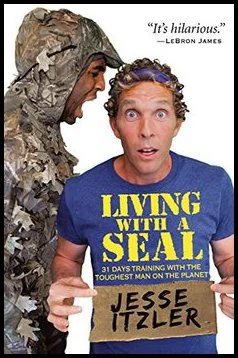
That “SEAL” by the way, is David Goggins, one of the toughest men on the planet.
Why is Goggins considered one of the toughest men on the planet?
He is the only person to complete SEAL training (3 Hell Weeks) U.S. Army Ranger School, and Air Force Tactical Air Controller training.
He has competed in more than sixty ultra-marathons, triathlons, and ultra-triathlons.
He broke the Guinness World Record by completing 4,030 pull-ups in 17 hours.
And those are just a few of his accomplishments (I highly recommend reading his book, “Can’t Hurt Me” to get the full story).
Now back to the book “Living with a SEAL.”
For a month, Goggins made Itzler do countless crazy workouts such as hundreds of burpees and push-ups, jogging for miles in the snow, running with a weighted-vest, you name it, they probably did it.
Do you think you’d be able to keep up with Goggins and his workouts?
Read on to find out.
(Disclaimer: Keep in mind that these workouts may be extreme for some individuals and you can hurt yourself from doing them. This is not a recommendation to do these workouts, please don’t sue me if you try this and get injured. Be responsible, be smart, be safe.)
5 Killer workouts from David Goggins:
“If you don’t challenge yourself, you don’t know yourself.”
1) Burpee Test
Goggins followed Itzler everywhere for the 31 days of training, including the office. One afternoon while in the office, Goggins told Itzler it was time for a burpee test–performing 100 burprees as quickly as possible.
If you haven’t done a burpee before, don’t worry, it’s simple and you don’t need any weights.
You simply drop to the floor in a plank position, do a push-up, kick your knees to your chest and jump into a jumping jack.
It works out your arms, chest, legs and abs.
Now do 100 (timed).
Under 10 Minutes – Solid
Under 11 Minutes – Acceptable
Over 13 Minutes – Unacceptable (do it again)
Itzler’s 100 burpees time:
11 minutes and 45 seconds (first time)
10 minutes 27 seconds (second time)
Aim to get under 10 minutes. Stay tuned to for my score.
13:00.06 (my first attempt, will do it again soon)
2) Nickels and Dimes
Do 5 pull-ups (nickels) and then 10 push-ups (dimes) every minute on the minute.
So if you do the 5 pull-ups and 10 push-ups in 30 seconds, you get a 30 second rest. If it takes you 50 seconds to do the set, you only get a 10 second rest.
Do this for 10 minutes.
Total will be: 50 pull-ups and 100 push-ups.
By the time Itzler got to 4 minutes, he dropped to the ground and couldn’t do anymore.
Can you do the full 10 minutes?
3) 150 Push-ups with 50-Pound Vest
Goggins apparently made friends with a guy at Itzler’s gym and he let Goggins borrow a 50-pound weighted-vest. So of course, Goggins wanted to put it to use, and they did.
Do 15 sets of 10 push-ups with 30-seconds of rest between sets.
Total: 150 push-ups with weighted vest.
Itzler’s time: 22 minutes
SEAL’s time: 15 minutes
This is a hard one, even Goggins couldn’t go straight to ten push-ups without dropping to his knees after the sixth set. Yet all he kept saying was “This is great.”
4) Run, Push-up, Run
Instead of doing a typical 6 mile run, Goggins makes Itzler do 25 push-ups every half mile. Also, each mile time must be faster than the last.
Start at a 9 minute-mile pace.
After running half a mile, drop down and do 25 push-ups.
After 1 mile, do 25 push-ups and run the next mile at an 8:50 mile pace.
Repeat push-ups at every half mile and by the last mile you run should be at an 8:10 mile pace.
1st mile: 9 mile pace (50 push-ups)
2nd mile: 8:50 mile pace (50 push-ups)
3rd mile: 8:40 mile pace (50 push-ups)
4th mile: 8:30 mile pace (50 push-ups)
5th mile: 8:20 mile pace (50 push-ups)
6th: mile: 8:10 mile pace (50 push-ups)
Total: 6 miles and 300 push-ups.
5) The 4/4/48
This may be the toughest workout in the book:
Run 4 miles every 4 hours for 48 hours.
A total of 48 miles in two days.
Goggins had Itzler train for this by running 4.25 miles four times in 24 hours.
Since Itzler was running in the cold (about 10º F), he ended up pulling his groin about 16 miles in and had to cut the run short.
Someone correct me if I’m wrong, but I think Goggins had to leave before they did the actual 4/4/48 run. Maybe I’ll try it (Leave a comment below and if enough people show interest, I’ll give it a shot).
“Every day is a challenge, otherwise it’s not a regular day.”
Well there it is, 5 workout challenges from the “SEAL” in “Living with a SEAL.”
And if you’re wondering about Jesse Itzler’s fitness stats after the 31 days, here they are:
222.5 miles run
6,488 push-ups
236 pull-ups
957 sit-ups
200 burpees
800 jumping jacks
50 box jumps
150 flutter kicks
14 fireman carries
And remember:
“Don’t get too comfortable. Ever.”
Thanks for reading!
See below to learn more:
You can buy the book, “Living with a SEAL” by Jesse Itzler here.
Get David Goggins’ book, “Can’t Hurt Me” here.

Here are a few similar fitness books:

"Living with a SEAL (David Goggins)" by Jesse Itzler
What happens when a multi-millionaire invites a Navy SEAL to live with him for a month?
"Living with a SEAL (David Goggins)" by Jesse Itzler
A hilarious book on fitness, not making excuses and challenging yourself to improve.
Book Summary:
What do you get when you put a U.S. Navy SEAL and a millionaire entrepreneur in the same hous for a month?
Jesse Itzler, the book’s author, is a gritty entrepreneur who co-founded Marquis Jet (he later sold it to Berkshire Hathaway) and helped pioneer the coconut water craze with Zico coconut water (later acquired by Coca-Cola).
He is also married to Spanx founder (and now billionaire) Sara Blakely.
Itzler had it all.
Successful in just about every aspect of his life. However, he felt stuck in a routine.
Wake up, go to work, come home, have dinner, exercise, sleep. Then do it again.
“I wanted to get off it; I wanted to shake things up in a big way,” he writes.
And what better way to shake things up than by asking a SEAL to train you and push you to new limits.
That SEAL, we know now, is David Goggins.
Itzler was speechless when he saw Goggins (then weighing about 260 pounds) run a 100-mile race without any support staff, and he had to meet this incredible man.
Itzler ended up inviting Goggins to live with him in hopes of getting a bit of Goggins’ magic sauce.
Each day, Goggins came up with a new workout to show Itzler that he was nowhere near his potential. This included running with a 50-pound vest, doing 100 chin-ups in a row, swimming in a frozen lake, running 4 miles every 4 hours and much more.
By pushing Itzler physically, Goggins was also pushing him mentally.
Itzler thought many of the tasks where impossible, but by doing them, he realized his mind was playing it safe and was capable of doing more than he thought possible.
In addition to being about fitness and mental toughness, this book is also hilarious (look on the cover, Lebron James agrees). If you’re a fan of David Goggins or Jesse Itzler, you’ll enjoy this book.
Book Lessons:
1) Measure your foundation & track your progress
“If you don’t challenge yourself, you don’t know yourself.”
One of the first things SEAL (Goggins) did when training Itzler was giving him a fitness test and writing down all of his reps. It’s important to know where you are and what you’re capable of doing.
Once the foundation was set, Goggins started to push Itzler in all different types of workouts and at the end of each day, workout totals were jotted down.
After training with Goggins for a month, Itzler’s mile pace went from 9:20 to 7:50 (7 minutes and 50 seconds). A whole minute and a half faster per mile.
Here are Itzler’s workout totals:
222.5 miles run
6,488 push-ups
236 pull-ups
957 sit-ups
200 burpees
800 jumping jacks
50 box jumps
150 flutter kicks
14 fireman carries
Measure your current abilities and track progress every day to see concrete evidence of what you’ve done and how your performance has changed over time.
2) No one ever regrets a workout
“Every day is a challenge, otherwise it’s not a regular day.”
Goggins made Itzler do some crazy things:
Running in a snowstorm
Doing 100 burpees in the office
Jumping into a frozen lake
Jogging with a 50-pound vest
The list goes on…
Many of these workouts flat out sucked. A lot of them Itzler didn’t want to do and he even tells Goggins for him to write down “MISERABLE” in his journal during one workout.
However, Itzler never regretting working out.
He never said, “Man, I really wish I didn’t do 100 burpees today.”
Does Itzler complain that the workouts suck? Yes.
But, to be fair, many of the workouts would be extremely difficult for the average adult to complete and Itzler never said no to a workout.
Even after doing 100 burpees in a row, his legs shaking, but he couldn’t help but smile afterward.
Working out may suck, but no one ever regrets doing it.

Snowing? Cold? Tired? Doesn’t matter, when SEAL says it’s running time, it’s running time.
3) Excuses only exist if you make them
“Don’t get too comfortable. Ever.”
Have you heard these lines before or told yourself this?
I was going to exercise today, but:
It’s raining
It’s too cold out
It’s snowing
I’m sore
My shoulders hurt
I don’t have time today
I have to watch the kids tonight
Sound familiar? I know that I’ve said at least half of these lines to myself.
Here is the honest truth, when you tell yourself these “reasons” you can’t work out, no matter how “good” the reason is, it won’t help you reach your fitness goals. And, all of these reasons are actually excuses.
When Goggins and Itzler were traveling, Itzler didn’t pack an extra pack of underwear. Here is how that conversation goes:
Itzler: I didn’t bring any extra underwear.
Goggins: So what?
I: I can’t run without underwear.
G: Nah, bro, you can’t run without legs. It’s on.
Itzler ends up going “commando” style and the two go for an 8.3-mile run.
Whether it was raining, snowing, cold, windy, it didn’t matter to Goggins. They went running.
What happened when Itzler had to watch his kid? Goggins told Itzler to put the kid in a stroller and run with him. Goggins also gave Itzler a 50-pound vest for some extra fun.
You can have excuses or you can have results. Pick one.
Book Review:
This is one of the funniest books I’ve read. It’s two different worlds colliding, one from a strict, tough, military background, and the other from a business, luxury, laidback setting. And when two worlds collide, a lot of interesting things happen.
As a fitness book, Goggins no BS or excuses approach is inspirational. You won’t find workout plans or what foods to eat to get in shape, but you will learn not to make excuses, track your progress and to get creative with your workouts.
Goggins does curse a lot so this book may not be suitable for children, but if you’re an adult, you’ll find this book to be hilarious. It’s rare that I laugh out loud from reading a book, and yet this book made me do just that several times. You won’t find any deep life-changing lessons in this book, but if you’re looking for an entertaining book about fitness that will make you laugh one minute and motivate you to get off the couch and run the next, I highly recommend getting this book!
Rating: 4.5/5 Stars
If you’re interested in getting the book, click here or on the image below.
Here are a few similar fitness books:
For literally a few dollar a book will give you an enormous amount of valuable information that can help you in life. It’s practically highway-robbery. So take advantage of this and read as much as you can.
If you want to check out my list of recommended books, you can find that here.
If you enjoyed this article, consider supporting our site or signing up for our monthly newsletter. Thank you!
Enjoying A&B?
Consider donating to keep the site up and running!