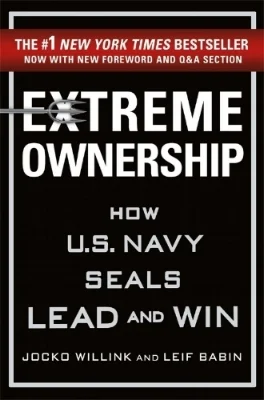
"Extreme Ownership" by Jocko Willink and Leif Babin
- Book: “Extreme Ownership” by Jocko Willink and Leif Babin
- For: Business managers, leaders, people interested in military tactics and improving their leadership skills
- Lesson: The leadership lessons from life-and-death combat can be applied to the business world to make your team and company successful
- Book: “Extreme Ownership” by Jocko Willink and Leif Babin
- Pages: 322
- For: Business managers, leaders, people interested in military tactics and improving their leadership skills
- Lesson: The leadership lessons from life-and-death combat can be applied to the business world to make your team and company successful
Summary:
Since the creation of mankind, there have been wars and warriors. Those warriors risk their lives for their country by putting themselves in combat zones in hopes of defeating the enemy. They often find themselves in life-or-death situations and must make decisions under pressure, under fire, and undermanned.
In these types of extreme high-risk situations, leadership and execution are crucial to achieving success. And the same strategies that are successful in battle can often be translated to business. Two thousand years ago, the war strategist Sun Tzu wrote “The Art of War” which became widely read by both military generals and business leaders.
The same can be said about the book “Extreme Ownership” by Jocko Willink and Leif Babin. These two U.S. Navy Seals officers led the most highly decorated special operation unit of the Iraq war. They now run a leadership consulting firm that teaches people how to apply powerful leadership principles from the battlefield to business and life.

Jocko Willink (left) and Leif Babin, authors of "Extreme Ownership."
The title of the book, “Extreme Ownership,” refers to one of the most important things that the authors learned from their 33 years of combined military experience.
They found that the key trait that made great leaders was taking extreme ownership of their job. That meant being responsible for everything related to their mission. These leaders didn’t cast blame or make excuses if something went wrong, they owned it all. This is the mindset leaders must have to lead their team and achieve success.
Every chapter in the book follows the formula of starting with a military story, then talking about the principle learned and ending with how the lesson can be applied to the business world.
Here are three important lessons from the book:
“Believe”
- Story:
The chapter begins with Jocko learning that his team, which was filled with Navy SEALs, had to fight alongside Iraqi Army soldiers. This may not seem like an issue, but remember, Navy SEALs are like a professional sports team. They are a tight-knit group of soldiers with hundreds of hours of training, in peak physical condition, and had access to some of the best and most technologically advanced equipment in the world.
Meanwhile, the Iraqi soldiers were mostly uneducated, untrained, undernourished and unmotivated. Most of the soldiers had joined just for a paycheck and more often than not, when there was a real firefight, they ran away from the fight. To make it even worse, some Iraqi soldiers were still loyal to Saddam and, at times, attacked U.S. soldiers.
Now, Jocko's commanding officer was saying that to go on missions, the SEALs had to work with the Iraqi soldiers. Jocko wondered why his boss made such a bad decision. After taking a step back and questioning his leaders, he began to see the logic behind the decision. In order for Iraq to become a stabilized country, they needed to have well-trained soldiers that could handle problems on their own. If they didn’t learn, once the U.S. soldiers left the country, the terrorist groups would retake the entire area.
When Jock first told his troops about the new rule, the team was furious. But, after explaining the reason behind it, they too realized the logic of the decision and agreed it had to be done, even if it was risky and unpleasant.
- Principle
To be a great leader, one must truly believe in the mission. If a leader doesn’t understand a decision made by senior command, they must ask why and learn the reason behind the decision. Once the leader understands why, he can then communicate the mission with confidence to those below them.
- Business Application
A company recently implemented a new compensation structure for their sales force but it created stress and fragmentation among employees because none of them understood why it was changed.
The employees complained to Jocko and said that they believed the new structure would drive a large part of their salesforce away. Jocko asked the group why leadership changed the compensation structure, but no one could answer the question. Jocko then asked if they thought the CEO was unreasonable or inexperienced. The group said “no” and added that the CEO is smart and that they feel stupid questioning the CEO.
As it turned out, none of the employees understood the reason behind the CEO’s decision and all of them were too scared to ask why. Meanwhile, the CEO with all her years of business experience, thought it was easy to understand why the changes were necessary. The next day, the CEO held a meeting that went over the new plan and answered all the questions that the employees had.
Leadership falls on not just the CEO but also the employees. If they don’t understand the mission, they must ask questions to understand the reason behind it. Once the why is understood, then the information can be passed down the chain with confidence so that everyone understands what needs to be done.
“Ask questions until you understand why so you can believe in what you are doing and you can pass that information down the chain to your team.”
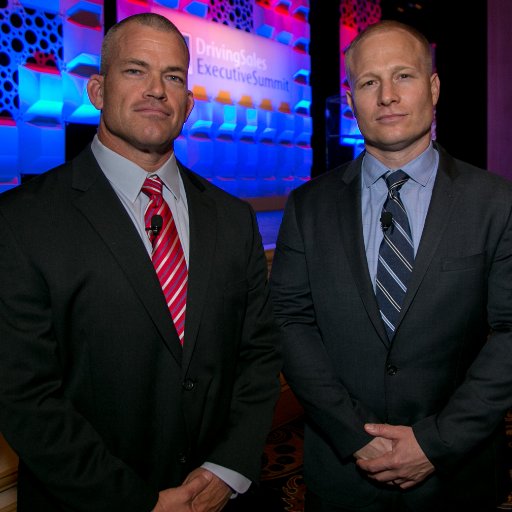
After their military career, Willink and Babin created Eheleon Front, a consulting firm that offers solutions in businesses and leadership strategies.
“Prioritize and Execute”
- Story
Leif Babin and his SEAL team were in enemy territory on a wide-open rooftop with no cover. Earlier in the day, they had been engaged in a firefight and were firing from inside a small building. When they tried to exit, they saw a possible IED (improvised explosive device) near the building entrance. They placed their own explosive nearby to destroy it. It was set on a timer and the clock was ticking. Now they had to find another way out of the building and get away from the blast radius. They decided to head to the roof, but while on the roof, one of the SEALs walked over a plastic tarp that covered a hole and fell twenty feet to the ground.
Now they were exposed out in the open, with an IED set to explode, and a SEAL separated from the team and in need of medical support. In this high risk and unforgiving environment, every second counted.
Babin thought back to his training and remembered that when there are multiple challenges, the most important thing to do is to remain calm, take a step back and determine the greatest priority for the team.
In this situation, it meant setting up security because if they didn’t protect themselves, they wouldn’t be able to help the wounded SEAL. Next, he had to find a way to get everyone off the rooftop. They found a locked stairwell and broke it open. After making their way down to the wounded SEAL, they took a headcount to make sure they had everyone and moved to safety. As they made it to the safe zone, the explosive went off and destroyed the IED so that no soldiers would be killed.
- Principle
Whether on the battlefield or the business world, when there are countless problems and challenges, it is important to relax, look around, and make a decision.
“Leaders must determine the highest priority task and execute. When overwhelmed, fall back upon this principle: Prioritize and Execute.”
- Business Application
As a consultant to a pharmaceutical company, Jocko spoke with the CEO and went over the list of new initiatives the CEO planned to implement to help the company improve its performance.
Here are the things the CEO wanted to accomplish:
- Launch several new products, each with its own marketing plan
- Create new distribution centers in a dozen new markets in the next two years
- Enter the laboratory-equipment market
- Start a new training program
- Rebuild the company website
- Restructure the sales force
With some much to do, it can become confusing to know which task is the most important. Jocko asked the CEO which initiative had the highest priority and if the CEO believed his team knew which task was of highest priority.
The CEO admitted that they probably didn’t know and that if they did focus mainly on just the highest priority, it would make a huge difference to the company. Jocko recommended that the CEO focus on one task and once completed, move onto the next highest priority.
“This focus on a singular initiative unified the efforts of the entire company. Progress was seen quickly and gained momentum. The CEO recognized the traction, and the effectiveness of the method: Prioritize and Execute.”
“Decisiveness and Uncertainty”
- Story
While on a rooftop with Chris Kyle (the Most Lethal Sniper in U.S. Military History and author of American Sniper), Chris told Leif that he saw a guy with a scoped weapon in a building. The man stepped behind the window and then disappeared behind a curtain.
Not too far away, there was a group of U.S. soldiers on the ground. Chris wanted to protect his fellow soldiers and take out the sniper, but he couldn’t positively identify the man and wasn’t sure if it was an enemy or a friendly. Chris asked Leif what he should do.
If they waited too long, they worried that the man might shoot one of the U.S. soldiers. But if they took the shot and it turned out to be a friendly soldier, it would be just as bad.
Leif radioed the other platoon and asked if he had placed any soldiers inside the building. The company commander replied “no” and said to take the shot.
The man behind the curtain came out again but neither Chris nor Leif were certain it was an enemy. However, Leif couldn’t just wait there and risk the possibility of the man shooting other soldiers.
Instead, he radioed the commander and asked him to send troops to check out the building.
The soldiers went in to clear the building and came rushing out. It turned out that the man in the window was, in fact, a U.S. soldier. The building number had been miscommunicated. In Ramadi, there were no address numbers nor street signs and the buildings were constantly changing due to destruction from bombs and bullets. All of these factors made it difficult to properly communicate building locations. An event that happened often in this chaotic environment.
- Principle
Even in times of uncertainty, leaders cannot be paralyzed by fear. This results in inaction. Leaders must make the best decisions they can based on the information that they have. Leaders must also be ready to adjust those decisions as the situation evolves and new information is discovered.
- Business Application
While advising a software company, Jocko met with the CEO. The CEO had two senior engineers that were constantly butting heads and insisted that the other person be fired or they would quit.
The CEO wasn’t sure what to do because she didn’t want to lose either one but knew that both employees were creating a harmful environment for the company's employees. The CEO tried to take the engineers to dinner to discuss the situation and solve the issue, but nothing worked.
The CEO was unsure of what to do and instead chose to do nothing. Jocko informed her that a CEO must be decisive and willing to make choices or she will be seen as a weak leader by her peers.
Jocko also told the CEO that these two employees had bad attitudes and are probably spreading negativity among other employees. This was not the role model behavior that a leader should have. Even if only one employee was fired, it was highly possible that the one that stayed would cause problems with the next senior engineer.
With all this information, the CEO decided to take action. She spoke with the lead developer and asked for two candidates that were ready and eager to step up. The CEO discovered two workers that had critical knowledge of the projects and were excited and happy to work together. She then contacted HR and told them to terminate the two badly behaved senior engineers. Now, the company was back on track and it was game on.
Implement these principles in your job and personal life to become a better leader and achieve greater success. Get some y'all. Out!
Thank you for reading. If you enjoyed this article, consider reading the book. I highly recommend it, click here to get it!
If you enjoyed this article, consider supporting our site or signing up for our monthly newsletter. Thank you!
Reader freebies:

10 Interesting Quotes on Writing by Ernest Hemingway
- Book: “Ernest Hemingway on Writing" edited by Larry Phillips
- For: Anyone interested in Hemingway's writing, aspiring writers
- Lesson: Learn Hemingway's thoughts on being a writer, his work habits and advice for aspiring writers
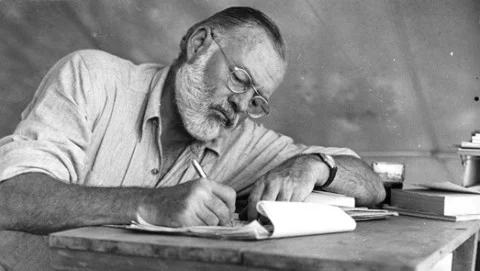
Ernest Hemingway is one of the most well-known writers of the 20th century. In 1954, he was awarded the Nobel Prize for literature. The Sun Also Rises and A Farewell to Arms established Hemingway as one of the greatest literary writers of his time.
He started his career as a journalist and worked as an ambulance driver during World War I. He also covered the Spanish Civil War and World War II. He won a Pulitzer Prize in 1953 for The Old Man and the Sea. He died in 1961.
Here are 10 interesting quotes from the book “Ernest Hemingway On Writing.”
10)
“Writing is something that you can never do as well as it can be done. It is a perpetual challenge and it is more difficult than anything else that I have ever done–so I do it. And it makes me happy when I do it well.”
9)
“I have to write to be happy whether I get paid for it or not. But it is a hell of a disease to be born with. I like to do it. Which is even worse. That makes it from a disease into a vice. Then I want to do it better than anybody has ever done it which makes it into an obsession. An obsession is terrible. Hope you haven’t gotten any. That’s the only one I’ve got left. ”
8)
“Forget your personal tragedy. We are all bitched from the start and you especially have to be hurt like hell before you can write seriously. But when you get the damned hurt use it–don’t cheat with it.”
7)
“You see I’m trying in all my stories to get the feeling of the actual life across–not to just depict life–or to criticize it–but to actually make it alive. So that when you have read something by me you actually experience the thing. You can’t do this without putting in the bad and the ugly as well as what is beautiful. Because if it is all beautiful you can’t believe in it. Things aren’t that way. It is only by showing both sides...”
6)
“You just have to go on when it is worst and most helpless–there is only one thing to do with a novel and that is go straight on through to the end of the damn thing.”
5)
“Ordinarily I never read anything before I write in the morning to try and bite on the old nail with no help, no influence and no one giving you a wonderful example or sitting looking over your shoulder.”
4)
“The more I’m let alone and not worried the better I can function. ”
3)
“‘Tell me first what are the things, the actual, concrete things that harm a writer?’ ‘Politics, women, drink, money, ambition. And the lack of politics, women, drink, money and ambition.’”
2)
“For Christ sake write and don’t worry about what the boys will say nor whether it will be a masterpiece not what. I write one page of masterpieces to ninety one pages of shit. I try to put the shit in the wastebasket.”
1)
“All the critics who could not make their reputations by discovering you are hoping to make them by predicting hopefully your approaching impotence, failure and general drying up of natural juices.”
If you've enjoyed this article, consider getting the book. Get it here.

If you enjoyed this article, consider supporting our site or signing up for our monthly newsletter. Thank you!
Reader freebies:

Top 10 Favorite Books of 2017
A lot of reading was done in 2017, in fact, I’ve managed to read 35 books. Here are my top ten favorite books of 2017 (in no particular order), enjoy!
A lot of reading was done in 2017, in fact, I managed to read 35 books. Most of the books were great, but a select few were truly amazing. These books were engaging, informative, and insightful. Here are my top ten favorite books of 2017 (in no particular order), enjoy!
10)

Book: "Zero To One" by Peter Thiel
Pages: 224
For: Anyone interested in creating or investing in startups, and understanding what successful startups have in common
Lesson: Gain a new perspective on business, learn what makes certain startups successful while others fail
9)

Book: "How To Win Friends & Influence People" by Dale Carnegie
Pages: 288
For: People interested in making a good first impression and building social relationships
Lesson: Learn how to become a great conversationalist, build social bonds, and communicate your ideas in a positive manner
8)

Book: "What Every BODY Is Saying" by Joe Navarro
Pages: 272
For: Anyone interested in psychology and wants to understand people's true thoughts and intentions
Lesson: Learn the meaning of body language and people's true feelings from an ex-FBI recognized expert on nonverbal behavior
7)

Book: "Grit" by Angela Duckworth
Pages: 352
For: People interested in learning about the traits and mindset needed to become successful in life
Lesson: Learn how people can become successful in life regardless of talent or I.Q., and the traits that help people accomplish incredible achievements
6)

Book: "Mindset" by Carol Dweck
Pages: 320
For: Anyone who wants to learn how to realize their own potential to the fullest
Lesson: Learn about the different mindsets of people and how you can change your mindset to fulfill your potential from one of the world's leading researchers in the field of motivation
5)

Book: "The War Of Art" by Steven Pressfield
Pages: 190
For: Anyone who is in a creative career or wishes to become a professional in a creative field
Lesson: Tips and advice on how to defeat fear and self-doubt and achieve your creative goals
4)

Book: "The Subtle Art Of Not Giving A F*ck" by Mark Manson
Pages: 224
For: Anyone interested in self-development or seeking a new perspective on life
Lesson: Embrace your faults, define your values and purpose and live a fulfilling life
3)

Book: "Trust Me I'm Lying" by Ryan Holiday
Pages: 352
For: Anyone interested in learning about the truth about online media
Lesson: Learn how online media, such as blogs, can be easily manipulated, how fake news spreads, and how corporations take advantage of the news
2)

Book: "How To Read Literature Like A Professor" by Thomas Foster
Pages: 336
For: Anyone interested in learning how to interpret literature and its deeper meanings
Lesson: Learn how to properly read and interpret literature to understand the deeper meaning behind literary devices such as setting, symbols, themes and more.
1)

Book: "Tools of Titans" by Tim Ferriss
Pages: 736
For: There is something for everyone in this book
Lesson: Learn the stories and strategies to success from billionaires, famous authors, professional athletes, business leaders, and icons.
Thank you for reading. If you're looking for more book recommendations, click here!





10 Powerful Quotes from “The Emperor’s Handbook”
- Book: “The Emperor’s Handbook” by Marcus Aurelius
- For: Anyone interested in philosophy, living a good life or looking for meaning in life
- Lesson: Learn to live a fulfilling life while being a virtuous person
- Book: “The Emperor’s Handbook” by Marcus Aurelius
- Pages: 160
- For: Anyone interested in philosophy, living a good life or looking for meaning in life
- Lesson: Learn to live a fulfilling life while being a virtuous person
Marcus Aurelius is known for his role as Emperor of Rome during the 2nd century AD when he ruled Rome at the height of its power and was, in many ways, the figure described in Plato’s dream of a philosopher-king.
When Marcus was three years old, his father passed away. Marcus was raised by his mother, and they moved in with their grandfather. When Hadrian, the emperor of Rome, visited the house, he believed Marcus was destined for greatness. In his will, Hadrian wrote that the next ruler should adopt Marcus. The new emperor, Antoninus Pius, did just that.
Marcus spent twenty years working with the emperor, learning how to rule and become a leader. After Antoninus Pius died, Marcus would assume the role of emperor of Rome.
Although Marcus became one of the most powerful men in the world, he did not chase wealth, power or fame. Nor did he fall to any other temptation of evil. He would rule Rome in a just and virtuous manner. He kept a journal where he wrote all the important lessons he learned during his life. This journal would become known as the “Meditations” or “The Emperor’s Handbook.” Here are ten powerful quotes from his book.

Sculpture of Marcus Aurelius
“Do not waste the rest of your life speculating about others in ways that are not to your mutual advantage. Think of all that might be accomplished in the time you throw away–distracted from the voice of your own true and reasonable self–wondering what the next man is up to and why, what he’s saying, or thinking, or plotting. Purge your mind of all aimless and idle thoughts, especially those that pry into the affairs of others or wish them ill.
”
2.
“If you pursue the matter at hand along the straight path of reason...if you keep your divine spirit pure and blameless, as though this were the moment to give it back; if expecting nothing and fearing nothing, you are content to act in accord with nature and to speak with heroic honesty–then you will live well. And no power on earth can stop you.”
3.
“Everyone dreams of the perfect vacation...you too long to get away and find that idyllic spot, yet how foolish...when at any time you are capable of finding that perfect vacation in yourself. Nowhere is there a more idyllic spot, a vacation home more private and peaceful, than in one’s own mind...take this vacation as often as you like, and so charge your spirit.
”
4.
“Is it not better simply to do what is necessary and no more, to limit yourself to what reason demands...this adds to the happiness of doing a few things the satisfaction of having done them well. Most of what we say and do is unnecessary anyway; subtract all that lot, and look at the time and contentment you’ll gain.
”
5.
“Look around you and see how everything is perpetually changing, and get used to the idea that nature loves nothing more than to change the things that are and to make more things like them come into being. In a way, everything is a seed of the thing that grows out of it.
”
6.
“Persuade me or prove to me that I am mistaken in thought or deed, and I will gladly change–for it is the truth I seek, and the truth never harmed anyone. Harm comes from persisting in error and clinging to ignorance.
”
7.
“The happiness of those who want to be popular depends on others; the happiness of those who seek pleasure fluctuates with moods outside their control; but the happiness of the wise grows out of their own free acts.
”
8.
“One thing alone troubles me: the thought that I might do what my true self does not will or that I might do what it wills in the wrong way or at the wrong time.
”
9.
“Don’t hanker after what you don’t have. Instead, fix your attentions on the finest and best that you have, and imagine how much you would long for these if they weren’t in your possession. At the same time, don’t become so attached to these things that you would be distraught if you were to lose them.
”
10.
“Why do you hesitate or second-guess yourself when you know perfectly well what ought to be done? If you know where you need to go, make a considerate but determined effort to get there. If you don’t, wait and seek the best advice you can find...Relaxed but alert, cheerful but determined–such is reason’s faithful follower.
”
Thank you for reading! If you're interested in getting the book, click here.

If you enjoyed this article, consider supporting our site or signing up for our monthly newsletter. Thank you!
Reader freebies:


"On Writing Well" by William Zinsser
- Book: "On Writing Well" by William Zinsser
- For: Anyone who wants to improve their writing
- Lesson: Learn how to write better
- Book: "On Writing Well" by William Zinsser
- Pages: 336
- Lesson: Learn how to write better
- For: Anyone who wants to improve their writing
Most people that know English can read and speak the language with ease but almost everyone has trouble when it comes to writing.
But whether you’re a businessman, politician or high school student, it is important to know how to write well so that you can express yourself, communicate clearly, and make sure people read what you’ve written.
This is what William Zinsser teaches in his book “On Writing Well,” which has sold millions of copies.
Zinsser worked at The New York Tribune and at Yale where he taught students how to write. By the end of his career, he had written 15 books.

Author William Zinsser
So what lessons can we learn from Zinsser’s book?
The first part of the book begins by teaching the principles of good writing. Just like in sports, before you want to play the game, you must learn the rules to it.
The principles include learning how to make your writing simple, free of clutter, and which words you should use and avoid.
“You must know what the essential tools are and what job they were designed to do.”
One way to accomplish this is by studying famous writers.

Ernest Hemingway and Leo Tolstoy
“Make a habit of reading what is being written today and what has been written by earlier masters…and trying to figure out how they did it. ”
In part two of the book, Zinsser shares lessons on writing in unity, having a good lead and ending, and writing with proper grammar and punctuation.
Zinsser writes that “the most important sentence in any article is the first one. If it doesn’t induce the reader to proceed to the second sentence, your article is dead” (Page 55).
When it comes time to end the piece Zinsser writes, “if you presented all the facts and made the point you want to make, look for the nearest exit” (Page 66).
The third part of the book is focused on specific forms. Here Zinsser teaches readers how to write about people you’re interviewing, places you’re traveling to and writing about yourself in a memoir.
When writing a travel piece Zinsser advises readers to not ask the tourists what they think of the attraction, but instead ask those who work there or the locals. The tourists visiting have only been there for a few hours or days, but the people who live there have been there for years or sometimes decades.
“By interviewing local men and women…I tapped into one of the richest veins waiting for any writer.”
Zinsser also goes into detail on how to write about science, business, art, sports, and humor.
When writing about movies, books or art, Zinsser believes only people who love the medium should review it.
“The reader deserves a movie buff who will bring along a reservoir of knowledge, passion and prejudice. It’s not necessary for the critic to like every film; criticism is only one person’s opinion. But he should go to every movie wanting to like it. If he is more often disappointed than pleased, it’s because the film has failed to live up to its best possibilities.”
In the last part of the book, Zinsser gives advice on how to find your voice, face the fear and enjoyment of being a writer, and what it means to be a nonfiction writer.
To find your voice, Zinsser tells readers to once again, study great writers.
“Don’t worry that by imitating them you’ll lose your own voice and your own identity. Soon enough you will shed those skins and become who you are supposed to become.”
And when it comes to being an excellent nonfiction writer, one must chase their interests.
“If a subject interests you, go after it, even if it’s in the next county or the next state or the next country. It’s not going to come looking for you.”
Overall, whether you’re a student, scientist, or businessman, Zinsser’s book can help everyone become a better writer!

If you enjoyed this article, consider supporting our site or signing up for our monthly newsletter. Thank you!
Reader freebies:

"The Storytelling Animal" by Jonathan Gothschall
- Book: "The Storytelling Animal" by Jonathan Gothschall
- Pages: 272
- For: People that are interested in English, history, or psychology
- Lesson: Learn the purpose of why humans tell stories
- Book: "The Storytelling Animal" by Jonathan Gothschall
- Pages: 272
- Lesson: Learn the purpose of why humans tell stories
- For: People that are interested in English, history, or psychology
Human beings are animals, and like all animals, they've evolved to become as strong and fit as possible. To survive, early humans had to find new methods of hunting and gathering food. Some humans developed tools such as daggers and spears to improve their success in hunting. Others learned to farm and produce crops.
But why did humans develop the ability to tell stories instead of continuing to focus all their energy on tasks that would lead to more food?
Wouldn’t it make more sense that early humans would spend as much time as possible gathering food, building shelter, and reproducing instead of spending time telling stories? So far, no scientist has found the ability of storytelling in any other animal species aside from humans.
So why do humans tell stories? This is the question writer Johnathan Gottschall answers in his book, “The Storytelling Animal.”
Gottschall says that people are addicted to stories, even when sleeping, the mind continues to tell stories in the form of a dream.
This is because humans have evolved to crave story. It allows listeners to simulate worlds so that they may live better in this one. Stories give pleasure and instructions to the audience. It is a device that helps people escape from the boredom and brutality of real life.
Stories can be used to teach the next generation by passing down critical information in an entertaining method. The audience enters the story as the protagonist and is able to learn from the character’s achievements and mistakes, without taking any action themselves.
Stories also help bond communities. Each country has its own folk tales, myths, and legends. Each religion has a story of its deity and how the world was created. Story is a form of social glue that brings people together around common values.
As with all great tools, there is a darker use for stories. Gottschall writes about how some religions have followers who become extremists because they believe in a certain story. Other individuals, like Hitler, used stories to spread propaganda throughout Germany and used his storytelling ability to convince an entire country that Jews were an inferior race.
While stories have evolved over the centuries, it still plays a large role in people’s lives. Stories can be found in books, movies, plays, newspapers, video games and more. As time goes on, the way stories are told will continue to change but the purpose of stories will not.
If you're interested in reading the book, click below!

If you enjoyed this article, consider supporting our site or signing up for our monthly newsletter. Thank you!
Reader freebies:

"Made To Stick" by Chip & Dan Heath
Book Review: Made To Stick by Chip & Dan Heath
Book Review: 'Made to Stick' by Chip Heath & Dan Heath
In today’s world, it seems that urban legends, conspiracy theories, and gossip spread effortlessly, while the truth has a difficult time catching up.
Important ideas such as discoveries in medicine, technology, and politics, often have a harder time reaching the public. Why do some ideas thrive while others die, is the question authors Chip Heath and Dan Heath attempt to answer in their book ‘Made to Stick.’

Authors Chip & Dan Heath
The book serves as a guide that shares the six key qualities needed to make an idea or story stick. These six qualities are simplicity, unexpectedness, concreteness, credibility, emotional, stories. Better known in the book as S.U.C.C.E.S.
The first principle is simplicity. An idea must be stripped down to its core and be both simple and profound. The message should be similar to a proverb. A short statement that a person could spend a lifetime learning to follow, such as, the ones who are crazy enough to change the world are the ones that do.
The second principle is unexpectedness. One method is to use surprise and tell the readers something they weren’t expecting. But, for the idea to endure, one must generate interest and curiosity. This can be done by beginning a story with a mystery, so that the audience has to stay along for the ride until the end.
The third principle is concreteness. Ideas should have concrete images and words. This requires communicating in a universal language and avoiding the ‘curse of knowledge.’ This occurs when a person is highly trained in one area and assumes everyone she is speaking to is an expert in the same space. For example, a CFO explaining the company’s tax savings in detail to a group of people who don't have a background in accounting.

The fourth principle is credibility. People are more likely to believe an idea if it comes from a credible source. This can require live examples or data and statistics. It also helps to be a person of authority, or have external credibility from an organization.
The fifth principle is emotional. For an idea to stick, it must create a strong feeling with the person. One method for doing so is by creating empathy for specific individuals. Associate the idea with things people already like and appeal to their self-interest. This is why charities tell people their donations will go to helping this one girl named Delu, instead of towards the entire country Rwanda.
The final principle is stories. Stories embody most of the SUCCES framework. A story should be simple and concrete, have an element of surprise, and evoke strong emotions.
For each key principle, the Heath brothers provide a case study of a story before and after applying the SUCCES framework. Readers can see how stories differ and apply the knowledge to their own cause.
Whether a person is a researcher, journalist, or any other occupation, if there is an important idea that people should know about, applying the six principles from this book will transform the way people communicate ideas.
If you're interested in read this book, click below!

If you enjoyed this article, consider supporting our site or signing up for our monthly newsletter. Thank you!
Reader freebies:

"David and Goliath" by Malcolm Gladwell
Book Review: David and Goliath by Malcolm Gladwell.
Book Review: 'David and Goliath' by Malcolm Gladwell
In the classic biblical tale of David and Goliath, most people interpret the battle as an underdog story of a feeble shepherd against a gigantic warrior. The young shepherd defeats the mighty warrior with only a stone and sling. Since then, the story has come to represent battles between underdogs and giants.
Almost everyone believes that David’s victory was miraculous. But, Malcolm Gladwell disagrees.
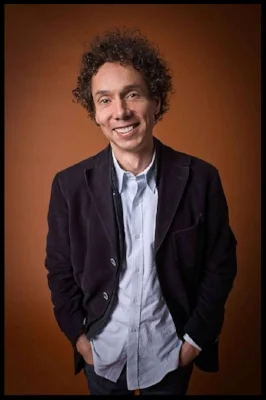
Author Malcolm Gladwell
In his book “David and Goliath,” Gladwell challenges how people view obstacles and disadvantages, and shows how sometimes a person’s perceived weaknesses can actually be their greatest strength.
Gladwell starts his book by reexamining the fight between David and Goliath. Gladwell argues that David actually had the upper hand in the fight for a variety of reasons.
First, David had used a sling, a weapon which can hurl rocks at incredible speeds and hit targets up to two hundred yards away. David had experience with the sling, as this was his weapon of choice for fighting off lions and bears. David also had no armor, so he could move quickly and freely without any additional weight slowing him down.
Goliath, Gladwell argues, was at a disadvantage because of his weight and choice of weapon. Goliath was wearing a full suit of armor, which meant an additional hundred pounds that he had to carry, and a sword. Goliath wasn’t expecting a long-distance fight, he was prepared for close-range combat.

Gladwell goes through several examples of ‘disadvantages’ such as dyslexia, race, and loss of parents, and shows how certain individuals actually attribute their success in life to their disadvantages.
Just as there are times when a perceived weakness can actually be a strength, there are times when an advantage can actually be a disadvantage.
To make his point, Gladwell using the example of a student pursuing a STEM major at Harvard.
Most people would believe that getting into an elite and prestigious school such as Harvard, instead of a liberal arts school such as Hartwick, to pursue a STEM major would be an advantage, but Gladwell has the statistics to prove otherwise.
Gladwell found that although the bottom third of Harvard students had higher SAT scores than the top third of Hartwick students, the Harvard students had a lower likelihood of getting a STEM degree.
The SAT scores of the bottom third of Harvard students was 581, compared to the top third of Hartwick students which had a score of 569. Yet, only 15.4% of those Harvard students graduated with a science degree compared to 55% of the Hartwick students.
After pondering on these results, Gladwell realized that it isn’t how smart a student is, but how smart they feel relative to their fellow classmates.
Gladwell goes on to another study that shows that the best students from mediocre schools were almost always more likely to be hired than good students from the very best schools.
The world can be a complicated and complex place, sometimes one’s greatest weakness can be their greatest strength and vice versa. Although challenging, Gladwell’s book does a compelling job of explaining these phenomena through the use of history, psychology, and powerful storytelling.
Thank you for reading. If you're interested in reading the book, click below!

If you enjoyed this article, consider supporting our site or signing up for our monthly newsletter. Thank you!
Reader freebies:

"You Are A Writer" by Jeff Goins
Book Review: You Are a Writer by Jeff Goins
Each person has a story, whether that be their life story or a fiction story that they thought of as a kid. However, most of these stories are never heard because few people choose the grueling and difficult career path of being a writer. But, for those that are looking for inspiration or motivation on their journey, Jeff Goins’ book You Are A Writer, is here to help.
At roughly 130 pages long, Goins book is incredibly short. But in the case of this book, less really is more. Goins cuts out any unnecessary information and only keeps what readers will find to be helpful.

Author Jeff Goins
Goins starts the book by saying that the world is filled with closest artists and authors–people who want to pursue a creative craft but are afraid they will fail. To overcome this, one must believe in themselves and start acting like the person they’re supposed to be. Goins writes that before anyone else will believe in you, you must first believe in yourself.
A person must declare themselves a writer and accept the fact that although they are starting from the bottom as a beginner, they will have the opportunity to grow and make their craft into something great, if they are willing to put in the time and work.
Once a person proclaims themselves a writer, the next step is, unsurprisingly, to start writing. However, this doesn’t mean waiting till one feels motivated or inspired. It means, writing every single day, without excuses.
Just as professional weightlifters workout every day, writers must do the same. As with all muscles, even creative ones, the muscle gets stronger the more one practices.
Goins writes that there will be pain in the beginning. There will be days when you don’t want to write, and there will be days when have almost no time, but good writers must practice.
Professional writers take the time to write, craft and edit their piece until it is right. Then they spend hours or days revising it. Finally, they must be able to take criticism and feedback in a positive light, and use it to make their work better.
This may be harsh advice to people who believe that the first thing they write, is usually the best thing they write. However, Goins says this is a myth. To put it plainly, “All first drafts suck, so get over it already.”
The genius part, Goins writes, is in the editing process. It is a constant cycle of writing, getting feedback, and rewriting. Every word counts. If a writer is simply trying to fill the page with unnecessary words, they are wasting the reader’s time.
To be a great writer, one must write with passion, says Goins. Passion is contagious and helps make the work deep and true. Not only does it make the writer’s work better, it will help create a connection with readers. Once readers feel a connection, they will slowly spread the writer’s message and soon a community will be formed.
To spread their message, a writer needs a platform. This can be anything from a blog to a newspaper column or social media site. From there, writers should work on their craft by posting often and seeking feedback. There’s no such thing as an overnight success, so instead of expecting a book deal right away, writers should focus on gradually building up their community of fans over time.
Having published several books and become a regular contributor to several magazines, Goins gives examples of ways writers can pitch their work for to magazines and guest blogs. Most writers shouldn’t be surprised if they get rejected. Goin notes that this happens to all writers without exception.
In fact, early in his career, Stephen King kept his rejection letters and pinned them above his writing desk. Each “no” helps a writer build thick skill, and over time getting rejected will have little effect on a person.
Overall, Jeff Goins gives readers a practical guide to becoming a writer, improving their writing, and getting published. Now all that is left is for you to start.

If you enjoyed this article, consider supporting our site or signing up for our monthly newsletter. Thank you!
Reader freebies:

Why College Students Should Travel Abroad
As students go through high school and college, they take history courses and learn about the world through textbooks and movies, but, the majority of students have a hard time understanding the significance of the information. However, when a person travels abroad, they get to experience different languages, cultural values, food, and more.
As students go through high school and college, they take history courses and learn about the world through textbooks and movies, but, the majority of students have a hard time understanding the significance of the information.
Ask a random college student about ancient Rome and they’ll most likely say something along the lines of, it was ruled by Julius Cesar and citizens attended gladiator fights for entertainment.
It can be difficult for students to absorb information about history and the world because, at times, it can seem like a far-off land. With only books and films to educate students, ancient Rome is as foreign a land as the fictional world of Narnia.
A professor can talk about the Colosseum and show pictures of it on a slideshow, but that is not nearly as likely to captivate students as visiting Rome in person.

Seeing the almost 2,000-year-old monument in person and walking through the Colosseum, one can begin to imagine themselves as a spectator in the stands watching a gladiator fight below. Exploring the Palatine Hill, one can see the ruins of temples and palaces, and lose their breath as they imagine themselves as a citizen of Rome two millennia ago.
Traveling the world is filled with moments like these, where one has no words to describe the feeling of amazement.
Traveling can be about more than just experiencing history. It is an opportunity to experience different cultures. When traveling in the U.S., most folks are quite similar with the only thing that changes are people’s accents.
However, when a person travels abroad, they get to experience different languages, cultural values, food, and more. For example, citizens of Rome love to make their food from scratch, drink wine with their meals and eat outside while listening to local musicians.
Traveling abroad expands one’s horizon and allows students to immerse themselves in a different way of life. It helps young people learn that there is more than one way to live life. The more a person travels, the more they learn about the world and come to understand how it works.
Traveling also allows people to live in the moment.
When traveling, students don’t worry about grades, midterms, or jobs, they are living in the present and forget everything else. By forgetting the noise of daily distractions, students are able to find out what they like and don’t like about different places and thus learn more about themselves in the process.
Traveling also makes students more confident in themselves. At first, it may seem scary to travel to an unfamiliar setting, but by being placed in a new environment, students will begin to adapt to their surroundings. Sooner or later, students will have to ask a local for directions or ask the waiter about the dinner menu, all of which will involve interacting with new people.
College may also be the best time in one’s life to do such an activity. Students are young and in good shape to walk around the city for hours, something that may be harder for them to do when they retire in their 60’s. Also, after college, most workers only get two weeks’ vacation for an entire year, which is almost nothing when one realizes college students have almost four months off.
In today’s world, students shouldn’t have any excuses not to travel. Many schools provide study abroad programs or cultural exchange programs. There are also volunteer programs where students travel abroad for free in exchange for teaching English to young children.
As the old saying goes, “If there’s a will, there’s a way.” Now pick a place, pack your things, and go explore this amazing place we call Earth.
Enjoying A&B?
Consider donating to keep the site up and running!