"I Will Teach You To Be Rich" by Ramit Sethi
Book summary, review and lessons from "I Will Teach You To Be Rich" by Ramit Sethi.
Learn key lessons about how to live a Rich Life and gaining control over your finances.
Book Summary:
“I Will Teach You To Be Rich” is by Ramit Sethi, a personal finance expert. His updated book delivers a simple and powerful, no-BS 6-week program that just works.
It will show you:
How to crush your debt and student loans faster than you thought possible
How to set up no-fee, high-interest bank accounts that won’t gouge you for every penny
How Ramit automates his finances so his money goes exactly where he wants it to
A set-it-and-forget-it investment strategy that’s dead simple and beats financial advisors at their own game
How to handle buying a car or a house, paying for a wedding, having kids, and other big expenses—stress free.
And amazing stories of how previous readers used the book to create their rich lives. Master your money—and then get on with your life.

Book Lessons:
10 Rules for a Rich Life:
A Rich Life means you can spend extravagantly on the things you love as long as you cut costs mercilessly on the things you don’t.
Focus on the Big Wins–the 5-10 things that get you disproportionate results, including automating your savings and investing, finding a job you love, and negotiating your salary. Get the Big Wins right and you can order as many lattes as you want.
Investing should be very boring–and very profitable–over the long term.
There’s a limit to how much you can cut, but no limit to how much you can earn.
Your friends and family will have lots of “tips” once you begin your financial journey. Listen politely, then stick to the program.
Build a connection of “spending frameworks” to use when deciding on buying something. For example, Ramit’s book-buying rule: If you see an interesting book buy it, one book might just change your life (like this one).
Beware of the endless search for “advanced” tips. Sometimes the most advanced thing you can do is the basics, consistently.
You’re in control, no one is coming to rescue you. Take control of your finances and build your Rich Life.
Part of creating your Rich Life is the willingness to be unapologetically different. Once money isn’t a primary constraint, you’ll have the freedom to design your own Rich Life. Embrace it, this is the fun part!
Live life outside the spreadsheet. Once you automate your money using the system in the book, you’ll see that the most important part of a Rich Life involves relationships, new experiences, and giving back.
Ramit’s 6 Week Program To Becoming Rich:
Week 1:
Get your credit score and credit report
You can access your report and score at myfico.com
You can also get your free credit report from annualcreditreport.com
Set up your credit card
Get a no-fee card, check out bankrate.com to find the best card for you
Make sure you’re handling your credit cards effectively
Set up automatic payments so your credit card bill is paid off in full every month
If you have debt, start paying it off
Figure out how much you owe, call the lender to negotiate down the APR or restructure your payments, and set up your automatic payment with more money than you’re paying now
Week 2:
Open a checking account or assess the one you already have
Find an account with no-fees and no-minimum
Open an online high-interest savings account
Higher interest = Higher savings
Fund your online savings account
Leave 1-2 months of living expenses in your checking account
Week 3:
Open a 401(k)
Contribute enough to get a full match
Come up with a plan to pay off your debt
Run a calculation by paying an extra $100 or $200 per month
Open a Roth IRA and set up automatic payments
Send as much as you can, even $50 per month is fine
Find out if you’re eligible for an HSA and, if you are, open your account
Week 4:
Get your paycheck, determine what you’ve been spending, and figure out what your Conscious Spending Plan should look like
Break down your take-home income into chunks of fixed costs (50-60%), long-term investments (10%), savings goals (5-10%), and guilt-free spending money (20-35%).
Optimize your spending
Examine your savings goals and monthly fixed costs
Break down expenses into monthly chunks and then recalculate your plan
Pick your Big Wins
Open an account at You Need A Budget or Personal Capital
Assume you wan to cut your spending by $200 per month, what one or two Big Wins will you target?
Start using the envelope system where you allocate a fixed amount of cash each month for a certain activity or expense
Maintain your Conscious Spending Plan
Enter any cash receipts into your system each week
Adjust the percentages to each part of your spending plan
Make sure your system is realistic enough that you’ll stick with it for the long term
Week 5:
List all your accounts in one place
By linking your accounts, you’ll make your life easier and get all the information you need all in one place
Set up your Automatic Money Flow
Have a system that automatically sends money to your investment accounts, savings account, fixed costs, and leave you money for guilt-free spending.
Week 6:
Figure out your investing style
Decide whether you want the simple investment options of a target date fund or the increased control of index funds
Research your investments
Research funds from Vanguard, T. Rowe Price, and Schwab
Buy your funds
Buying a target date fund is easy:
Transfer money to your investment account, log in to your account, enter the ticker symbol and click buy
That’s it! You’re now on your way to becoming rich.
P.S: Don’t try to time the market:
Over the past 15 years, the performance of the S&P 500 earned an annualized return of 7.7%
However, during that 15-year period, if you missed 10 of the best trading days, your returns would drop to 2.96%
And if you missed the 30 best trading days, your returns would be -2.47% (negative returns!)
In other words, if you invested $10,000 you would have:
$30,711 if you kept your money in the market the whole time
$15,481 if you missed the 10 best trading days
$6,873 if you missed the 30 best trading days
Book Review:
“I Will Teach You To Be Rich” by Ramit Sethi is a simple and clear guide to gaining control of your finances. The title may sound gimmicky, but this isn’t a get-rich-quick scheme, rather it is the opposite. Get out of debt, start saving, put your money to work by investing, and you’ll eventually get rich, or at least live a Rich Life (have financial freedom).
If you’re interested in learning about personal finance or get out of debt and start investing, this is a great book for you.
Rating: 4/5 Stars
If you’re interested in this book, you can get it here.
If you want the audiobook version, click here for 2 free audiobooks here.

After reading 100+ books, here are the books I recommend reading:
Please consider supporting A&B or signing up for our monthly newsletter. Thank you!

"The Female Brain" by Louann Brizendine
Book summary, review and lessons from "The Female Brain" by Louann Brizendine.
Learn key lessons about the differences between male and female brains, and how men and women experience the world differently.
Book Summary:
“The Female Brain” by Louann Brizendine serves as a scientific guide to better understanding the nature and experience of the female brain as it guides women through the different stages of life.
Dr. Brizendine distills all her findings and the latest information from the scientific community into this highly accessible book that educates readers and helps them better understand the differences between male and female brains. A few lessons readers will learn:
Why are women more verbal than men
Why women go to the bathroom together
Why women remember details of fights that men can’t remember at all
Why women tend to form deeper bonds with their female friends than men do with their male counterparts
And more.

Book Lessons:
More than 99% of male and female genetic coding is exactly the same. Out of 30,000 genes in the human genome, the less than 1% of variation between the sexes is small, but that percentage accounts for countless differences:
Women:
The part of the brain that weighs options and makes decisions is larger in women than men.
The prefrontal cortex (which rules emotions) is larger in women.
The insula (center that processes gut feelings) is larger and more active in women.
The hippocampus (part of the brain that is responsible for memory) is larger and more active in women.
Women are, on average, better at expressing emotions and remembering the details of emotional events.
Girls are better at reading faces and hearing emotional vocal tones than boys.
By being able to read faces, women can predict what bigger, more aggressive males are going to do and plan ahead to stay safe.
Girl’s social, verbal, and relationship skills develop years earlier than boys’.
On average, girls speak two to three times more words per day than boys.
Why do girls go to the bathroom to talk?
They’re trading secrets and gossiping to create connection and intimacy with their female peers.
When females are competing with other females, they often use more subtle tools, such as spreading rumors to undermine a rival.
Women are less concerned with a potential husband’s visual appeal and more interested in his material resources and social status.
Some research shows that women, on average, look for mates who are at least 4 inches taller and 3.5 years older.
Women do reach the same or higher romantic end point, but they’re often slower to confess to being in love and more careful than males in the beginning weeks and months of a relationship.
The state of romantic love can be reignited by the threat of fear of losing one’s partner–of being dumped.
Being dumped heightens the phenomenon of passionate love in the brain circuits of both men and women.
Women have evolved to cry four times more easily than men–displaying an unmistakable sign of sadness and suffering that men can’t ignore.
Research shows that women typically remember emotional events–such as first dates, vacations and big arguments–more vividly and retain them longer than men.
Men:
Men have two and a half times the brain space devoted to sexual drive as well as larger brain centers for action and aggression.
Men’s self-esteem derives more from their ability to maintain independence from others, while women’s self-esteem is maintained, in part, by the ability to sustain intimate relationships with others.
Abandoned men are 3-4 times more likely to commit suicide, while women, by constant, sink into depression.
Foreplay for men is usually minutes before the act while foreplay for women is usually hours in advance.
Women must get into the mood by first relaxing and reconnecting positively with her partner.
When stress levels are high, men will bond quickly and sexually with the first willing female while women, by contrast, will rebuff advances or expressions of affection and desire when under stress.
Men have evolved over millions of years to scan women for quick visual clues to their fertility:
Age and health are the two main factors, along with symmetrical physical features, smooth skin, and curvy, hourglass figure.
Book Review:
“The Female Brain” by Louann Brizendine gives both men and women an interesting look into understanding how males and females, although 99% genetically alike, have evolved different brains and see the world through a unique lens.
The book is less than 200 pages long, is easy to read (even with a lot of scientific terms) and covers the development of women’s brains from birth through teen years, to dating, pregnancy, childbirth and beyond.
If you’re interested in learning about neuroscience or want to better understand how women think, this is a great book for you.
Rating: 3.5/5 Stars
If you’re interested in this book, you can get it here.
If you want the audiobook version, click here for 2 free audiobooks here.

After reading 100+ books, here are the books I recommend reading:
Please consider supporting A&B or signing up for our monthly newsletter. Thank you!

"Coming Apart" by Charles Murray
Book summary, review and lessons from “Coming Apart: The State of White America, 1960-2010” by Charles Murray.
Learn key lessons about the differences between upper and lower class Americans, the 4 drivers of the new upper class, and more.
Book Summary:
“Coming Apart: The State of White America, 1960-2010” by Charles Murray explains why white America has become fractured and divided by education and class.
Drawing on five decades of statistics and research, this book demonstrates that a new upper class and a new lower class have diverged so far in core behaviors and values that they barely recognize their underlying American kinship—divergence that has nothing to do with income inequality and that has grown during good economic times and bad.
The top and bottom of white America increasingly live in different cultures, Murray argues, with the powerful upper class living in enclaves surrounded by their own kind, ignorant about life in mainstream America, and the lower class suffering from erosions of family and community life that strike at the heart of the pursuit of happiness. That divergence puts the success of the American project at risk.

Book Lessons:
1) Lifestyle differences between upper & lower class Americans
Author Charles Murray writes that to see the lifestyles differences between Americans, all one has to do is visit one public elementary school and one private elementary school:
At the public school, most of the cars will be American brands, while at the elite school, the majority will be foreign.
At the public school, most mothers will be in their late 20s or early 30s, in the private school, most will be in their 40s and almost no mothers will be in their 20s.
At the mainstream school, most parents will be overweight, while at the elite school, the parents will be a lot thinner since the upper class pays a lot of attention to health and fitness.
Additionally, the upper class parents rarely eat fast food or smoke.
Upper class parents are also usually well-informed and read the WSJ, NYT or listen to NPR.
The average American watches about 35 hours of TV per week while upper class American usually watch less than 10 hours per week.
For mainstream Americans, a trip to Europe or Asia is a big deal and something that they many never do even once, for upper class Americans, foreign vacations are a normal part of their lives–they are usually traveling the globe either for business or pleasure.
Upper class Americans can usually work from anywhere as long as they have a cell phone and laptop, meanwhile for the average American, they have a time to punch in and out and a physical location where they have to be during that time.
2) The 4 Drivers of the New Upper Class
1) The increasing market value of brains:
Over the last century, brains have become much more valuable in the marketplace. And since the growth of higher-tech, there has been an increasing demand for people who can improve and exploit the technology.
Secondly, as business decisions become more and more complex, the more businesses rely on people who can navigate through difficult situations that require an advanced cognitive ability.
Lastly, the bigger the stakes, the greater the value of marginal increments in skills. The dollar value of a manager who can increase his division’s profits by 10% instead of 5% will be rewarded handsomely over the manager who can only increase it by half.
2) Wealth:
Given the information above, it’s no surprise to learn that people working in managerial occupations and professions have made a lot more money in 2010 than in 1960. Meanwhile, real family income for families in the middle was flat. Just about all of the benefits of economic growth from 1970-2010 went to people in the upper half of the income distribution.
More wealth gave the upper class more access to privacy–in the form of concierge and security guards, a gated community or a high-end suburb insulated from average Americans.
3) The College Sorting Machine:
Murray writes that people like to be around other people who understand them and whom they can talk to. This creates a cognitive segregation as smart people seek out other smart people and this is exactly what happens in colleges.
About 80% of students at “Tier 1” schools came from families in the top quartile of socioeconomic status, while only 2% came from the bottom quartile. To put bluntly, the children of parents who are well-educated and affluent get into the best schools because their parents are well educated and can afford to pay for a better education.
4) Homogamy:
Homogamy refers to the interbreeding of individuals with like characteristics. Recent trends show that college graduates are more likely to marry college graduates and high school dropouts are more likely to marry other high school dropouts.
Since college brings people together around the time they begin to look for marriage partners, students tend to marry those of a similar level of education and thus the very smart men are more likely to marry the very smart women and have very smart kids and the cycle repeats.
3) A tale of two neighborhoods
Imagine two fictional neighborhoods, one called Belmont–where the people are mostly in the upper-middle class, and the other called Fishtown–where most of the residents are part of the working-class.
What are some differences between the two classes?
In Belmont, nearly 90% of people (whites ages 30-49) were married, compared to approximately 50% in Fishtown.
About 8% of people in Belmont never married, compared to nearly 25% of people in Fishtown.
Roughly 5% of people in Belmont have gone through a divorce, compared to nearly 30% of people in Fishtown.
About 70% of married couples in Belmont describe their marriage as very happy, compared to about 55% of married couples in Fishtown.
About 80% of whites in state and federal prisons came from Fishtown while fewer than 2% came from Belmont.
About 55% of Belmont citizens attend worship services, compared to 45% for Fishtown residents.
Nearly 35% of men in Fishtown don’t make enough to put themselves and one other adult above the poverty line, compared to 5% of men in Belmont.
The book goes on to compare the residents of Belmont and Fishtown in many more categories including self-reported happiness, helpfulness, trustworthiness, fairness and more.
Throughout all of the surveys a common theme emerges. Life is better in almost every aspect imaginable in the upper class community of Belmont, while the working-class citizens of Fishtown experience more hardships and difficulties.
Book Review:
The book may be called, “Coming Apart: The State of White America, 1960-2010” but it is actually about class in America, not race. Author Charles Murray explores the increasing polarization between classes and how each group is becoming radically different.
Essentially, the book highlights the different lifestyles between the top and bottom of Americans, with the powerful upper class surrounded only by their own kind and ignorant about life in mainstream American, while the lower class suffers the erosion of sustainable jobs, core family values and a good community life.
Overall this book was easy to read and understand, especially since the author has graphs throughout the book to help readers visualize the data from surveys and research.
If you’re interested in learning about the current state of America and how different classes live their lives in the U.S., then this book is for you.
Rating: 4/5 Stars
If you’re interested in this book, you can get it here.
If you want to get the audiobook version, click here for 2 free audiobooks here.

After reading 100+ books, here are the books I recommend reading:
Please consider supporting A&B or signing up for our monthly newsletter. Thank you!

"How To Be A 3% Man" by Corey Wayne
Book summary, review and lessons from "How To Be A 3% Man" by Corey Wayne.
Learn key lessons on how to become better at understanding and dating women.
Book Summary:
“How To Be A 3% Man, Winning The Heart Of The Woman Of Your Dreams” by Corey Wayne teaches readers the hidden secrets to understanding women. The book covers both dating and long term relationships.
As an adult, Corey Wayne reached financial success early in his life but still struggled in the dating department. He would get 2-3 dates max and then the women would never want to see him again or just wanted to be friends with him. So, he spent several years reading, researching, practicing, and interviewing men who were successful with women to learn their secrets.
He now shares the lessons he’s learned through his book, blog posts and YouTube channel (which has over 300K+ subscribers).

Key Book Lessons:
Dates are opportunities to get to know one another and get intimate.
BAD dates: loud clubs, movies, concerts
GOOD dates: bars, coffee, art museums, mini-golf (you need places where you can talk and build a connection–go to nice, fun and inexpensive places).
On the date, look for signs of growing attraction: eye contact, touching, questions from her. The more physical touch there is from a woman, the more likely it is she wants to kiss you.
Allow women to do the majority (70-80%) of the talking.
You are there to get to know her and relationships are built on sharing personal details about oneself.
Unless a woman directly asks you a question about yourself, don’t talk much about yourself. Women who are interested in you will want to know more about you and ask you questions.
Keep the conversation positive, uplifting and interesting.
Positive topics elicit positive feelings. Even if a girl asks about your ex and your ex was crazy, say something nice about her and change the topic.
It’s good to share personal details but don’t dump all of your emotional baggage on her at once.
Women are like cats, men are like dogs.
Women need more time to build up a level of attraction and many will run away if pursued too quickly. Guys fall in love quickly because they are visual creatures but remember it isn’t the same for women. Give her time to get to know you and develop an emotional connection.
Women enjoy a challenge and a chase. Often times, the harder it is to get something, the more value we feel it has.
Common mistakes guys make:
Falling in love with women they haven’t even met or known for less than a week– women are likely much different than the fantasy image playing in your mind.
Don’t pressure her into a commitment, when she feels ready, she’s bring up the “what are we” or “marriage” conversation.
Buying gifts for women early on–it comes off as a bribe for sex and may be showing too much attraction when she hasn’t had time to grow her feelings for you.
If you’re not in a relationship with her, don’t buy her any gifts.
Don’t be needy or desperate.
Wait a few days before you text or call her, or until she reaches out to you. You should be busy with life and have other priorities.
If a woman’s attraction level towards you lowers, so should your interest and attention towards her. Give her space and time, don’t over pursue or put too much pressure on her.
The strongest negotiation position is the ability to walk away and not look back.
If a woman cancels a date without bringing up another time or rescheduling, it’s a sign of low attraction.
The more a woman likes you, the easier she will make it for you two to get together and the less “games” she will play.
If she tries to change plans, unless it is an emergency, it’s probably best to cancel the date: “It sounds like it’s not a good time to get together so let’s just do it another night.”
After a date, wait 2-3 days before planning the next one.
You want to give her time to think and wonder about you.
Aim to date once a week until she starts to initiating contact and reaching out to you.
Many women test men by not calling or responding to their texts:
They are trying to find out if you’re needy. It can be a few days or 2 weeks before they get back to you. (I found this to be true on multiple occasions).
If a woman is contacting you, assume she wants to see you.
Minimize talking on phone or text:
Men are more likely to talk themselves out of a woman’s attraction than into it.
Also, talking on the phone also gives you a 0% chance of becoming physical or intimate. You can’t kiss her over the phone. Once you’re girlfriend/boyfriend, then feel free to spend time communicating over the phone.
When a woman is talking about her problems say: “Do you want my advice or do you just want me to listen?”
When a woman says “everything is fine” it likely isn’t. Try to think if you’ve done anything wrong recently and ask her to communicate her feelings.
Communication is the most important part of a relationship. If a woman doesn’t communicate, keeps things to herself or gets physically violent, all are red flags and she may not be worth dating long term.
It is not what a woman says, but what she does that you must pay attention to.
Read her actions, not her words.
Woman have developed subtle ways to reject men to avoid direct conflict and aggressive recoil from men.
Attraction is not a destination, it is a journey that lasts forever. You must be a good man and boyfriend for as long as you two are together.
Keep dating a woman until she brings up the girlfriend conversation. Keep treating her as your girlfriend till she brings up the marriage conversation. Once married, keep dating her and watch her attraction level for as long as you two are together.
Book Review:
“How To Be A 3% Man, Winning The Heart Of The Woman Of Your Dreams” by Corey Wayne may seem like a sketchy book, and trust me I was skeptical at first, but I went into it with an open mind and was thoroughly surprised by the number of valuable lessons I learned from it.
Think about it, there are improvement book in every field, whether it is becoming a better artist, musician, or writer, why can’t people also read books on dating and become better at dating and relationships?
Dating is one of those things most parents don’t teach, nor is it a class taught in high school or college. But everyone deserves a chance at finding love and being with their soulmate, so why not read books on dating and become better at it?
And this isn’t only my point of view here, Corey Wayne’s book has 1,600+ reviews on Amazon with an average rating of 4.7/5 stars. Give this book a chance before you judge it, I’m positive you’ll enjoy reading it and also learn valuable lessons along the way.
Rating: 4.5/5 Stars
If you’re interested in this book, you can get it here.
I highly recommend getting audiobook version, you can get 2 free audiobooks here.

Here are a few similar articles:
After reading 100+ books, here are the books I recommend reading:
Please consider supporting A&B or signing up for our monthly newsletter. Thank you!

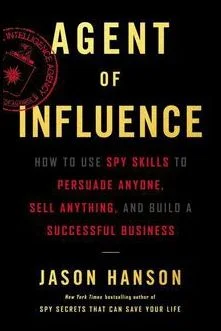
"Agent of Influence" by Jason Hanson
Book summary, review and lessons from "Agent of Influence" by Jason Hanson.
Learn key lessons from an ex-CIA officer, and how you can apply spy skills to grow and develop your business.
Book Summary:
“Agent of Influence: How to Use Spy Skills to Persuade Anyone, Sell Anything, and Build a Successful Business” by Jason Hanson is a practical guide on how to use proven spy techniques to bolster your business strategies.
Bestselling author Jason Hanson, a former CIA special agent and founder of Spy Escape School, reveals how anyone can use spy tactics for increased success. Hanson teaches readers how to develop a winning sales personality and target the perfect business opportunity using the SADR cycle—spotting, assessing, developing, and recruiting. With this invaluable and unique handbook, you will become a more productive and confident professional.
Book Lessons:
1) Key Spy Lessons
Know your contacts contacts.
Spies don’t just know their contacts, they take the time to learn who their contacts are connected to. Who are their relatives, their neighbors or co-workers, expand your network by figuring out your contacts know.
Look at their feet.
Any time you notice someone’s feet pointing away from the person to whom they are talking to, it’s a clear signal that they do not want to engage in the conversation any longer. If their feet are pointing towards the exit, they likely want to head that way.
Hold proper eye contact.
Research shows that most people are comfortable with eye contact that lasts about 3.2 seconds, any more and people begin to feel too intimate or even threatening.
Listen for key words.
When you’re developing a connection with someone, listen to words they emphasize or frequently repeat. These key words will often give you insight into the person’s life.
Repeat their name.
It’s said that a person’s name is the sweetest and most important sound in any language. Make it a point to purposefully repeat the person’s name throughout a conversation to create the feeling that they are interesting and the center of attention.
Own your mistakes.
When something goes wrong in a business, the person in charge should take full responsibility, no matter whose fault it technically was. Take extreme ownership of the situation and set an example by fixing the problem, even if it wasn’t your wrongdoing.
2) Use the hourglass conversation to extract information
“By starting with a broad general topic, narrowing in on a specific topic, and then going broad again, you can quickly pull incredibly valuable information from someone without them suspecting you’re prying.”
One of the most important skills a spy needs to have in their arsenal, is the ability to extract information from people without them becoming suspicious.
This is done through a technique called “the hourglass conversation.”
It starts with the spy talking about a broad general topic, then narrowing the conversation to a specific topic where they can learn valuable information, and then going to a broad topic.
This method works extremely well because people tend to only remember the start and end of a conversation and often forget what happened in the middle.
For example, lets say a spy is at a global conference and wants to extract information from a chemical engineer about the kind of work he does.
The spy would start by making small talk about the atmosphere of the conference and the lectures, then ask about the line of work the engineer does and what he enjoys about his job and then finish by asking if the engineer knows any good places to get food around town.
“People often remember the beginning and end of a conversation–but not the middle. This is why spies ask the probing question in the middle of the conversation. This is how they can determine if their target has what they want without coming off as suspicious.”
Here’s how author Jason Hanson used the Hourglass conversation to land a gig with a billionaire businessman:
Hanson was at an exclusive event and knew a billionaire who had been receiving death threats was at the event. Hanson figured he could provide the businessman with personal security and having him in his network would lead to more lucrative jobs.
However, Hanson couldn’t just walk up to the businessman and announce that he should hire him. In fact, almost everyone in the room wanted to talk to the businessman.
Instead, Hanson took a different approach and talked to the billionaire’s girlfriend. He opened the conversation by talking about the food and event (general broad topic). He shifted the conversation to work and told her about his security company (narrow topic). The girlfriend then mentioned that she had been worried about her boyfriend’s safety and was looking to bring people in since he wasn’t going to do it himself.
After receiving this gem of information, Hanson took the conversation broad again and talked about their favorite hobbies. The two then exchange contact info and went back to the event.
Hanson reconnected with the girlfriend two days later and she was glad to hear from him. She ended up hiring his security company to provide training to her billionaire boyfriend as well as his entire board of directors!
3) Build Alliances, Not Contacts
“There’s a big difference between having a Rolodex full of powerful names and actually being able to put the names to good use.”
Hanson argues that finding a way to access someone isn’t the hardest part of networking, the real challenge is taking that relationship to a higher level.
Instead of having contacts, one should have alliances–an alliance is someone who views you as an asset in their own life, respects you as a peer and values your knowledge and expertise.
Alliances are built by making connections, finding commonalities and making the person feel comfortable.
The first main tactic intelligence officers use to build a relationship is matching and mirroring:
Spies will match and mirror the behavior of someone with whom they want to build an alliance since, generally speaking, people often feel more comfortable with others who are like them.
This technique involves observing the person’s posture, eye contact, physical proximity and other body language cues. “Mirroring cements the feeling that this person is a positive influence and someone we would like to have in our lives.”
A key point to remember is that you don’t have to mirror every behavior a person exhibits and to choose behaviors that feel natural and comfortable for you.
The second tactic is to create a bridge or establish commonalities with the person:
By sharing common interests you build rapport while gaining key insights into the person’s life.
Here are a few tips for building a bridge with someone:
Avoid one-upmanship where you try to be better than the person you’re talking to, don’t judge the person or they will avoid telling you personal information, don’t give advice unless specifically asked for, do not interrupt the person, make sure you’re an extraordinary listener, and use flattery but don’t over do it.
The third and last tactic is give to get to find common ground:
Most people aren’t going to openly share their fears or deep dark secrets with people they don’t know unless the other person opens up first or creates a warm, inviting outlet.
This doesn’t mean you dump your personal life story on a person you just met, but feel free to share bits and pieces of your personal life or your concerns about your business to get the other person to open up and start talking about their life or business.
Sincerity is equally as important as making useful connections so make it your goal to connect with people over a genuine commonality to achieve the best results. As Warren Buffet said, “It takes twenty years to build a reputation and five minutes to ruin it.”
Never risk your brand or personal reputation to make a connection based on a lie, it’s not worth it.
Book Review:
“Agent of Influence” by Jason Hanson is an easy-to-read guide on how business owners and entrepreneurs can apply lessons from the spy world towards business.
The book has a similar vibe to “Extreme Ownership" by Jocko Willink and Leif Babin, while also adding key lessons about negotiation, sales, and even has a bonus chapter explaining how to get on TV.
Overall, I’ve found this book to be both interesting and practical. The author does get a bit irritating since he tends to constantly self-promote himself, but aside from that he provides engaging stories, useful pieces of advice, and summarizes important takeaways and the end of each chapter.
Thank you Dey St. for sending me a copy of this book!
Rating: 4/5 Stars
Get the book here.

After reading 100+ books, here are the books I recommend reading.
Please consider supporting A&B or signing up for our monthly newsletter. Thank you!

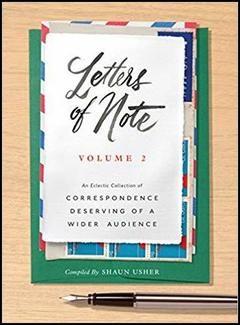
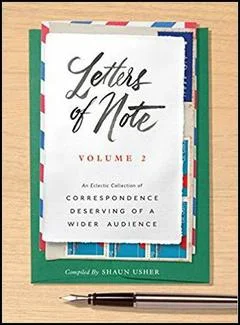
"Letters of Note: Volume 2" by Shaun Usher
Book summary and lessons from "Letters of Note: Volume 2” by Shaun Usher.
Get life advice from W.E.B. Du Bois, learn why you wouldn’t want to cross Michelangelo, and Kurt Vonnegut’s advice for high school students.
Book Summary:
“Letters of Note: Volume 2: An Eclectic Collection of Correspondence Deserving of a Wider Audience” by Shaun Usher is the companion volume to the instant classic “Letters of Note.”
Volume 2 follows a similar formula as the original and contains a collection of more than 125 captivating letters written by authors, scientists, celebrities, and ordinary people. Relive history with this beautifully designed book and gain insight into the personal lives of incredible figures.
There is an image of each letter and a transcript to go with it–the book is also filled with photographs, portraits and relevant artwork that adds a visual treat to this collection of text.
The book contains letters from:
Abraham Lincoln
Carl Jung
David Bowie
Dr. Seuss
J.K. Rowling
John Lennon
W.E.B. Du Bois
Winston Churchill
And many more.
Book Lessons:
1) Life advice from W.E.B. Du Bois
W. E.B. Du Bois was the first African American to earn a PhD at Harvard and cofounded the National Association for the Advancement of Colored People, an organization that fought for racial equality since its inception.
In 1914, his daughter, Yolande, who was soon turning fourteen, left home to study at Bedales School in England. Shortly after arriving, her father wrote a letter with some words of advice for her.

“You are in one of the world’s best schools, in one of the world’s greatest modern empires. Millions of boys and girls all over this world would give almost anything they possess to be where you are. You are there by no desert or merit of yours, but only by lucky chance.
”
“Deserve it, then. Study, do your work. Be honest, frank and fearless and get some grasp of the real values of life.
”
“The main thing is the YOU beneath the clothes and skin–the ability to do, the will to conquer, the determination to understand and know this great, wonderful, curious world. Don’t shrink from new experiences and custom. Take the cold bath bravely.
”
“Enjoy what is and not pine for what is not. Read some good, heavy, serious books just for discipline: Take yourself in hand and master yourself. Make yourself do unpleasant things, so as to gain the upper hand of your soul.
”
2) Don’t ever cross Michelangelo
Michelangelo di Lodovico Buonarroti Simoni, better known as simply Michelangelo, is one of the greatest artists of all-time. His work has become legendary and millions of people travel every year to see his paintings, sculptures, and artwork.
Michelangelo worked tirelessly and was well rewarded for his work, and shared his fortune with his family. However, one of his brothers, Giovan Simone, mistreated their father, which greatly upset Michelangelo. Michelangelo responded furiously by letter.
“It is said that when one does good to a good man, he makes him become better, but that a bad man becomes worse...You grow continually worse.
”
“I do not say that you are a scoundrel; but you are of such sort that you have ceased to give satisfaction to me or anybody. I could read you a long lesson on your ways of living; but they would be idle words.
”
“Now, I am sure that you are not my brother, else you would not threaten my father. Nay, you are a beast; and as a beast I mean to treat you.
”
“I have gone twelve years past drudging about through Italy, borne every shame, suffered every hardship, worn my body out in every toil, put my life to a thousand hazards, and all with the sole purpose of helping the fortunes of my family.
”
“Now that I have begun to raise it up a little, you only, you alone, choose to destroy and bring to ruin in one hour what is has cost me so many years and such labour to build up. By Christ’s body this shall not be; for I am the man to put to the rout ten thousand of your sort, whenever it be needed.”
3) Kurt Vonnegut’s advice for high school students
In 2006, a group of high school students were tasked with writing a letter to their favorite author and asking them to come visit their school. Five students decided to write to Kurt Vonnegut, the American writer who published 14 novels, three short story collections, five plays, and five works of non-fiction.
Although Vonnegut never made the trip to visit the school, he did write a wonderful letter to the students. Here are a few quotes from his response:
“I thank you for your friendly letters. You sure know how to cheer up a really old geezer (84) in his sunset years.”
“What I had to say to you, moreover, would not take long...Practice any art, music, singing, dancing, acting, drawing, painting, sculpting, poetry, fiction, essays, reportage, no matter how well or badly, not to get money and fame, but to experience becoming, to find out what’s inside you, to make your soul grow.
”
“Seriously! I mean starting right now, do art and do it for the rest of your lives.
”
“Here’s an assignment for tonight...Write a six line poem, about anything, but rhymed...Make it as good as you possibly can. But don’t tell anybody what you’re doing...Tear it up into teeny-weeny pieces, and discard them into widely separated trash recepticals.
You will find that you have already been gloriously rewarded for your poem. You have experienced becoming, learned a lot more about what’s inside you, and you have made your soul grow.
”
Book Review:
“Letters of Note: Volume 2” by Shaun Usher is just as aesthetically pleasing as Usher’s first book, however, I found Volume 2 much less interesting than the first. Out of the 125+ letters in this book, I’d say about only a dozen really caught my attention and made the book worth reading.
This opinion is of course biased and I would have loved to have seen more letters from writers offering advice on their craft or more letters such as the one W.E.B. Du Bois wrote, where readers could gain valuable life advice.
My recommendation would be to get the first volume of “Letters of Note” and if you truly love the book, then feel free to pickup the second volume.
You can also read the letters for free on Usher’s website here.
Rating: 2.5/5 Stars
If you’re interested in getting the book, you can do so here.
After reading 100+ books, here are the books I recommend reading.
Please consider supporting A&B or signing up for our monthly newsletter. Thank you!

“The Algebra of Happiness” by Scott Galloway
Book summary, review and lessons from “The Algebra of Happiness” by Scott Galloway.
Learn key life lessons, why you should take risks and not fear rejection, and how to stay married for the long-term.
Book Summary:
“The Algebra of Happiness: Notes on the Pursuit of Success, Love, and Meaning” is an unconventional book of wisdom and life advice from Scott Galloway–the renowned business school professor and NYT bestselling author of “The Four.”
Galloway’s book is a mix of anecdotes and no-BS insight to share hard-won wisdom about life's challenges, along with touching personal stories. Here are a few lessons readers will learn:
Advice on if you should drop out of school to be an entrepreneur (it might have worked for Steve Jobs, but you're probably not Steve Jobs),
Ideas on how to position yourself in a crowded job market (do something "boring" and move to a city; passion is for people who are already rich),
Discovering what the most important decision in your life is (it's not your job, your car, OR your zip code),
And many more.

Book Lessons:
1) Key Life Lessons
Happiness is usually highest during childhood, teen and college years.
It drops during your mid-20s because of work, stress and other hardships and stays around that level till your mid-40s, but starts to go back up once you hit your 50s.
If you want to be extremely successful in your career, you have to focus on work and not look for work-life balance.
By focusing on your career, you will have a lot more work-life balance later in life.
The ratio of time you spend sweating to watching others sweat is a forward-looking indicator of your success.
Spend more time playing sports than watching sports.
The most important decision you’ll make in life is deciding who will be your life partner.
Look for a partner with similar goals and one who approaches life the same way as yourself.
Two-thirds of economic growth over the next 50 years will be in supercities.
Opportunity is a function of density, get to a place that’s crowded with success.
Compound interest is the most powerful force in the universe.
Invest as early as possible: every $1,000 you put in today will be worth $10,000-$25,000 40 years from.
What is a man’s worst friend? Alcohol.
A Harvard happiness study tracked men for 75 years and found that the one thing that predicted unhappiness better than any other factor was alcohol–it led to failed marriages, careers and bad health.
To be happy, choose experiences over materialism.
Studies show that people overestimate the amount of happiness things will bring them and underestimate the long-term positive effect of experiences.
Nothing is ever as bad or as good as it seems.
You will experience failure and hard times in life, they will not last forever. Failure is often part of the road to success. The good times also don’t last forever, cherish moments of happiness.
Galloway’s book is based on his popular YouTube episode “The Algebra of Happiness.” Watch the video for more lessons.
2) Take risks and be okay with rejection
“Train yourself to take some sort of risk (ask for a raise, introduce yourself around at a party) every day and et comfortable grasping beyond your reach.
”
As the old saying goes, “No risk, no reward.”
Galloway encourages readers to train themselves to take risks, even small ones such as introducing yourself to a stranger at a party. You never know, perhaps the women you introduce yourself to is your future wife (this is how Galloway met his wife).
He also adds that his willingness to endure rejection from peers, investors and women “has been hugely rewarding. Knowing what you want is a blessing, and fear of rejection is a bigger obstacle than lack of talent or the market,” which is why it’s so important to practice risk-taking and being okay with failing.
Failures can be both private and public.
If you fail to get into law school because you bombed the LSAT, no one will know unless you told them. However, if you start your own company and launch it into the public domain, and it fails, people will know. But that’s okay–the road to success is filled with ups and downs, you just have to keep going.
Even if your startup does well in the beginning, you will have to take on more risk and possibly face more rejections. This includes creating and selling new products, hiring new employees, seeking venture funding and finding companies to buy your business.
Life is filled with risks and rejections, don’t let that stop you.
3) Advice for a happy marriage
“Studies show that marriage is advantageous economically. Having a partnership, sharing expenses and responsibilities, being able to focus on your careers, and utilizing the wisdom of crowds leads to better decisions.
”
Marriage is not only better for your personal life, but it is also better for your financial life. Galloway writes that a married couples’ household worth grows at an average of 14% a year.
By their 50s, married couples have 3x the assets of their single peers.
Here are a few pieces of marriage advice from Galloway:
Don’t keep score.
Aim to be as generous and do as much as you can for your partner instead of keeping count of everyone’s contribution and making a loser column. If your partner messes up, and they will, have forgiveness towards them.
Don’t ever let your wife be cold or hungry.
Most fights happen when either you or your partner are cold, hungry, tired or a combination of both. Keep a few snack and oversized scarves with you in the car or when on the go for emergency purposes.
Express affection and desire as often as possible.
Affection, touch and sex all reinforce that your relationship is intact, active and you have romantic feelings for your partner. People who don’t feel desired become insecure and can go down the path of feeling indifferent or disconnected which can lead to them cheating.
The two most rewarding things in life are family and professional achievement, writes Galloway. Life isn’t as fun if you don’t have a close partner to share all the great moments of life with. If you find someone who you can see spending the rest of your life with, make sure you’re a good partner and keep them along for the whole ride.
Book Review:
“The Algebra of Happiness” by Scott Galloway is a surprisingly entertaining and thoughtful book. Although its written by an angry, depressed business professor, Galloway does an excellent job combing research data with personal experiences to offer advice on living a good life.
The book gives tips on succeeding in business, finding the right partner and staying together for the long-term, how to be a good parent, how to take care of your health, and many more wise lessons.
This honest and direct book of advice is a wonderful read for recent graduates, millennials and anyone who feels adrift in life.
Thank you Portfolio Penguin for sending me a copy of this book!
Rating: 4/5 Stars
If you’re interested in this book, you can get it here.

After reading 100+ books, here are the books I recommend reading.
Please consider supporting A&B or signing up for our monthly newsletter. Thank you!

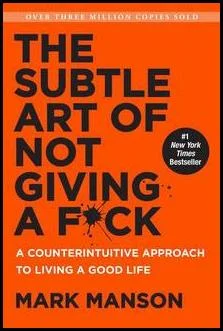
"The Subtle Art of Not Giving a F*ck" by Mark Manson
Book summary, review and lessons from "The Subtle Art of Not Giving a F*ck" by Mark Manson.
Learn why life is an infinite set of problems, why you should adjust your values and how taking responsibility of your life will make it better.
An excellent self-improvement book that delivers the cold, hard truth to readers.
Book Summary:
“The Subtle Art of Not Giving a F*ck: A Counterintuitive Approach to Living a Good Life” by Mark Manson provides readers with a counterintuitive guide to living a good life. Instead of trying to be happy all the time, Manson teaches:
Why problems are infinite, and why that is both a good and bad thing.
How adjusting your values can improve your quality of life.
Why you should take complete responsibility of your life.
And many more lessons.

There are only so many things we can give a f*ck about, so we need to figure out which things really matter in life. Manson’s book delivers the cold, hard truth while also sharing entertaining stories filled with profane humor. This book is a refreshing slap in the face for people to help them lead contented, grounded lives.
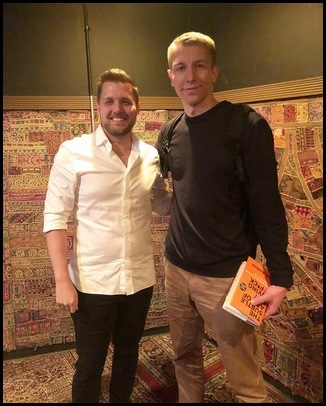
Got to meet Mark Manson at his book tour in NYC.
Book Lessons:
1) Problems are both good and bad
“Life is essentially an endless series of problems...The solution to one problem is merely the creation of the next one...Don’t hope for a life without problems...There’s no such thing. Instead, hope for a life full of good problems. ”
Every single person in the world has problems. It doesn’t matter if you’re rich, happily married and live in a nice house, you will still face the problem of managing your wealth, remembering your wife’s birthday and buying her a gift and keeping the house clean.
Being rich has its problems, as does being poor.
Having a family has its problems, as does not having one.
Being employed has its problems, as does being unemployed.
There is no such thing as a life without problems.
So what can you do?
“Hope for a life filled with good problems,” writes Mark Manson.
Having the problem of having too many good friends and not knowing which ones to hang out with is a good problem.
Getting accepted into all of the colleges you applied to is a good problem.
Planning a vacation that you won from being the number one salesperson at your company is a good problem.
The good news is that people also derive happiness from solving problems.
This is why people are constantly engaging in games, puzzles and challenges.
Since happiness comes from solving problems, happiness is a form of action or activity, not something you’ll magically discover. By taking action and solving problems, your body will reward you with positive emotions.
Since you can’t have a problem free life, it’s important to ask, “What pain do you want to sustain?”
Who you are is defined by what you’re willing to struggle for. People who enjoy the struggles of a gym are the ones who run triathlons and have chiseled abs and can benchpress a small house. People who enjoy long workweeks and the politics of the corporate ladder are the ones who fly to the top of it. People who enjoy the stresses and uncertainties of the starving artist lifestyle are ultimately the ones who live it and make it (page 40).
2) To have a good life, have good values
“The question is not whether we evaluate ourselves against others; rather, the question is by what standard do we measure ourselves?”
According to Mark Manson, here are the differences between good and bad values:
Good Values:
Reality-based
Socially constructive
Immediate and controllable
Bad Values:
Superstitious
Socially destructive
Not immediate or controllable
Honesty, for example, is a good value. It’s something you have complete control over, it reflects reality and it benefits others. Popularity, on the other hand, is a bad value. You have little control over what people think of you and you will spend too much time concerning yourself over every little action that may change your ranking.
When people have poor values, that is, poor standards, they are “essentially giving fucks about the things that don’t matter, things that in fact make our life worse” (88).
Manson proves his point by looking at the values of Dave Mustaine and Pete Best.
In the early 1980s, Dave Mustaine formed the legendary heavy-metal band Megadeth. Megadeth would go on to sell over 25 million albums and tour the world several times. Mustaine became incredibly wealthy from the band’s success and is considered one of the most influential musicians in the history of heavy-metal music.
Unfortunately, before he formed Megadeth, Mustaine was kicked out of the band Metallica. Arguably the greatest rock band of all time–Metallica has sold over 180 million albums, seven times that of Megadeth.
In a 2003 interview, Mustaine admitted he still considered himself a failure for being kicked out Metallica. By adopting the bad values of happiness equals being more successful than his former band, Mustaine felt like a failure even though he was worth millions of dollars, had countless fans and made a career out of something he loved to do.
Now compare that to the life of Pete Best.
Pete Best was also kicked out of a band, and not just any band, it was The Beatles.
Unlike Mutaine, Best didn’t go on to become a global rockstar or make millions of dollars, and yet, in an interview, he said he was happier without the Beatles.
Why?
Best said that getting kicked out of the band led him to meet his wife and then his marriage led to him having children. His values changed and he began to measure his life differently.
Instead of chasing glory and fame, Best sought out a loving family and happy marriage.
One would imagine that Dave Mustaine would be more satisfied with life since he achieved great fame and glory, but yet he felt like a failure whereas Pete Best didn’t become a superstar and yet is contempt with life because he simply changed his values.
Choose better values, and you too will have a better life.
3) Take total responsibility for your life
“There is a simple realization from which all personal improvement and growth emerges. This is the realization that we, individually, are responsible for everything in our lives, no matter the external circumstances.
”
This lesson may be one of the coldest and hardest truths to accept in Manson’s book. The truth that no matter what, you are responsible for your life and must respond to any punches life throws your way.
This doesn’t mean that fault and responsibility are the same things, but you still must take responsibility for things that aren’t your fault.
For instance, if you woke up one day and there was a newborn baby on your doorstep, it would not be your fault that the baby was put there, but the baby would now be your responsibility. You would have to choose what to do (feed the baby, call home services, etc).
In other words, fault is past tense and responsibility is present tense.
Here’s some more cold, hard truth from Mark Manson:
Many people may be to blame for your unhappiness, but nobody is ever responsible for your unhappiness but you. This is because you always get to choose how you see things, how you react to things, how you value things. You always get to choose the metric by which to measure your experiences (page 99).
Don’t fall for the victim mentality–it’s tempting to pass of the responsibility of solving your problems to others, but it won’t get you nearly as far in life as taking responsibility for your own life will.
This isn’t a new idea, Jocko Willink literally wrote a book called “Extreme Ownership” where he shares the most important lesson of leadership, taking complete responsibility and ownership of any situation.
Jordan Peterson also shares a similar lesson in his book, “12 Rules for Life.” Peterson writes that each and every one of us most shoulder as much responsibility as possible in order to improve our lives.
Your problems may not be your fault, but it is up to you, and you alone, to take responsibility of your life and take action to improve it.
Book Review:
“The Subtle Art of Not Giving A F*ck” by Mark Manson is equal parts insightful and entertaining. Manson has an incredible sense of awareness when it comes to life and looking at it from different perspectives, while also cracking poop jokes and talking about a superhero called “Disappointment Panda.”
This is the second time I’ve read this book, and I found it just as helpful and interesting as the first. At 200 pages, this book is quite easy to read and Manson’s stories about Buddha and rockstars keep readers engaged chapter after chapter.
Life is short, stop caring about things that don’t matter. Instead, read this book, focus on the things that do matter and take responsibility for your life.
Rating: 5/5 Stars
If you’re interested in this book, you can get it here.
You can also get the audio version of this book for free by signing up for a trial of Audible here.
Here are a few similar articles:
After reading 100+ books, here are the books I recommend reading.
Please consider supporting A&B or signing up for our monthly newsletter. Thank you!

"The Creative Curve" by Allen Gannett
Book summary, review and lessons from "The Creative Curve" by Allen Gannett.
Read about creative geniuses and the truth behind their work instead of the common myths around them.
Learn practical steps that you can apply to become more creative.
Book Summary:
“The Creative Curve: How to Develop the Right Idea, at the Right Time” by Allen Gannett debunks the mythology around creative genius and reveals the science and secrets behind achieving breakout commercial success in any field.
From writing a popular novel to starting up a successful company, recent research shows that there is a predictable science behind achieving commercial success in any creative endeavor.

By understanding the mechanics of what Gannett calls “the creative curve”–the point of optimal tension between the novel and the familiar, and the four laws of creative success (consumption, imitation, creative communities, iterations) and the common patterns behind their achievement, everyone can better engineer creativity.
Book Lessons:
Become a consumer and spend 20% of your time familiarizing yourself within your chosen field.
Imitate the style of great creatives in your field before you start adding your personal spin to your art.
Develop a creative community that consists of a mentor, collaborator, modern muse and prominent promoter.
Iterate your work by talking to customers and using data-drive processes to refine ideas and turn them into great pieces of work.
Law 1: Consumption
“Painters show up at numerous art exhibits. Chefs eat at cutting-edge restaurants, visit farms, and travel to food shows. Songwriters are constantly listening to music, new and old.”
There is a common pattern among successful creative artists, they are all consumers of their craft.
Great painters visit art galleries.
Skilled chefs explore different restaurants.
Successful authors read hundreds of books a year.
Gannett writes that creative artists spend about 3-4 hours a day or roughly 20% of their time on consuming their respective art.
He calls this the 20% principle:
By consuming material in your creative field, you develop an intuitive, expert-level understanding of the field, where it is on the creative curve, and where it is heading.
Take Ted Sarandos, the chief content officer at Netflix, as an example.
As a kid, Sarandos worked at a video rental store and spent all of his free time at work watching movies. Within a few months, he had watched almost every movie in the shop. He had become a human recommendation engine as was constantly being asked by customers which movies were worth watching.
By going on a consumption binge, Sarandos was able to differentiate what makes a movie great and was makes a movie bomb. He continued to consume movies as he was promoted to general manager of the video store chain and then went on to join Netflix in 2000, where he led content acquisition.
Even today, Sarandos continues to watch 3-4 hours of film and TV today, except now he does so from his corner office in Beverly Hills.
The 20% principle is critical for creative artists because you need to have a certain level of established knowledge of what people like and what already exists in the world before you attempt to create something new.
As author Allen Gannett writes, “If your goal is to achieve mainstream success, your first step should be to immerse yourself in the field you’re interested in, exposing yourself to and consuming as much as possible. This will allow you to identify ideas that are familiar to previous successes” (131).
Only once you have a baseline understanding of your art field can move on to creating something original.
Law 2: Imitation
“You may think that breakout success comes from breaking the pattern. In reality, it is only by following a pattern that you tap into the right level of novelty.
”
There’s an old saying that before you can break the rules, you must first master them. That is especially true for creatives.
Great creative individuals all follow some form of structure, formula, pattern or norm.
Almost all books are 200-300 pages long.
Almost all songs are 2-3 minutes long.
Almost all sitcoms are 20-30 minutes long.
These constraints ensure familiarity to consumers, while also allowing the artist to spice things up by changing 10, 20 or 30% of the art.
Take Andrew Ross Sorkin, author of the bestselling book “Too Big to Fail” and co-creator of the hit show “Billions” as an example.
After graduating from college, Sorkin was hired as a business reporter for the NYT. However there was one problem, he was 22 years old and had no real experience.
So what did he do?
He started to imitate the greats. He sought out NYT stories from previous years and studied their formats. Sorkin began to build outlines of an ideal format based on what worked and then fit his own story into the outline.
Instead of trying to reinvent the wheel, Sorkin learned the formula of what makes an article great and applied it to his own writing. The result? It “helped skyrocket his career” (152).
Sorkin used the same strategy when he began writing the book “Too Big to Fail.”
“I went to the bookstore and bought five or ten of my favorite business narratives and studied what they were doing, how they do it, what was it that I liked about it, and what didn’t I like about it,” Sorkin said.
Sorkin then emulated the book style formula of the writers he admired into his own book. By doing so, he was able to communicate his most persuasive new ideas into a time-tested framework.
“If we imitate the people we admire, and reconstruct their past successes, we are that much closer to absorbing the patterns we need to create content at the right point of the creative curve,” writes author Allen Gannett.
Law 3: Creative Communities
“Studies show that building a community of people around us is essential to achieving world-class success...research demonstrated that an innovator’s network could predict prominence, productivity, and even the length of their career.
”
There’s a common myth that creative geniuses simply sit alone in a house in the woods and create masterpieces. However, more often than not, this is completely false.
The truth is that most creative geniuses have a creative community.
One study found that the “strength of an artist’s reputation was correlated to the number of relationships they had with other successful artists, both within and beyond their own generation” (156).
Author Gannett discovered that creatives had 4 different types of people in their networks:
A Master Teacher
A Conflicting Collaborator
A Modern Muse
A Prominent Promoter
Together, these form what Gannett calls a “creative community.” Each role can be filled by either an individual or a group, and all four roles play a critical part in becoming a successful creative artist.
Here is a short description of each role:
A Master Teacher
Master teachers serve two essential roles: they teach constraints and they assist with deliberate practice through feedback. A master teacher is needed to take your game to the next level, even professional athletes have teachers (coaches).
A Conflicting Collaborator
You don’t want to collaborate with someone who is so easy to get along with that they don’t push you. The goal is to find a person who will help you discover and overcome your flaws.
A Modern Muse
A modern muse is an individual or a group of people who continually inspire and motivate you. This support system will help supply you with energy to power through the low moments of your creative career.
A Prominent Promoter
Prominent promoters are people with credibility who will advocate for you and your work. This could be an agent, publicist or fellow artist with a solid reputation and has influence in their field.
Near the end of the chapter, Gannett writes that “The best innovators know that creative success isn’t a solo adventure, and also know that a single key partner is insufficient. We all need in our orbits a community of people who will fill a variety of roles” (182).
Law 4: Iterations
“The biggest secret to creating something your audience will love? Listen to them.
”
The 4 steps of iteration are conceptualization, reduction, curation, and feedback.
During the conceptualization stage, creatives generate a set of plausible ideas that can later be refined.
In reduction, creatives put their early work in front of an audience to test the ideas and get a sense of which ideas are worth investing time and energy into. This stage can be scary because it involves criticism and rejection, but it’s better to have 3 great ideas that you feel will succeed instead of 30 random ideas.
Then in the curation stage, you take your ideas one step further and allow people to dive deeper into your work so that you can gather extensive information to confirm data and intuition.
The final stage is feedback. Creators need to constantly measure and assess their work to fit customer needs. This can come from phone calls, emails, social media, sales figures or any other data points. Just as authors constantly rewrite their drafts, use customer feedback to improve and refine your product until it is a polished piece of work.
Here’s how Ben & Jerry’s, the famous ice cream company, goes through the iteration process:
Conceptualization: Ben & Jerry’s R&D researchers come up with a list of 200 possible new flavors.
Reduction: Ben & Jerry’s emails those 200 flavors to their newsletter subscribers and asks which flavors interest them and move forward with the top 15 flavors.
Curation: the Flavor Gurus start to make small batches of the 15 flavors and tests them with other teams and stakeholders.
Feedback: During the early release, Ben & Jerry’s looks at fan reactions to see if people like it or not. Then during the official release, the company looks at phone calls, emails, social media, sales figures and any other data points that indicate whether customers like the product and if any improvements are needed.
Book Review:
“The Creative Curve” blew me away. It’s not a NYT or WSJ bestseller, and yet it is a fantastic book filled with engaging stories and wonderful pieces of practical advice.
The book debunks many common myths around creative geniuses and provides insightful recommendations on how anyone can improve their creativity. Author Allen Gannett did an excellent job presenting his ideas with the support of both original research and published scientific studies.
This book is a must read for artists, writers, musicians or anyone in a creative industry. I can’t recommend it enough, I’ve already added it to my list of books that are worth reading more than once.
Rating: 5/5 Stars
If you’re interested in this book, you can get it here.

Here are a few similar articles:
After reading 100+ books, here are the books I recommend reading.
Please consider supporting A&B or signing up for our monthly newsletter. Thank you!

"Loonshots" by Safi Bahcall
Book summary, review and lessons from "Loonshots" by Safi Bahcall
Read about a surprising new way of thinking about the mysteries of group behavior and nurturing radical breakthroughs.
“Loonshots” teaches readers how to keep an eye out for false fails and how to create a company structure that allows loonshots to grow and thrive.
Book Summary:
“Loonshots: How to Nurture the Crazy Ideas That Win Wars, Cure Diseases, and Transform Industries” by Safi Bahcall, teaches readers a surprisingly new way of thinking about group behavior and nurturing radical breakthroughs.
Safi Bahcall combines his business and science background to share dozens of entertaining historical stories about ideas that changed the world. These crazy ideas include the invention of radar, the James Bond and Star Wars franchises, the creation of Lipitor–a multibillion-dollar drug, and many more.

Just like how changing the temperature of a fridge by one degree can change water from a solid to a liquid, “Loonshots” explains how making small shifts in company structure can lead to dramatic outcomes that can alter company’s future. The book distills these insights into lessons for creatives, entrepreneurs, and visionaries everywhere.
Book Lessons:
1) Beware of false fails
“The negative result in the rat experiment was a False Fail–a result mistakenly attributed to the loonshot but actually a flaw in the test.
”
Statins (drugs that lower cholesterol levels in the blood) have generated over $300 billion in sales, and Facebook, a social media giant that has a market cap of over $500 billion are two loonshot ideas that both experienced false fails.
The first statin, mevastatin, showed no lowering of cholesterol levels during the crucial stage of testing in live animals. That is until Akira Endo, the scientist who discovered mevastatin, bumped into a colleague who worked with chickens.
It occurred to Endo that hens might have high blood cholesterol since their eggs have so much of it and convinced his colleague to give mevastatin to chickens (in secret, of course).
““The results were spectacular. Mevastatin decreased cholesterol by nearly half, triglycerides by even more, with no ill effects””
Why did the drug work on chickens but not rats?
It was later discovered that rats have very little LDL or “bad cholesterol” while chickens have both good and bad cholesterol, much like humans.
Today, statins prevent approximately half a million heart attacks and strokes each year–but the drug almost didn’t make it to market because of a false fail during testing.
Facebook had a similar experience.
In the early 2000s, Facebook was seeking venture capital while competing with several other social networks including: Classmates, Sixdegrees, Tribe, Hub Culture, aSmallWorld, and others.
Investors believed social network sites were a fad since users would abandon established sites and join new ones, such as leaving Friendster for MySpace. Several investors passed on Facebook, but investor Peter Thiel decided to dig deeper into the problem.
Thiel found that users of Friendster were leaving the site because it was constantly crashing and although the company had received advice to fix and scale their site, they ignored it. Thiel concluded that users weren’t leaving the social network because of its weak business model, but because of a software glitch.
Thiel wrote Zuckerberg a check for $500,000 and eight years later, he sold most of his stake in Facebook for roughly a billion dollars.
Both Facebook and statins were crazy loonshot ideas that experienced false starts. However, a simple adjustment resulted in two multi-billion dollar entities.
One way to overcome false starts, is to Listen to the Suck with Curiosity or LSC as the author calls it. Overcome the urge to defend and dismiss when your idea is attacked and instead investigate the failure with an open mind.
When the drug testing in rats didn’t work, Endo asked why and set about testing different ideas. Peter Thiel did the same thing and investigated into why users were leaving social networks and found a contrarian answer.
It’s hard to hear that no one likes your beautiful loonshot idea, but it can be even harder to keep asking why it isn’t working. However, that doesn’t mean you should give up.
2) Developing the ideal loonshot environment
“Rather than champion any individual loonshot, they create an outstanding structure for nurturing many loonshots. Rather than visionary innovators, they are careful gardeners.
”
The idea that long-lasting companies are built on the back of a single genius-entrepreneur, is a myth. Rather, the best companies “ensure that both loonshots and franchises are tended well, that neither side dominates the other, and that each side nurtures and supports the other” (38).
Bahcall calls these principles the Bush-Vail rules–separate the groups working on the loonshots and those working on the main business, but allow projects and feedback to travel easily between the two groups.
Start by separating the artists and soldiers
“Artists” are people responsible for developing high-risk, early stage ideas while “soldiers” are responsible for already-successful, steady-growth parts of the organization. Loonshots are often fragile in their early stages since most are seen as crazy ideas, even radar was dismissed by the military as loonshot.
Several major movie studios passed on the loonshot idea of a British spy who saves the world (James Bond) and a script titled The Adventures of Luke Starkiller (Star Wars). By separating the artists and soldiers, you will create a loonshot nursery that projects those embryonic ideas and allows the artists to grow and develop them.
Love your artists and soldiers equally
Both loonshots and franchises are important to a business’ long-term survival, which is why it is important to love both artists and soldiers. During Steve Job’s first stint at Apple, he called the loonshot group working on the Mac “pirates” while he dismissed the group working on the Apple II franchise as “regular Navy.”
Hostility between the two groups grew and resulted in several key employees leaving the company as well as a failed Mac launch. It wasn’t until Steve Jobs returned 12 years later, that he learned to love both his artists (Jony Ive) and soldiers (Tim Cook).
3) Additional rules for a loonshot environment
Separate the phases
Separate your artists and soldiers.
Tailor the tools to the phase.
Watch your blind side: nurture both types of loonshots (product and strategy).
Create dynamic equilibrium
Love your artists and soldiers equally.
Manage the transfer, not the technology: be a gardner, not a Moses.
Appoint, and train, project champions to bridge the divide.
Spread a system mindset
Keep asking why the organization made the choices it did.
Keep asking how the decision-making process can be improved.
Identify teams with outcome mindsets, and help them adopt system mindsets (149).
Reduce the return on politics
Make lobbying for compensation and promotion decisions difficult. Find ways to make those decisions less dependent on an employee’s manager and more independently assessed.
Use soft equity
Identify and apply the non-financial rewards that make a big difference. For example: peer recognition and intrinsic motivators.
Increase project-skill fit
Invest in the people and processes that will scan for a mismatch between employees’ skills and their assigned projects. Adjust roles or transfer employees between groups when mismatches are found. The goal is employees stretched neither too much nor too little by their roles.
Fix the middle
Identify and fix perverse incentives, the unintended consequences of well-intentioned rewards. Pay special attention to the dangerous middle-manager levels, the weakest point in the battle for promotion and toward incentives centered on outcomes. Celebrate results, not rank.
Bring a gun to a knife fight
Competitors in the battle for talent and loonshots may be using outmoded incentive systems. Bring in a specialist in the subtleties of the art–a chief incentive officer.
Fine-tune the spans
Widen management spans in loonsot groups (but not in franchise groups) to encourage looser controls, more experiments, and peer-to-peer problem solving (224).
Book Review:
“Loonshots” by Safi Bahcall does an excellent job explaining how small shifts in company structure can help companies nurture and develop loonshot ideas–a widely dismissed idea whose champion is written off as crazy, that leads to an important breakthrough.
One would believe a book about company structure would be dry and dull, but Bahcall made this book both entertaining and educational. The book is filled with stories about how the military dismissed the invention of radar, how a drug that lowered cholesterol was killed three times, how forest fires and terrorist networks spread, and dozens of more captivating stories.
Although “Loonshots” is an interesting and informative read, it is also for a very niche audience. I would recommend this book for CEOs and executives of medium to large size companies, scientists, military leaders and entrepreneurs. Apply the tools in this book to help your company and employees unlock their potential to create and nurture the crazy ideas that change the world.
Rating: 4/5 Stars
If you’re interested in this book, you can get it here.

Here are a few similar articles:
After reading 100+ books, here are the books I recommend reading.
Please consider supporting A&B or signing up for our monthly newsletter. Thank you!
Enjoying A&B?
Consider donating to keep the site up and running!