
Reading Books About Auschwitz Vs Visiting It
Reading books about Auschwitz are one thing, actually visiting is another
Both are important and teach different lessons
Overview:
Books are a fantastic resource at our disposal; they’re cheap, portable, and filled with knowledge. However, as with all things, books have their limitations. They are written by other people and are a secondary source of information.
Some people are non-believers until they see things with their own eyes. Some things are so hard to imagine, that the reader feels the author is writing about a non-existent place until they finally visit it themselves.

Entrance into Auschwitz I. The sign translates to "Work Will Set You Free" a common lie told by many concentration camps.
That is partly how I felt before I visited Auschwitz. I’ve seen videos of the camps and read books such as “Man’s Search for Meaning” and “This Way for the Gas, Ladies and Gentlemen” but it isn’t until I actually visited this horrible place that I began to truly grasp, or at least attempt to understand, the horrors that occurred there.
It’s well known that millions of people were murdered at Auschwitz, but it’s difficult to comprehend that massive number. That is until one walks the hall were thousands upon thousands of shoes lay piled up to the ceiling. Shoes of men, women, and sadly children as well.
But more than that, their personal belongings are still there too. There are thousands of cups that people brought because they were told they would be living in the camps. Thousands of suitcases because people believed they were going to need a decent set of clothes.
They didn’t. Most people had all their belongings taken from them, including their lives.

Thousands of cups and bowls brought by prisoners to Auschwitz.
One of the most shocking realizations from visiting the camp is the sheer size of the camp. Auschwitz consisted of three camps: Auschwitz I, Auschwitz II-Birkenau and Auschwitz III-Monowitz.
Auschwitz II-Birkenau was the largest of the three and could hold 100,000 prisoners. The camps are filled with barracks that had multiple three-level bunk beds crammed inside. There was little to none ventilation and no bathrooms in the barrack. The barracks were often filled with rats, flies, lice and other unwelcoming creatures.

Prisoner barracks at Auschwitz. There were about 8 people on each level of the bunk bed.
Birkenau is also where the infamous railroad tracks and Gate of Death are found.

"The Gate of Death."
Once people arrived inside the camp, they were told to separate their belongings, and form into a line. An S.S. guard would make a split-second decision of who was healthy enough to work and who wasn’t.
Roughly 80% of newly arrived prisoners were told to get into a line that would go and take a shower. This line consisted of women, children, old adults and handicapped individuals. They marched into a shower room with fake shower heads where gas was released instead of water.

Railroad tracks leading to the center of Auschwitz II.
Visiting the camp in-person helps “put a face to a name” so to speak. You see the setting used for so many books. You see just how cramped the barracks were, the massive size of the camp and the barbed-wire fences that mean it nearly impossible to escape.
Books, on the other hand, provides in-depth stories of the people that lived and suffered. It’s like having a story in your head and then when you visit the camp, you know the setting of each scene.
When Borowski wrote in his book which directions elderly women and handicapped men walked towards the gas chambers, I knew which direction they went. When he wrote about the building where women were experimented on by Nazi scientists, I knew which building it was.
I don't claim to fully understand the life of an Auschwitz prisoner and I never will. But if people can make sense of even a small piece of the horrors that took place here and what was done to prisoners, that should be enough to teach a lesson that will not soon be forgotten.

"Those who do not remember the past are condemned to repeat it."-George Santayana
To learn more about life in concentration camps, what it took to survive, and lessons learned from survivors, I recommend reading these books:
“This Way for the Gas, Ladies and Gentlemen” & "Man’s Search for Meaning"


If you enjoyed this article, consider supporting our site or signing up for our monthly newsletter. Thank you!
Reader freebies:

How Much I've Spent on Books in 2017
In 2017 I read 35 books, but I actually bought 52 books.
Find out how much each book cost and how much I ended spending on books last year.
In 2017 I read a total of 35 books, but I actually bought 52 books. I always try to buy used books to save money and the only book I've ever pre-ordered was "12 Rules for Life" by Jordan Peterson. By buying used books, I figured I'd save a ton of money and the amount I spent on books would be quite small.

A 'few' of my books.
To test this hypothesis, I decided to review all of my book purchases to find out exactly how much I've spent on books in 2017. Here is the cost of each book I've bought last year:
$6.44: The Man Who Mistook His Wife For A Hat: And Other Clinical Tales
$8.81: Man's Search for Meaning
$9.91: The War of Art: Break Through the Blocks and Win Your Inner Creative Battles
$8.29: The Gulag Archipelago Abridged: An Experiment in Literary Investigation (P.S.)
$5.05: Ernest Hemingway on Writing
$5.98: The First Five Pages: A Writer's Guide To Staying Out of the Rejection Pile
$13.40: The Emperor's Handbook: A New Translation of The Meditations
$11.41: The Denial of Death
$4.99: American Sniper: The Autobiography of the Most Lethal Sniper in U.S. Military History
$8.05: No More Mr Nice Guy: A Proven Plan for Getting What You Want in Love, Sex, and Life
$8.46: Competition Demystified: A Radically Simplified Approach to Business Strategy
$5.99: The Red Circle: My Life in the Navy SEAL Sniper Corps and How I Trained America's Deadliest Marksmen
$6.66: Perennial Seller: The Art of Making and Marketing Work that Lasts
$4.48: On Writing Well: The Classic Guide to Writing Nonfiction
$12.19: War and Peace (Vintage Classics)
$5.48: The Art of War for Writers: Fiction Writing Strategies, Tactics, and Exercises
$11.04: Trust Me, I'm Lying: Confessions of a Media Manipulator
$10.39: The Divine Comedy: Inferno; Purgatorio; Paradiso (Everyman's Library)
$8.95: Without Conscience: The Disturbing World of the Psychopaths Among Us
$6.13: Einstein's Dreams
$14.64: Pre-Suasion: A Revolutionary Way to Influence and Persuade
$5.99: The Innovators: How a Group of Hackers, Geniuses, and Geeks Created the Digital Revolution
$8.88: The Hero with a Thousand Faces (The Collected Works of Joseph Campbell)
$5.11: Purple Cow, New Edition: Transform Your Business by Being Remarkable
$5.99: How to Read Novels Like a Professor: A Jaunty Exploration of the World’s Favorite Literary Form
$6.79: What Every BODY is Saying: An Ex-FBI Agent’s Guide to Speed-Reading People
$10.46: Thus Spoke Zarathustra: A Book for Everyone and No One (Penguin Classics)
$7.24: 1984 (Signet Classics)
$11.97: Walt Disney: The Triumph of the American Imagination
$10.00: The Effective Executive: The Definitive Guide to Getting the Right Things Done
$11.35: Influence: The Psychology of Persuasion, Revised Edition
$6.29: Good to Great: Why Some Companies Make the Leap and Others Don't
$5.05: Tender Is the Night
$7.99: The Curious Case of Benjamin Button and Other Jazz Age Stories (Penguin Classics)
$5.33: David and Goliath: Underdogs, Misfits, and the Art of Battling Giants
$3.57: Rich Dad Poor Dad: What The Rich Teach Their Kids About Money That the Poor and Middle Class Do Not!
$7.38: Modern Romance
$5.35: 1984
$8.98: The Black Swan: The Impact of the Highly Improbable (Incerto)
Total Cost: $414.61
Interesting Figures:
Number of books purchased: 52
Average book price: $7.97
Most expensive book: $17.98: The New Encyclopedia of Modern Bodybuilding
Least expensive book: $1.79: The Storytelling Animal: How Stories Make Us Human

More books!
If you're interested in learning about my favorite books of 2017, you can find that here.
Keep in mind that the cost listed is just the total cost of the books and does not include shipping. In total, I think it’s safe to say that I’ve spent ~$500 or so on books in 2017.
As you can see the cost of books adds up, throw in the cost of maintaining a website and it comes out to several hundreds dollars a year. However, I truly enjoy reading and writing and want to continue sharing awesome lessons and knowledge with everyone. Thus, I ask viewers to consider donating to help keep this site up and running, every dollar counts!
If I’m able to turn this into a full-time career, I’d be able to read a lot more books and share many more important lessons learned from books. I also promise to keep the site ad-free and strive to provide interesting and educational content.
If you’re not able to donate but still want to support the cause, sign up for our newsletter here and follow AlexandBooks on social media (Facebook, Twitter, Instagram).
Thanks everyone and continue to read books and be awesome! -Alex
*PS: The links on my website are Amazon affiliate links, Amazon pays me a small fee for each item purchased. Important Fact: It doesn't affect the price of your purchase at all, and it helps keep this website up and running ad-free.*
If you enjoyed this article, consider supporting our site or signing up for our monthly newsletter. Thank you!
Reader freebies:

5 Lessons From 3 Books About Slave Labor Camps
Learn 5 life lessons gathered from reading three books about slave labor camps
This article talks about “Man’s Search for Meaning,” “The Gulag Archipelago” and “The Forgotten Highlander”
Summary:
Humans are capable of doing incredible things. They can create new forms of medicine and invent useful tools to make life easier. However, there is also a darker side to people. They are also capable of doing horrible things such acting inhumane and forcing people into slave labor camps.
Having read three books about forced labor camps: “Man’s Search for Meaning” by Viktor Frankl, “The Gulag Archipelago” by Aleksander Solzhenitsyn and “The Forgotten Highlander” by Alistair Urquhart–I’ve noticed similar themes and lessons among these books.
For those unfamiliar with these books, here is a quick summary:
"Man’s Search for Meaning" by Viktor Frankl:

Frankl was a Jewish psychiatrist during World War II and was sent to four different concentration camps including the infamous Auschwitz. During his time in the camps, he observed prisoners and himself, to reflect on what made some people mentally tough and why some people survived while others died or committed suicide.
In the camps, he was forced to assess whether his own life still had any meaning. Prisoners worked over ten hours a day of physical labor in freezing temperatures with not much more than a shirt, pants, and slippers. Most days they were given only one bowl of soup and a piece of bread.
"The Gulag Archipelago" by Aleksander Solzhenitsyn:

Solzhenitsyn was a decorated captain in the Soviet Army during World War II, but in 1945, he was sent to prison for criticizing Stalin in private letters. While in prison, he observed the prisoners, guards, and everyone in between to discover how everyone played a role in contributing to the creation of Soviet prison camps.
This book is a non-fictional account about the Soviet forced labor camps that led to the imprisonment, brutalization and very often murder of tens of millions of innocent Soviet citizens by their own Government.
"The Forgotten Highlander" by Alistair Urquhart:

Born in Scotland, Alistair was drafted into the army during WWII and shipped to the British outpost of Singapore. The Japanese soon invaded the colony and the British soldiers became prisoners of war (POWs). As a POW, Alistair was forced into slave labor on the notorious “Death Railway”, working up to 18 hours a day and while being fed only one cup of rice a day.
He worked barefoot with barely any clothes and suffered from malaria, dysentery, and tropical ulcers (Google at your own discretion). He often worked seven days a week from dawn to dusk and experienced several beatings and even a sexual advancement from a guard–that he fought off. Miraculously, Alistair survived 750 days of labor in the jungle.
Here are 5 lessons I’ve learned from reading these books:
5) Humans Can Survive In horrible Conditions
“Like nearly all the camp inmates I was suffering from edema. My legs were so swollen and the skin on them so tightly stretched that I could scarcely bend my knees. I had to leave my shoes unlaced in order to make them fit my swollen feet. There would not have been space for socks even if I had had any. So my partly bare feet were always wet and my shoes always full of snow.”
The quote above comes from Viktor Frankl as he explains life at a Nazi concentration camp. He suffered from edema, which caused his tissues to swell up and made moving around torture. His feet were uncovered as he walked through snow and didn’t have a pair of socks–not that he could wear them anyway because his shoes were already tight due to his swollen feet. With barely any clothes or gear, he and others were still forced to mine the frozen ground for ten or more hours a day.
The only nutrition prisoners were given was a bowl of very watery soup once daily and a small piece of bread. Sometimes they were given special extra allowances consisting of a piece of cheese or a slice of poor quality sausage.
Life wasn’t much better for Alistair Urquhart at the Japanese labor camps. He was given only a cup of rice and water for each meal. From constantly working in the jungle with no shoes, he developed tropical ulcers. There was a doctor in his camp but he didn’t have any medicine so the best advice he gave Urquhart was to put maggots on his foot to eat the dead skin.
As crazy as it sounds, it’s true:
“I left the medical hut, shaking my head, still wondering if I were being had. Letting maggots eat my skin did not sound particularly appetizing but I was willing to try anything. I knew I had to stop the rot that was devouring my legs.””
And the craziest part is it actually worked. However, Urquhart said that even years later he would sometimes get the sensation of maggots eating his skin. An unfortunate side effect, but he did live to be 97 years old.

Alistair Urquhart, author of "The Forgotten Highlander."
4) Survival Requires The Right Mindset
“‘It’s easy for these men to give up and when they lose hope the fight just seeps right out of them. On countless occasions I have seen two men with the same symptoms and same physical state, and one will die and one will make it. I can only put that down to sheer willpower.’”
Urquhart writes that he could tell which men would die by simply looking at their faces. Those with a lost gaze in their eyes didn't last long. It was in that moment that Urquhart made the decision that he would not stop fighting–even if it required him to put maggots on his feet to survive.
Aleksandr Solzhenitsyn learned a similar lesson.
“And the conclusion is: Survive to reach it! Survive! At any price!... This is the great fork of camp life. From this point the roads go to the right and to the left. One of them will rise and the other will descend. If you go to the right–you lose your life, and if you go to the left–you lose your conscience. ”
Solzhenitsyn notes that prisoners had to make a decision, do whatever it takes to survive or fall short and die. This didn’t mean kill other people to survive, but rather it was a change in mindset.
In his book, Solzhenitsyn writes that prisoners were allowed to take baths–with only cold water–but then had to endure a trip back to camp in subzero temperatures. Yet, none of them got pneumonia, in fact, they didn’t even catch a cold.
However, when one of those prisoners was finally released and he could live in a warm home and take warm baths, he got ill the first month. The mindset of surviving at any price was not there anymore. Changing one's mindset can have an incredible impact on the rest of the body.

Aleksandr Solzhenitsyn, author of "The Gulag Archipelago."
3) Slave Labor–You Get What You Pay For
“We made constant attempts at sabotage. Men whispered orders to impair the construction of the bridge wherever possible. Some charged with making up concrete mixtures deliberately added too much sand or not enough, which would later have disastrous effects. ”
Evil leaders have been under the assumption that slave labor is a great way to accomplish projects at little to no costs, but this is far from the truth. As Urquhart writes in his book, the prisoners did everything in their power to delay or destroy the project. They even collected termites and white ants and deposited them into the grooves of the logs that were meant to hold up the bridge. As a result, construction projects were often delayed or if it were finished, the quality of the project was extremely poor and didn't last long.
A similar conclusion can be found in the Soviet labor camps.
“All they were on the lookout for was ways to spoil their footgear–and not go out to work; how to wreck a crane, to buckle a wheel, to break a spade, to sink a pail–anything for a pretext to sit down and smoke. ”
Just as in the Japanese camps, workers would constantly find ways to sabotage the project so they didn’t have to work. Solzhenitsyn adds that the material was so poor, people could break bricks with their bare hands.
The prisoners did everything possible to quietly foil the project so that they wouldn’t have to work–after all, they weren’t being paid to work so they didn’t have any incentive to do so.
The prisoners were also constantly stealing project materials. Solzhenitsyn concludes the chapter by writing that the labor camps were not only ineffective, but they ended up costing the country more than if they had simply paid workers a fair wage.
2) Life Is Unfair
- Viktor Frankl worked at a hospital as a psychiatrist, before being arrested and sent to four different concentration camps over the years.
- Aleksander Solzhenitsyn was a decorated captain in the Soviet Army during World War II before he was arrested and sent to a labor camp for criticizing Stalin in private letters.
- Alistair Urquhart was drafted into the army during WWII and shipped to the British outpost of Singapore before he was arrested by the Japanese and sent to one of their labor camps.
None of these men were “evil” or actual criminals. They were simply in the wrong place at the wrong time. None of them deserved to suffer in the labor camps. None of them should have worked 16 hours a day of physical labor on barely any food or water in horrific conditions.
Life is simply unfair at times. Viktor Frankl does, however, offer a piece of advice should anyone find themselves in a similar situation. He writes that everything can be taken from a person, except their attitude.
“Everything can be taken from a man but one thing: the last of the human freedoms–to choose one’s attitude in any given set of circumstances, to choose one’s own way...It is this spiritual freedom–which cannot be taken away–that makes life meaningful and purposeful.”
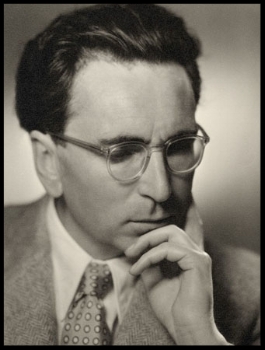
Viktor Frankl, author of "Man's Search for Meaning."
1) Man is Capable of being a Saint & a Swine
“In the concentration camps...we watched and witnessed some of our comrades behave like swine while others behaved like saints. Man has both potentialities within himself, which one is actualized depends on decisions but not on conditions. ”
That is a heavy truth to swallow. Even in the concentration camps, Frankl noticed some prisoners gave their daily piece of bread to prisoners in dire need of nutrition. He also saw other miracles such as a Nazi doctor buying medical supplies with his own money and smuggling it back into camp to help the Jewish prisoners.
Frankl ends the book by saying that man is capable of inventing the gas chambers of Auschwitz, but man is also the same being that entered those gas chambers with the Lord’s prayer on their lips.
Solzhenitsyn came to a similar conclusion in his book.
“Gradually it was disclosed to me that the line separating good and evil passes not through states, nor between classes, nor between political parties either–but right through every human heart–and through all human hearts. ”
Solzhenitsyn spent countless hours thinking in prison–when he wasn’t being forced to work, prisoners sat in their cells and had nothing but their hands and their mind–and came upon the realization that good and evil exists inside every person, but they must make the decision within themselves.
Inside every person is the struggle between good and evil, and although it is impossible to expel evil from the word, the next best thing is to constrict it within each person. That is a responsibility that falls upon each and every one of us.
Thank you for reading my article! If you're interested in getting any of the books mentioned, click below:
If you enjoyed this article, consider supporting our site or signing up for our monthly newsletter. Thank you!
Reader freebies:

6 Profound Quotes from "12 Rules for Life" by Jordan Peterson
- Book: “12 Rules for Life: An Antidote to Chaos” by Jordan B. Peterson
- In this article I share my thoughts on 6 incredibly insightful quotes from Peterson's book
Summary:
Since discovering Jordan Peterson's YouTube channel last year, I've become completely amazed by the amount of incredible information produced by this single individual. His book, "12 Rules for Life: An Antidote to Chaos" is the first book that I've ever pre-ordered in my entire life, and I've bought roughly 100 books in the last three years.
I've already written one article about "12 Rules for Life" but this book holds so much valuable information that I had to write another.
For those unfamiliar with Dr. Peterson, here is a quick intro.
Jordan B. Peterson is a Canadian clinical psychologist, cultural critic, and professor of psychology. He has taught at Harvard and the University of Toronto. Dr. Peterson specializes in personality psychology with a particular interest in the psychology of religious and ideological beliefs. He’s published more than a hundred scientific papers, transforming the modern understanding of personality, while his textbook, Maps of Meaning, revolutionized the psychology of religion.
In the past few years, Dr. Peterson has become one of the world’s most popular public thinkers due to his YouTube lectures–which has over 1 million subscribers– where he describes the deep connections between neuroscience, psychology and some of the oldest stories told by mankind.

Author Dr. Jordan B. Peterson.
In his book, 12 Rules for Life, Peterson discusses discipline, courage, and the necessity of clear, truthful thinking in order to live properly within the order and chaos of our lives.
Here are 6 profound quotes from his book.
6)
“To stand up straight with your shoulders back is to accept the terrible responsibility of life, with eyes wide open. It means deciding to voluntarily transform the chaos of potential into the realities of habitable order. It means adopting the burden of self-conscious vulnerability, and accepting the end of the unconscious paradise of childhood...It means willingly undertaking the sacrifices necessary to generate a productive and meaningful reality.”
This quote is from the first chapter of Peterson’s book (some may call it the lobster chapter), where Dr. Peterson discusses an important life lesson that can be learned from these sea-dwelling creatures.
To start, lobsters and humans have similar nervous systems and live in a dominance hierarchy. But what do lobsters have to do with standing up straight? Well, humans and lobsters share the chemical serotonin, which governs posture. When a lobster is defeated in a fight, its posture drops, it faces the ground and appears weak to others. The same thing happens to humans, and with each defeat, serotonin levels drop and so does our posture.
If a person slouches, they present themselves as defeated. However, if a person stands up straight, it means they may have taken a hit but are not defeated.
It means that you, both physically and mentally, are able and willing to move forward in life to the next challenge. It also signals to other people that you are able to handle whatever life throws your way while you pursue your rightful destiny.
Life is not easy. There will be pain and suffering. But do not let chaos bring you down. Accept the fact that this journey will not be smooth and that no matter what happens, you will take responsibility for your life and do what you can to make it better. And when negative situations occur in life that you cannot control, you will still stand up straight and not let it bring you down.
5)
“You could help direct the world, on its careening trajectory, a bit more toward heaven and a bit more away from Hell. Once having understood Hell, researched it, so to speak–particularly your own individual Hell–you could decide against going there or creating that. You could aim elsewhere. You could, in fact, devote your life to this. That would give you a Meaning, with a capital M.”
Everyone that is alive right now is part of this game that we call life. The stage that we have entered into as players was created, for the most part, by previous characters. No one gets to play this game forever, but each of us, no matter how big or small a role, contributes to the game.
Peterson believes our contributions can have one of two effects, it can either tilt the world up towards Heaven, or down towards Hell.
Hell is a topic Peterson has extensively researched–for those that don’t believe in Hell on Earth, he advises people to read about Viktor Frankl’s experiences in the Holocaust camps or Aleksandr Solzhenitsyn’s time in the Soviet slave labor camps.
After having read both of those books, it’s easy to see why Peterson preaches about moving the world towards Heaven. The horrible events that happened in those books should never again occur, and we must all do our part to make sure the world is far, far away from Hell. As Peterson says, “You could, in fact, devote your life to this.” Doing so would not only be beneficial to the world, but it would also “give you a Meaning, with a capital M.”
4)
“When the internal critic puts you down using such comparisons, here’s how it operates: First, it selects a single, arbitrary domain of comparison. Then it acts as if that domain is the only one relevant. Then it contrasts you unfavorably with someone truly stellar, within that domain. It can take that final step even further, using the unbridgeable gap between you and its target of comparison as evidence for the fundamental injustice of life. That way your motivation to do anything at all can be most effectively undermined. ”
All of us have a voice inside of our heads that no matter what we do, always has something negative to say about ourselves. Peterson calls this voice the internal critic. This critic is an expert in making us unhappy by comparing our lives to others.
Specifically, the critic operates by picking a single, arbitrary domain–say money–and then acts as if that domain is the only one that is relevant. For example, if I made $40,000 last year and my friend made twice as much, the internal critic says starts to say that I’m poor, I’m not as good, and that my life would be exponentially better if I made more money.
However, this internal critic can be easily dismissed because its logic is flawed. Each person is a unique individual that consists of a nearly infinite number of domains. It is impossible to even compare two people once two domains are given.
The book uses the example of two employees, where person A makes more money than person B. Most people would automatically say person A has the ‘better life’. But now consider that person A finds out that his wife is having an affair, whose life is better now?
It’s impossible to truly compare the lives of two individuals. There is nothing to gain, it is simply waste of time and energy. Instead, focus on improving your own life and making it as good as possible.

"Psst, hey kid...you looking for some order and responsibility?"
3)
“The first step, perhaps, is to take stock. Who are you? When you buy a house and prepare to live in it, you hire an inspector to list all its faults–as it is, in reality, now, not as you wish it could be. You’ll even pay him for the bad news. You need to know. You need to discover the home’s hidden flaws. You need to know whether they are cosmetic imperfections or structural inadequacies. You need to know because you can’t fix something if you don’t know it’s broken–and you’re broken. You need an inspector. The internal critic–it could play that role, if you could get it on track; if you and it could cooperate.”
Now that you have the internal critic under control, it is time to put it to work and use it to your advantage. The critic should the play role of an inspector examining a home. It should look at the interior and exterior imperfections and identify what can be fixed and what cannot.
It can be tempting to skip this step, but ignoring a hole in a wall does not make it go away. The same can be said of people. Identify what areas, both physically and mentally, you may need to inspect and repair.
It can be tricky, but try to be honest with yourself without being too harsh.
To those that may believe they are beyond repair, Jordan Peterson writes that the past is fixed, but the future is not, life can get better. Of course, not everything can be fixed tomorrow, but that doesn’t mean a person should give up.
Instead use the internal critic to identify what “you could set in order and what you would set in order–voluntarily, without resentment, even with pleasure.” Change will require action, but it is an exchange with your future self. Work today to improve your life, and you will receive a better life for your future self.
This may be a difficult step for people, so Peterson advises readers to start small and build their level of responsibility over time. Even doing small tasks will greatly improve one's life over time, similar to how compound interest in a savings account over time can lead to huge savings.
I started with small tasks such as cutting down the amount of sugar I put in my tea from two teaspoons to one, and then zero, and doing at least 30 minutes of reading each morning. Have these tasks made my life perfect? Of course not, but it has paid off. I can now drink tea without sugar and still enjoy it, and so far this year I’ve read 13 books.
So take some time to examine yourself and your life, and work on making positive changes even if the changes are small.
2)
“Why refuse to specify? Because while you are failing to define success, you are also refusing to define failure, to yourself, so that if and when you fail you won’t notice, and it won’t hurt. But that won’t work! You cannot be fooled so easily–unless you have gone very far down the road! You will instead carry with you a continual sense of disappointment in your own Being and the self-contempt that comes along with that and the increasing hatred for the world that all of that generates.”
Just as refusing to admit there is a hole in a wall does not solve the problem, refusing to define your goals does not mean failure will be avoided. Many people refrain from identifying their goals because they don’t want to admit that they've failed.
Also, when a goal is defined but isn’t achieved, it will likely cause the person pain because they haven't accomplished what they wanted. However, the alternative is much worse. If goals aren’t specified, the person will wander around in life with a dull ache of continued hopelessness and a vague sense of failure.
Instead, do the opposite and list your goals anywhere you can. Download an app on your phone or just use the To-Do feature. Even better, write down your goals in a journal or notebook.
My favorite method is to use a calendar. Each night before going to bed, I write down 3 things I want to accomplish the next day. I also write down 3 things I want to accomplish that week and that month.
It’s great because I can literally see my progress and accomplishments all in one place. If I didn’t meet a certain goal, I can always move it to a different day. I can also flip to past months and see what I’ve accomplished in prior months.
For example, I’ve been tracking how many times I work out each week. Before using my calendar, I thought I was going to the gym 5 times a week, but the truth was I was only going 3 times a week. With this new information, I started keeping track of the days I worked out and felt extremely accomplished when I looked back on my calendar and saw I worked out 5 days and had the proof in writing (If you don’t have time to go to a gym, consider making a home gym).
Does listing your goals and not achieving them suck?
Yes.
But, it also feels great when goals are accomplished. And you have the power to achieve those goals and avoid the sucky feeling of failure by simply putting in the work. You can’t have highs without the chance of having lows, you must take the risk. Trust me, the lows won’t last forever, but the ache of hopelessness from not listing goals will.
1)
“Orient yourself properly. Then–and only then–concentrate on the day. Set your sights at the Good, the Beautiful, and the True, and then focus pointedly and carefully on the concerns of each moment. Aim continually at Heaven while you work diligently on Earth. Attend fully to the future, in that manner, while attending fully to the present. Then you have the best chance of perfecting both. ”
There’s an old quote by Lewis Carroll that goes “If you don't know where you are going, any road will take you there.” So before you can take the road to help tilt the world towards Heaven, you must first orient yourself and find out exactly where you are in the world. Then, and only then, can you work on finding the right road.
Try to take the road that will make you a good and true person, and will also make the world a more beautiful place than it is today. Once you’re on this road, pay constant attention to make sure your work on Earth (the present) is leading towards Heaven (a better future). If everyone does this to the best of their abilities, perhaps one day, there could be Heaven on Earth.
Now wouldn’t that be wonderful?
Thank you for reading my article. If you're interested in getting this book, click here or on the image below!
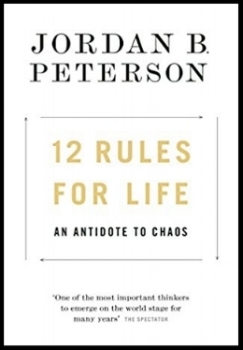
More information about Jordan Peterson can be found below.
If I have failed to peak your interest in this book, consider this: for the past three years I’ve been a voracious reader and have read close to a total of 100 books, but I can say without a doubt in my mind, this book is in the top 3 best books I’ve ever read. Give it a chance. -Alex
If you enjoyed reading "12 Rules for Life" I recommend reading these books:
“The Power of Myth” by Joseph Campbell
“Wild at Heart” by John Eldredge
“The Gulag Archipelago” by Aleksander Solzhenitsyn
"Man’s Search for Meaning" by Viktor Frankl


Also, please consider supporting our site or signing up for our monthly newsletter. Thank you!
Reader freebies:




Alex and Books Is 1 Year Old!
- Alex and Books turned 1 Year old this week!
- Find out what's been accomplished in Year 1
- And things I learned from a year of blogging
Year 1 Is In The Books!

(Get it? Because this is a site about books...yeah I'll see myself out)
On a more serious note...
I’d like to say thank you to everyone who visited Alexandbooks, I hope people have found this site to be helpful and educational.
People often say that the hardest part of doing something is starting it, well after a year of work, I believe this is true. There have been a few ups and downs starting this site, but the journey has just begun!
Here’s what’s been achieved so far:
48 articles have been written (read them here)
37 books have been recommended (find them here)
5 videos have been created (watch them here)
Here are a few of my favorite articles:
If you want to read the very first article I posted, you can read it here.
Also, a list of the most popular articles can be found here.
On the site there has been a total of:
8,117 Pageviews
5,422 Views
5,167 Unique Visitors

A Few random facts:
The majority of visitors come from the US.

There’s been 28 visitors from Poland (Polska!).

And 0 from North Korea...

A Few Things I Learned From Year One:
Building a Website isn’t easy
It took me several months to build a website and it involved a lot of trial and error. Even after taking the website live, the user interface didn’t flow well, so I ended up redoing the site. I’d say that in the first few months I spent more time learning how to build the site and improving it than time spent on writing articles.
However, it’s been a great learning experience and I’m happy to say I know spend more time focusing on the articles instead of the website. Still, I’m constantly looking for ways to improve the website so if you have any suggestions, you can message me here.
Blogging will not make you rich
Or replace your day job. Or even replace your side job. Since starting this site, I’m made a total of about $5 in revenue.
Profits however, is a different story.
Owning a domain name and operating a website costs around $200 a year. The cost of all of the book bought last year came out to around $350. So in total, profits were -$545.

Last year I read 35 books. If each of those cost $10 on average, that's $350 just for the books!
Nonetheless, the good news is that this website was never created with the goal of becoming rich.
The reason behind starting the blog was because I thought it would be a good challenge to learn how to build a website, and it would be better to spend time reading and writing about books instead of watching TV or playing video games in my free time.
Like All Skills, Reading Is A Habit
People ask me how I make time to read so many books and how I never get bored of reading. The truth is that reading is very much like going to work or the gym. There are times when you don’t want to do it and times when it gets boring.
That is why it is important to turn it into a habit.
When you make something into a habit, it doesn’t require much energy or motivation. You just do it. For example, I do most of my reading in the morning. I eat breakfast and start reading afterwards because before I can write an article about the book, I have to first read it. After a while, reading in the morning became second nature and became effortless.
There are also multiple ways to ‘read’ a book.
Physical books are great for writing and highlighting but are difficult to read while traveling. A kindle or eBook is great for highlighting, but you can’t write in it and I personally don’t like staring at a screen for hours. Audio books are great way to learn while commuting, but you can’t write or highlight any important text. Each one has pros and cons so it’s important to identify which one best fits your style of learning (you can learn more about your reading style here).

Year 1 is complete, now onto Year 2!
Thoughts on Year 2
My goal for year two is to continue creating educational and helpful articles related to books and lessons learned on this journey. I started focusing only on business books, but have since expanded into psychology, writing, self-development, and other genres. I believe it's best to have an open mind so I will continue to explore different genres.
I've read about 100 books in the last three years, and even though I read a lot of books on similar topics, I continue to learn new lessons from each books.
Books are an invaluable source of information because they have been written by experts with years of experience on a specific topic. So instead of getting a PhD in psychology and studying it for twenty years, you can just read a book and learn the key lessons from it in just a few hours. If you want to start reading but don't know which book is interesting or helpful, you can find my list of recommended books by genre here.
And now, chapter two of Alex and Books begins.
Thank you for reading.
Sincerely,
Alex W.
P.S. Scroll down to learn how to support this site & for some Free Gifts!
Ways to support a&B

As mentioned earlier, running a website costs a lot more than I thought. Add in the cost of books, and the expenses of this site total to roughly $550 a year.
If you found this site useful and would like it support it, the best way of doing so would be to give a contribution.
Every dollar will go towards this website and even small donations help.
For people who can't donate, the second best way to support is by signing up for the monthly newsletter. People who sign up will get access to exclusive articles and will be entered for book giveaways.
Freebies For You!
(If you don't see any images try turning off ad-blocker)
*The links above are affiliate links that help support this site with no additional cost to yourself*
If you want to stay up to date with the books I'm currently reading and get behind the scenes pictures, follow me on Instagram!







Books, eBooks, and Audiobooks–Which one is right for you?
The three most popular forms of reading are physical books, ebooks, and audiobooks. Read more to find out which one best suits you.
Books have been around for thousands of years, but with advances in technology in the last few decades, there are now multiple ways to ‘read’ a book. The three most popular forms of reading are physical books, ebooks, and audiobooks. Because each form of consumption has its own pros and cons, there is no one-size-fits all model. Instead, each form is suited for people depending on their lifestyle and preferences.
Learn more about each form to get a better sense of which form of reading best suits your style.

What's your preferred method of reading?
Physical Books
Pros:
- Good for people who want to get away from technology, be physically engaged, and mark up the pages
- Only form of a book that an author can sign
- Doesn’t require battery or any electronic device
- Can be stored in personal library or used as a conversational piece at home
- Reader can write in the book and mark it anyway they wish
- Traditional and chic form of reading
- Paperbacks usually run cheaper than eBooks or audiobooks
Cons:
- Physical books can be heavy and large
- Books can be easily damaged (ex. rain)
- Difficult to read while performing physical exercise (ex. jogging)
- Takes longer to order (if physically shipped)
eBooks
Pros:
- Good for people that travel often and prefer to travel light
- Can be stored on smartphone or tablet device
- Convenient, weightless, doesn’t require physical space
- Good for people with limited space in their homes
- Eco-friendly
- Ability to highlight text easily and search for important notes in seconds
Cons:
- Usually costs more than paperbacks
- Difficult to borrow an eBook to a friend
- Requires electronic device
- Can’t be signed by an author
- Difficult read while performing physical exercise (ex. jogging)
Audiobooks
Pros:
- Good for people that like to multitask or are constantly moving during their commute
- More passive activity
- Can be ‘read’ while exercising or driving
- Good way to be productive while commuting to and from work
Cons:
- Usually more expensive than physical books
- Usually becomes available after physical and eBook release
- Require electronic device (and sometimes headphones)
- Difficult to highlight and write down important information
- No visual words so readers cannot take a picture of any text to save or share information
What style of reading best suits you? Let me know in the comments below!
Personally, I read physical books while at home, and eBooks/audiobooks while on my daily commute. If you're looking for some good books to read, check out my 10 favorite books of 2017 list here.
Thank you for reading. If you're interested in getting a free audio or kindle book, check out the links below!
Try Audible and get two FREE audiobooks here.
Get a FREE month of unlimited kindle reading and listening here.

"12 Rules for Life" by Jordan B. Peterson
- Book: “12 Rules for Life: An Antidote to Chaos” by Jordan B. Peterson
- For: Anyone who is unhappy with their life, people who are angry, resentful, or lost in life
- Lesson: 12 Rules that will help you become a better person and in turn help make the world a better place
- Book: “12 Rules for Life: An Antidote to Chaos” by Jordan B. Peterson
- Pages: 448
- For: Anyone who is unhappy with their life, people who are angry, resentful, or lost in life
- Lesson: 12 Rules that will help you become a better person and in turn help make the world a better place
Jordan B. Peterson is a Canadian clinical psychologist, cultural critic, and professor of psychology. He has taught at Harvard and the University of Toronto. Dr. Peterson specializes in personality psychology with a particular interest in the psychology of religious and ideological beliefs. He’s published more than a hundred scientific papers, transforming the modern understanding of personality, while his textbook, Maps of Meaning, revolutionized the psychology of religion.
In the past few years, Dr. Peterson has become one of the world’s most popular public thinkers due to his YouTube lectures–which has over 700K subscribers– where he describes the deep connections between neuroscience, psychology and some of the oldest stories told by mankind.

Author Dr. Jordan B. Peterson
In his book, 12 Rules for Life, Peterson discusses discipline, courage, and the necessity of clear, truthful thinking in order to live properly within the order and chaos of our lives.
Here are three important rules from his book.
1) Stand up straight with your shoulders back
Peterson starts the book by talking about the surprising similarities shared between humans and lobsters. For example, they have similar nervous systems and live in a dominance hierarchy. But what do lobsters have to do with standing up straight? Well, both humans and lobsters share the chemical serotonin, which governs posture. When a lobster is defeated in a fight, their posture drops, they face the ground and appear weak to others. The same thing happens to humans, and with each defeat, serotonin levels drop even lower.
“Low serotonin means decreased confidence. Low serotonin means more response to stress and costlier physical preparedness for emergency…Low serotonin means less happiness, more pain and anxiety, more illness, and a shorter lifespan.
”
One bad life event can lead to another, and soon enough there you become stuck in a feedback loop spiraling down in a negative direction. The most important thing to do when this happens is to work to turn the direction of the feedback loop in reverse.
If a person slouches, they present themselves as defeated. However, if a person stands up straight, it means they may have taken a hit but are not defeated. It means that you, both physically and mentally, are able and willing to move forward in life to the next challenge. It also signals to other people that you are able to handle whatever life throws your way while you pursue your rightful destiny.
2) Treat yourself like someone you are responsible for helping
This chapter begins with a story which highlights that, on average, humans care more for their pets than themselves. Peterson reaches this conclusion by stating that humans are more likely to fill and properly administer prescription medication to their pets than to themselves.
Although this trait may seem healthy and unselfish at first, it is not. If the pet owner doesn’t take care of himself, how will they be able to take care of the pet for the long term? Also, why don’t people love and care for themselves the same way they care for their pet?
“[People] are excruciatingly aware of their own faults and inadequacies, real and exaggerated, and ashamed and doubtful of their own value. They believe that other people shouldn’t suffer, and they will work diligently and altruistically to help them alleviate it. They extend the same courtesy even to the animals they are acquainted with–but not so easily to themselves.”
Peterson writes that people must learn to respect themselves because they play a vital role to their pets, other people, and society. Peterson believes every person has a vital role to play in the destiny of the world and for that reason, they must take care of themselves.
An easy way to take better care of yourself is to treat yourself like someone you are responsible for helping. To take care of yourself, it is important to define who you are and refine your personality. Strive to become a good person and then work towards becoming an even better being. By doing so you will help direct the world a bit more towards Heaven instead of Hell.
3) Make friends with people who want the best for you
When looking back on his teenage years, Peterson notes that two of his friends were intelligent people but often hung out with the wrong crowd. Luckily for Peterson, he moved away from this group when moved to a new city to pursue his college education. However, his two acquaintances continued to surround themselves with people that weren’t good for them and both began to go down the wrong path in life.
“Sometimes, when people have a low opinion of their own worth–or, perhaps, when they refuse responsibility for their lives–they choose a new acquaintance, of precisely the type who proved troublesome in the past. Such people don’t believe that they deserve any better–so they don’t go looking for it. Or, perhaps, they don’t want the trouble of better.”
Peterson writes that some people who have decided to reject the path upward because of its difficulty and instead surround themselves with people who decide to take the easier path in life. This group of individuals, put off what needs to be done today and instead enjoy cheap pleasures and thrills. Silently, each person agrees not to call each other on it and they continually distract themselves from their true calling.
Even one troubled individual can be harmful. Dr. Peterson says that the psychological literature makes this clear. When a group of well-performing workers has a new poorly performing individual introduced to them, the entire team degenerates. This is why it is important to surround yourself with good healthy people.
But be warned, this is not an easy task. It takes strength and courage to stand near a good person. You must have humility and be willing to learn from others. This may be painful at first but it will allow you to grow and become a better person.
So remember, stand up straight with your shoulders back, take care of yourself like someone you are responsible for helping and surround yourself with good friends!

If you're interested in getting this book, click here.
More information about Jordan Peterson can be found below.
- Jordan Peterson Website: http://jordanbpeterson.com/
- Podcast: http://jordanbpeterson.com/jordan-b-p
- Reading List: http://jordanbpeterson.com/2017/03/
- Twitter: https://twitter.com/jordanbpeterson
If I have failed to peak your interest in this book, consider this: for the past three years I’ve been a voracious reader and have read close to a total of 100 books, but I can say without a doubt in my mind, this book is in the top 3 best books I’ve ever read. Give it a chance, you will not regret it.
If you enjoyed this article, consider supporting our site here or signing up for our monthly newsletter here. Thank you!

10 Powerful Quotes from “The Emperor’s Handbook”
- Book: “The Emperor’s Handbook” by Marcus Aurelius
- For: Anyone interested in philosophy, living a good life or looking for meaning in life
- Lesson: Learn to live a fulfilling life while being a virtuous person
- Book: “The Emperor’s Handbook” by Marcus Aurelius
- Pages: 160
- For: Anyone interested in philosophy, living a good life or looking for meaning in life
- Lesson: Learn to live a fulfilling life while being a virtuous person
Marcus Aurelius is known for his role as Emperor of Rome during the 2nd century AD when he ruled Rome at the height of its power and was, in many ways, the figure described in Plato’s dream of a philosopher-king.
When Marcus was three years old, his father passed away. Marcus was raised by his mother, and they moved in with their grandfather. When Hadrian, the emperor of Rome, visited the house, he believed Marcus was destined for greatness. In his will, Hadrian wrote that the next ruler should adopt Marcus. The new emperor, Antoninus Pius, did just that.
Marcus spent twenty years working with the emperor, learning how to rule and become a leader. After Antoninus Pius died, Marcus would assume the role of emperor of Rome.
Although Marcus became one of the most powerful men in the world, he did not chase wealth, power or fame. Nor did he fall to any other temptation of evil. He would rule Rome in a just and virtuous manner. He kept a journal where he wrote all the important lessons he learned during his life. This journal would become known as the “Meditations” or “The Emperor’s Handbook.” Here are ten powerful quotes from his book.

Sculpture of Marcus Aurelius
“Do not waste the rest of your life speculating about others in ways that are not to your mutual advantage. Think of all that might be accomplished in the time you throw away–distracted from the voice of your own true and reasonable self–wondering what the next man is up to and why, what he’s saying, or thinking, or plotting. Purge your mind of all aimless and idle thoughts, especially those that pry into the affairs of others or wish them ill.
”
2.
“If you pursue the matter at hand along the straight path of reason...if you keep your divine spirit pure and blameless, as though this were the moment to give it back; if expecting nothing and fearing nothing, you are content to act in accord with nature and to speak with heroic honesty–then you will live well. And no power on earth can stop you.”
3.
“Everyone dreams of the perfect vacation...you too long to get away and find that idyllic spot, yet how foolish...when at any time you are capable of finding that perfect vacation in yourself. Nowhere is there a more idyllic spot, a vacation home more private and peaceful, than in one’s own mind...take this vacation as often as you like, and so charge your spirit.
”
4.
“Is it not better simply to do what is necessary and no more, to limit yourself to what reason demands...this adds to the happiness of doing a few things the satisfaction of having done them well. Most of what we say and do is unnecessary anyway; subtract all that lot, and look at the time and contentment you’ll gain.
”
5.
“Look around you and see how everything is perpetually changing, and get used to the idea that nature loves nothing more than to change the things that are and to make more things like them come into being. In a way, everything is a seed of the thing that grows out of it.
”
6.
“Persuade me or prove to me that I am mistaken in thought or deed, and I will gladly change–for it is the truth I seek, and the truth never harmed anyone. Harm comes from persisting in error and clinging to ignorance.
”
7.
“The happiness of those who want to be popular depends on others; the happiness of those who seek pleasure fluctuates with moods outside their control; but the happiness of the wise grows out of their own free acts.
”
8.
“One thing alone troubles me: the thought that I might do what my true self does not will or that I might do what it wills in the wrong way or at the wrong time.
”
9.
“Don’t hanker after what you don’t have. Instead, fix your attentions on the finest and best that you have, and imagine how much you would long for these if they weren’t in your possession. At the same time, don’t become so attached to these things that you would be distraught if you were to lose them.
”
10.
“Why do you hesitate or second-guess yourself when you know perfectly well what ought to be done? If you know where you need to go, make a considerate but determined effort to get there. If you don’t, wait and seek the best advice you can find...Relaxed but alert, cheerful but determined–such is reason’s faithful follower.
”
Thank you for reading! If you're interested in getting the book, click here.

If you enjoyed this article, consider supporting our site or signing up for our monthly newsletter. Thank you!
Reader freebies:


Why College Students Should Travel Abroad
As students go through high school and college, they take history courses and learn about the world through textbooks and movies, but, the majority of students have a hard time understanding the significance of the information. However, when a person travels abroad, they get to experience different languages, cultural values, food, and more.
As students go through high school and college, they take history courses and learn about the world through textbooks and movies, but, the majority of students have a hard time understanding the significance of the information.
Ask a random college student about ancient Rome and they’ll most likely say something along the lines of, it was ruled by Julius Cesar and citizens attended gladiator fights for entertainment.
It can be difficult for students to absorb information about history and the world because, at times, it can seem like a far-off land. With only books and films to educate students, ancient Rome is as foreign a land as the fictional world of Narnia.
A professor can talk about the Colosseum and show pictures of it on a slideshow, but that is not nearly as likely to captivate students as visiting Rome in person.

Seeing the almost 2,000-year-old monument in person and walking through the Colosseum, one can begin to imagine themselves as a spectator in the stands watching a gladiator fight below. Exploring the Palatine Hill, one can see the ruins of temples and palaces, and lose their breath as they imagine themselves as a citizen of Rome two millennia ago.
Traveling the world is filled with moments like these, where one has no words to describe the feeling of amazement.
Traveling can be about more than just experiencing history. It is an opportunity to experience different cultures. When traveling in the U.S., most folks are quite similar with the only thing that changes are people’s accents.
However, when a person travels abroad, they get to experience different languages, cultural values, food, and more. For example, citizens of Rome love to make their food from scratch, drink wine with their meals and eat outside while listening to local musicians.
Traveling abroad expands one’s horizon and allows students to immerse themselves in a different way of life. It helps young people learn that there is more than one way to live life. The more a person travels, the more they learn about the world and come to understand how it works.
Traveling also allows people to live in the moment.
When traveling, students don’t worry about grades, midterms, or jobs, they are living in the present and forget everything else. By forgetting the noise of daily distractions, students are able to find out what they like and don’t like about different places and thus learn more about themselves in the process.
Traveling also makes students more confident in themselves. At first, it may seem scary to travel to an unfamiliar setting, but by being placed in a new environment, students will begin to adapt to their surroundings. Sooner or later, students will have to ask a local for directions or ask the waiter about the dinner menu, all of which will involve interacting with new people.
College may also be the best time in one’s life to do such an activity. Students are young and in good shape to walk around the city for hours, something that may be harder for them to do when they retire in their 60’s. Also, after college, most workers only get two weeks’ vacation for an entire year, which is almost nothing when one realizes college students have almost four months off.
In today’s world, students shouldn’t have any excuses not to travel. Many schools provide study abroad programs or cultural exchange programs. There are also volunteer programs where students travel abroad for free in exchange for teaching English to young children.
As the old saying goes, “If there’s a will, there’s a way.” Now pick a place, pack your things, and go explore this amazing place we call Earth.

The Importance of Exercise
Nearly everyone knows that exercise is important; this is a message that our society has been repeating over and over again to us since we were kids. However, not everyone may be aware of the amazing benefits exercise provides.
Nearly everyone knows that exercise is important; this is a message that our society has been repeating over and over again to us since we were kids. However, not everyone may be aware of the amazing benefits exercise provides.
In the United States, more than one in three adults and one in six children (ages 2-19) are obese.With America being one of the top world powers, if not the world power, this statistic is truly shocking. But exercise can do more than just get a person into shape. Many people may not know the plethora of benefits exercise can provide. In a recent report, the Academy of Medical Royal Colleges called exercise a “miracle cure.”
Here are some reasons why exercise may very well be a miracle cure.
To start, working out helps manage physical and mental stress. Exercise also releases endorphins, which creates a feeling of euphoria and happiness.
Exercise is especially important for individuals suffering from depression or anxiety because research shows that exercise can be just as effective as antidepressant pills in treating depression.

Lifting weights can help lift your mood.
A report from the National Center for Biotechnology Information writes that “depressed adults who took part in a fitness program displayed significantly greater improvements in depression, anxiety, and self-concept than those in a control group…the exercise participants also maintained many of these gains through the 12-month follow-up period.”
Not only do the benefits of exercise immediately help individuals, the benefits can stay with them for months after they started working out.
So far, we learned that exercise can aid in managing physical and mental stress as well as combat depression and anxiety. That, in itself, is incredible, but there are even more benefits from exercise:
- Physical fitness can also boost an individual’s self-esteem and improve their positive self-image.
- Working out helps support the brain and prevents degeneration of the hippocampus, an important part of the brain that’s associated with memory and learning.
- Exercise can create new brain cells and improve overall brain performance.
- Studies have shown exercise can help people fall asleep, especially individuals with insomnia.
- Exercise increases creativity and puts people into a positive mood.
- Exercise increases blood flow to the skin and helps deliver oxygen and nutrients which improves skin health and can even make wounds heal faster.
Let’s be honest here, this is an amazing list of benefits. In business terms, exercise has an incredible ROI.
Exercise is something that is available to everyone. People of all ages, genders, and races can exercise. A person doesn’t even need a gym membership, anyone can jog around their neighborhood or workout in their room.

The best part about exercise is that it is earned and no one can give it to you and no one can take it from you. Even if someone is born into a wealthy family, has a private chef and a personal gym, they won’t be able to get six-pack abs unless they work at it every single day.
The opposite of that is true as well. If a person lifts weights every day and they build 21-inch biceps like Arnold Schwarzenegger, they’ll maintain their physique for some time even if they stop working out.
It’s no secret that exercise takes time. Finding thirty minutes to an hour each day can be difficult for some individuals. But, there is good news. When a person commits to exercising each day, they start to look at their day and review what is important and what isn’t. This helps people become better at time management.
In my personal experience, I found that exercise helps people become more disciplined. By finding time to work out each day, you slowly build up discipline. Eventually, exercise becomes a habit and becomes a part of your daily routine. With its wide range of incredible benefits, everyone should strive to incorporate exercise into their daily life.
I hope this article encourages you to find time to exercise and become more active!
If you'd like to learn more about working out and exercise, check out the book below:

If you enjoyed this article, consider supporting our site or signing up for our monthly newsletter. Thank you!
Reader freebies:
Enjoying A&B?
Consider donating to keep the site up and running!