"Perennial Seller" by Ryan Holiday
- Book: “Perennial Seller” by Ryan Holiday
- For: Creative people who are looking to make their work last decades or longer
- Lesson: Learn how to create creative work that succeeds in the market for the long-term
Summary:
In every creative industry, there are certain creations that can be described as “perennial.” Meaning, regardless of how well it may have done at its release, these perennial products have continued to be successful and are still consumed by people decades later. The James Bond series, Citizen Kane and Pac-Man are still selling to this day and will likely continue selling for the next few decades.
The Great Gatsby continues to sell tons of copies more than half a century later. Certain products become timeless and classic, and Ryan investigates what makes perennial sellers unique.
The book is split into four parts. The first talks about the creative process and the magic and mindset needed to create a perennial seller. Part two teaches how to polish, perfect and package your creation. The third discusses marketing, which involves PR and promotion. The last part focuses on building a platform of fans to develop a long-term career.

Author Ryan Holiday.
Lessons:
1) Great Art Requires Purpose & Sacrifice
“The hard part is not the dream or idea; it’s the doing. It is the driving need that determines one’s chances. You must have a reason–a purpose–for why you want the outcome and why you’re willing to do the work to get it. That purpose can be almost anything, but it has to be there.”
Every creative person has a dream to write the next great novel or blockbuster film, but it’s the need to create something great that is vital in creating a perennial seller.
Here are a few examples of a good purpose: to uncover a truth that has been unsaid for too long, it will make the world a better place, it’s a once-in-a-lifetime moment, it will help a lot of people, because the excitement you feel cannot be contained.
If you want to create something to satisfy your ego, make money, or gain fame, be careful of this mindset. If the reason you want to create something is similar to the lines of, it’s your life’s work or this is what you were put on the planet to do, then you have the correct intent and are moving in the right direction.
After purpose, the next step is sacrifice.
The famous writer George Orwell said he would never write a book unless he was “driven by a demon he couldn’t resist.” The famous entrepreneur Elon Musk compared starting a company to “eating glass and staring into the abyss of death.”
Sacrifice will consist of pain and long hours of work. However, from sacrifice comes meaning, and from the struggle comes purpose. During this step, the fake innovator will be self-confident, while the real one will be scared to death. This is good, fear will keep you on your toes and alert during the process of creation.
2) Make Every Piece A Masterpiece
“The difference between a nice contemporary hit and a lasting icon is made in these decisions, and this process is not necessarily done quickly. It may be that the editing and refining of a work may take as long as the initial flurry of creation–it could be that the last mile takes longer than all the others put together.”
It is often said that getting through the last mile is just as hard as getting to the last mile. Before the product can be released, it needs to be polished, improved and properly positioned. Each piece of the product must be perfected in order to make it into a true masterpiece.
This step can be done only by the creator.
The creator is the CEO of your work. All responsibility and leadership falls on their shoulders. Chances are they’ll work with an editor, publisher or publicist–and they will help–but they will not take care of everything.
People will give feedback on how to improve your script or novel, but only the creator will be able to separate the helpful from the harmful suggestions.
Keep in mind, this process may last a long time. When Harper Lee submitted her manuscript, the editor told her it would require significant changes. Lee listened and after two years of rewrites, she created her famous book To Kill a Mockingbird.
Chances are that the first prototype will not be a masterpiece. Even The Great Gatsby was rejected several times. Similarly, WD-40 name comes from the forty attempts it took for its creator to nail the working formula.
3) Even a Masterpiece Must be Marketed
“You’ve reached the halfway point of the creative journey...you have created work that is both intrinsically and compellingly packaged and positioned. Now the bad news: There’s still a lot of competition out there left to beat. We are fighting not just against our contemporaries for recognition, but against centuries of great art for an audience. Each new work competes for customers with everything that came before it and everything that will come after.”
If you are the person who has created the product, it is up you to market and sell it. No one knows the product better and no one is more invested in it than you.
The first step to marketing your product is to make people care. This means being ready to sell at any time or place. When you meet someone, you should see it as an opportunity to make them care about your product. Phil Knight, the founder of Nike, sold his running shoes at track meets. Jay-Z sold CDs out of his car on the streets of New York City.
Author Ryan Holiday goes on to say that the one of the most important things that matters is word of mouth.
He calls it the single most powerful force in the life of a product since an organic, natural recommendation makes up between 20 and 50 percent of all purchasing decisions.
Not only is word of mouth more effective at converting potential customers than traditional advertising, it is also of little to no cost to the creator.
To increase word of mouth about a product, it is important to create excitement and gather momentum around it. One of the best ways to do this is by giving away the work for little or no cost to a select group of people.
Ryan has partnered with BitTorrent, one of the biggest piracy tools in the world, to give away music and books on several occasions. Author Robert Greene gave away a free supplemental eBook which helped make his paid book a number one New York Times bestseller. This freemium model builds trust, interest, and awareness of your product and if your work is good, a percentage of those people will be willing to pay for your product and support your work. This will help build a group of early adopters that will spread the word about your product to others. If you’ve gotten this far and want to learn more, you can get the book here.
Conclusion:
To create a perennial seller, one must have a deep purpose and be willing to sacrifice a lot for their work. It must be revised over and over again until each piece is a masterpiece. Once completed, the product must be marketed correctly in order for it to become a true perennial seller. Ryan Holiday is a great writer and although this book isn’t his best work, it is worth reading if you’re in the creative space or wish of creating something that will continue to last for decades.
Rating: 4/5
If you’re interested in getting the book, click here or on the image below!

- Book: “Perennial Seller” by Ryan Holiday
- Pages: 256
- For: Creative people who are looking to make their work last decades or longer
- Lesson: Learn how to create creative work that succeeds in the market for the long-term
If you're interested in reading another book by Ryan Holiday, here's an article on "Ego Is The Enemy."
If you enjoyed this article, consider supporting our site or signing up for our monthly newsletter. Thank you!
Reader freebies:

"Man's Search for Meaning" by Viktor Frankl
Book: “Man’s Search for Meaning” by Viktor Frankl
For: People searching for meaning in life or want to know how ordinary people cope with extraordinary situations
- Lesson: Learn how a psychiatrist survived a concentration camp and how humans can survive horrible situations and trauma
Summary:
Viktor Frankl, a Jewish psychiatrist during World War II, was sent to four different concentration camps including the infamous Auschwitz. During his time in the camps, he observed prisoners and himself, to reflect on what made some people mentally tough and why some people survived while others died or committed suicide.
In the camps, he was forced to assess whether his own life still had any meaning. Prisoners worked over ten hours a day of physical labor in freezing temperatures with not much more than a shirt, pants, and slippers. Most days they were given only one bowl of soup and a piece of bread.
After spending several years in the concentration camps, the war finally ended and Frankl became a free man. Frankl would go on to become the founder of logotherapy, a form of psychotherapy that focuses on the pursuit of meaning in one's life. He also wrote several books about logotherapy, his time in the camps, and the meaning of life.

An image of a young Viktor Frankl.
Lessons:
1) Love is an incredibly powerful force
“Then I grasped the meaning of the greatest secret that human poetry and human thought and belief have to impart. The salvation of man is through love and in love. I understood how a man who has nothing left in this world still may know bliss, be it only for a brief moment, in the contemplation of his beloved.”
While in the camps, prisoners were forced to work long hours of physical labor in harsh environments with poor equipment. Although he was in a horrible situation, Frankl could cheer himself up by thinking of his wife.
Due to the horrible conditions in the camps, Frankl was suffering every day, but the thought of seeing his wife again gave him a feeling of fulfillment and encouragement. Although Frankl had no idea whether or not his wife was alive, he says it didn’t make much of a difference. Even if she wasn’t alive, he still loved her spirit.
In his mind, Frankl was reliving all of the wonderful memories he and his wife have had during their time together and sometimes cried of happiness while doing so.
2) All Man Has Is His Attitude
“Everything can be taken from a man but one thing: the last of the human freedoms–to choose one’s attitude in any given set of circumstances, to choose one’s own way.”
Upon entering the concentration camp for the first time, the Nazi soldiers took everything from the soon to be prisoners including their clothes, jewelry (wedding rings as well), and documents.
Prisoners were separated from their families, shaved, and given a prison number that was tattooed on their arm.
When everything is taken from a person, there is only one thing left, their attitude.
Their attitude determines the decisions they make every day and every hour within that day. Prisoners in the camp all experienced lack of sleep, insufficient food, and various mental stresses. Yet, some prisoners still gave away their last piece of bread to others or helped them when they got injured.
Frankl says that a person is made as a result of their inner decisions and not the result of outside influences alone. Even in an extreme environment, like a concentration camp, man can still retain his human dignity.
3) The Meaning of Life and Suffering
“We must never forget that we may also find meaning in life even when confronted with a hopeless situation when facing a fate that cannot be changed. For what then matters is to bear witness to the uniquely human potential at its best, which is to transform a personal tragedy into a triumph, to turn one’s predicament into a human achievement.”
According to Frankl, the meaning of life can be discovered in three ways:
- By creating a work or doing a deed
- By experiencing something or encountering someone
- By the attitude we take toward unavoidable suffering
The first two are quite obvious, the first method often involves a person’s career or what they do to give back to others while the second is often referred to as experiencing goodness, love, and beauty. However, the third needs further elaboration.
Frankl says that meaning in life can be found even in hopeless situations. Throughout history, humans have been found to have almost endless potential. Many people have been able to turn their tragedy into a triumph–an amazing achievement that humans are capable of doing. Frankl is one example of this, the odds of surviving in a concentration camp were one in twenty-eight.
Frankl writes that suffering ceases to be suffering at the moment it finds a meaning, such as the meaning of sacrifice (example: People suffer at the dentist but the dentist is needed to be healthy, people suffer when running a marathon but they find meaning in finishing the race).
Although suffering is not necessary to find meaning, meaning can be found in suffering.
One meaning in life that Frankl discovered through his suffering is that man is capable of extreme evil as well as extreme good. Frankl saw stick-thin prisoners offering their one piece of daily bread to those in dire need and even a few Nazi guards helped Frankl survive by giving him advice or supplies.
Conclusion:
Love is a powerful emotion, have a positive attitude, and be aware that meaning can be found in suffering. Overall, Man’s Search for Meaning is definitely worth reading. It’s a quick read and an amazing story of the human spirit and the potential of mankind, both good and bad.
Rating: 5/5 Stars
If you’re interested in getting the book, click here or on the image below.
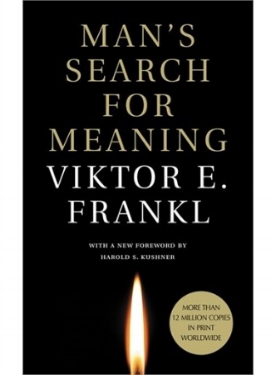
If you enjoyed this article, I highly recommend learning about the psychologist Jordan Peterson and his book "12 Rules for Life."
Please consider supporting our site here or signing up for our monthly newsletter here. Thank you!
Reader freebies:

Improve Your Life by Taking Extreme Ownership
Take extreme ownership for every part of your life. It will be tough at first, the extra responsibility will be a burden, however, by owning everything you will become more motivated and disciplined in every aspect of your life.
Lesson: Take Extreme Ownership of Your Life
“‘There is only one person to blame for this: me. I am the commander. I am responsible for the entire operation. As the senior man, I am responsible for every action that takes place on the battlefield. There is no one to blame but me. And I will tell you this right now: I will make sure that nothing like this ever happens to us again.’
”
While on a mission with friendly Iraqi forces, the chaotic environment of war led to a misinterpretation of enemy forces and resulted in one of the worst scenarios of war, a blue-on-blue (friendly fire on friendly forces). It resulted in the death of an Iraqi soldier and a wounded SEAL.
Afterwards, in a debrief meeting, the master chief wanted to know who was to blame for this horrible situation. Some of the members of Jocko’s team stepped up and claimed responsibility. After a few minutes, Jocko had heard enough. There was only one person to blame said Jocko.
Himself.
As the senior man of the operation, he claimed that he was responsible for everything that happened to him and his men below him. It was a heavy burden, but it is the burden that leaders must carry.
Although taking full responsibility could have possibly resulted in Jocko being fired, it was the right thing to do . In hindsight, he notes that his decision to take full ownership actually led to his boss and team trusting him more.
It showed that, as a leader, Jocko could recognize his mistakes, could be humble, and was willing to take a hit for his team before anyone else was held responsible. By taking extreme ownership, Jocko was able to succeed in leading some of the most elite soldiers in the world and retired after twenty incredible years of service.

Authors Jocko Willink and Leif Babin.
Action:
Everyone makes mistakes, including leaders. Before blaming others for a mistake or problem, a leader must first look in the mirror at themselves.
If the team isn’t performing well, find out why and look for solutions. If an employee’s performance is subpar, perhaps it’s because the leader didn’t train them well enough and needs more practice. If an individual continually fails to meet standards, the leader must make the call whether to terminate them or hire others who can do the job.
Take extreme ownership for every part of your life. It will be tough at first, the extra responsibility will be a burden, however, by owning everything you will become more motivated and disciplined in every aspect of your life. This is especially true for people who are leaders. Leaders must acknowledge mistakes, admit failures, and develop a plan to succeed. When a leader sets such examples, the mindset of everyone on their team will develop in the team’s culture.
If you aren’t getting promoted at work, before blaming management, ask yourself if there’s a task you’re not doing or take on additional projects to show management you’re capable of doing more. If you aren’t losing weight, before blaming the lack of time and food options, ask yourself if you can find time workout before or after work and try creating a healthy meal plan for the week ahead.
If you aren’t doing well in school, before blaming the professor, ask yourself if you should be doing more practice problems or creating study groups to find other ways to learn the subject. If you aren’t feeling loved by a partner or friend, before blaming them for being a bad person, ask yourself what kind of person have you’ve been lately and what you can do to make the other person feel more loved.
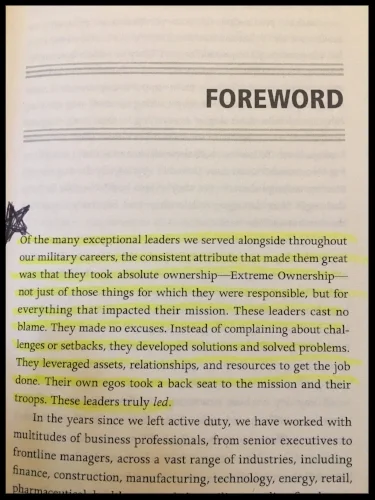
The first page of "Extreme Ownership."
Personal Lesson:
In my own life, I was unsatisfied with my body, friendships and school. I blamed my genetics, friends and college professors for my unhappiness. I wanted to have a muscular body, better friends and a higher GPA. Blaming other people and God got me nowhere–it resulted in a large waste of energy with zero improvements. For some reason, the last place anyone wants to look when something is wrong is in themselves, and I was the same.
However, reading “Extreme Ownership” made it clear that looking inward and taking responsibility for every aspect of your life is the only true way to grow and succeed in life.
Instead of blaming exterior entities, I looked inward. I accepted the hand I was given and looked for possible solutions. I changed my diet, workout routine and found a gym partner that allowed me to better my physique. I started listening more to people and looked for ways to help them to become a better friend to others. As I became a better friend, the bond between my friendship grew stronger and closer. And instead of blaming my professors for being bad teachers, I started to spend more time teaching myself by reading textbooks and watching educational videos. As a result, I finished my first semester of graduate school with a 3.9 GPA.
Next time there’s a problem or an undesired result, before blaming others or making excuses, take extreme ownership of everything and reflect on yourself and what actions you can take to solve the problem.
Get some y’all. Out!
If you're interested in getting the book, click here or on the book below!

If you enjoyed this article, consider supporting our site or signing up for our monthly newsletter. Thank you!
Reader freebies:

Books, eBooks, and Audiobooks–Which one is right for you?
The three most popular forms of reading are physical books, ebooks, and audiobooks. Read more to find out which one best suits you.
Books have been around for thousands of years, but with advances in technology in the last few decades, there are now multiple ways to ‘read’ a book. The three most popular forms of reading are physical books, ebooks, and audiobooks. Because each form of consumption has its own pros and cons, there is no one-size-fits all model. Instead, each form is suited for people depending on their lifestyle and preferences.
Learn more about each form to get a better sense of which form of reading best suits your style.

What's your preferred method of reading?
Physical Books
Pros:
- Good for people who want to get away from technology, be physically engaged, and mark up the pages
- Only form of a book that an author can sign
- Doesn’t require battery or any electronic device
- Can be stored in personal library or used as a conversational piece at home
- Reader can write in the book and mark it anyway they wish
- Traditional and chic form of reading
- Paperbacks usually run cheaper than eBooks or audiobooks
Cons:
- Physical books can be heavy and large
- Books can be easily damaged (ex. rain)
- Difficult to read while performing physical exercise (ex. jogging)
- Takes longer to order (if physically shipped)
eBooks
Pros:
- Good for people that travel often and prefer to travel light
- Can be stored on smartphone or tablet device
- Convenient, weightless, doesn’t require physical space
- Good for people with limited space in their homes
- Eco-friendly
- Ability to highlight text easily and search for important notes in seconds
Cons:
- Usually costs more than paperbacks
- Difficult to borrow an eBook to a friend
- Requires electronic device
- Can’t be signed by an author
- Difficult read while performing physical exercise (ex. jogging)
Audiobooks
Pros:
- Good for people that like to multitask or are constantly moving during their commute
- More passive activity
- Can be ‘read’ while exercising or driving
- Good way to be productive while commuting to and from work
Cons:
- Usually more expensive than physical books
- Usually becomes available after physical and eBook release
- Require electronic device (and sometimes headphones)
- Difficult to highlight and write down important information
- No visual words so readers cannot take a picture of any text to save or share information
What style of reading best suits you? Let me know in the comments below!
Personally, I read physical books while at home, and eBooks/audiobooks while on my daily commute. If you're looking for some good books to read, check out my 10 favorite books of 2017 list here.
Thank you for reading. If you're interested in getting a free audio or kindle book, check out the links below!
Try Audible and get two FREE audiobooks here.
Get a FREE month of unlimited kindle reading and listening here.

"12 Rules for Life" by Jordan B. Peterson
- Book: “12 Rules for Life: An Antidote to Chaos” by Jordan B. Peterson
- For: Anyone who is unhappy with their life, people who are angry, resentful, or lost in life
- Lesson: 12 Rules that will help you become a better person and in turn help make the world a better place
- Book: “12 Rules for Life: An Antidote to Chaos” by Jordan B. Peterson
- Pages: 448
- For: Anyone who is unhappy with their life, people who are angry, resentful, or lost in life
- Lesson: 12 Rules that will help you become a better person and in turn help make the world a better place
Jordan B. Peterson is a Canadian clinical psychologist, cultural critic, and professor of psychology. He has taught at Harvard and the University of Toronto. Dr. Peterson specializes in personality psychology with a particular interest in the psychology of religious and ideological beliefs. He’s published more than a hundred scientific papers, transforming the modern understanding of personality, while his textbook, Maps of Meaning, revolutionized the psychology of religion.
In the past few years, Dr. Peterson has become one of the world’s most popular public thinkers due to his YouTube lectures–which has over 700K subscribers– where he describes the deep connections between neuroscience, psychology and some of the oldest stories told by mankind.

Author Dr. Jordan B. Peterson
In his book, 12 Rules for Life, Peterson discusses discipline, courage, and the necessity of clear, truthful thinking in order to live properly within the order and chaos of our lives.
Here are three important rules from his book.
1) Stand up straight with your shoulders back
Peterson starts the book by talking about the surprising similarities shared between humans and lobsters. For example, they have similar nervous systems and live in a dominance hierarchy. But what do lobsters have to do with standing up straight? Well, both humans and lobsters share the chemical serotonin, which governs posture. When a lobster is defeated in a fight, their posture drops, they face the ground and appear weak to others. The same thing happens to humans, and with each defeat, serotonin levels drop even lower.
“Low serotonin means decreased confidence. Low serotonin means more response to stress and costlier physical preparedness for emergency…Low serotonin means less happiness, more pain and anxiety, more illness, and a shorter lifespan.
”
One bad life event can lead to another, and soon enough there you become stuck in a feedback loop spiraling down in a negative direction. The most important thing to do when this happens is to work to turn the direction of the feedback loop in reverse.
If a person slouches, they present themselves as defeated. However, if a person stands up straight, it means they may have taken a hit but are not defeated. It means that you, both physically and mentally, are able and willing to move forward in life to the next challenge. It also signals to other people that you are able to handle whatever life throws your way while you pursue your rightful destiny.
2) Treat yourself like someone you are responsible for helping
This chapter begins with a story which highlights that, on average, humans care more for their pets than themselves. Peterson reaches this conclusion by stating that humans are more likely to fill and properly administer prescription medication to their pets than to themselves.
Although this trait may seem healthy and unselfish at first, it is not. If the pet owner doesn’t take care of himself, how will they be able to take care of the pet for the long term? Also, why don’t people love and care for themselves the same way they care for their pet?
“[People] are excruciatingly aware of their own faults and inadequacies, real and exaggerated, and ashamed and doubtful of their own value. They believe that other people shouldn’t suffer, and they will work diligently and altruistically to help them alleviate it. They extend the same courtesy even to the animals they are acquainted with–but not so easily to themselves.”
Peterson writes that people must learn to respect themselves because they play a vital role to their pets, other people, and society. Peterson believes every person has a vital role to play in the destiny of the world and for that reason, they must take care of themselves.
An easy way to take better care of yourself is to treat yourself like someone you are responsible for helping. To take care of yourself, it is important to define who you are and refine your personality. Strive to become a good person and then work towards becoming an even better being. By doing so you will help direct the world a bit more towards Heaven instead of Hell.
3) Make friends with people who want the best for you
When looking back on his teenage years, Peterson notes that two of his friends were intelligent people but often hung out with the wrong crowd. Luckily for Peterson, he moved away from this group when moved to a new city to pursue his college education. However, his two acquaintances continued to surround themselves with people that weren’t good for them and both began to go down the wrong path in life.
“Sometimes, when people have a low opinion of their own worth–or, perhaps, when they refuse responsibility for their lives–they choose a new acquaintance, of precisely the type who proved troublesome in the past. Such people don’t believe that they deserve any better–so they don’t go looking for it. Or, perhaps, they don’t want the trouble of better.”
Peterson writes that some people who have decided to reject the path upward because of its difficulty and instead surround themselves with people who decide to take the easier path in life. This group of individuals, put off what needs to be done today and instead enjoy cheap pleasures and thrills. Silently, each person agrees not to call each other on it and they continually distract themselves from their true calling.
Even one troubled individual can be harmful. Dr. Peterson says that the psychological literature makes this clear. When a group of well-performing workers has a new poorly performing individual introduced to them, the entire team degenerates. This is why it is important to surround yourself with good healthy people.
But be warned, this is not an easy task. It takes strength and courage to stand near a good person. You must have humility and be willing to learn from others. This may be painful at first but it will allow you to grow and become a better person.
So remember, stand up straight with your shoulders back, take care of yourself like someone you are responsible for helping and surround yourself with good friends!

If you're interested in getting this book, click here.
More information about Jordan Peterson can be found below.
- Jordan Peterson Website: http://jordanbpeterson.com/
- Podcast: http://jordanbpeterson.com/jordan-b-p
- Reading List: http://jordanbpeterson.com/2017/03/
- Twitter: https://twitter.com/jordanbpeterson
If I have failed to peak your interest in this book, consider this: for the past three years I’ve been a voracious reader and have read close to a total of 100 books, but I can say without a doubt in my mind, this book is in the top 3 best books I’ve ever read. Give it a chance, you will not regret it.
If you enjoyed this article, consider supporting our site here or signing up for our monthly newsletter here. Thank you!

AlexandBooks + YouTube
I hope to continue sharing knowledge and fantastic books with all of you throughout 2018. In addition to writing articles, I’m also working on creating YouTube videos about some of my favorite books.
Hi everyone!
I hope to continue sharing knowledge and important books with all of you throughout 2018. In addition to writing articles, I’m also working on creating YouTube videos about some of my favorite books. As mentioned before, I’m teaching myself as I go along, but I'm constantly working to get better.
Please leave both positive and constructive comments either in the comment section at the bottom of this page or on YouTube. I will read every comment. If there's a book you want me to make a video on, comment below as well. Once again, thank you for the continuous support and I hope you enjoy these videos and learn something new!
Best regards,
Alex from alexandbooks.com
- Book: "Zero to One" by Peter Thiel
- Pages: 244
- For: Entrepreneurs, founders, people that want to change the world
- Lesson: Get a new perspective on business, learn why certain startups succeed while others fail
- Book: “Ernest Hemingway on Writing" edited by Larry Phillips
- Pages: 140
- For: Anyone interested in Hemingway's writing, aspiring writers
- Lesson: Learn Hemingway's thoughts on being a writer, his work habits and advice for aspiring writers
- Book: “The Emperor’s Handbook” by Marcus Aurelius
- Pages: 160 pages
- For: Anyone interested in philosophy, living a good life or looking for meaning in life
- Lesson: Learn to live a fulfilling life while being a virtuous person
- Book: "On Writing Well" by William Zinsser
- Length: 336 Pages
- Lesson: Learn how to write better
- For: Anyone who wants to improve their writing
- Book: “Extreme Ownership” by Jocko Willink and Leif Babin
- Pages: 322
- For: Business managers, leaders, people interested in military tactics and improving their leadership skills
- Lesson: The leadership lessons from life-and-death combat can be applied to the business world to make your team and company successful
If you enjoyed this article, consider supporting our site here or signing up for our monthly newsletter here. Thank you!

10 Most Popular Articles of 2017
I’d like to thank all of you for the positive feedback about my articles. Although I am still learning as I go, 2017 was a great year. A total of 28 articles were written. Here are the 10 Most Popular Articles of 2017.
Hi everyone!
I’d like to thank all of you for the positive feedback and comments about my articles. Comments, both positive and constructive are always welcome. Although I am still learning as I go, 2017 was a great year. A total of 28 articles were written. Here are the 10 Most Popular Articles of 2017. Let me know what was your favorite article of 2017 in the comments below!
10) “David & Goliath” Book Review
9) “You Are A Writer” by Jeff Goins
8) 5 Great Classic Books To Read
7) "How To Read Literature Like A Professor"
6) How To Succeed In Your Internship
5) The Importance Of Exercise
4) How To Find Time For Reading
3) How To Succeed In College
2) How To Get An Internship
1) 5 Lessons from "What Every BODY Is Saying"
If you enjoyed this article, consider supporting our site or signing up for our monthly newsletter. Thank you!
Reader freebies:
Try Audible and get two FREE audiobooks!
Get a FREE month of unlimited kindle reading and listening!

3 Helpful Books for Aspiring Writers
Writing is hard, but becoming a writer is even harder. Writers should seek mentors, such as successfully published authors. Although not everyone can have such a mentor, everyone can read books to improve their craft and take a step closer to becoming a writer.
Writing is hard, but becoming a writer is even harder. However, this doesn't mean it's impossible. Becoming a writer takes a lot of time, energy, and focus. One must practice every day. Furthermore, writers should seek mentors, such as successfully published authors. Although not everyone can have such a mentor, everyone can read books to improve their craft and take a step closer to becoming a writer.
And remember, practice and rejection cannot be avoided on the journey to becoming a writer. Even legendary writers know this lesson.
““Stephen King’s first four novels were rejected. ‘This guy from Maine sent in this novel over the transom,’ said Bill Thompson, his former editor at Doubleday. Mr. Thompson, sensing something there, asked to see subsequent novels, but still rejected the next three. However, King withstood the rejection, and Mr. Thompson finally bought the fifth novel, despite his colleagues’ lack of enthusiam, for $2,500. It was called Carrie. ”
3) "The First Five Pages" by Noah Lukeman

Book: “The First Five Pages” by Noah Lukeman
Pages: 208
For: Novelists, journalists, poets, screenwriters and anyone who wishes to have their work published
Lesson: Learn the elements of good writing, learn what publishers are looking for and what common mistakes most writers make
As a literary agent, Noah’s client include Pulitzer Prize nominees, New York Times bestselling authors and American Book Award winners.
In this book, Noah acts as your personal editor. In each chapter, he describe a mistake that often gets manuscripts rejected and then offers examples of typical works of writing he would reject, and closes by offering the reader solutions and exercises to better their craft.
Although there are no rules to great writing, there are ways to avoid bad writing. This is the focus of Noah’s book. To learn how to identify and avoid bad writing, and thus hopefully have your work published.
2) "On Writing Well" by William Zinsser
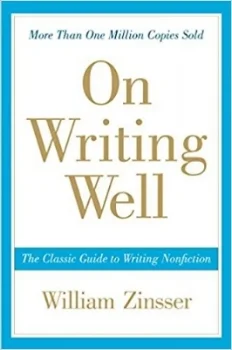
Book: "On Writing Well" by William Zinsser
Pages: 336
For: Anyone who wants to improve their writing whether they’re an engineer, businessman, journalist, or editor
Lesson: Learn how to write clearly and concisely from a long-time journalist and professor of writing
Zinsser worked at The New York Tribune and at Yale where he taught students how to write. By the end of his career, he had written 15 books.
The first part of the book begins by teaching the principles of good writing. Just like in sports, before you want to play the game, you must learn the rules to it. The principles include learning how to make your writing simple, free of clutter, and which words you should use and avoid.
In part two of the book, Zinsser shares lessons on writing in unity, having a good lead and ending, and writing with proper grammar and punctuation. In the last part of the book, Zinsser gives advice on how to find your voice, face the fear and enjoyment of being a writer, and what it means to be a nonfiction writer.
1) "The Art of War for Writers" by James Bell

Book: “The Art of War for Writers”
Pages: 272
For: Aspiring writers, especially those who write fiction
Lesson: Writing a book is a series of battles, learn tactics and strategies for idea generation, character building, dealing with rejection, coping with unrealistic expectations, and much more.
James Scott Bell is a best-selling author and wrote Plot & Structure and Revision & Self-Editing in addition to his ultimate novel-writing battle plan: The Art of War for Writers. The original book, “The Art of War” by Sun Tzu is filled with tactics and strategies that are widely used by military generals and business leaders but these principles can also be applied to the creative field.
Bell uses the principles of war strategies and applies it to writing and the battle that each writer must face when trying to create a novel. In the book, you’ll find tactics and strategies for idea generation and development, character building, plotting, drafting, querying and submitting, dealing with rejection, coping with unrealistic expectations, and much more.
Get the book here.
Bonus: "Ernest Hemingway on Writing" edited by Larry Phillips

Book: “Ernest Hemingway on Writing" edited by Larry Phillips
Pages: 140
For: Anyone interested in Hemingway's writing, aspiring writers
Lesson: Learn Hemingway's thoughts on being a writer, his work habits and advice for aspiring writers
Ernest Hemingway is one of the most well-known writers of the 20th century. In 1954, he was awarded the Nobel Prize for literature. The Sun Also Rises and A Farewell to Arms established Hemingway as one of the greatest literary writers of his time. He started his career as a journalist and worked as an ambulance driver during World War I. He covered the Spanish Civil War and World War II. He won a Pulitzer Prize in 1953 for The Old Man and the Sea. He died in 1961.
If you enjoyed this article, consider supporting our site here or signing up for our monthly newsletter here. Thank you!




The 25+ Books Hemingway Recommends For Writers
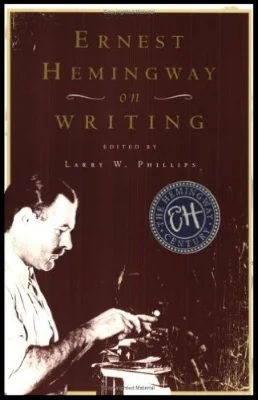
- Book: “Ernest Hemingway on Writing" edited by Larry Phillips
- For: Anyone interested in Hemingway's writing, aspiring writers
- Lesson: Learn Hemingway's thoughts on being a writer, his work habits and advice for aspiring writers
The book, “Ernest Hemingway on Writing” is a collection of Hemingway quotes taken from novels, stories, letters, interviews and other sources.
When it comes to writing, Hemingway said “I think you should learn about writing from everybody who has ever written that has anything to teach you” (page 91).
Hemingway goes on to recite a list of necessary books to read including:

“‘Should a writer have read all of those?’ ‘All of those and plenty more.’”
What are your thoughts on Hemingway’s list of necessary books to read to become a writer?
If you've enjoyed this article, consider getting the book. Get it here.



3 Insightful Books About Elite U.S. Military Soldiers
The United States has a population of over 300 million but less than 1% of the population has served in the military. These books will help shed some light on what the military does and life inside the service.
The United States has a population of over 300 million but less than 1% of the population has served in the military. In fact, many civilians have little to no knowledge of life in the military. From basic training, to life overseas, to actual combat, the average American knows little about the life of a military veteran.
To learn more about the brave men who enlisted to defend this country, check out the following books.
1) American Sniper

Book: “American Sniper” by Chris Kyle
Pages: 448
For: People interested in learning about the life of the most lethal sniper in U.S. history
Lesson: Learn the life story of one of the most celebrated war heroes of our time
Many people have seen the film, “American Sniper” but there is a lot more to Chris in his memoir. He talks about his childhood and how life events shaped his path to becoming a U.S. Navy SEAL. Chris also has a great sense of humor and tells a joke every now and then throughout the book. He also talks about the challenges of maintaining a relationship and family while spending the majority of his time overseas and the difficulties of returning to a civilian life. This is a book worth reading.
2) The Red Circle

Book: “The Red Circle” by Brandon Webb
Pages: 496
For: People interested in learning about the life of a U.S. Navy SEAL from basic training to combat overseas to working as a sniper instructor.
Lesson: Learn what it takes to become a US Navy SEAL and how the author rebuilt the sniper training program for the military and helped train, Chris Kyle & Marcus Luttrell
Brandon Webb tells his life story and his journey to becoming a U.S. Navy SEAL. He describes the grit and mindset needed to get through the infamous BUDS training, as well as SERE and sniper school. He also talks about events that occurred overseas and his many near death situations. Webb would go on to redesign the sniper training course and mentor both Chris Kyle and Marcus Luttrell.
3) American Heroes in Special Operations

Book: “American Heroes in Special Operations” by Oliver North
Pages: 300
For: People interested in the different special forces in the U.S. military
Lesson: Learn the stories of courageous men and women in the military and the type of operations performed by elite military forces
The author, Oliver North, is a combat-decorated Marine and a recipient of the Silver Star, Bronze Star for valor and two Purple Hearts. He’s also a New York Times best-selling author. His book covers stories about the Soldiers, Sailors, Airmen, and Marines of the U.S. Special Operations Command as they undertake missions in some of the most difficult and dangerous places on the planet.
BONUS:

Book: “Extreme Ownership” by Jocko Willink and Leif Babin
Pages: 322
For: Business managers, leaders, people interested in military tactics and improving their leadership skills
Lesson: The leadership lessons from life-and-death combat can be applied to the business world to make your team and company successful
The same strategies that are successful in battle can often be translated to business. Two thousand years ago, the war strategist Sun Tzu wrote “The Art of War” which became widely read by both military generals and business leaders.
The same can be said about the book “Extreme Ownership” by Jocko Willink and Leif Babin. These two U.S. Navy Seals officers led the most highly decorated special operation unit of the Iraq war. They now run a leadership consulting firm that teaches people how to apply powerful leadership principles from the battlefield to business and life.

Enjoying A&B?
Consider donating to keep the site up and running!