"Make Your Bed" by William McRaven
- Book: “Make Your Bed” by Admiral William McRaven
- For: People who need some inspiration or guidance in life, those who seek life advice
- Lesson: Learn how doing certain little things in your life can help change yourself and the world for the better
Summary:
Make Your Bed (2017) is written by William H. McRaven, a retired four-star US Navy SEAL admiral. Throughout his 37 years of service, McRaven learned a lot about life and success through his military training and combat experience overseas.

Admiral William McRaven (U.S. Navy Retired)
The book is a collection of McRaven’s ten most valuable lessons he learned from BUD/S (Basic Underwater Demolition/SEAL training). For those unfamiliar with BUD/S, here is an overview:
“Before becoming Navy SEALs, candidates are put through some of the most mentally challenging and physically demanding training in the world. Basic Underwater Demolition/SEAL training, or BUD/S, is designed to find and develop men of the strongest character who give everything.“
McRaven then talks about how he applied the lessons he learned from BUD/S towards his professional and personal life. The book is based on McRaven’s now viral commencement speech at the University of Texas.
Lessons:
1) Make Your Bed
“Making my bed correctly was not going to be an opportunity for praise. It was expected of me. It was my first task of the day, and doing it right was important. It demonstrated my discipline. It showed my attention to detail, and at the end of the day it would be a reminder that I had done something well, something to be proud of, no matter how small the task.”
The first lesson in the book is one that soldiers learn very early on in military training–making their beds. If not done to perfection, the soldier can expect to be punished through physical training.
This may seem silly or sadistic, but there is an important lesson behind this simple task. Soldiers are expected to make their beds correctly because it shows attention to detail and discipline. If someone can’t make their bed, how can they be expected to follow or lead others into battle? The small things must be done right before big things can be accomplished.
This simple task is also a reminder that something done well, no matter how small, is something to be proud of. Accomplishing a task, even a small one, will fill the person with a sense of pride and encourage them to do another task.
Also, if the soldier has an exceptionally tough day of training or combat, they will remember that whenever they return, there will be a clean bed waiting for them (Author and psychologist Jordan Peterson is also a big fan of people having their beds made and room clean).

2) Get Over Being A Sugar Cookie
“In all of SEAL training there was nothing more uncomfortable than being a sugar cookie. There were a lot of things more painful and more exhausting, but being a sugar cookie tested your patience and your determination. Not just because you spent the rest of the day with sand down your neck, under your arms, and between your legs, but because the act of becoming a sugar cookie was completely indiscriminate. There was no rhyme or reason. You became a sugar cookie at the whim of the instructor.”
US Navy SEALs are some of the most elite soldiers in the world, but becoming one is filled with challenges such as having to become a sugar cookie. This is done by jumping in the cold Pacific water and then covering oneself completely in sand. The soldier would then stay in that uniform the rest of the day, cold, wet and sandy.
Similarly to making one's bed, this task may seem ridiculous at first but it holds a deep life lesson.
While training to become a SEAL, McRaven was told to become a sugar cookie. Afterwards, the Lieutenant came over and explained why the instructors make recruits perform this task.
The lesson to learn from becoming a sugar cookie is that life isn’t fair and the sooner soldiers learn this, the better off they will be.
Sometimes no matter how well a person prepares or how well they perform, it's possible to end up as a sugar cookie in life. Instead of complaining or being negative, one must accept that life can be unfair, but they must keep moving forward.
3) Don’t Back Down From Sharks
“But you are also taught that if a shark begins to circle your position–stand your ground. Do not swim away. Do not act afraid. And if the shark, hungry for a midnight snack, darts towards you–then summon up all your strength and punch him in the snout, and he will turn and swim away.”
During SEAL training, recruits spend a large portion of their time swimming in the open waters of the Pacific ocean. These waters are known to be a breeding ground for many sharks–including great white sharks. However, to pass SEAL training, soldiers must complete a series of long swims, most during the daytime but some during the night, through this shark-infested area.
Instructors advise students that no student has ever been eaten by a shark–at least not recently, but if a shark did begin to circle a student they should stand their ground. The student should not swim away nor act afraid.
If the shark darts towards them, they should gather their strength and punch the shark in the snout.
The shark in this story is a symbol for the bullies of the world.
Sharks, like bullies, will try to scare their prey and target weak animals. To combat sharks, one must have the courage to stand up to these predators. With courage, people have the ability to defy and defeat any evil.
So remember: make your bed every morning, life can be unfair at times but you must keep moving forward, and stand up to bullies to make the world a better place. These simple lessons along with others are the little things that can change your life...and maybe even the world.
Conclusion:
There have been a lot of books by Navy SEALs in the past few years, some wrote war memoirs, others wrote about training soldiers, while others wrote about business lessons. But this book is unique because it focuses solely on life lessons and how readers can improve themselves and the world around them.
I bought this book after watching Admiral McRaven’s commencement speech (if you haven’t watched it, here’s the link) because I found his words inspiring.
The book expands on McRaven’s speech and provides situations where McRaven learned these life lessons and how he applied this knowledge throughout his career.
At 130 pages, the book is quite short and can be read in under three hours. I highly recommend it if you’re looking for some inspiration or need guidance in life.
Rating: 4/5 stars
If you’re interested in reading the book, click here or on the image below!

- Book: “Make Your Bed” by Admiral William McRaven
- Pages: 130
- For: People who need some inspiration or guidance in life, those who seek life advice
- Lesson: Learn how doing certain little things in your life can help change yourself and the world for the better
If you enjoyed this article, consider supporting our site or signing up for our monthly newsletter. Thank you!
Reader freebies:

"Rich Dad Poor Dad" by Robert Kiyosaki
- Book: “Rich Dad Poor Dad” by Robert Kiyosaki
- For: People in high school & college, and people who want to be financially independent
- Lesson: Learn how to invest your money properly, what rich parents teach their kids, and common obstacles stopping people from financial success
Summary:
“Rich Dad Poor Dad” was written by Robert Kiyosaki–an investor, entrepreneur, and educator who is often called the millionaire school teacher. Kiyosaki aims to teach readers how to be financially literate, a skill that is often taught only by rich parents to their soon to be rich children.
While growing up, Kiyosaki had two dads, one was his biological father, and the other was his best friend’s father. The author’s real father worked for the government and had a Ph.D. However, although this dad was well-educated, he often struggled with money and paying the bills.
On the other hand, Kiyosaki’s second father had an eighth-grade education but went on to become one of the richest men in Hawaii. Kiyosaki talks about money lessons he learned from both of his fathers and teaches readers the secret to becoming financially independent and successful.

Robert Kiyosaki, author of the bestselling book “Rich Dad, Poor Dad.” Kiyosaki has authored more than 15 books to date.
Lessons:
1) The RicH Buy Assets, The Poor Buy Liabilities
“You must know the difference between an asset and a liability, and buy assets. If you want to be rich, this is all you need to know. It is Rule No. 1. It is the only rule. This may sound absurdly simple, but most people have no idea how profound this rule is. Most people struggle financially because they do not know the difference between an asset and liability. ”
The main difference between an asset and liability is that an asset makes money, while a liability loses money.
The rule sounds simple, yet many people, especially the middle and poor class, confuse the two groups.
Here’s what Kiyosaki’s rich dad considers to be an asset:
- Businesses that require little oversight
- Stocks
- Bonds
- Mutual funds
- Income-generating real estate
- Notes (IOUs)
- Royalties from intellectual property such as music, scripts, patents
- And anything that has value, produces income or appreciates and has a ready market
All assets have one thing in common, they will make you more money. That is why you want to own assets.
Liabilities, on the other hand, drain money from your pockets.
Liabilities can be anything from home mortgages, consumer loans, credit cards, or a new car, furniture or appliance when the old one works fine.
Take a new car for example. Many people believe a car is an investment, but this is only true in rare cases, such as if it is a collectible or limited edition.
With a regular car, as soon as you drive off the dealer's lot, it automatically decreases in value. Then there’s car insurance, license plates, and registration costs. There’s also fuel costs and yearly check-ups. Also, the more a person drives a car, the more it decreases in value. A car bought for $20,000 may end costing $30,000 or more after five years of insurance payments, fuel costs, and other related expenses.
However, if the person took that same $20,000 and put it into the stock market and earned 10% each year, they would now have over $30,000 in their account. See the difference? One person lost $30K while the other made $30K.
2) Overcome the fear of losing money
“Once people have studied and become financially literate, they may still face roadblocks to becoming financially independent. There are five main reasons why financially literate people may still not develop abundant asset columns. Asset columns that could produce large sums of cash flow. Asset columns that could free them to live the life they dream of, instead of working full time just to pay bills.”
The fear of losing money is one of the first obstacles that must be overcome. Kiyosaki writes that he has never met a rich person who has never lost money. He goes on to say that everyone is afraid of losing money, even the rich. The difference is how one handles losing money.
One of the best ways to handle this fear is to start investing early and see losing money as a teaching tool. Anyone who rides a bike will fall down many times and anyone who plays golf will lose at least a couple of golf balls, all of these moments are opportunities to learn from mistakes.
Losing money and failing is part of the journey to becoming better. Failure decreases fears and can increase a person’s desire to win.
In his book, Kiyosaki goes on to talk about the other four obstacles to success, including cynicism, laziness, bad habits, and arrogance.
3) Education Is The Best Investment
“Just because you have no money, it should not be an excuse to not learn. But that is a choice we all make daily, the choice of what we do with our time, our money and what we put in our heads. That is the power of choice. All of us have a choice. I just choose to be rich, and I make that choice every day.”
Before making investments in assets, the first investment should be in education. Kiyosaki says that the mind is the only real asset people have, and the most powerful tool in our domain.
Everyday people have the choice of whether to watch TV, play video games, or read a book. “90 percent of the population buys TV sets and only about 10 percent buy books on business or tapes on investments,” says Kiyosaki.
There are multiple ways people can invest in education.
To start, you can buy books. If books are expensive, buy a used copy or go to a library. If you’re more of an audio person, can also listen to audio-books (here's a link to a free audio book).
There are also tons of videos on YouTube that are educational and free watch to watch. One of the author's favorite ways to learn is by attending in-person seminars that take a deep dive into the subject.
To be successful, people must be humble enough to realize that they don’t know everything and that they should read and learn from what others have to say. Intelligent people welcome new ideas and one of the best ways to learn is by listening instead of talking.
Conclusion:
At first, I wasn’t sure if this book was worth reading because it sounded like a get-quick-rich type of book. However, since it was a #1 NYT bestseller, I figured I’d check it out.
Surprisingly, the book has a lot of solid information on money skills and how to manage one’s finances.
This is a great book for people in high school and college since educational institutions don’t focus on teaching money skills. Also, recommend it to people who have trouble with their finances and have never made any investments before.
The author also provides readers will additional tools and information at their website here.
Rating: 4/5 stars
If you’re interested in reading the book, click here or on the image below!

- Book: “Rich Dad Poor Dad” by Robert Kiyosaki
- Pages: 207
- For: People in high school & college, and people who want to be financially independent
- Lesson: Learn how to invest your money properly, what rich people teach their kids, and common obstacles stopping people from financial success
If you enjoyed this article, consider supporting our site or signing up for our monthly newsletter. Thank you!
Reader freebies:

"No More Mr. Nice Guy" by Dr. Robert Glover
- Book: “No More Mr. Nice Guy” by Dr. Robert Glover
- For: Men who are unhappy with their relationship, stuck in the friend zone, or men who have been called a “nice guy”
- Lesson: Learn how to be confident, embrace your masculinity, accept yourself, and build meaningful relationships
Summary:
Written by a psychotherapist with a PhD., No More Mr. Nice Guy (2003) by Dr. Glover, examines ‘nice guy syndrome’ and shows readers how to break free from this disease.
Contrary to popular belief, most ‘nice guys’ aren’t nice.
These are men that are passive aggressive, seek approval, and use many forms of manipulation. Nice Guys believe that if they are nice and give a lot to others, in return other people will be nice and give back to them.
They view niceness as an exchange, instead of as a gift. Because of this, many nice guys become unhappy and frustrated, especially with women, because they believe the other person didn’t complete their end of the deal.
Nice guy behavior includes: care taking, giving to get, fixing, keeping the peace, avoiding conflict, seeking approval, hiding mistakes.
Many of them are also: dishonest, secretive, controlling, passive-aggressive, isolated, and full of rage.

Author Dr. Glover
Dr. Glover explains all of these traits and provides examples of how men can change for the better. Each chapter has a “Breaking Free: Activity” to help men go from a Nice Guy to a good guy. A few of the important lessons readers learn from this book, is how to: set boundaries, build meaningful relationships, express their feelings, deal with problems, and accept themselves.
Lessons:
1) Nice Guys Aren’t Actually Nice
“As a result of the conditioning they received in their family and society, Nice Guys believe if they are “good,” then they should be loved, get their needs met, and have a problem-free life. In reality, the primary paradigm of the Nice Guy Syndrome is nothing more than a big covert contract with life.”
Nice Guys use a contract that says “I will do this X, so that you will do Y” but this contract is only known to the Nice Guy and they become resentful when the other person does not give back.
The Nice Guy often sees themselves as the victim, and giving to get creates a cycle of craziness that turns into what Dr. Glover calls the "Victim Triangle". It consists of three predictable sequences:
- The Nice Guy gives to others hoping to get something in return.
- When he doesn’t get as much in return, he becomes frustrated and resentful. Remember, the Nice Guy is the one keeping score, and isn’t totally objective.
- After the frustration and resentment builds up long enough, it spills out in the form of rage attacks, passive-aggressive behavior, pouting, tantrums, withdrawing, shaming, criticizing, blaming, and physical abuse. Once the cycle is completed, it begins all over again.
This is just one of the reasons why Nice Guys aren’t always nice.
Other times, Nice Guys try to buy people’s love. One such man described in Glover’s book bought his girlfriend gifts, sent her cards, bought her clothes, planned special surprises, and helped out with her home.
However, all of this was too much for the girlfriend and she felt it was overwhelming and that she could never repay him. So she tried to stop him by pushing him away. Meanwhile, the man didn’t understand and lashed out at his girlfriend, as predicted in the victim triangle.
Nice Guys often swing between the two extremes of being overwhelming nice to seriously angry. Be aware of Nice Guy traits in yourself and potential partners. Identifying the problem is the first step towards solving it.
2) Reclaim Your Masculinity
“I define masculinity as that part of a man that equips him to survive as an individual, clan, and species. Without this masculine energy we would have all become extinct eons ago. Masculinity empowers a man to create and produce. It also empowers him to provide for and protect those who are important to him. These aspects of masculinity include strength, discipline, courage, passion, persistence, and integrity.”
Most Nice Guys are disconnected from their masculinity and other men. They strive to attract women by being different and believe that by being nice and kind they will be able to get any women they desire.
Meanwhile, men who are “jerks” are able to attract women and the Nice Guys begin to resent women for being so blind and ignorant. Dr. Glover asked several women why they go after these so-called jerks over Nice Guys, and they said that Nice Guys have little life energy in them and that “jerks” have a masculine edge to them.
Women don’t want a passive, pleasing wimp, writes Dr. Glover. Women don’t want to be married to someone they can walk all over. A women won’t feel safe knowing she can push her man around. If she can push him around, it means other people can too.
This is why, time after time, women will test their men. She wants to see if she can trust her man. She will do her best to see if boundaries exist, or if her man will just roll over and quit.
Setting boundaries will create respect. If she knows her man will stand up to her, he is also likely to stand up for her.
Nice Guys must also connect with other men that are healthy male role models. Women are attracted to men who have a strong social circle and it helps the man get some of his emotional and social needs met with men, taking pressure off from their wife.
As a result of getting their emotional needs met with men, Nice Guys become less dependent, needy, manipulative, and resentful in their relationships with women.
3) Take Responsibility and Work to Improve
“It is time to start getting what you want. Breaking free from the Nice Guy Syndrome will allow you to discover your true passion and potential. By taking responsibility for creating the kind of life you really want, you can become all that you were meant to be.”
This is a theme I see over and over again in books (“Extreme Ownership” & “12 Rules for Life”). You are the only person on this planet that is responsible for your needs, wants, and happiness. Once you accept that fact, it is time to start working on improving your life to the quality you desire.
Dr. Glover provides several key actions to help readers improve their life:
- Don’t settle. Every time you settle, you get exactly what you settled for.
- Put yourself first.
- No matter what happens, you will handle it.
- Ask for what you want.
- Be clear and direct.
- Learn to say “no.”
- Don’t make excuses.
- Be honest with yourself.
- Do not let anyone treat you badly. No one. Ever.
- Stop blaming, victims never succeed.
- Live with integrity, decide what feels right to you, then do it.
- Be good to yourself.
- Give yourself room to fail. There are no mistakes, only learning experiences.
- Be willing to let go of what you have so you can get what you want.
- If you do what you have always done, you will get what you have always got.
Conclusion:
I was skeptical of this book at first because the title sounded as if it were from the PUA community, but I looked into the author and saw that he had concrete credentials so I gave this book a shot.
This book provides a treasure trove of information and is less than 200 pages long. It will change your perspective on life and help you become a better person in relationships and beyond. If you’ve been called a Nice Guy before or are stuck in the friend zone, definitely give this book a chance.
The author also provides readers will additional tools and information at their website here. I highly recommend reading this book if you want to stop being a Nice Guy and start living life a true and genuine man.
Rating: 5/5 stars
If you’re interested in reading the book, click here or on the image below!
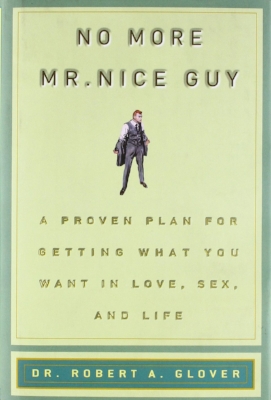
- Book: “No More Mr. Nice Guy” by Dr. Robert Glover
- Pages: 180
- For: Men who are unhappy with their relationship, stuck in the friend zone, or men who have been called a “nice guy”
- Lesson: Learn how to be confident, embrace your masculinity, accept yourself, and build meaningful relationships
If you enjoyed this article, consider supporting our site or signing up for our monthly newsletter. Thank you!
Reader freebies:

"Trust Me I'm Lying" by Ryan Holiday
- Book: “Trust Me, I’m Lying’ by Ryan Holiday
- For: People who want to understand how blogs & other media work, and how it affects our society
- Lesson: Learn about the power of blogs, and how even established media companies can be manipulated by a single individual
Summary:
Holiday's job as a marketer is to manipulate the media in order to promote his client’s products so that more people will buy them. The news, he says, “is created and driven by marketers, and that no one does anything to stop it. After much success in media manipulation, Holiday set out to expose the dark art of it is done.

Author Ryan Holiday.
Since most news is now online, blogs and media sites aim to have as much page views as possible. The more traffic a website has, the more that site can charge advertisers, and thus the more money they can make.
However this is a horrible incentive, Holiday points out. This model means that traffic is more important–and more profitable–than the truth of real news.
Unlike a traditional newspaper that is published every day, blogs can publish a story every minute. This means if they publish a breaking story first, they’re likely to get a large number of visitors. And since more visitors means more profit, blogs focus on publishing first, even if the story doesn’t have much information or the facts in the story haven’t been verified.
The next problem is that “89 percent of journalists reported using blogs for their research for stories.” Meaning, if a blog has a breaking news story, it might be picked up by a journalist for Wired or Forbes, even if the story has yet to be confirmed.
For his client’s book, Holiday set up posters and then graffitied it. He then submitted an anonymous tip to several blogs and a blog soon wrote a story on it. Then another site saw the blog’s article and wrote their own story on it. All of these stories were not news, but essentially free PR for the client’s book.
Since many journalists are rarely in a position to witness or establish the truth, they are dependent on other sources, ones who likely have their own self-interests at heart.
Holiday also notes that most of the time, the truth is boring. Truthful news is great, but since it is boring, it won’t be shared, and since it won’t be shared, it won’t get a lot of traffic AKA money.
Thus, blogs tend to focus on the controversial news since anger is one of the most powerful predictors of what spreads online. Holiday used this knowledge to his advantage by having a pornstar pose with American Apparel clothing for an ad, even though she were nude and only wore socks. The ad made many people angry and was controversial, which resulted in more free publicity and sales for the company.
Lessons:
1) Be Careful of Advertisements as Content
“Blogs so desperately need material that I would send them screenshots of ads and say, ‘Here is an exclusive leak of our new controversial ad.’ The next day: ‘Exclusive! American Apparel’s Controversial New ad.’ The chatter about these advertisements always perplexed me: Don’t they know that generally companies have to pay to generate this kind of attention?
”
Since blogs publish their stories online, they have an infinite amount of space for stories. This results in a constant quest for the newest and latest story, even if the story is basically information about an advertisement.
Bloggers also write posts such as “Top 20 Viral Ads” of the year. Read that again slowly. It’s an advertisement for a story about advertisements.
Holiday used this knowledge to his advantage and “leaked" American Apparel ads to bloggers, giving his company free publicity instead of having to pay for online ads to get exposure.
Companies often leak movie trailers, info about new products, or a song from an upcoming album to generate buzz and free publicity. Many celebrities often leak their nude photos or sex tapes to gain popularity and followers if there haven’t been any recent interesting stories about them.
As a reader, be careful of any story that has the word ‘leak’ in it.
2) You Get What You Pay For
“A subscription model...offers necessary subsidies to the nuance that is lacking in the kind of stories that flourish in one-off distribution. Opposing views can now be included. Uncertainty can be acknowledged. Humanity can be allowed. Since articles don’t have to spread on their own, but rather as part of the unity...publishers do not need to exploit valence to drive single-use buyers.
”
As the saying goes, there’s no such thing as a free lunch, or in this case, free news.
Journalist and publishers need to make a living, this means they need to make money. Some companies, such as the New York Times, do this through a subscription model. The advantage of this is that people don’t buy the newspaper once, but rather but a collection of papers. Doing so reduces the need for clickbait headlines that one-off distribution publications require.
The subscription model also provides a steady stream of revenue, which allows writers to publish stories with opposing views so that readers get opinions from both sides of the topic.
The other revenue model is to make money from advertisers instead of readers. The downside of free news is that the publisher tries to get as many eyeballs as possible because they rely on stories of immediacy and impulsive, even if the story is distorted or not fully factual. If a story isn’t factual, it won’t be removed, but rather it will be updated. Thus, two stories are born out of a one.
These publishers focus on news that will take people to an extreme, it will likely make readers angry or excited. It aims to create viral content and focuses on topics such as sex, scandals, betrayal, crime, and controversies.
If no new stories are being written, they will publish almost anything even if it’s a company’s press release of a new product. They will write stories about ads, or articles on already existing stories. Often times, they will write an article about which products the reader should buy and have links to the products in the article. Thus making money from ads and affiliate links.
Holiday points out that a subscription model isn’t perfect, but it is more factual and harder to manipulate than free news.
3) Watch Out For ‘Possible’ News
“No blog wants to be embarrassingly wrong, so instead of standing behind embarrassing stories resulting from their silly approach to journalism, blogs duck behind qualifiers: “We’re hearing…”; “I wonder…”; “Possibly…”; “Lots of buzz that…”; “Sites are reporting…””
All of the qualifiers described above are basically saying this story is possible, but the facts and evidence are yet to be found. Essentially, it is a story that may not even be true, also known as a rumor.
Here’s an example of such a story that Holiday found:
“After weeks of escalating buzz about a New York Times piece that would reveal a “bombshell” scandal about New York Governor David Paterson, Business Insider is reporting that the story will likely come out tomorrow and will be followed by the governor’s resignation. Though the nature of the revelation is still a mystery, reports are that this story is “much worse” than Paterson’s publicly acknowledged affair with a state employee.” - Page 170
He calls it Covering Your Ass 101. Every sentence talks about what might happen. Later on, it turned out the events in the story did not happen and the post was updated, essentially giving the blog two stories for the price of one.
Readers should look for facts in stories, especially if it is a blog post. Avoid an article if it says rumors, lots of buzz, likely, or other qualifiers. Look for legitimate evidence, facts, or first-hand reports.
Conclusion:
This is one of the rare books that almost anyone who reads it, will learn something new. I’d highly recommend it if you work in news, marketing, or consume a lot of online content. You'll find out just how easily blogs can be manipulated and learn what to look out for when reading blog posts. Holiday also teaches readers how they can use the dark art of manipulation for their own products and services. Having read multiple books by Ryan Holiday, I believe this one is his best book so far.
Rating: 4.5/5 Stars
If you’re interested in getting the book, click here or on the image below!

- Book: “Trust Me, I’m Lying’ by Ryan Holiday
- Pages: 352
- For: People who want to understand how blogs & other media work, and how it affects our society
- Lesson: Learn about the power of blogs, and how even established media companies can be manipulated by a single individual
Related Ryan Holiday articles here:
If you enjoyed this article, consider supporting our site or signing up for our monthly newsletter. Thank you!
Reader freebies:

"The Forgotten Highlander" by Alistair Urquhart
- Book: “The Forgotten Highlander” by Alistair Urquhart
- For: People who want to know about the conditions POW faced during WWII
- Lesson: Learn about the incredible journey of survival from one of the worst POW scenario imaginable
Summary:
“The Forgotten Highlander” (2010) by Alistair Urquhart is a war memoir recounting the incredible World War II story of survival in the Pacific as a prisoner of war. Born in Scotland, Alistair was drafted into the army during WWII and shipped to the British outpost of Singapore. The Japanese soon invaded the colony and the British soldiers became prisoners of war (POWs). As a POW, Alistair was forced into slave labor on the notorious “Death Railway”, working up to 18 hours a day and while being fed only one cup of rice a day.
He worked barefoot with barely any clothes and suffered from malaria, dysentery, and tropical ulcers (Google at your own discretion). He often worked seven days a week from dawn to dusk and experienced several beatings and even a sexual advancement from a guard–that he fought off.
Miraculously, Alistair survived 750 days of labor in the jungle. He was then put on a Japanese “hell ship” that was torpedoed and sunk by an American submarine. Adrift on a small raft, he spent five days alone out on the open seas. He was picked up by a Japanese ship and sent to work in a coal mine. That mine was located near Nagasaki, Japan (Yes, this is a true story). When the atomic bomb was dropped, Alistair could feel the hot wind from the explosion. A few days later, the U.S. military arrived and freed Alistair along with the other prisoners.
On the ship home, Alistair showered for the first time in three and a half years and weighed himself. He lost 53 pounds and was a living skeleton at 82 pounds, but he was alive and glad to finally go home.

Author Alistair Urquhart.
Lessons:
1) Survival Depends on Willpower
“‘It’s easy for these men to give up and when they lose hope the fight just seeps right out of them. On countless occasions I have seen two men with the same symptoms and same physical state, and one will die and one will make it. I can only put that down to sheer willpower.’”
In the death camp, life for prisoners was unbelievably horrific. POWs worked 18 hours a day, 7 days a week. They were given only a cup of water and cup of rice as their meal for the entire day. The rice often contained maggots, lice, flies or other insects. However, it was all that was given.
Prisoners constantly got sick and contracted malaria, ringworm, tropical ulcers, and other diseases. In this horrible state, it’s not surprising that many people gave up on life. With no end in sight, many wished for a bullet to their head to end their suffering.
Alistair’s will to live meant doing anything that would increase his chances of survival. This meant putting maggots on his legs to eat the dead flesh caused by an ulcer to prevent it from becoming fatal. Although it may sound disgusting, the tactic worked and Alistair’s wounds healed within a few days.
2) Take Life One Day At A Time
“I didn’t allow myself to think of home. All I could do was think about the next day and how I would face it. I was psyching myself to make it through another day of hell and torture. To think of home was too much. It brought me down.”
Life at times can be extremely difficult. For Alistair, this meant long hours of physical labor with almost no food. Similarly, for the average person, it means long hours of office work with little time to eat. Everyone experiences a period of life in which every day seems to be torture.
When such a time comes, it’s best to take life one day at a time. Focus on the present moment, and identify what needs to be done. For Alistair, he was so focused on staying alive, this meant eating whatever food possible, even when he got a cup of rice with flies and weevils inside.
Don’t worry about next week or three months down the road, just focus on getting through today. Tough times don’t last, but tough people do.

Even as skeletons, these prisoners were forced to work eighteen-hour shifts.
3) Be Grateful For What You Have
“Our eyes widened in disbelief and our taste buds went into overdrive. We drooled as we friend up the eggs and stared in amazement at them bubbling in the pan, the sizzling sound a symphony to our ears. The familiar smell had us dancing around with excitement. Never, ever did a fried egg taste so good and every succulent mouthful was made to last.”
As POWs, prisoners were feed last and not given any options. This usually resulted in a daily cup of plain rice or rice balls. Each plain rice every day, day after day, week after week is absolutely mind-numbing.
Yet this is the scenario Alistair found himself in. However, one of his friends managed to get his hands on an egg. Such a small discovery, made Alistair and his friends dance with excitement as this egg tasted better than any other.
It’s moments like these that should remind people to be grateful for everything they have. Even if you live in a tiny apartment and have a shower without hot water, at least you aren’t sharing a room with twenty men and with no shower at all. This lesson is quite similar to a quote nine from Marcus Aurelius’ book “The Emperor’s Handbook.”
Conclusion:
This book is an incredible tale of the human spirit and what man is capable of doing when pushed to his limits. It’s also a sad story because readers learn about the evil things people are capable of doing. On a lighter note, the story does teach readers to be grateful for what they have in their lives, even if it’s not much. It always shows that tough times don’t last, but tough people do.
I found this book to be very similar to “Man’s Search for Meaning.” Both were prisoners of war and suffered horrendously during their imprisonment. However, both men were mentally strong and managed to survive to tell their story.
Both books are great, but if I could only recommend one, I’d have to go with Viktor Frankl’s book since as a psychiatrist, he’s able to talk about his journey in scientific terms and dive deeper into why people can be both good and evil. Nonetheless, if you are looking for a war memoir that will keep you hooked on every page, “The Forgotten Highlander” is worth reading.
Rating: 4.5/5 Stars
If you’re interested in getting the book, click here or on the image below!

- Book: “The Forgotten Highlander” by Alistair Urquhart
- Pages: 320
- For: People who want to know about the conditions POW faced during WWII
- Lesson: Learn about the incredible journey of survival from one of the worst POW scenarios possible
You can also watch a documentary about Alistair Urquhart here.
If you enjoyed this article, consider supporting our site or signing up for our monthly newsletter. Thank you!
Reader freebies:

"The ONE Thing" by Gary Keller & Jay Papasan
- Book: "The ONE Thing" by Gary Keller & Jay Papasan
- For: People who want to become better at managing their time and be more productive
- Lesson: Learn how to manage your time efficiently and effectively, achieve more, and find greater clarity in your career and life
Summary:
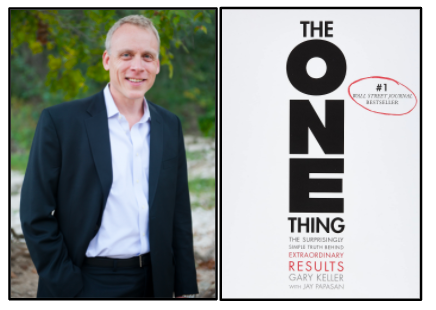
"The ONE Thing" (2013) is written by Gary Keller, the co-founder and chairman of the largest real estate company in the US, and by Jay Papasan, the executive editor and vice-president of publishing at Keller Williams Realty.
The title of the book refers to identifying and accomplishing the single most important task in one’s life at each moment of their life, and then moving on to the next one thing. Everyone has limited time and energy so by focusing on the single most important task at that moment, a person can achieve extraordinary results.

Authors of "The ONE Thing" Gary Keller and Jay Papasan (image source).
The book helps readers discover their most important goal and gives them tools for managing time to be as efficient and effective as possible. The book also disproves common work-related myths such as multi-tasking, and provides a new set of guidelines to follow. At the end of each chapter, the authors restate key information and give actionable insight to readers.
Towards the end of the book, Gary and Jay give advice on how to live life with priority, purpose, and productivity, without having the other areas of life get out of balance.
Lessons:
1) Everything is NOT Equal
“When everything feels urgent and important, everything seems equal. We become active and busy, but this doesn’t actually move us any closer to success. Activity is often unrelated to productivity, and busyness rarely takes care of business.”
One of the first lessons readers learn is that not all tasks matter equally and that success doesn’t come from doing the most, yet that is exactly what most people believe. For example, promotions aren’t handed out to the person that sends the most emails, but rather the person who achieves the best results.
Achievers focus on the essential. They pause before working to identify what matters and then get to work. Achievers always have a clear sense of priority even as new tasks are added. They are able to identify their tasks, and then narrow their focus on the most important thing, knowing that that task will achieve the greatest result.
This isn’t just a theory, it’s backed by Pareto’s Principle, also known as the 80/20 Principle. It proves that a minority of the inputs usually leads to a majority of the results (ex. 80% of a company’s revenue comes from 20% of its clients). In other words, a large amount of the results comes from a small amount of effort. This inequality of effort can be found in wealth distribution, employee output, and almost every aspect of work.
So instead of having a to-do list which is long and cluttered. Have a success list, a short list that aims at accomplishing the top five tasks and then focus on the most important one.
2) Multitasking is a Lie
“When you try to do two things at once, you either can’t or won’t do either well. If you think multitasking is an effective way to get more done, you’ve got it backward. It’s an effective way to get less done. As Steve Uzzell said, ‘Multitasking is merely the opportunity to screw up more than one thing at a time.’”
The authors write that people can do two or more things at once, such as walk and talk or read a map, but people can’t focus on two things at once. This is an important difference. When someone attempts to multitask, what they are actually doing is bouncing their attention back and forth between two tasks.
This is known as “task switching.”
When switching between easy tasks such as watching television and folding clothes, it is relatively quick and painless. However, if someone is working on a sophisticated Excel spreadsheet and a co-worker comes in to discuss a business problem, the complexity of the tasks will make it almost impossible to easily jump back and forth.
Switching tasks also increases the chance of being distracted since the brain isn’t focused on anything during the switching period. By focusing on two tasks, attention becomes divided and as more tasks come into play, attention drops lower and lower.
Researchers have found that multitasking is ineffective, causes more stress, and takes longer to accomplish tasks. Even talking on the phone while driving can take up to 40% percent of a person’s focus, the same effect as being drunk.
When you find your one thing, give it your absolute attention and don’t multitask, this will lead to real results.
3) Good Habits Equals Good Life
“When we know something that needs to be done but isn’t currently getting done, we often say, ‘I just need more discipline.’ Actually, we need the habit of doing it. And we need just enough discipline to build the habit.”
Habits make the daily activities of life easier since the task has been repeated so many times it can be done with minimal effort in an autopilot like state. The secret then is to make the hard stuff into habits so that it will become easier (ex. Going to the gym for the first time is hard, going to the gym for a bodybuilder is easy).
Doing the same task over and over again will eventually lead to a moment when it becomes automatic or ingrained in the person’s life. Although some self-help circles claim 21 days is the secret number of days needed, the authors say that modern science doesn’t back that up.
Instead, research shows that it takes an average of 66 days to acquire a new habit.
Researchers also found evidence of a halo effect around habit creation. Students who successfully acquired one positive habit reported less stress, better diets, and even consumed less alcohol and tobacco. By focusing and achieving one positive habit, it will become easier to develop the next one.
There’s a great quote in the book that says, “People do not decide their futures, they decide their habits and their habits decide their futures.” Strive to create the best habits possible so that you create the best future possible for yourself.
Conclusion:
When I first heard of this book I wasn’t fond of it because of its click-bait title and get-rich-quick vibe. However, a friend strongly recommended reading this book, and since I trusted him, I bought a copy. I’m glad I listened.
The book provides advice, backed by scientific studies, on how to be more productive and effective. It will teach you how to prioritize tasks, manage time, build good habits, use willpower properly, set goals and more. The authors also provide readers will additional tools and information at their website here. I highly recommend reading this book if you want to be more productive and improve your quality of life.
Rating: 5/5 Stars
If you’re interested in reading the book, click here or on the image below!

- Book: "The ONE Thing" by Gary Keller & Jay Papasan
- Pages: 240
- For: People who want to become better at managing their time and be more productive
- Lesson: Learn how to manage your time efficiently and effectively, achieve more, and find greater clarity in your career and life
If you enjoyed this article, consider supporting our site or signing up for our monthly newsletter. Thank you!
Reader freebies:

"Perennial Seller" by Ryan Holiday
- Book: “Perennial Seller” by Ryan Holiday
- For: Creative people who are looking to make their work last decades or longer
- Lesson: Learn how to create creative work that succeeds in the market for the long-term
Summary:
In every creative industry, there are certain creations that can be described as “perennial.” Meaning, regardless of how well it may have done at its release, these perennial products have continued to be successful and are still consumed by people decades later. The James Bond series, Citizen Kane and Pac-Man are still selling to this day and will likely continue selling for the next few decades.
The Great Gatsby continues to sell tons of copies more than half a century later. Certain products become timeless and classic, and Ryan investigates what makes perennial sellers unique.
The book is split into four parts. The first talks about the creative process and the magic and mindset needed to create a perennial seller. Part two teaches how to polish, perfect and package your creation. The third discusses marketing, which involves PR and promotion. The last part focuses on building a platform of fans to develop a long-term career.

Author Ryan Holiday.
Lessons:
1) Great Art Requires Purpose & Sacrifice
“The hard part is not the dream or idea; it’s the doing. It is the driving need that determines one’s chances. You must have a reason–a purpose–for why you want the outcome and why you’re willing to do the work to get it. That purpose can be almost anything, but it has to be there.”
Every creative person has a dream to write the next great novel or blockbuster film, but it’s the need to create something great that is vital in creating a perennial seller.
Here are a few examples of a good purpose: to uncover a truth that has been unsaid for too long, it will make the world a better place, it’s a once-in-a-lifetime moment, it will help a lot of people, because the excitement you feel cannot be contained.
If you want to create something to satisfy your ego, make money, or gain fame, be careful of this mindset. If the reason you want to create something is similar to the lines of, it’s your life’s work or this is what you were put on the planet to do, then you have the correct intent and are moving in the right direction.
After purpose, the next step is sacrifice.
The famous writer George Orwell said he would never write a book unless he was “driven by a demon he couldn’t resist.” The famous entrepreneur Elon Musk compared starting a company to “eating glass and staring into the abyss of death.”
Sacrifice will consist of pain and long hours of work. However, from sacrifice comes meaning, and from the struggle comes purpose. During this step, the fake innovator will be self-confident, while the real one will be scared to death. This is good, fear will keep you on your toes and alert during the process of creation.
2) Make Every Piece A Masterpiece
“The difference between a nice contemporary hit and a lasting icon is made in these decisions, and this process is not necessarily done quickly. It may be that the editing and refining of a work may take as long as the initial flurry of creation–it could be that the last mile takes longer than all the others put together.”
It is often said that getting through the last mile is just as hard as getting to the last mile. Before the product can be released, it needs to be polished, improved and properly positioned. Each piece of the product must be perfected in order to make it into a true masterpiece.
This step can be done only by the creator.
The creator is the CEO of your work. All responsibility and leadership falls on their shoulders. Chances are they’ll work with an editor, publisher or publicist–and they will help–but they will not take care of everything.
People will give feedback on how to improve your script or novel, but only the creator will be able to separate the helpful from the harmful suggestions.
Keep in mind, this process may last a long time. When Harper Lee submitted her manuscript, the editor told her it would require significant changes. Lee listened and after two years of rewrites, she created her famous book To Kill a Mockingbird.
Chances are that the first prototype will not be a masterpiece. Even The Great Gatsby was rejected several times. Similarly, WD-40 name comes from the forty attempts it took for its creator to nail the working formula.
3) Even a Masterpiece Must be Marketed
“You’ve reached the halfway point of the creative journey...you have created work that is both intrinsically and compellingly packaged and positioned. Now the bad news: There’s still a lot of competition out there left to beat. We are fighting not just against our contemporaries for recognition, but against centuries of great art for an audience. Each new work competes for customers with everything that came before it and everything that will come after.”
If you are the person who has created the product, it is up you to market and sell it. No one knows the product better and no one is more invested in it than you.
The first step to marketing your product is to make people care. This means being ready to sell at any time or place. When you meet someone, you should see it as an opportunity to make them care about your product. Phil Knight, the founder of Nike, sold his running shoes at track meets. Jay-Z sold CDs out of his car on the streets of New York City.
Author Ryan Holiday goes on to say that the one of the most important things that matters is word of mouth.
He calls it the single most powerful force in the life of a product since an organic, natural recommendation makes up between 20 and 50 percent of all purchasing decisions.
Not only is word of mouth more effective at converting potential customers than traditional advertising, it is also of little to no cost to the creator.
To increase word of mouth about a product, it is important to create excitement and gather momentum around it. One of the best ways to do this is by giving away the work for little or no cost to a select group of people.
Ryan has partnered with BitTorrent, one of the biggest piracy tools in the world, to give away music and books on several occasions. Author Robert Greene gave away a free supplemental eBook which helped make his paid book a number one New York Times bestseller. This freemium model builds trust, interest, and awareness of your product and if your work is good, a percentage of those people will be willing to pay for your product and support your work. This will help build a group of early adopters that will spread the word about your product to others. If you’ve gotten this far and want to learn more, you can get the book here.
Conclusion:
To create a perennial seller, one must have a deep purpose and be willing to sacrifice a lot for their work. It must be revised over and over again until each piece is a masterpiece. Once completed, the product must be marketed correctly in order for it to become a true perennial seller. Ryan Holiday is a great writer and although this book isn’t his best work, it is worth reading if you’re in the creative space or wish of creating something that will continue to last for decades.
Rating: 4/5
If you’re interested in getting the book, click here or on the image below!

- Book: “Perennial Seller” by Ryan Holiday
- Pages: 256
- For: Creative people who are looking to make their work last decades or longer
- Lesson: Learn how to create creative work that succeeds in the market for the long-term
If you're interested in reading another book by Ryan Holiday, here's an article on "Ego Is The Enemy."
If you enjoyed this article, consider supporting our site or signing up for our monthly newsletter. Thank you!
Reader freebies:

"Man's Search for Meaning" by Viktor Frankl
Book: “Man’s Search for Meaning” by Viktor Frankl
For: People searching for meaning in life or want to know how ordinary people cope with extraordinary situations
- Lesson: Learn how a psychiatrist survived a concentration camp and how humans can survive horrible situations and trauma
Summary:
Viktor Frankl, a Jewish psychiatrist during World War II, was sent to four different concentration camps including the infamous Auschwitz. During his time in the camps, he observed prisoners and himself, to reflect on what made some people mentally tough and why some people survived while others died or committed suicide.
In the camps, he was forced to assess whether his own life still had any meaning. Prisoners worked over ten hours a day of physical labor in freezing temperatures with not much more than a shirt, pants, and slippers. Most days they were given only one bowl of soup and a piece of bread.
After spending several years in the concentration camps, the war finally ended and Frankl became a free man. Frankl would go on to become the founder of logotherapy, a form of psychotherapy that focuses on the pursuit of meaning in one's life. He also wrote several books about logotherapy, his time in the camps, and the meaning of life.

An image of a young Viktor Frankl.
Lessons:
1) Love is an incredibly powerful force
“Then I grasped the meaning of the greatest secret that human poetry and human thought and belief have to impart. The salvation of man is through love and in love. I understood how a man who has nothing left in this world still may know bliss, be it only for a brief moment, in the contemplation of his beloved.”
While in the camps, prisoners were forced to work long hours of physical labor in harsh environments with poor equipment. Although he was in a horrible situation, Frankl could cheer himself up by thinking of his wife.
Due to the horrible conditions in the camps, Frankl was suffering every day, but the thought of seeing his wife again gave him a feeling of fulfillment and encouragement. Although Frankl had no idea whether or not his wife was alive, he says it didn’t make much of a difference. Even if she wasn’t alive, he still loved her spirit.
In his mind, Frankl was reliving all of the wonderful memories he and his wife have had during their time together and sometimes cried of happiness while doing so.
2) All Man Has Is His Attitude
“Everything can be taken from a man but one thing: the last of the human freedoms–to choose one’s attitude in any given set of circumstances, to choose one’s own way.”
Upon entering the concentration camp for the first time, the Nazi soldiers took everything from the soon to be prisoners including their clothes, jewelry (wedding rings as well), and documents.
Prisoners were separated from their families, shaved, and given a prison number that was tattooed on their arm.
When everything is taken from a person, there is only one thing left, their attitude.
Their attitude determines the decisions they make every day and every hour within that day. Prisoners in the camp all experienced lack of sleep, insufficient food, and various mental stresses. Yet, some prisoners still gave away their last piece of bread to others or helped them when they got injured.
Frankl says that a person is made as a result of their inner decisions and not the result of outside influences alone. Even in an extreme environment, like a concentration camp, man can still retain his human dignity.
3) The Meaning of Life and Suffering
“We must never forget that we may also find meaning in life even when confronted with a hopeless situation when facing a fate that cannot be changed. For what then matters is to bear witness to the uniquely human potential at its best, which is to transform a personal tragedy into a triumph, to turn one’s predicament into a human achievement.”
According to Frankl, the meaning of life can be discovered in three ways:
- By creating a work or doing a deed
- By experiencing something or encountering someone
- By the attitude we take toward unavoidable suffering
The first two are quite obvious, the first method often involves a person’s career or what they do to give back to others while the second is often referred to as experiencing goodness, love, and beauty. However, the third needs further elaboration.
Frankl says that meaning in life can be found even in hopeless situations. Throughout history, humans have been found to have almost endless potential. Many people have been able to turn their tragedy into a triumph–an amazing achievement that humans are capable of doing. Frankl is one example of this, the odds of surviving in a concentration camp were one in twenty-eight.
Frankl writes that suffering ceases to be suffering at the moment it finds a meaning, such as the meaning of sacrifice (example: People suffer at the dentist but the dentist is needed to be healthy, people suffer when running a marathon but they find meaning in finishing the race).
Although suffering is not necessary to find meaning, meaning can be found in suffering.
One meaning in life that Frankl discovered through his suffering is that man is capable of extreme evil as well as extreme good. Frankl saw stick-thin prisoners offering their one piece of daily bread to those in dire need and even a few Nazi guards helped Frankl survive by giving him advice or supplies.
Conclusion:
Love is a powerful emotion, have a positive attitude, and be aware that meaning can be found in suffering. Overall, Man’s Search for Meaning is definitely worth reading. It’s a quick read and an amazing story of the human spirit and the potential of mankind, both good and bad.
Rating: 5/5 Stars
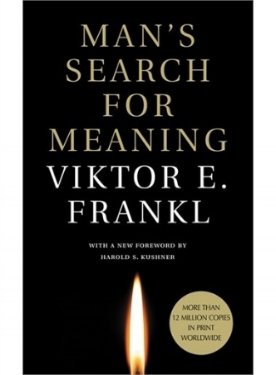
If you’re interested in getting the book, click here or on the image below.
If you enjoyed this article, I highly recommend learning about the psychologist Jordan Peterson and his book "12 Rules for Life."
Please consider supporting our site here or signing up for our monthly newsletter here. Thank you!
Reader freebies:

"12 Rules for Life" by Jordan B. Peterson
- Book: “12 Rules for Life: An Antidote to Chaos” by Jordan B. Peterson
- For: Anyone who is unhappy with their life, people who are angry, resentful, or lost in life
- Lesson: 12 Rules that will help you become a better person and in turn help make the world a better place
- Book: “12 Rules for Life: An Antidote to Chaos” by Jordan B. Peterson
- Pages: 448
- For: Anyone who is unhappy with their life, people who are angry, resentful, or lost in life
- Lesson: 12 Rules that will help you become a better person and in turn help make the world a better place
Jordan B. Peterson is a Canadian clinical psychologist, cultural critic, and professor of psychology. He has taught at Harvard and the University of Toronto. Dr. Peterson specializes in personality psychology with a particular interest in the psychology of religious and ideological beliefs. He’s published more than a hundred scientific papers, transforming the modern understanding of personality, while his textbook, Maps of Meaning, revolutionized the psychology of religion.
In the past few years, Dr. Peterson has become one of the world’s most popular public thinkers due to his YouTube lectures–which has over 700K subscribers– where he describes the deep connections between neuroscience, psychology and some of the oldest stories told by mankind.

Author Dr. Jordan B. Peterson
In his book, 12 Rules for Life, Peterson discusses discipline, courage, and the necessity of clear, truthful thinking in order to live properly within the order and chaos of our lives.
Here are three important rules from his book.
1) Stand up straight with your shoulders back
Peterson starts the book by talking about the surprising similarities shared between humans and lobsters. For example, they have similar nervous systems and live in a dominance hierarchy. But what do lobsters have to do with standing up straight? Well, both humans and lobsters share the chemical serotonin, which governs posture. When a lobster is defeated in a fight, their posture drops, they face the ground and appear weak to others. The same thing happens to humans, and with each defeat, serotonin levels drop even lower.
“Low serotonin means decreased confidence. Low serotonin means more response to stress and costlier physical preparedness for emergency…Low serotonin means less happiness, more pain and anxiety, more illness, and a shorter lifespan.
”
One bad life event can lead to another, and soon enough there you become stuck in a feedback loop spiraling down in a negative direction. The most important thing to do when this happens is to work to turn the direction of the feedback loop in reverse.
If a person slouches, they present themselves as defeated. However, if a person stands up straight, it means they may have taken a hit but are not defeated. It means that you, both physically and mentally, are able and willing to move forward in life to the next challenge. It also signals to other people that you are able to handle whatever life throws your way while you pursue your rightful destiny.
2) Treat yourself like someone you are responsible for helping
This chapter begins with a story which highlights that, on average, humans care more for their pets than themselves. Peterson reaches this conclusion by stating that humans are more likely to fill and properly administer prescription medication to their pets than to themselves.
Although this trait may seem healthy and unselfish at first, it is not. If the pet owner doesn’t take care of himself, how will they be able to take care of the pet for the long term? Also, why don’t people love and care for themselves the same way they care for their pet?
“[People] are excruciatingly aware of their own faults and inadequacies, real and exaggerated, and ashamed and doubtful of their own value. They believe that other people shouldn’t suffer, and they will work diligently and altruistically to help them alleviate it. They extend the same courtesy even to the animals they are acquainted with–but not so easily to themselves.”
Peterson writes that people must learn to respect themselves because they play a vital role to their pets, other people, and society. Peterson believes every person has a vital role to play in the destiny of the world and for that reason, they must take care of themselves.
An easy way to take better care of yourself is to treat yourself like someone you are responsible for helping. To take care of yourself, it is important to define who you are and refine your personality. Strive to become a good person and then work towards becoming an even better being. By doing so you will help direct the world a bit more towards Heaven instead of Hell.
3) Make friends with people who want the best for you
When looking back on his teenage years, Peterson notes that two of his friends were intelligent people but often hung out with the wrong crowd. Luckily for Peterson, he moved away from this group when moved to a new city to pursue his college education. However, his two acquaintances continued to surround themselves with people that weren’t good for them and both began to go down the wrong path in life.
“Sometimes, when people have a low opinion of their own worth–or, perhaps, when they refuse responsibility for their lives–they choose a new acquaintance, of precisely the type who proved troublesome in the past. Such people don’t believe that they deserve any better–so they don’t go looking for it. Or, perhaps, they don’t want the trouble of better.”
Peterson writes that some people who have decided to reject the path upward because of its difficulty and instead surround themselves with people who decide to take the easier path in life. This group of individuals, put off what needs to be done today and instead enjoy cheap pleasures and thrills. Silently, each person agrees not to call each other on it and they continually distract themselves from their true calling.
Even one troubled individual can be harmful. Dr. Peterson says that the psychological literature makes this clear. When a group of well-performing workers has a new poorly performing individual introduced to them, the entire team degenerates. This is why it is important to surround yourself with good healthy people.
But be warned, this is not an easy task. It takes strength and courage to stand near a good person. You must have humility and be willing to learn from others. This may be painful at first but it will allow you to grow and become a better person.
So remember, stand up straight with your shoulders back, take care of yourself like someone you are responsible for helping and surround yourself with good friends!

If you're interested in getting this book, click here.
More information about Jordan Peterson can be found below.
- Jordan Peterson Website: http://jordanbpeterson.com/
- Podcast: http://jordanbpeterson.com/jordan-b-p
- Reading List: http://jordanbpeterson.com/2017/03/
- Twitter: https://twitter.com/jordanbpeterson
If I have failed to peak your interest in this book, consider this: for the past three years I’ve been a voracious reader and have read close to a total of 100 books, but I can say without a doubt in my mind, this book is in the top 3 best books I’ve ever read. Give it a chance, you will not regret it.
If you enjoyed this article, consider supporting our site here or signing up for our monthly newsletter here. Thank you!

"Extreme Ownership" by Jocko Willink and Leif Babin
- Book: “Extreme Ownership” by Jocko Willink and Leif Babin
- For: Business managers, leaders, people interested in military tactics and improving their leadership skills
- Lesson: The leadership lessons from life-and-death combat can be applied to the business world to make your team and company successful
- Book: “Extreme Ownership” by Jocko Willink and Leif Babin
- Pages: 322
- For: Business managers, leaders, people interested in military tactics and improving their leadership skills
- Lesson: The leadership lessons from life-and-death combat can be applied to the business world to make your team and company successful
Summary:
Since the creation of mankind, there have been wars and warriors. Those warriors risk their lives for their country by putting themselves in combat zones in hopes of defeating the enemy. They often find themselves in life-or-death situations and must make decisions under pressure, under fire, and undermanned.
In these types of extreme high-risk situations, leadership and execution are crucial to achieving success. And the same strategies that are successful in battle can often be translated to business. Two thousand years ago, the war strategist Sun Tzu wrote “The Art of War” which became widely read by both military generals and business leaders.
The same can be said about the book “Extreme Ownership” by Jocko Willink and Leif Babin. These two U.S. Navy Seals officers led the most highly decorated special operation unit of the Iraq war. They now run a leadership consulting firm that teaches people how to apply powerful leadership principles from the battlefield to business and life.

Jocko Willink (left) and Leif Babin, authors of "Extreme Ownership."
The title of the book, “Extreme Ownership,” refers to one of the most important things that the authors learned from their 33 years of combined military experience.
They found that the key trait that made great leaders was taking extreme ownership of their job. That meant being responsible for everything related to their mission. These leaders didn’t cast blame or make excuses if something went wrong, they owned it all. This is the mindset leaders must have to lead their team and achieve success.
Every chapter in the book follows the formula of starting with a military story, then talking about the principle learned and ending with how the lesson can be applied to the business world.
Here are three important lessons from the book:
“Believe”
- Story:
The chapter begins with Jocko learning that his team, which was filled with Navy SEALs, had to fight alongside Iraqi Army soldiers. This may not seem like an issue, but remember, Navy SEALs are like a professional sports team. They are a tight-knit group of soldiers with hundreds of hours of training, in peak physical condition, and had access to some of the best and most technologically advanced equipment in the world.
Meanwhile, the Iraqi soldiers were mostly uneducated, untrained, undernourished and unmotivated. Most of the soldiers had joined just for a paycheck and more often than not, when there was a real firefight, they ran away from the fight. To make it even worse, some Iraqi soldiers were still loyal to Saddam and, at times, attacked U.S. soldiers.
Now, Jocko's commanding officer was saying that to go on missions, the SEALs had to work with the Iraqi soldiers. Jocko wondered why his boss made such a bad decision. After taking a step back and questioning his leaders, he began to see the logic behind the decision. In order for Iraq to become a stabilized country, they needed to have well-trained soldiers that could handle problems on their own. If they didn’t learn, once the U.S. soldiers left the country, the terrorist groups would retake the entire area.
When Jock first told his troops about the new rule, the team was furious. But, after explaining the reason behind it, they too realized the logic of the decision and agreed it had to be done, even if it was risky and unpleasant.
- Principle
To be a great leader, one must truly believe in the mission. If a leader doesn’t understand a decision made by senior command, they must ask why and learn the reason behind the decision. Once the leader understands why, he can then communicate the mission with confidence to those below them.
- Business Application
A company recently implemented a new compensation structure for their sales force but it created stress and fragmentation among employees because none of them understood why it was changed.
The employees complained to Jocko and said that they believed the new structure would drive a large part of their salesforce away. Jocko asked the group why leadership changed the compensation structure, but no one could answer the question. Jocko then asked if they thought the CEO was unreasonable or inexperienced. The group said “no” and added that the CEO is smart and that they feel stupid questioning the CEO.
As it turned out, none of the employees understood the reason behind the CEO’s decision and all of them were too scared to ask why. Meanwhile, the CEO with all her years of business experience, thought it was easy to understand why the changes were necessary. The next day, the CEO held a meeting that went over the new plan and answered all the questions that the employees had.
Leadership falls on not just the CEO but also the employees. If they don’t understand the mission, they must ask questions to understand the reason behind it. Once the why is understood, then the information can be passed down the chain with confidence so that everyone understands what needs to be done.
“Ask questions until you understand why so you can believe in what you are doing and you can pass that information down the chain to your team.”
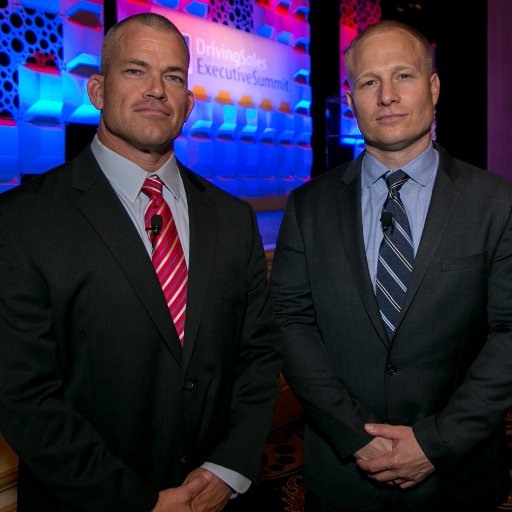
After their military career, Willink and Babin created Eheleon Front, a consulting firm that offers solutions in businesses and leadership strategies.
“Prioritize and Execute”
- Story
Leif Babin and his SEAL team were in enemy territory on a wide-open rooftop with no cover. Earlier in the day, they had been engaged in a firefight and were firing from inside a small building. When they tried to exit, they saw a possible IED (improvised explosive device) near the building entrance. They placed their own explosive nearby to destroy it. It was set on a timer and the clock was ticking. Now they had to find another way out of the building and get away from the blast radius. They decided to head to the roof, but while on the roof, one of the SEALs walked over a plastic tarp that covered a hole and fell twenty feet to the ground.
Now they were exposed out in the open, with an IED set to explode, and a SEAL separated from the team and in need of medical support. In this high risk and unforgiving environment, every second counted.
Babin thought back to his training and remembered that when there are multiple challenges, the most important thing to do is to remain calm, take a step back and determine the greatest priority for the team.
In this situation, it meant setting up security because if they didn’t protect themselves, they wouldn’t be able to help the wounded SEAL. Next, he had to find a way to get everyone off the rooftop. They found a locked stairwell and broke it open. After making their way down to the wounded SEAL, they took a headcount to make sure they had everyone and moved to safety. As they made it to the safe zone, the explosive went off and destroyed the IED so that no soldiers would be killed.
- Principle
Whether on the battlefield or the business world, when there are countless problems and challenges, it is important to relax, look around, and make a decision.
“Leaders must determine the highest priority task and execute. When overwhelmed, fall back upon this principle: Prioritize and Execute.”
- Business Application
As a consultant to a pharmaceutical company, Jocko spoke with the CEO and went over the list of new initiatives the CEO planned to implement to help the company improve its performance.
Here are the things the CEO wanted to accomplish:
- Launch several new products, each with its own marketing plan
- Create new distribution centers in a dozen new markets in the next two years
- Enter the laboratory-equipment market
- Start a new training program
- Rebuild the company website
- Restructure the sales force
With some much to do, it can become confusing to know which task is the most important. Jocko asked the CEO which initiative had the highest priority and if the CEO believed his team knew which task was of highest priority.
The CEO admitted that they probably didn’t know and that if they did focus mainly on just the highest priority, it would make a huge difference to the company. Jocko recommended that the CEO focus on one task and once completed, move onto the next highest priority.
“This focus on a singular initiative unified the efforts of the entire company. Progress was seen quickly and gained momentum. The CEO recognized the traction, and the effectiveness of the method: Prioritize and Execute.”
“Decisiveness and Uncertainty”
- Story
While on a rooftop with Chris Kyle (the Most Lethal Sniper in U.S. Military History and author of American Sniper), Chris told Leif that he saw a guy with a scoped weapon in a building. The man stepped behind the window and then disappeared behind a curtain.
Not too far away, there was a group of U.S. soldiers on the ground. Chris wanted to protect his fellow soldiers and take out the sniper, but he couldn’t positively identify the man and wasn’t sure if it was an enemy or a friendly. Chris asked Leif what he should do.
If they waited too long, they worried that the man might shoot one of the U.S. soldiers. But if they took the shot and it turned out to be a friendly soldier, it would be just as bad.
Leif radioed the other platoon and asked if he had placed any soldiers inside the building. The company commander replied “no” and said to take the shot.
The man behind the curtain came out again but neither Chris nor Leif were certain it was an enemy. However, Leif couldn’t just wait there and risk the possibility of the man shooting other soldiers.
Instead, he radioed the commander and asked him to send troops to check out the building.
The soldiers went in to clear the building and came rushing out. It turned out that the man in the window was, in fact, a U.S. soldier. The building number had been miscommunicated. In Ramadi, there were no address numbers nor street signs and the buildings were constantly changing due to destruction from bombs and bullets. All of these factors made it difficult to properly communicate building locations. An event that happened often in this chaotic environment.
- Principle
Even in times of uncertainty, leaders cannot be paralyzed by fear. This results in inaction. Leaders must make the best decisions they can based on the information that they have. Leaders must also be ready to adjust those decisions as the situation evolves and new information is discovered.
- Business Application
While advising a software company, Jocko met with the CEO. The CEO had two senior engineers that were constantly butting heads and insisted that the other person be fired or they would quit.
The CEO wasn’t sure what to do because she didn’t want to lose either one but knew that both employees were creating a harmful environment for the company's employees. The CEO tried to take the engineers to dinner to discuss the situation and solve the issue, but nothing worked.
The CEO was unsure of what to do and instead chose to do nothing. Jocko informed her that a CEO must be decisive and willing to make choices or she will be seen as a weak leader by her peers.
Jocko also told the CEO that these two employees had bad attitudes and are probably spreading negativity among other employees. This was not the role model behavior that a leader should have. Even if only one employee was fired, it was highly possible that the one that stayed would cause problems with the next senior engineer.
With all this information, the CEO decided to take action. She spoke with the lead developer and asked for two candidates that were ready and eager to step up. The CEO discovered two workers that had critical knowledge of the projects and were excited and happy to work together. She then contacted HR and told them to terminate the two badly behaved senior engineers. Now, the company was back on track and it was game on.
Implement these principles in your job and personal life to become a better leader and achieve greater success. Get some y'all. Out!
Thank you for reading. If you enjoyed this article, consider reading the book. I highly recommend it, click here to get it!
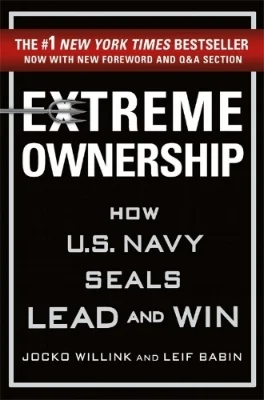
If you enjoyed this article, consider supporting our site or signing up for our monthly newsletter. Thank you!
Reader freebies:
Enjoying A&B?
Consider donating to keep the site up and running!