5 Killer Workouts from Navy SEAL David Goggins
Do you think you’d last training with David Goggins for 31 days?
Burpees, running with a weighted vest, push-ups and much more.
Here are 5 workout challenges from the “SEAL” aka David Goggins.
I recently finished reading, “Living with a SEAL: 31 Days Training with the Toughest Man on the Planet.” It’s a hilarious book about two men from different worlds living together for a month (read my takeaways from the book here).
In the book, Jesse Itzler, a successful entrepreneur, feels his life has become too comfortable and stagnant so he asks a Navy SEAL to live with him and train him for 31 days.
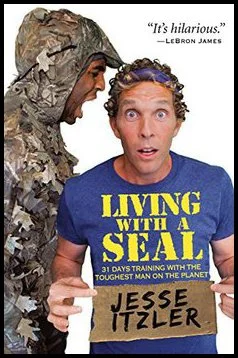
That “SEAL” by the way, is David Goggins, one of the toughest men on the planet.
Why is Goggins considered one of the toughest men on the planet?
He is the only person to complete SEAL training (3 Hell Weeks) U.S. Army Ranger School, and Air Force Tactical Air Controller training.
He has competed in more than sixty ultra-marathons, triathlons, and ultra-triathlons.
He broke the Guinness World Record by completing 4,030 pull-ups in 17 hours.
And those are just a few of his accomplishments (I highly recommend reading his book, “Can’t Hurt Me” to get the full story).
Now back to the book “Living with a SEAL.”
For a month, Goggins made Itzler do countless crazy workouts such as hundreds of burpees and push-ups, jogging for miles in the snow, running with a weighted-vest, you name it, they probably did it.
Do you think you’d be able to keep up with Goggins and his workouts?
Read on to find out.
(Disclaimer: Keep in mind that these workouts may be extreme for some individuals and you can hurt yourself from doing them. This is not a recommendation to do these workouts, please don’t sue me if you try this and get injured. Be responsible, be smart, be safe.)
5 Killer workouts from David Goggins:
“If you don’t challenge yourself, you don’t know yourself.”
1) Burpee Test
Goggins followed Itzler everywhere for the 31 days of training, including the office. One afternoon while in the office, Goggins told Itzler it was time for a burpee test–performing 100 burprees as quickly as possible.
If you haven’t done a burpee before, don’t worry, it’s simple and you don’t need any weights.
You simply drop to the floor in a plank position, do a push-up, kick your knees to your chest and jump into a jumping jack.
It works out your arms, chest, legs and abs.
Now do 100 (timed).
Under 10 Minutes – Solid
Under 11 Minutes – Acceptable
Over 13 Minutes – Unacceptable (do it again)
Itzler’s 100 burpees time:
11 minutes and 45 seconds (first time)
10 minutes 27 seconds (second time)
Aim to get under 10 minutes. Stay tuned to for my score.
13:00.06 (my first attempt, will do it again soon)
2) Nickels and Dimes
Do 5 pull-ups (nickels) and then 10 push-ups (dimes) every minute on the minute.
So if you do the 5 pull-ups and 10 push-ups in 30 seconds, you get a 30 second rest. If it takes you 50 seconds to do the set, you only get a 10 second rest.
Do this for 10 minutes.
Total will be: 50 pull-ups and 100 push-ups.
By the time Itzler got to 4 minutes, he dropped to the ground and couldn’t do anymore.
Can you do the full 10 minutes?
3) 150 Push-ups with 50-Pound Vest
Goggins apparently made friends with a guy at Itzler’s gym and he let Goggins borrow a 50-pound weighted-vest. So of course, Goggins wanted to put it to use, and they did.
Do 15 sets of 10 push-ups with 30-seconds of rest between sets.
Total: 150 push-ups with weighted vest.
Itzler’s time: 22 minutes
SEAL’s time: 15 minutes
This is a hard one, even Goggins couldn’t go straight to ten push-ups without dropping to his knees after the sixth set. Yet all he kept saying was “This is great.”
4) Run, Push-up, Run
Instead of doing a typical 6 mile run, Goggins makes Itzler do 25 push-ups every half mile. Also, each mile time must be faster than the last.
Start at a 9 minute-mile pace.
After running half a mile, drop down and do 25 push-ups.
After 1 mile, do 25 push-ups and run the next mile at an 8:50 mile pace.
Repeat push-ups at every half mile and by the last mile you run should be at an 8:10 mile pace.
1st mile: 9 mile pace (50 push-ups)
2nd mile: 8:50 mile pace (50 push-ups)
3rd mile: 8:40 mile pace (50 push-ups)
4th mile: 8:30 mile pace (50 push-ups)
5th mile: 8:20 mile pace (50 push-ups)
6th: mile: 8:10 mile pace (50 push-ups)
Total: 6 miles and 300 push-ups.
5) The 4/4/48
This may be the toughest workout in the book:
Run 4 miles every 4 hours for 48 hours.
A total of 48 miles in two days.
Goggins had Itzler train for this by running 4.25 miles four times in 24 hours.
Since Itzler was running in the cold (about 10º F), he ended up pulling his groin about 16 miles in and had to cut the run short.
Someone correct me if I’m wrong, but I think Goggins had to leave before they did the actual 4/4/48 run. Maybe I’ll try it (Leave a comment below and if enough people show interest, I’ll give it a shot).
“Every day is a challenge, otherwise it’s not a regular day.”
Well there it is, 5 workout challenges from the “SEAL” in “Living with a SEAL.”
And if you’re wondering about Jesse Itzler’s fitness stats after the 31 days, here they are:
222.5 miles run
6,488 push-ups
236 pull-ups
957 sit-ups
200 burpees
800 jumping jacks
50 box jumps
150 flutter kicks
14 fireman carries
And remember:
“Don’t get too comfortable. Ever.”
Thanks for reading!
See below to learn more:
You can buy the book, “Living with a SEAL” by Jesse Itzler here.
Get David Goggins’ book, “Can’t Hurt Me” here.

Here are a few similar fitness books:

"Living with a SEAL (David Goggins)" by Jesse Itzler
What happens when a multi-millionaire invites a Navy SEAL to live with him for a month?
"Living with a SEAL (David Goggins)" by Jesse Itzler
A hilarious book on fitness, not making excuses and challenging yourself to improve.
Book Summary:
What do you get when you put a U.S. Navy SEAL and a millionaire entrepreneur in the same hous for a month?
Jesse Itzler, the book’s author, is a gritty entrepreneur who co-founded Marquis Jet (he later sold it to Berkshire Hathaway) and helped pioneer the coconut water craze with Zico coconut water (later acquired by Coca-Cola).
He is also married to Spanx founder (and now billionaire) Sara Blakely.
Itzler had it all.
Successful in just about every aspect of his life. However, he felt stuck in a routine.
Wake up, go to work, come home, have dinner, exercise, sleep. Then do it again.
“I wanted to get off it; I wanted to shake things up in a big way,” he writes.
And what better way to shake things up than by asking a SEAL to train you and push you to new limits.
That SEAL, we know now, is David Goggins.
Itzler was speechless when he saw Goggins (then weighing about 260 pounds) run a 100-mile race without any support staff, and he had to meet this incredible man.
Itzler ended up inviting Goggins to live with him in hopes of getting a bit of Goggins’ magic sauce.
Each day, Goggins came up with a new workout to show Itzler that he was nowhere near his potential. This included running with a 50-pound vest, doing 100 chin-ups in a row, swimming in a frozen lake, running 4 miles every 4 hours and much more.
By pushing Itzler physically, Goggins was also pushing him mentally.
Itzler thought many of the tasks where impossible, but by doing them, he realized his mind was playing it safe and was capable of doing more than he thought possible.
In addition to being about fitness and mental toughness, this book is also hilarious (look on the cover, Lebron James agrees). If you’re a fan of David Goggins or Jesse Itzler, you’ll enjoy this book.
Book Lessons:
1) Measure your foundation & track your progress
“If you don’t challenge yourself, you don’t know yourself.”
One of the first things SEAL (Goggins) did when training Itzler was giving him a fitness test and writing down all of his reps. It’s important to know where you are and what you’re capable of doing.
Once the foundation was set, Goggins started to push Itzler in all different types of workouts and at the end of each day, workout totals were jotted down.
After training with Goggins for a month, Itzler’s mile pace went from 9:20 to 7:50 (7 minutes and 50 seconds). A whole minute and a half faster per mile.
Here are Itzler’s workout totals:
222.5 miles run
6,488 push-ups
236 pull-ups
957 sit-ups
200 burpees
800 jumping jacks
50 box jumps
150 flutter kicks
14 fireman carries
Measure your current abilities and track progress every day to see concrete evidence of what you’ve done and how your performance has changed over time.
2) No one ever regrets a workout
“Every day is a challenge, otherwise it’s not a regular day.”
Goggins made Itzler do some crazy things:
Running in a snowstorm
Doing 100 burpees in the office
Jumping into a frozen lake
Jogging with a 50-pound vest
The list goes on…
Many of these workouts flat out sucked. A lot of them Itzler didn’t want to do and he even tells Goggins for him to write down “MISERABLE” in his journal during one workout.
However, Itzler never regretting working out.
He never said, “Man, I really wish I didn’t do 100 burpees today.”
Does Itzler complain that the workouts suck? Yes.
But, to be fair, many of the workouts would be extremely difficult for the average adult to complete and Itzler never said no to a workout.
Even after doing 100 burpees in a row, his legs shaking, but he couldn’t help but smile afterward.
Working out may suck, but no one ever regrets doing it.

Snowing? Cold? Tired? Doesn’t matter, when SEAL says it’s running time, it’s running time.
3) Excuses only exist if you make them
“Don’t get too comfortable. Ever.”
Have you heard these lines before or told yourself this?
I was going to exercise today, but:
It’s raining
It’s too cold out
It’s snowing
I’m sore
My shoulders hurt
I don’t have time today
I have to watch the kids tonight
Sound familiar? I know that I’ve said at least half of these lines to myself.
Here is the honest truth, when you tell yourself these “reasons” you can’t work out, no matter how “good” the reason is, it won’t help you reach your fitness goals. And, all of these reasons are actually excuses.
When Goggins and Itzler were traveling, Itzler didn’t pack an extra pack of underwear. Here is how that conversation goes:
Itzler: I didn’t bring any extra underwear.
Goggins: So what?
I: I can’t run without underwear.
G: Nah, bro, you can’t run without legs. It’s on.
Itzler ends up going “commando” style and the two go for an 8.3-mile run.
Whether it was raining, snowing, cold, windy, it didn’t matter to Goggins. They went running.
What happened when Itzler had to watch his kid? Goggins told Itzler to put the kid in a stroller and run with him. Goggins also gave Itzler a 50-pound vest for some extra fun.
You can have excuses or you can have results. Pick one.
Book Review:
This is one of the funniest books I’ve read. It’s two different worlds colliding, one from a strict, tough, military background, and the other from a business, luxury, laidback setting. And when two worlds collide, a lot of interesting things happen.
As a fitness book, Goggins no BS or excuses approach is inspirational. You won’t find workout plans or what foods to eat to get in shape, but you will learn not to make excuses, track your progress and to get creative with your workouts.
Goggins does curse a lot so this book may not be suitable for children, but if you’re an adult, you’ll find this book to be hilarious. It’s rare that I laugh out loud from reading a book, and yet this book made me do just that several times. You won’t find any deep life-changing lessons in this book, but if you’re looking for an entertaining book about fitness that will make you laugh one minute and motivate you to get off the couch and run the next, I highly recommend getting this book!
Rating: 4.5/5 Stars
If you’re interested in getting the book, click here or on the image below.
Here are a few similar fitness books:
For literally a few dollar a book will give you an enormous amount of valuable information that can help you in life. It’s practically highway-robbery. So take advantage of this and read as much as you can.
If you want to check out my list of recommended books, you can find that here.
If you enjoyed this article, consider supporting our site or signing up for our monthly newsletter. Thank you!

Top 10 Favorite Books of 2018
I read a total of 38 books In 2018.
Here are my top 10 favorite books.
Summary:
In 2018, I was fortunate to read a number of great books, 38 to be exact (the vast majority were physical books, but some were ebooks or audiobooks). I beat my 2017 record of 35 books (you can find my favorite books from 2017 here). However, a small number of these books really stood out from the crowd.
These books either changed the way I looked at the world or taught me something that I will remember for the rest of my life.
The 10 books listed below deserve extra recognition for being so awesome, so without further delay, here they are (in no particular order):
10) “The Compound Effect” by Darren Hardy

There’s a reason this book is a New York Times, Wall Street Journal, and USA Today bestseller, it’s because it is incredibly insightful and helpful to readers. Darren Hardy does an excellent job of teaching readers the importance of the Compound Effect (how little actions overtime can lead to radical results) and provides several analogies that really stick in the reader’s head.
The shocking part is that this book is only about 160 pages. There is no fluff or guff. It’s pure gold. I would recommend reading this book at least twice and make sure to highlight important passages, jot down notes and write down steps on how you can start changing your life for the better.
9) "TOTAL RECALL" BY ARNOLD SCHWARZENEGGER
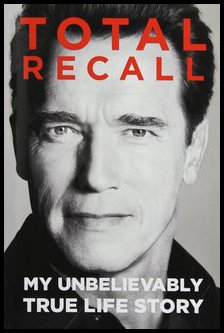
“Total Recall” (2013) is an incredible story about Arnold Schwarzenegger’s life that covers both the struggles and triumphs he faced in bodybuilding, acting and politics. It’s a great American-dream story that shows the true path to becoming successful and what is needed to get there.
A lot can be learned about his drive and desire to achieve from reading this book. Readers will learn several important lessons such as why you should write down your goals, practice often, be self-disciplined, and train both the mind and body.
Arnold doesn’t hide anything and talks about both the ups and downs during his life journey. He also includes a chapter that highlights his rules for success. And even though he isn’t perfect and had an affair, he is an awesome human being and readers will learn a lot by reading his book.
Now go read this book. Hasta la vista, baby.
8) "Discipline Equals Freedom" by Jocko Willink

This book doesn’t have any secrets to life, but that’s the point. THERE ARE NO SECRETS or SHORTCUTS. It’s just hard work, day-in and day-out.
People already know a lot of lessons in this book, such as work out often and don’t eat sugar, but when it comes from Jocko (a retired Navy SEAL of 20 years), there’s a much higher chance of it sticking in your mind. I think part of it is the amount of respect people have for him. This guy wakes up a 4:30 AM every day–even on Christmas and New Years– and works out, and posts a picture on social media as proof for everyone to see.
In the end, readers will have learned at least two valuable lessons from this book. The need to build self-discipline and the need to take action. Don’t just read this book, but go and do. Do the work, do what needs to be done even if you don’t feel like doing it, do what will make you a smarter, stronger and a better person in life. Now, go and GET AFTER IT!
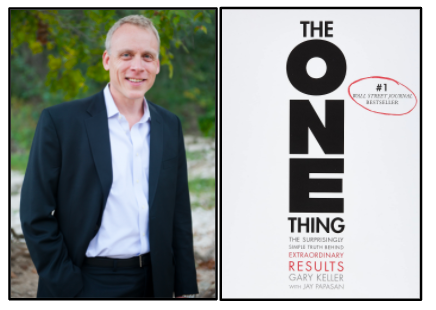
7) “The ONE Thing” by Keller & Papasan
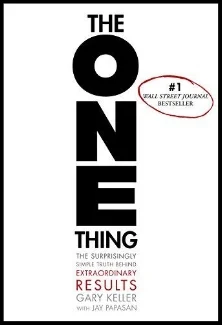
The title of this book sounds like clickbait, do this one thing to be successful, but this book is actually filled with an immense amount of valuable information.
The book provides advice backed by scientific studies, on how to be more productive and effective. It will teach you how to prioritize tasks, manage time, build good habits, use willpower properly, set goals and more. The book also debunks popular myths such as multitasking being great–which it is not–and that being busy is good–also not true.
The authors also provide readers with additional tools and information at their website here. I highly recommend reading this book if you want to be more productive and efficient in both your professional and personal life.
6) “The Third Door” by Alex Banayan

This book is filled with a lot of great business advice, but it’s also an amazing story. As a college student, the author hacked The Price Is Right and used the prize money to fund his quest to learn from the world's most successful people.
The author takes readers on a journey of how he chased Larry King in a grocery store, waited in a bathroom to talk to Tim Ferriss, used his network to meet with Bill Gates, and dozens more of the world's most successful people.
There’s also a lot of great advice from icons such as how Tim Ferriss cold-emails people, how Jessica Alba stays focused on her business, and how Pitbull believes people should always stay an intern. Highly recommend it to college students, entrepreneurs, and people interested in business.
5) "A Billion Wicked Thoughts” by Ogas & Gaddam

They say men are from Mars and women are from Venus, and in a way, that is true. “A Billion Wicked Thoughts” shines light on the ways men and women are wired and how even though they are part of the same species, heterosexual guys and girls desire and are attracted to vastly different traits.
Although the authors are scientists and probably love big data, they do a surprisingly fantastic job of explaining what they found from the data and combine it with evolutionary psychology to create clear and easy to understand lessons that readers can apply to their daily lives.
I’d highly recommend reading this book to both men and women because it helps people better understand the opposite sex through a scientific lens instead of simply saying “Guys are stupid” or “Girls are weird.”
4) “Atomic Habits” by James Clear

I’d put this book in the top 3 best productivity books I’ve ever read, it’s that good.
James Clear did an excellent job with this book. It’s an easy and entertaining book to read filled with personal stories as well as scientific studies. There’s a lot of information to absorb, but each chapter ends with a summary and important lessons are repeated throughout the book.
If you’re looking for an easy and proven way to build good habits and break bad ones (which is everyone), this book is for you. Read it, highlight it, take notes, and start applying the lessons to your life and achieve success that lasts.
3) “Man’s Search for Meaning” by Viktor Frankl

After reading this book, I recommended it to several people and every one of them has told me that the book was incredible.
The author retells his life at Auschwitz and several other concentration camps and talks about the horrible conditions he and other prisoners had to endure to survive. From working 10+ hours a day of physical labor in freezing temperatures to constantly walking past dead bodies. It was hell, but amazingly, Frankl survived.
This book is a story of one man’s will to live and throughout the book, Frankl teaches readers several important lessons about how humans can be evil, but also incredibly kind. The best part is that Frankl was a psychiatrist so he could really analyze both the prisoners and the guards and get to the center of what makes humans ticks and why they do what they do. From his experience, Frankl discovered life lessons that would have been nearly impossible to find anywhere else.
2) “Extreme Ownership” by Willink & Babin

“Extreme Ownership” was initially released as a leadership and management guide to help corporate leaders, but this book is so much more than that. The lessons learned from this book can be applied to almost every aspect of life.
For example, the title of the book refers to a trait that Willink and Babin believe all great leaders possess–the ability to go above and beyond by taking extreme ownership and responsibility of the situation (also if you’re interested in leadership, management, and lessons from war, check out Jocko’s podcast here).
People that take extreme ownership don’t go around blaming others for negative outcomes, they ask themselves what they could have done to prevent things from going bad or think about what they’ll do from now on to prevent the same negative event from happening in the future.
Honorable mentions:
These are books that I’d highly recommend reading when you have some free time. Although they didn’t make it into the top ten, these books are still spectacular and you can learn a lot from reading them:
"Mastering Fear" by Brandon Webb & John Mann
Webb, a Navy SEAL, pilot and media CEO, teaches readers how to overcome fear in business and life.
"The Productivity Project" by Chris Bailey
Bailey spent a year experimenting and researching different habits and activities, to find out how people can maximize their productivity.
"The Aquariums of Pyongyang" by Chol-hwan & Rigoulot
The author spent 10 YEARS in a North Korean concentration camp (yes, these still exist), managed to escape and shares stories of corruption and the truth about life in the hermit kingdom.
1) “12 Rules for Life” by Jordan Peterson

Every now and then you read a book that literally changes your life, for me, this is that book.
It’s hard to start talking about “12 Rules for Life” because so many aspects of this book are incredible. The book pulls interesting lessons from psychology, philosophy, anthropology, and sociology. It also talks about how religion, literature, and Disney movies have similar life lessons and how each one can teach people about the proper way to live a good life.
Peterson teaches readers how to stand up for themselves, how to take care of themselves and others, and several other lessons that teach people how to be a better person overall. If you want to change your life for the better, read this book.

My 10 favorite books of 2018!
Want more book recommendations?
Find my Top 10 Favorite Books of 2017 here.
Or all my book recommendations here.
If you enjoyed this article, consider supporting the site or signing up for our monthly newsletter. Thank you!

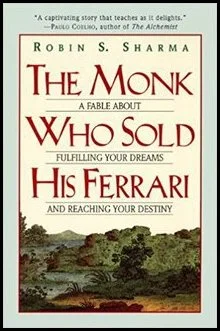
"The Monk Who Sold His Ferrari" by Robin Sharma
An inspiring tale about a rich lawyer that drops everything to pursue happiness and fulfillment.
Learn how to have a good mindset, why reading books is important and the 7 virtues of Enlightenment Living.
A great book for those seeking passion, purpose or peace.
Book Summary:
“The Monk Who Sold His Ferrari: A Fable About Fulfilling Your Dreams and Reaching Your Destiny” by Robin Sharma is an inspiring tale that provides a step-by-step approach to living with greater courage, balance, abundance and joy.
The book tells the extraordinary story of Julian Mantle, a lawyer forced to confront the spiritual crisis of his out-of-balance life, and the subsequent wisdom that he gains on a life-changing odyssey that enables him to create a life of passion, purpose and peace.
It teaches readers how to:
Follow Our Life's Mission and Calling
Cultivate Self-Discipline and Act Courageously
Value Time as Our Most Important Commodity
Live Fully, One Day at a Time
And more.
Author Bio:
Robin Sharma is one of the world's premier speakers on Leadership and Personal Mastery. For nearly 20 years, many of the most well-known organizations on the planet, ranging from Nike, GE, Microsoft and Oracle. Sharma has been ranked as one of the Top 5 Leadership Gurus in the World in an independent survey of over 22,000 businesspeople.

Book Lessons:
1) Search for the positive in every event
“No matter what happens to you in your life, you alone have the capacity to choose your response to it. When you form the habit of searching for the positive in every circumstance, your life will move into its highest dimensions.
”
In the book, the monk says that one’s outer world is a reflection of their inner world and that by controlling their thoughts, they can control the way they respond to events and thus begin to control their destiny.
Interestingly, the Chinese character for ‘crisis’ is comprised of two sub-characters: one that spells ‘danger’ and another that spells ‘opportunity.’
Every challenge, obstacle and hurdle may at first seem like a negative event, but it is actually an opportunity for you to grow as a person by overcoming it.
“From struggle comes strength. Even pain can be a wonderful teacher,” the author writes.
Negative experiences and mistakes aren’t all that bad if you look at them with a positive mindset and learn from the outcome.
“Every event offers you lessons. These little lessons fuel your inner and outer growth. Without them, you would be stuck on a plateau” (pg 47).
This mindset is quite similar to that of Jocko Willink, the best-selling author of several books and retired Navy SEAL of 20 years.
Bad experiences and events will happen in life. There is no way in avoiding it.
However, getting upset or depressed about it won’t improve the situation or make life better.
Instead, look at each experience and ask yourself, “What can I learn from this?” or “What is one positive takeaway from this event?”
When Jocko and his team had their operation canceled, he said “Good, more time to plan the next one.” Or when he didn’t get the new high-speed gear he wanted, he said: “Good, we can keep the mission simple.”
Look for the positive in every event.
2) Never stop learning
“It centers around the whole notion of lifelong learning and expanding your knowledge base for the good of yourself and all those around. ”
The author encourages readers to become lifelong students. Not only that, but he says that people must apply what they’ve learned.
Knowledge is only potential power, it must be put to use to provide actual benefits.
One of the best ways to learn is to read books. Read 30 minutes every day and it will do “wonders for you.” Read philosophy books, great literature and classical works. Read books about amazing humans who have accomplished incredible achievements.
Why is reading so important?
It’s because the answer to almost every problem can be found in a book. How to become a better lawyer, friend or lover, there are tons of books on these subjects. All the mistakes and problems modern day people face have likely been faced by people in the past who wrote books on the topic in order to help others.
“Read the right books. Learn how those who preceded you have handled the challenges you are currently facing. Apply their strategies for success and you will be astonished by the improvements you will note in your life” (pg 118).
3) The 7 Virtues of Enlightenment Living
#1) Master your mind
Cultivate your mind–it will blossom beyond your expectations.
The quality of your life is determined by the quality of your thoughts.
There are no mistakes–only lessons. See setbacks as opportunities for personal expansion and spiritual growth.
#2) Follow your purpose
The purpose of life is a life of purpose.
Discovering and then realizing your lifework brings lasting fulfillment.
Set clearly defined personal, professional and spiritual goals, and then have the courage to act on them.
#3) Practice kaizen
Self-master is the DNA of life mastery.
Success on the outside begins within.
Enlightenment comes through the consistent cultivation of your mind, body and soul.
#4) Live with discipline
Discipline is built by consistently performing small acts of courage.
The more you nurture the embryo of self-discipline, the more it will mature.
Willpower is the essential virtue of a fully actualized life.
#5) Respect your time
Time is your most precious commodity and it is non-renewable,
Focus on your priorities and maintain balance.
Simplify your life.
#6) Selflessly serve others
The quality of your life ultimately comes down to the quality of your contribution.
To cultivate the sacredness of each day, live to give.
By elevating the lives of others, your life reaches its highest dimensions.
#7) Embrace the present
Live in the “now.” Savor the gift of the present.
Never sacrifice happiness for achievement.
Savor the journey and live each day as your last.
Conclusion:
You’ve probably heard of the stereotypical story of the rich, high-powered lawyer who, although financially successful, is unhappy with his life. So, he drops everything and goes on a spiritual journey.
That is this book.
Today we see this story as a cliche: a rich person (CEO, lawyer, surgeon) who has a nice house, fancy car and expensive clothes, is unfulfilled in life so they sell everything and become a yoga teacher, priest or in this case, a monk.
Don’t get me wrong, this book is filled with great lessons and Sharma does an excellent job of telling a story and he gives readers lesson takeaways and action points. However, reading this book in 2018, it seems to be a bit dated. If I read this book 20 years ago when it was published, it would have gotten 5 out of 5 stars. For me personally, it’s not a life changing book, but it is still worth reading.
Rating: 4/5 Stars
If you’re interested in getting the book, click here or on the image below.

Here are a few similar books:


For literally a few dollar a book will give you an enormous amount of valuable information that can help you in life. It’s practically highway-robbery. So take advantage of this and read as much as you can.
If you want to check out my list of recommended books, you can find that here.
If you enjoyed this article, consider supporting our site or signing up for our monthly newsletter. Thank you!

"A Billion Wicked Thoughts" by Ogas & Gaddam
What can a billion internet searches tell us about sexual relationships?
Learn the difference between male and female desires.
Backed with real data, evolutionary psychology and extensive research, this book will change the way you look at the opposite sex.
Book Summary:
“A Billion Wicked Thoughts: What the Internet Tells Us About Sexual Relationships” by Ogi Ogas & Sai Gaddam explores the differences in male and female sexuality, human desire and attraction through extensive research into mountains of data provided by online searches.
The last great sex study was done in the 1950s and looked at about 18,000 people and found shocking results. In this book, neuroscientists Ogas and Gaddam examined over 400 million different searches and the search history of more than 650,000 people, providing a vastly more detailed and improved answer to the question, what do men and women really desire?
Here are a few lessons this book teaches readers:
What really turns men and women on
Why men love large breasts and butts
What makes the set up to a romantic evening so important for a woman
Why women’s desires are so hard to predict
And much, much more.

Author Bio:
Ogi Ogas studies computational models of memory, learning, and vision. He was a Department of Homeland Security Fellow. Ogi Ogas, Ph.D. He is the project head of the Dark Horse Project in the Laboratory for the Science of Individuality at the Harvard Graduate School of Education.
Sai Gaddam studies large-scale data analysis and serves as a data mining consultant in India. Sai conducted his doctoral research at Boston University on biologically inspired models of machine learning.

Authors Ogi Ogas (left) and Sai Gaddam.
Book Lessons:
1) Why men like large breasts and butts
“Visual cues trigger desire in men. If a man’s brain decides a picture is arousing, he swiftly experiences physical and psychological arousal.
”
What cues do men specifically desire?
Breasts, hips and butts are the main cues, along with feet and feminine facial features.
The authors write that across many species (humans included), more attractive female parts are associated with greater health, fertility, and offspring survival. These body parts also signal to a man how many years of healthy childbearing remain in a woman’s lifetime.
Interestingly, all of the things men are attracted to are influenced by the same molecule: Estrogen.
Why estrogen?
“Unhealthy and underfed women produce less estrogen and therefore may not be able to bear children, or may bear unhealthy children” (pg 56). It also indicates if she is getting enough to eat and how much stress she is experiencing.
In addition to estrogen, women need a specific kind of female-only fat called gynoid fat that supports the energy demands of pregnancy and lactation. This fat is also only used during childbearing.
And where is the gynoid fat stored?
In the breasts, hips, butts and thighs.
Usually the larger these parts are, the more gynoid fat they have. For instance, levels of gynoid fat in breast positively predict all aspects of female lifetime reproductive capacity, including conception probability, probability of successful pregnancy and offspring quality.
Since these body parts are the best indicators of a woman’s long-term reproduction value, it’s no surprise that these ornaments have evolved to become the most potent visual cues for men.
2) Women experience sexual arousal differently from men
“The results were very clear. Men experienced a strong correlation between the arousal of mind and body. Women did not. ”
In a study by one of the world’s leading researchers on the neuropsychology of female desire, researchers measured how aroused women were while looking at different images (straight sex, gay sex, lesbian sex, etc).
Researchers measured how psychologically aroused women were by asking them, and also how physically aroused they were by measuring their blood flow to their sexual organs. The same experiment was performed on men.
The results?
If a man was physically turned on, he was also psychologically turned on. However, that was not the case for women.
Women were physically turned on by all of the images (even ones of monkey porn), but were only psychologically turned on by specific images (images of heterosexual sex generated the greatest arousal, monkey porn generated zero arousal).
Thus, it’s clear that there is a dissociation between the conscious arousal of the mind and the unconscious arousal of the body for females. This is why some women even report having an orgasm during unwanted or coercive sex.
Why the mind body split?
It’s because women have to consider the long term consequences of sexual intercourse.
Sex for a woman can result in pregnancy, nursing and more than a decade of child raising. These commitments require enormous amounts of time, resources and energy. Sex with the wrong guy can lead to single motherhood, an abusive spouse or a weak father that can’t protect his offspring.
Females are like detectives, they look for clues and information about mates before committing to one.
Women want a man that is financially stable, nice to children, self-confident, physically and mentally healthy, and makes her feel safe.
While a man only needs one cue to become aroused (she has a thick behind), a woman needs several cues such as personality, commitment, kindness, status and many more pieces of information.
3) Why women love vampires and werewolves
“Over the past decade, sexy vampires, lusty werewolves, and a wide variety of supernatural beasties have replaced mere mortals as the most popular romance heroes and heroines.”
”
Why do women love Edward the vampire or Jacob the werewolf from “Twilight” which has sold over 100 million copies worldwide?
It’s because these paranormal heroes are supernatural males, alphas among alphas.
They are exceptionally strong, often immortal, know how to fight off evil beings, can protect the ones they love, are often rich, and live in a mansion or castle. Essentially all the traits that females desire, but to the max.
Another cue that turns women on is irresistibility. “One of the most fundamental and influential psychological cues for women is irresistibility: the feeling that you are sexually desirable” (pg 109).
This explains why so many women have fallen for Edward Cullen. Not only does he display all of the traits listed above, but he also lusts after Bella’s blood which he can’t let himself give in because he loves her.
As a result, Bella gets to be desired forever by a supernatural being, by a boyfriend who must continuously prove how much he loves her by controlling himself.
Werewolves share some similarities as vampires, but also some differences. Werewolves are known for having monstrous strength and refuse to back down from challenges. Wolf packs have a true designated alpha, a super alpha among alphas. They are also intensely loyal to protecting anyone that is part of the pack, including their human girlfriends.
These superheroes also have tough exterior shells, but inside they are soft and kind, which is something many women desire in a male.
In the end when you combine this huge mix of turbocharged cues of masculinity, few women are able to resist these supernatural beings.
Bonus: Interesting facts from the book
Popular adult pay-sites (i.e. Brazzers) attract an audience that is about 75% male and 25% female.
However, when it comes to actually paying for porn, the gender gap widens to about 98% male and only 2% female.
Indicating that men are much more motivated and are willing to pay for images of the opposite sex than females.
“Teen” and “young” are the most searched sexual keywords by men.
Breasts are the most popular body part in sexual searches in every country the authors looked at (including U.S., Russia, India, Japan and even Saudi Arabia).
Searches for butts are almost as popular as breasts.
Throughout history, about 80% of females reproduced, while only 40% of males have done so. Meaning the majority of men never had any kids. This may explain why men are more willing to task risks.
Sailing off to explore new countries, fighting in wars or starting a business are all risky ventures, but men need to stand out from one another and staying home, although safe, won’t help one reproduce.
For women on the other hand, the optimal thing to do is play it safe because odds are that multiple men will come along and offer sex. The woman simply has to pick the one she likes best.
Romance novels are essentially porn for women.
All hero professions (doctor, king, knight, etc) are associated with status, confidence and competence.
Women want their heroes to be like coconuts: hard and tough on the outside, but soft and sweet on the inside. “The hero is granted free reign to be a badass with everyone else, as long as he’s tender and attentive with the heroine” (pg 99).
Material resources are arousing to females all across the animal kingdom.
Women prefer men who are richer than them, female chimps prefer males with the largest quantity of meat, female pelicans prefer males that give them the most amount of fish.
Women want a man that is competent. When asked if they would date someone that didn’t know how to drive a car, most women answered no, while most men answered yes.
This explains why women mostly go for older men: first, older men have had more time to accumulate wealth and secondly, they have had more time to educate themselves and gather life experiences.
Women find married men attractive because it shows that another woman has vetted the man and approved of him in one form or another.
Women prefer bodies that are muscular, specifically the chest, arms and back, without being overbuilt; these features also indicate testosterone levels. Women prefer men that are taller than them. They also like men in uniform or well-dressed.
Men are wired for sexual jealousy, but women are wired for emotional jealousy.
Men are suspicious of a woman who has slept around many different men, while women are jealous of a man who has loved several women.
“Since a man pays no physical cost for impregnating a woman, evolution made it easy for him to get aroused. After all, any opportunity is precious. For a woman, however, a man is bound to show up eventually, but pregnancy entails a substantial investment. She doesn’t need to chase–she need to choose.”
Conclusion:
They say men are from Mars and women are from Venus, and in a way, that is true. “A Billion Wicked Thoughts” shines light on the ways men and women are wired and how even though they are part of the same species, heterosexual guys and girls desire and are attracted to vastly different traits.
Although the authors are scientists and probably love big data, they do a surprisingly fantastic job of explaining what they found from the data and combine it with evolutionary psychology to create clear and easy to understand lessons that readers can apply to their daily lives.
I’d highly recommend reading this book to both men and women because it helps people better understand the opposite sex through a scientific lens instead of simply saying “Guys are stupid” or “Girls are weird.”
There’s also a good Google Talk about this book done by one of the authors. You can watch that here.
Rating: 5/5 Stars
If you’re interested in getting the book, click here or on the image below.

Here are a few similar books:


For literally a few dollars and hours, a book will give you an enormous amount of valuable information that can help you in life. It’s practically highway-robbery. So take advantage of this and read as much as you can.
If you want to check out my list of recommended books, you can find that here.
If you enjoyed this article, consider supporting our site or signing up for our monthly newsletter. Thank you!

The 20+ Books F. Scott Fitzgerald Recommends Reading
F. Scott Fitzgerald is one of the most well-known writers of the 20th century.
His book, “The Great Gatsby” is one of my all-time favorites.
Here’s a list of 20+ books Fitzgerald recommends reading!
Francis Scott Key Fitzgerald (1896 - 1940), better known as F. Scott Fitzgerald is one of my favorite fiction writers and his book, “The Great Gatsby” is one of my all-time favorite reads.


For those unfamiliar with Fitzgerald, he was a 20th-century American short-story writer and novelist. He completed four novels and more than 150 short stories during his lifetime, and is perhaps best remembered for his third novel, “The Great Gatsby” (1925), which is today widely considered “the great American novel.”

Joanne Rowling, better known by her pen name J. K. Rowling and Robert Galbraith.
Throughout his life, Fitzgerald struggled with alcoholism and in 1936, he ended up at the Highland Hospital in Asheville, North Carolina.
There, he provided his nurse with a list of 22 books he thought were essential reading:

At the top of the page, the nurse wrote, "These are books that Scott thought should be required reading."
The list is a bit hard to read, so here it is typed out:
“The Short Stories of Guy De Maupassant” translated by Michael Monahan
“An Outline of Abnormal Psychology” edited by Gardner Murphy
“The Best American Humorous Short Stories” edited by Alexander Jessup
John Keats and Percy Bysshe Shelley: Complete Poetical Works
What do you think of this list and have you read any of the books on it?
Although I see a lot of familiar names on here such as Conrad, Faulkner and Wilde, I’m sad to say I have not read any of the books here. Guess it’s time to order some more books.
““That is part of the beauty of all literature. You discover that your longings are universal longings, that you’re not lonely and isolated from anyone. You belong.””
If you’re looking for more book recommendations, check out the books Ernest Hemingway, Stephen King and J.K. Rowling recommend reading.
For just a few dollars, books give you an enormous amount of valuable information that can help change your life. It’s practically high-robbery. So take advantage of this and read as much as you can.
Also, if you want to check out my list of recommended books, you can find that here.
If you enjoyed this article, consider supporting our site or signing up for our monthly newsletter. Thank you!
This article was based on several articles. The sources can be found here and here.
*The links throughout this site are Amazon affiliate links. Amazon pays me a small fee from each purchase which helps keep this website up and running ad-free. It does not affect the price of your purchase in any way.*

"Subliminal" by Leonard Mlodinow
Do you know how much of your decisions are made by your unconscious?
Best-selling author Leonard Mlodinow returns to explain the many ways people are influenced without knowing it.
This book will change how you view yourself and the world around you.
Book Summary:
“Subliminal: How Your Unconscious Mind Rules Your Behavior” by Leonard Mlodinow is an eye-opening book about how the unconscious mind shapes our experience of the world.
Over the past 20 years through neurological research, it has become increasingly clear that the way we experience the world--our perception, behavior, memory, and social judgment--is largely driven by the mind's subliminal processes and not by the conscious ones, as we have long believed.

In the book, Mlodinow employs his signature concise, accessible explanations of the most obscure scientific subjects to unravel the complexities of the subliminal mind. In the process he shows readers the many ways it influences:
how we misperceive our relationships with family, friends, and business associates
how we misunderstand the reasons for our investment decisions
how we misremember important events
And much, much more.
Author Bio:
Leonard Mlodinow has a PhD in theoretical physics from the University of California, Berkeley, and teaches at the California Institute of Technology. His previous books include three New York Times best sellers: “War of the Worldviews” (with Deepak Chopra), “The Grand Design” (with Stephen Hawking), and “The Drunkard’s Walk: How Randomness Rules Our Lives.”
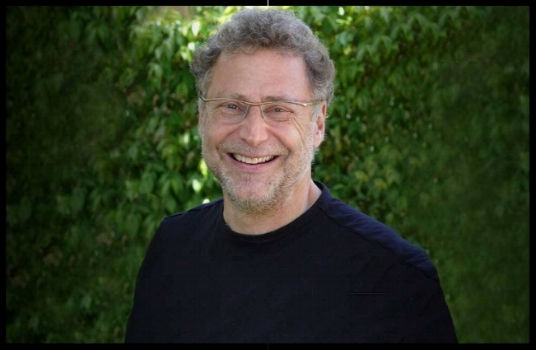
Author Leonard Mlodinow (credit).
Book Lessons:
1) How the subconscious influences marriage
“The source of love has been pondered for eons by lovers, poets, and philosophers, but it is probably safe to say that none of them has ever waxed eloquent about this particular factor: the person’s name.
”
In the book, Mlodinow shows a table containing the five most common U.S. surnames for grooms and brides. The numbers in the table show how many marriages occurred between a bride and groom with the same last names.

Chart from the book “Subliminal.”
The chart shows how Smiths marry other Smiths three to five times more often than any other surname.
And in all five cases, the most marriages occur when the bride and groom share the same last name. Mr. Williams marries Ms. Williams more often that marrying Ms. Jones or Ms. Brown.
So what does this tell us?
“People have a basic desire to feel good about themselves, and we therefore have a tendency to be unconsciously biased in favor of traits similar to our own.” write Mlodinow.
“Even such seemingly meaningless traits as our name” (pg 19) can have an impact on our decision of picking a life partner.
2) How restaurants can influence customers
“In truth, environmental factors have a powerful–and unconscious–influence not only on how much we choose to eat but also on how the food tastes.
”
When visiting a restaurant many people believe they are making the choice of what they want to eat and drink, but is that really the case?
Say you go to an elegant restaurant that has a menu with fancy food descriptions, such as “velvety mashed potatoes” and “slow-roasted beets on a bed of arugula,” as if other restaurants only served non-velvety mashed potatoes.
Adding the word velvety to the menu doesn’t change the physical structure of the mashed potatoes, but it does change the customer’s mind.
Studies show that adding modifiers to the described foods tempts customers to order it and they rate that food as tasting better than the identical foods given only a generic listing.
Not only does the restaurant menu influence people, but so does the music.
In a wine study, four French and four German wines of matching price, were placed on the shelves of a supermarket. French and German music was then played on alternative days and a record was kept of which wines customers bought.
The results?
When French music was played, 77% of the wine purchased was French. When German music was played, 73% of the wine purchased was German. Music was clearly playing a major role in which type of wine shopper bought.
However, when researchers asked shoppers if the music had influenced their choice, only about one shopper in seven said it had.

My copy of the book “Subliminal.” (No hidden messages here folks…)
3) How Expectations can impact reality
“In one line of research he showed that teachers’ expectations greatly affect their students’ academic performance, even when the teachers try to treat them impartially.
”
In one study, researchers asked students in 18 classes to complete an IQ test. However, the teachers were given the results, not the students.
The researchers told the teachers that the test would identify individuals with high intellectual potential or “gifted.”
What the teachers did not know, however, was that the kids named as “gifted” actually had average scores.
Shortly after the exam, the teachers rated the non-gifted or average students as being less curious and less interested than the gifted students, and the student’s grades reflected their rating.
But, it get more interesting.
Eight months later, another IQ test was given.
Researchers found that about half of the average kids had some gain in IQ, however, about 80% of the “gifted” students had an increase of 10 or more IQ points. Even more surprisingly, about 20% of the “gifted” group gained 30 or more points!
Compare that to the “average” group that only had 5% of students with the same leap.
Labeling children as gifted had proved to be a powerful self-fulfilling prophecy, even when both the “gifted” and “average” student groups, had the same test scores!
Bonus: The importance of touch
“Touch seems to be such an important tool for enhancing social cooperation and affiliation that we have evolved a special physical route along which those subliminal feelings of social connection travel from skin to brain.
”
In fact, scientists recently discovered a nerve fiber in people’s skin that appears to have developed specifically to transmit the pleasantness of social touch.
So how does human touch impact another person?
It helps men connect with women:
In one experiment, three young handsome men approached 240 young women and spoke the same line to them:
“Hello. My name’s Antoine. I just want to say that I think you’re really pretty. I have to go to work this afternoon but I wonder if you would give me your phone number. I’ll phone you later and we can have a drink together someplace.”
The variable in this experiment, or the only difference between the control group and the experimental group, is that the men added a light one-second touch to the women’s forearm for half of the 240 women they talked too.
The results?
When the guys give a light touch, they only got the women’s phone number 10% of the time. But, when they did touch the women, their success rate was 20%, the light one-second touch doubled their results.
Helps servers make more money:
In another experiment which involved eight servers and hundreds of customers, servers were trained to touch randomly selected customers briefly on the arm toward the end of the meal while asking if “everything was all right.”
Can you guess what happened?
The servers that didn’t touch a customer were tipped an average of about 14.5% while those that did lightly touch the customer’s arm were tipped about 17.5%.
In another study, 60% of customers ordered the diner’s special after the server touched the customer’s arm while suggesting the special, compared to 40% of those who were not touched.
Why does touch seem to have such an influence on people?
On the subconscious level, “touch seems to impart a subliminal sense of caring and connection” (pg 136).
The author points out that in all of these studies, the touches were subtle and not gropes or forceful contact with a stranger. In fact, in a debrief after the studies, less than one-third of the subjects were even aware that they had been touched.
And that is what this whole book is about, how subtle and sometimes invisible actions can influence a person’s decision without them even realizing how their subconscious rules their behavior.
Conclusion:
“Subliminal” does a great job of providing readers with countless examples of how even the smallest of changes can affect a person’s mind. From food descriptions at a restaurant to setting expectations for students, the world is filled with tiny gears that can turn the wheel on our personal behavior.
The book is exceptionally well-written and Mlodinow does a good job of keeping readers engaged by telling countless stories from scientific studies. That being said, there are a lot of studies in this book so be prepared for lots of facts and figures.
With all of the studies and stories packed into this book, I wish Mlodinow gave readers a summary at the end of each chapter or action steps for readers to use the new information they’ve learned. Aside from that critique, there isn’t much this book is missing. If you’re interested in science, specifically psychology or neurology, you should definitely read this book.
And if you’re not, you may want to consider getting this book just because it has the coolest cover of any book I’ve seen.
Rating: 4/5 Stars
If you’re interested in getting the book, click here or on the image below.
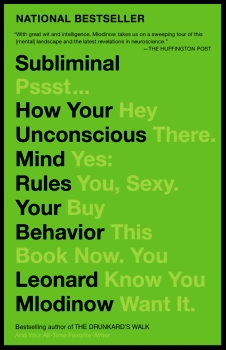
Here are a few similar books to “Subliminal”:


For literally a few dollars and hours, a book will give you an enormous amount of valuable information that can help you in life. It’s practically highway-robbery. So take advantage of this and read as much as you can.
If you want to check out my list of recommended books, you can find that here.
If you enjoyed this article, consider supporting our site or signing up for our monthly newsletter. Thank you!

The 20+ Books J.K. Rowling Recommends Reading
J.K. Rowling is the creator of the “Harry Potter” series and the world’s first billionaire author.
Want to know which books she loves and inspired her?
Here’s a list of books she recommends reading!
Joanne Rowling, better known by her pen names J.K. Rowling and Robert Galbraith, is a British novelist, philanthropist, film producer, television producer and screenwriter, best known for writing the Harry Potter fantasy series–which have sold more than 500 million copies, becoming the best-selling book series in history.
Rowling is also known for her “rags to riches” life story, where she went from living on state benefits to becoming the world’s first billionaire author.
Interestingly, she lost her billionaire status because she gave away much of her earnings to charity (that’s incredible of her to do that).

Joanne Rowling, better known by her pen name J. K. Rowling and Robert Galbraith.
Similar to other famous authors including Stephen King and Ernest Hemingway, Rowling loves to read books.
“I don’t believe in the kind of magic in my books. But I do believe something very magical can happen when you read a good book.
”
I was curious to learn which books Rowling loved or inspired her, so I did some research to find out which books the former billionaire author recommends, here is the list of the 20+ books she recommends:


“Little Women” by Louisa May Alcott
Rowling is a big fan of Little Women, saying that her “favorite literary heroine is Jo March. It is hard to overstate what she meant to a small, plain girl called Jo, who had a hot temper and a burning ambition to be a writer.”


"The Woman Who Walked Into Doors" by Roddy Doyle
"My favorite living writer is Roddy Doyle," Rowling told Amazon. This novel in particular — about a woman's relationship with a violent man — was one of the most important books in her life. "I don't think I've ever encountered such a believable, fully rounded female character from any other heterosexual male writer in any age," she told O, The Oprah Magazine.


“Grimble At Christmas” by Clement Freud
"Grimble is one of funniest books I've ever read," Rowling told Amazon. "Grimble himself, who is a small boy, is a fabulous character. I'd love to see a Grimble film. As far as I know, these last two fine pieces of literature are out of print, so if any publishers ever read this, could you please dust them off and put them back in print so other people can read them?"


“The Story of the Treasure Seekers” by Edith Nesbitt
“She’s the children’s writer with whom I most identify,” Rowling says of Nesbitt. Rowling calls The Story of the Treasure Seekers a “breakthrough children’s book” because it wasn’t a morality tale like the other children’s books of the time.


Jane Austen is J.K. Rowling's favorite author of all time, and "Emma" is her favorite of her books. "I've read all her books so many times I've lost count," she told Amazon. Of those many book-reading sessions, she said she read "Emma" at least 20 times.


“The Song of Achilles” by Madeline Miller
“I loved it.”- J.K. Rowling


"Team of Rivals" by Doris Kearns Goodwin
In 2012, Rowling described Team of Rivals as the last truly great book she read. “I lived in it the way that you do with truly great books,” she says, describing the experience as “putting it down with glazed eyes and feeling disconcerted to find yourself in the 21st century.”


“The Little White Horse” by Elizabeth Goudge
On a deeper level, Rowling was attracted to how cleverly the book was constructed, even though it seemed simple on the surface. "Perhaps more than any other book, it has a direct influence on the Harry Potter books," she told The Scotsman.


"The Diaries of Auberon Waugh" by Auberon Waugh
Auberon Waugh, son of Evelyn kept a diary between 1972 and 1985 in which he mocked the trends of the day. You may not know this, but J. K Rowling says she keeps a copy in her bathroom and “It’s always good for a giggle.”


When asked to name her favorite books as a child, Rowling said she loved "anything with a horse on it." Among those, "Black Beauty" is one of her favorite.


"Hons and Rebels" by Jessica Mitford
Rowling loves Mitford so much, she named her daughter after her. Rowling's great aunt gave her the journalistic memoir when she was 14, and she instantly became her heroine.
"I love the way she never outgrew some of her adolescent traits, remaining true to her politics — she was a self-taught socialist — throughout her life," Rowling told The Scotsman. "I think I've read everything she wrote."


"Manxmouse: The Mouse Who Knew No Fear" by Paul Gallico,
This book about a mouse who went off on epic adventures was one of Rowling's favorites when she was a child. "Gallico manages the fine line between magic and reality so skilfully, to the point where the most fantastic events feel plausible," she told the Sydney Morning Herald.


"Chéri" by Sidonie-Gabrielle Colette
Of all of Colette's books, Rowling loves "Chéri" the most. It's about a romance between a young man and her mistress. "I absolutely bow to Colette," Rowling said. "But I think if she could hear me, she would probably tell me where to get lost, because she was that kind of woman."


"I Capture the Castle" by Dodie Smith
Rowling calls "I Capture the Castle" one of her "favourite books for younger people." It's about a 17-year-old girl who lives in a castle with her family. In a recent edition of the novel, Rowling blurbed it, saying its narrator, Cassandra, is "one of the most charismatic narrators I've ever met."


"A Tale of Two Cities" by Charles Dickens
Rowling read Dickens' masterpiece in her third year of college. She shared a flat with"with an Italian, a Russian and a Spaniard," according to The Scotsman. "She found the Italian disagreeable and would avoid him by spending whole days in her room reading."


"Macbeth" by William Shakespeare
Like any British author — and any author working in the English language — Rowling loves Shakespeare. Her favorite is about a fellow Scot, "Macbeth." Its prophecy and fate-driven plot is an influence on the plot of "Harry Potter."


Rowling referenced the Greek epic at the end of "Harry Potter and the Goblet of Fire," when Harry saved Cedric's body. "That's where it came from," Rowling told Entertainment Weekly. "That really, really, REALLY moved me when I read that when I was 19. The idea of the desecration of a body, a very ancient idea… I was thinking of that when Harry saved Cedric's body."


"There are two books whose final lines make me cry without fail, irrespective of how many times I read them," Rowling told BBC Radio 4. "One is 'Lolita.'"
Like many other admirer's of Nabokov's novel of a pedophile who pursues a 12-year-old girl, Rowling loves it for the writing style.
"There just isn't enough time to discuss how a plot that could have been the most worthless pornography becomes, in Nabakov's hands, a great and tragic love story, and I could exhaust my reservoir of superlatives trying to describe the quality of the writing," she said.


“The Casual Vacancy” by J.K. Rowling
That's right, even J.K. Rowling loves J.K. Rowling, or at least she makes herself cry, too. She admitted to bawling her eyes out while writing, editing, and rereading The Casual Vacancy . That's some kind of endorsement, right?
If you don’t see any books on this list that you may want to read, here’s a piece of advice from Rowling.
“If you don’t like to read, you haven’t found the right book.
”
You may also want to check out the books Stephen King recommends reading or Ernest Hemingway’s list.
If you still can’t find the right book, here’s my personal list of great books (split up by genre): Recommended Books
And remember, books turn muggles into wizards, so go and read as much as possible!
If there’s a book on this list that you think is a must-read, let me know in the comments below. Thank you everyone! -Alex W.
This article was based on several articles. The sources can be found here, here, here, here and here.
*The links throughout this site are Amazon affiliate links. Amazon pays me a small fee from each purchase which helps keep this website up and running ad-free. It does not affect the price of your purchase in any way.*

"The Messy Middle" by Scott Belsky
Creating something from nothing is hard, but the unpredictable journey can be even harder.
This book covers how to endure the low points of building a business to how to optimize the high points and much, much more.
If you’re a business owner, entrepreneur or manager, you should read this book.
Book Summary:
“The Messy Middle: Finding Your Way Through the Hardest and Most Crucial Part of Any Bold Venture” by Scott Belsky, is an indispensable guide to navigating the volatility of new ventures and leading bold creative projects.
Creating something from nothing is hard, but the unpredictable journey can be even harder. People love talking about starts and finishes, but often ignore the middle stretch even though it is the most important and often the most misunderstood part.

The book has 100+ lessons and will help you:
• Endure the roller coaster of successes and failures by strengthening your resolve, embracing the long-game, and short-circuiting your reward system to get to the finish line.
• Optimize what’s working so you can improve the way you hire, better manage your team, and meet your customers’ needs.
• Finish strong and avoid the pitfalls many entrepreneurs make, so you can overcome resistance, exit gracefully, and continue onto your next creative endeavor with ease.
With insightful interviews from today’s leading entrepreneurs, artists, writers, and executives, as well as Belsky’s own experience working with companies like Airbnb, Pinterest, Uber, and Sweetgreen, The Messy Middle will help you find your way through the hardest parts of any bold project or new venture.
Author Bio:
Scott Belsky is an entrepreneur, author, and investor. He is currently Chief Product Officer at Adobe, serves as a board member to several early-stage companies, and is a Venture Partner at Benchmark, a leading venture capital firm based in San Francisco. He was previously the founder and CEO of Behance. He is also the creator of 99U, Behance's think tank and annual conference devoted to execution in the creative world.
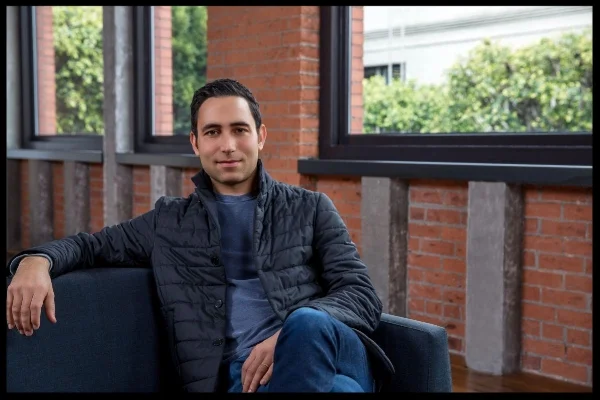
Author Scott Belsky (all images credit to Scott Belsky).
Book Lessons:
1) It’s not about the start or finish, but the journey in between
“The middle makes and breaks you, and ending up on the right side of this line depends on how you manage everything in between. It requires immense perseverance, self-awareness, craftsmanship, and strategy.
”
People love stories about success, especially about how a small team that worked really hard with little funding was able to build a startup and sell it in just a few years for millions of dollars.
However, that story is missing one very important part, the messy middle.
The messy middle is about all of the obstacles and the signed deals, the disappearing customers and the move to pivot, the employee that stole secrets and the day the team signed their first major client.
The messy middle is the journey all creative endeavors encounter, from the highest highs to the lowest lows.
For instance, take Scott Belsky’s company Behance.
He founded the company in 2006 to connect and empower creative professionals. The team bootstrapped the business for five years before one of their products gained traction and he was able to raise venture capital. He used the money to grow the business and in 2012 Adobe knocked on their doors and acquired the company.
Simple and easy right?
On the surface, yes, but the true story went something like this:
There were years at Behance when nobody beyond the team could understand or care about the work they were doing. The company was on the brink of falling apart more than once. In the early days, Scott had to take anti-nausea medication because it was the only way he could keep an appetite. In the first year, there were only four employees, each unqualified for the journey ahead, but they were the only ones crazy enough to accept the risks and join the journey.
So how did Scott Belsky manage to survive the messy middle?
That is exactly what this book is about.

The Myth of how people believe building a business works.
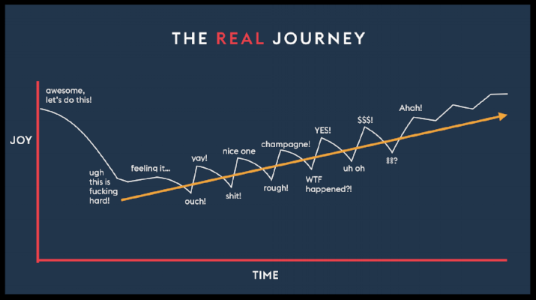
The Real Journey of how building a business looks like.
2) Resourcefulness > Resources
“Too many teams hire when they should be optimizing the people they’ve already got. You can always get more resources, but resourcefulness is a competitive advantage. Resources become depleted. Resourcefulness does not.
”
As Scott was growing Behance, his engineers had a list of people they “absolutely needed” to hire. The problem was that the designers and community management and support teams, all had similar lists as well.
Since the company was bootstrapping and had very little capital to hire anyone, Behance’s head of operations, Will Allen, advised the teams to come up with a list of process improvements they could make with their existing time to improve productivity without having to hire a new person anytime soon.
Here are a few questions you can ask your team before hiring an additional team member:
Are there better tools that could be adopted?
Can some of the work be automated?
Are there time-consuming processes that can be killed?
Scott points out that by not having the resources available to hire more people, his teams would uncover serious inefficiencies and exciting opportunities to boost productivity.
The team became more efficient before they became bigger which allowed them to attract high-quality individuals because efficient people want to work in an efficient environment.
“Resources come and go, but resourcefulness is a muscle that kicks in throughout the life cycle of any business. Without it, capital cannot be used efficiently. Focus on building your team’s resourcefulness” (pg 102).
3) Be frugal with everything except your bed, your chair, your space, and your team.
“In the process of building a business–and in life, generally–you should manage expenses carefully. But sometimes frugality backfires.
”
The author goes on to write that there are a few things in life, and business, that you should not be frugal with. For instance, given that you spend about 30% of your life in bed and since sleep is so important to being healthy and productive, you should not try to cut costs on getting a good bed.
The same goes for office chairs and desks. So people spend more time in the office sitting in their chair at their desk than they do lying in bed, so go out and find the best chair you can find.
Scott also advises companies not to be frugal with their office space. The space should be designed based on making people productive and creative, not on focusing on the cost per square foot or logistical efficiencies.
One of Scott Belsky’s mentors, James Higa, spent a lot of time with Steve Jobs through his time at Next, Apple and Pixar. James said that Steve would fly around the world to acquire Japanese American sculptures and put them in the building’s lobby just so employees could have a “daily encounter with beauty.”
Similarly, at Apple’s new Spaceship campus, Steve wanted the bathrooms to be placed in the building’s center so that it would pull people together every day and promote “serendipitous idea exchange” when nature called.
Steve Jobs had many responsibilities, including leading Apple, and yet he chose to focus on office space because he knew the importance environment and design had on employees and the company.
Lastly, don’t be frugal when it comes to paying your team, writes Scott. Sure, a company can get away with underpaying someone in the short term, but great talent will recognize their value over time and at that point, the company will have to pay the price to either attempt to save them, or worse, have to replace them.
“Your team must feel taken care of and must have no doubt that they are being rewarded as best as possible for their achievements–and then a little bit more” (pg 142).
Conclusion:
“The Messy Middle” is a wonderful guide for the entrepreneur or business owner that is growing their business and is facing, well, the messy middle. The book teaches readers how to endure the low points of hard truths, facing failure and keeping the business alive.
It also talks about optimizing the high points of the journey including what to look for when hiring people, how to design office space, and how to continue scaling the business.
This is a very brief summary, there are countless more important lessons to learn from this book.
The book also isn’t one long story, but rather each lesson has a one to three-page mini-story from either Scott’s personal experience or wisdom gained from a close friend or fellow entrepreneur, which is great because it’s not just theory, but rather filled with real world examples.
To conclude, I would highly recommend reading this book, but only for a specific audience. For instance, if you are a founder, entrepreneur, business owner or manager, then you should get this book. It will teach you how to survive and thrive through the hardest parts of growing a business. If you have yet to start a business, put this book in your cart and buy it when you do.
Rating: 4.5/5 stars
If you’re interested in reading the book, click here or on the image below.

If you’ve enjoyed this book, here are three similar great books:


For literally a few dollars and hours of time, a book will give you an enormous amount of valuable information that can help you in life. It’s practically highway-robbery. So take advantage of this and read as much as you can.
If you want to check out my list of recommended books, you can find that here.
If you enjoyed this article, consider supporting our site or signing up for our monthly newsletter. Thank you!

"The Compound Effect" by Darren Hardy
This is an incredible book that teaches the importance of small changes.
The book covers habits, productivity, and similar topics.
I’ve read this book twice and will read it many more times in the future.
Book Summary:
“The Compound Effect: Jumpstart Your Income, Your Life, Your Success” by Darren Hardy is based on the principle that everyday small decisions shape your destiny. The little decisions you make on a daily basis, will either take you to the life of your dreams or to disaster.
Darren Hardy shares lessons learned from his personal experiences and lessons from some of the most successful people on the planet, including Richard Branson, Warren Buffett and many more.
Here are a few things readers will learn from this book:
How even the smallest actions can lead to a radical positive result over time.
How to break your bad habits (some you might be unaware of) that are derailing your progress.
The real, lasting keys to motivation--how to get yourself to do things you don't feel like doing.
How to capture the elusive, awesome force of momentum.
And much more.
Author Bio:
Darren Hardy has been a leader in the personal growth and success industry for more than 20 years. He has led three success television networks and for eight years, Darren led the rebirth of SUCCESS Magazine as its publisher and founding editor.
These positions have given Darren unprecedented access to interview, investigate and publish the stories of the most successful entrepreneurs and business leaders in the world, including Richard Branson, Steve Jobs, Elon Musk, Jeff Bezos, Mark Zuckerberg, Howard Schultz, Steve Wynn, Jack Welch and many more.

Businessman, publisher of SUCCESS magazine and author Darren Hardy.
Lessons:
1) Use the Compound Effect to your advantage
“The Compound Effect is the principle of reaping huge rewards from a series of small, smart choices. What’s most interesting about this process to me is that, even though the results are massive, the steps, in the moment, don’t feel significant.
”
Darren Hardy starts the book with a story about a magic penny.
If you were given a choice between getting $3 million in cash today or a single penny that doubles in value every day for 31 days, which one would you choose?
Darren points out that the majority of people would take the $3 million today because it not only looks like the better deal, but it also takes a lot longer to see the payoff for the magic penny.
In fact, the Compound Effect of the magic penny is invisible for much of the time.
For instance, if you picked the magic penny and your friend took the other option, on day 10 your friend would have $3 million in cold, hard cash, while you would have only $5.12.
On day 20, you would have $5,243, which is a lot better than $5 but still nowhere near the $3 million dollar mark.
By day 29, you’ll have $2.7 million, almost as much as your friend’s $3 million. However, it isn’t until day 30, that your magic penny bet pays off and is now worth $5.3 million. On day 31, the very last day, your penny doubles again and is now worth a total of $10,737,418.24.
About three times more than your friend’s, now tiny, $3 million prize.

This is the power of the compound effect:
Small, Smart Choices + Consistency + Time = Radical Difference
Let’s look at another example.
Suppose your friend puts away $250 every month into an IRA (that grows 8% each year) after getting their first job after graduating college at age 23. You, on the other hand, don’t start saving until you’re 40.
By the time your friend hits 40, she’ll never have to invest another dollar and will have more than $1 million by the age of 67. You, on the other hand, will have less than $300,000 in your account, even though you invested $27,000 more than she did.

Don’t waste another day waiting to start a good habit, the earlier you start, the sooner you’ll see a positive outcome.
Both you and your friend made a small and smart choice by putting away money for retirement, and both of you were consistent with putting away $250 each month, so why did your friend have nearly three times as much money in the end?
It’s because she were able to use time to her advantage. The Compound Effect multiples your efforts so the more time you invest into a good habit, the greater outcome you’ll see.
2) Own 100% of your life
“Everything in your life exists because you first made a choice about something. Choices are at the root of every one of your results...In essence, you make your choices, and then your choices make you. Every decision, no matter how slight, alters the trajectory of your life.
”
Darren Hardy goes on to say that choices can be our best friend or our worst enemy. They can deliver us to our goals or send us into a galaxy far, far away.
Every decision, no matter how small, can change the direction of our lives.
That is why it’s so important to own 100% of your life.
The author writes that too many people point fingers, play the victim, blame the government or expect someone else to solve their problems; that is not owning your life.
People that don’t own their life will say:
I was late to an important meeting because of traffic.
My co-worker messed up the presentation, not me.
My teenage son and I don’t get along because he’s a jerk.
However, people who do own 100% of their lives will say:
I should have left my house 30 minutes earlier to make sure I wasn’t going to be late.
I should have double-checked the presentation a few days before the due date to make sure the work was excellent.
I should read parenting books about teenagers and try to bond over common hobbies.
See the difference? (This lesson is also found in “Extreme Ownership” & “12 Rules for Life”)
Darren writes that “You alone are responsible for what you do, don’t do, or how you respond to what’s done to you...If it was to be, it was up to me.”
This empowering mindset revolutionized his life.
It’s easy to blame others, make excuses, say that the economy isn’t doing well or the President is doing a bad job, but none of that victimhood mentality will help you succeed in life.
You can’t control the world or other people, but you can control yourself.
3) Avoid the Trap of Instant Gratification
“Why are we so irrationally enslaved by so many bad habits? It’s because our need for immediate gratification can turn us into the most reactive, nonthinking animals around.
”
If you took a bite of a Big Mac and immediately fell to the ground from a heart attack, you’d probably never eat one again in your life.
And if you smoked a cigarette and all the sudden your face was wrinkled and your teeth turned yellow, you’d likely quit smoking forever. Or if you ate a piece of ice cream cake packed with chocolate and frosting, and it added 30 pounds to your frame, saying “no thank you” to dessert next time would be a piece of cake.
The problem, however, is that all of these actions involve an instant sense of gratification and your mind doesn’t concern itself about the long-term consequences.
Having a burger, smoking a cigarette or eating cake, provides us with pleasure and there are no apparent negative effects at the moment.
But, as Darren Hardy mentioned earlier, the Compound Effect is always in motion, for both good and bad habits.
Even the smallest change can have a huge difference.
For instance, imagine a plane leaves from Los Angeles to New York City. If the nose of the plane is just 1% off, the plane will end up about 150 miles off course and will arrive in either Albany, New York or Dover, Delaware.

Even a small change, such as a 1% change in direction, can result in a completely different outcome. Make sure your habits are taking you in the right direction.
The same goes for habits. A single bad habit may not look like much at the moment, but over time it can lead you miles off course from the direction of your goals and the life you desire.
There’s a great quote in the book by leadership expert John C. Maxwell that says, “You will never change your life until you change something you do daily. The secret of success is found in your daily routine.”
So look at the actions and habits you take every day and ask yourself, “Is this bringing me closer to my goals or away from them?”
Conclusion:
There’s a reason this book is a New York Times, Wall Street Journal, and USA Today bestseller, it’s because this book is incredibly insightful. Darren Hardy does an excellent job of teaching readers the amazing impact of the Compound Effect and provides several analogies that really stick in the reader’s head.
The shocking part is that this book is only about 160 pages. There is no fluff or guff. It’s pure gold. I would recommend reading this book at least twice and make sure to highlight important passages, jot down notes and write down steps on how you can start changing your life for the better.
Definitely get this book, it will be going into my Book Hall of Fame.
Rating: 5/5 stars
If you’re interested in reading the book, click here or on the image below.

If you’ve enjoyed this book, here are three similar great books:


For literally a few dollars and hours of time, a book will give you an enormous amount of valuable information that can help you in life. It’s practically highway-robbery. So take advantage of this and read as much as you can.
If you want to check out my list of recommended books, you can find that here.
If you enjoyed this article, consider supporting our site or signing up for our monthly newsletter. Thank you!
Enjoying A&B?
Consider donating to keep the site up and running!