"The Messy Middle" by Scott Belsky
Creating something from nothing is hard, but the unpredictable journey can be even harder.
This book covers how to endure the low points of building a business to how to optimize the high points and much, much more.
If you’re a business owner, entrepreneur or manager, you should read this book.
Book Summary:
“The Messy Middle: Finding Your Way Through the Hardest and Most Crucial Part of Any Bold Venture” by Scott Belsky, is an indispensable guide to navigating the volatility of new ventures and leading bold creative projects.
Creating something from nothing is hard, but the unpredictable journey can be even harder. People love talking about starts and finishes, but often ignore the middle stretch even though it is the most important and often the most misunderstood part.

The book has 100+ lessons and will help you:
• Endure the roller coaster of successes and failures by strengthening your resolve, embracing the long-game, and short-circuiting your reward system to get to the finish line.
• Optimize what’s working so you can improve the way you hire, better manage your team, and meet your customers’ needs.
• Finish strong and avoid the pitfalls many entrepreneurs make, so you can overcome resistance, exit gracefully, and continue onto your next creative endeavor with ease.
With insightful interviews from today’s leading entrepreneurs, artists, writers, and executives, as well as Belsky’s own experience working with companies like Airbnb, Pinterest, Uber, and Sweetgreen, The Messy Middle will help you find your way through the hardest parts of any bold project or new venture.
Author Bio:
Scott Belsky is an entrepreneur, author, and investor. He is currently Chief Product Officer at Adobe, serves as a board member to several early-stage companies, and is a Venture Partner at Benchmark, a leading venture capital firm based in San Francisco. He was previously the founder and CEO of Behance. He is also the creator of 99U, Behance's think tank and annual conference devoted to execution in the creative world.

Author Scott Belsky (all images credit to Scott Belsky).
Book Lessons:
1) It’s not about the start or finish, but the journey in between
“The middle makes and breaks you, and ending up on the right side of this line depends on how you manage everything in between. It requires immense perseverance, self-awareness, craftsmanship, and strategy.
”
People love stories about success, especially about how a small team that worked really hard with little funding was able to build a startup and sell it in just a few years for millions of dollars.
However, that story is missing one very important part, the messy middle.
The messy middle is about all of the obstacles and the signed deals, the disappearing customers and the move to pivot, the employee that stole secrets and the day the team signed their first major client.
The messy middle is the journey all creative endeavors encounter, from the highest highs to the lowest lows.
For instance, take Scott Belsky’s company Behance.
He founded the company in 2006 to connect and empower creative professionals. The team bootstrapped the business for five years before one of their products gained traction and he was able to raise venture capital. He used the money to grow the business and in 2012 Adobe knocked on their doors and acquired the company.
Simple and easy right?
On the surface, yes, but the true story went something like this:
There were years at Behance when nobody beyond the team could understand or care about the work they were doing. The company was on the brink of falling apart more than once. In the early days, Scott had to take anti-nausea medication because it was the only way he could keep an appetite. In the first year, there were only four employees, each unqualified for the journey ahead, but they were the only ones crazy enough to accept the risks and join the journey.
So how did Scott Belsky manage to survive the messy middle?
That is exactly what this book is about.

The Myth of how people believe building a business works.
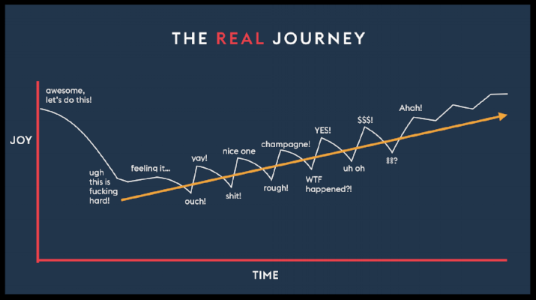
The Real Journey of how building a business looks like.
2) Resourcefulness > Resources
“Too many teams hire when they should be optimizing the people they’ve already got. You can always get more resources, but resourcefulness is a competitive advantage. Resources become depleted. Resourcefulness does not.
”
As Scott was growing Behance, his engineers had a list of people they “absolutely needed” to hire. The problem was that the designers and community management and support teams, all had similar lists as well.
Since the company was bootstrapping and had very little capital to hire anyone, Behance’s head of operations, Will Allen, advised the teams to come up with a list of process improvements they could make with their existing time to improve productivity without having to hire a new person anytime soon.
Here are a few questions you can ask your team before hiring an additional team member:
Are there better tools that could be adopted?
Can some of the work be automated?
Are there time-consuming processes that can be killed?
Scott points out that by not having the resources available to hire more people, his teams would uncover serious inefficiencies and exciting opportunities to boost productivity.
The team became more efficient before they became bigger which allowed them to attract high-quality individuals because efficient people want to work in an efficient environment.
“Resources come and go, but resourcefulness is a muscle that kicks in throughout the life cycle of any business. Without it, capital cannot be used efficiently. Focus on building your team’s resourcefulness” (pg 102).
3) Be frugal with everything except your bed, your chair, your space, and your team.
“In the process of building a business–and in life, generally–you should manage expenses carefully. But sometimes frugality backfires.
”
The author goes on to write that there are a few things in life, and business, that you should not be frugal with. For instance, given that you spend about 30% of your life in bed and since sleep is so important to being healthy and productive, you should not try to cut costs on getting a good bed.
The same goes for office chairs and desks. So people spend more time in the office sitting in their chair at their desk than they do lying in bed, so go out and find the best chair you can find.
Scott also advises companies not to be frugal with their office space. The space should be designed based on making people productive and creative, not on focusing on the cost per square foot or logistical efficiencies.
One of Scott Belsky’s mentors, James Higa, spent a lot of time with Steve Jobs through his time at Next, Apple and Pixar. James said that Steve would fly around the world to acquire Japanese American sculptures and put them in the building’s lobby just so employees could have a “daily encounter with beauty.”
Similarly, at Apple’s new Spaceship campus, Steve wanted the bathrooms to be placed in the building’s center so that it would pull people together every day and promote “serendipitous idea exchange” when nature called.
Steve Jobs had many responsibilities, including leading Apple, and yet he chose to focus on office space because he knew the importance environment and design had on employees and the company.
Lastly, don’t be frugal when it comes to paying your team, writes Scott. Sure, a company can get away with underpaying someone in the short term, but great talent will recognize their value over time and at that point, the company will have to pay the price to either attempt to save them, or worse, have to replace them.
“Your team must feel taken care of and must have no doubt that they are being rewarded as best as possible for their achievements–and then a little bit more” (pg 142).
Conclusion:
“The Messy Middle” is a wonderful guide for the entrepreneur or business owner that is growing their business and is facing, well, the messy middle. The book teaches readers how to endure the low points of hard truths, facing failure and keeping the business alive.
It also talks about optimizing the high points of the journey including what to look for when hiring people, how to design office space, and how to continue scaling the business.
This is a very brief summary, there are countless more important lessons to learn from this book.
The book also isn’t one long story, but rather each lesson has a one to three-page mini-story from either Scott’s personal experience or wisdom gained from a close friend or fellow entrepreneur, which is great because it’s not just theory, but rather filled with real world examples.
To conclude, I would highly recommend reading this book, but only for a specific audience. For instance, if you are a founder, entrepreneur, business owner or manager, then you should get this book. It will teach you how to survive and thrive through the hardest parts of growing a business. If you have yet to start a business, put this book in your cart and buy it when you do.
Rating: 4.5/5 stars
If you’re interested in reading the book, click here or on the image below.

If you’ve enjoyed this book, here are three similar great books:


For literally a few dollars and hours of time, a book will give you an enormous amount of valuable information that can help you in life. It’s practically highway-robbery. So take advantage of this and read as much as you can.
If you want to check out my list of recommended books, you can find that here.
If you enjoyed this article, consider supporting our site or signing up for our monthly newsletter. Thank you!

"The Compound Effect" by Darren Hardy
This is an incredible book that teaches the importance of small changes.
The book covers habits, productivity, and similar topics.
I’ve read this book twice and will read it many more times in the future.
Book Summary:
“The Compound Effect: Jumpstart Your Income, Your Life, Your Success” by Darren Hardy is based on the principle that everyday small decisions shape your destiny. The little decisions you make on a daily basis, will either take you to the life of your dreams or to disaster.
Darren Hardy shares lessons learned from his personal experiences and lessons from some of the most successful people on the planet, including Richard Branson, Warren Buffett and many more.
Here are a few things readers will learn from this book:
How even the smallest actions can lead to a radical positive result over time.
How to break your bad habits (some you might be unaware of) that are derailing your progress.
The real, lasting keys to motivation--how to get yourself to do things you don't feel like doing.
How to capture the elusive, awesome force of momentum.
And much more.
Author Bio:
Darren Hardy has been a leader in the personal growth and success industry for more than 20 years. He has led three success television networks and for eight years, Darren led the rebirth of SUCCESS Magazine as its publisher and founding editor.
These positions have given Darren unprecedented access to interview, investigate and publish the stories of the most successful entrepreneurs and business leaders in the world, including Richard Branson, Steve Jobs, Elon Musk, Jeff Bezos, Mark Zuckerberg, Howard Schultz, Steve Wynn, Jack Welch and many more.

Businessman, publisher of SUCCESS magazine and author Darren Hardy.
Lessons:
1) Use the Compound Effect to your advantage
“The Compound Effect is the principle of reaping huge rewards from a series of small, smart choices. What’s most interesting about this process to me is that, even though the results are massive, the steps, in the moment, don’t feel significant.
”
Darren Hardy starts the book with a story about a magic penny.
If you were given a choice between getting $3 million in cash today or a single penny that doubles in value every day for 31 days, which one would you choose?
Darren points out that the majority of people would take the $3 million today because it not only looks like the better deal, but it also takes a lot longer to see the payoff for the magic penny.
In fact, the Compound Effect of the magic penny is invisible for much of the time.
For instance, if you picked the magic penny and your friend took the other option, on day 10 your friend would have $3 million in cold, hard cash, while you would have only $5.12.
On day 20, you would have $5,243, which is a lot better than $5 but still nowhere near the $3 million dollar mark.
By day 29, you’ll have $2.7 million, almost as much as your friend’s $3 million. However, it isn’t until day 30, that your magic penny bet pays off and is now worth $5.3 million. On day 31, the very last day, your penny doubles again and is now worth a total of $10,737,418.24.
About three times more than your friend’s, now tiny, $3 million prize.

This is the power of the compound effect:
Small, Smart Choices + Consistency + Time = Radical Difference
Let’s look at another example.
Suppose your friend puts away $250 every month into an IRA (that grows 8% each year) after getting their first job after graduating college at age 23. You, on the other hand, don’t start saving until you’re 40.
By the time your friend hits 40, she’ll never have to invest another dollar and will have more than $1 million by the age of 67. You, on the other hand, will have less than $300,000 in your account, even though you invested $27,000 more than she did.

Don’t waste another day waiting to start a good habit, the earlier you start, the sooner you’ll see a positive outcome.
Both you and your friend made a small and smart choice by putting away money for retirement, and both of you were consistent with putting away $250 each month, so why did your friend have nearly three times as much money in the end?
It’s because she were able to use time to her advantage. The Compound Effect multiples your efforts so the more time you invest into a good habit, the greater outcome you’ll see.
2) Own 100% of your life
“Everything in your life exists because you first made a choice about something. Choices are at the root of every one of your results...In essence, you make your choices, and then your choices make you. Every decision, no matter how slight, alters the trajectory of your life.
”
Darren Hardy goes on to say that choices can be our best friend or our worst enemy. They can deliver us to our goals or send us into a galaxy far, far away.
Every decision, no matter how small, can change the direction of our lives.
That is why it’s so important to own 100% of your life.
The author writes that too many people point fingers, play the victim, blame the government or expect someone else to solve their problems; that is not owning your life.
People that don’t own their life will say:
I was late to an important meeting because of traffic.
My co-worker messed up the presentation, not me.
My teenage son and I don’t get along because he’s a jerk.
However, people who do own 100% of their lives will say:
I should have left my house 30 minutes earlier to make sure I wasn’t going to be late.
I should have double-checked the presentation a few days before the due date to make sure the work was excellent.
I should read parenting books about teenagers and try to bond over common hobbies.
See the difference? (This lesson is also found in “Extreme Ownership” & “12 Rules for Life”)
Darren writes that “You alone are responsible for what you do, don’t do, or how you respond to what’s done to you...If it was to be, it was up to me.”
This empowering mindset revolutionized his life.
It’s easy to blame others, make excuses, say that the economy isn’t doing well or the President is doing a bad job, but none of that victimhood mentality will help you succeed in life.
You can’t control the world or other people, but you can control yourself.
3) Avoid the Trap of Instant Gratification
“Why are we so irrationally enslaved by so many bad habits? It’s because our need for immediate gratification can turn us into the most reactive, nonthinking animals around.
”
If you took a bite of a Big Mac and immediately fell to the ground from a heart attack, you’d probably never eat one again in your life.
And if you smoked a cigarette and all the sudden your face was wrinkled and your teeth turned yellow, you’d likely quit smoking forever. Or if you ate a piece of ice cream cake packed with chocolate and frosting, and it added 30 pounds to your frame, saying “no thank you” to dessert next time would be a piece of cake.
The problem, however, is that all of these actions involve an instant sense of gratification and your mind doesn’t concern itself about the long-term consequences.
Having a burger, smoking a cigarette or eating cake, provides us with pleasure and there are no apparent negative effects at the moment.
But, as Darren Hardy mentioned earlier, the Compound Effect is always in motion, for both good and bad habits.
Even the smallest change can have a huge difference.
For instance, imagine a plane leaves from Los Angeles to New York City. If the nose of the plane is just 1% off, the plane will end up about 150 miles off course and will arrive in either Albany, New York or Dover, Delaware.

Even a small change, such as a 1% change in direction, can result in a completely different outcome. Make sure your habits are taking you in the right direction.
The same goes for habits. A single bad habit may not look like much at the moment, but over time it can lead you miles off course from the direction of your goals and the life you desire.
There’s a great quote in the book by leadership expert John C. Maxwell that says, “You will never change your life until you change something you do daily. The secret of success is found in your daily routine.”
So look at the actions and habits you take every day and ask yourself, “Is this bringing me closer to my goals or away from them?”
Conclusion:
There’s a reason this book is a New York Times, Wall Street Journal, and USA Today bestseller, it’s because this book is incredibly insightful. Darren Hardy does an excellent job of teaching readers the amazing impact of the Compound Effect and provides several analogies that really stick in the reader’s head.
The shocking part is that this book is only about 160 pages. There is no fluff or guff. It’s pure gold. I would recommend reading this book at least twice and make sure to highlight important passages, jot down notes and write down steps on how you can start changing your life for the better.
Definitely get this book, it will be going into my Book Hall of Fame.
Rating: 5/5 stars
If you’re interested in reading the book, click here or on the image below.

If you’ve enjoyed this book, here are three similar great books:


For literally a few dollars and hours of time, a book will give you an enormous amount of valuable information that can help you in life. It’s practically highway-robbery. So take advantage of this and read as much as you can.
If you want to check out my list of recommended books, you can find that here.
If you enjoyed this article, consider supporting our site or signing up for our monthly newsletter. Thank you!

"Atomic Habits" by James Clear
Learn how tiny changes can lead to remarkable results.
Find easy and proven ways to build good habits and break bad ones.
This is one of the best books on productivity I’ve ever read.
Book Summary:
“Atomic Habits: An Easy & Proven Way to Build Good Habits & Break Bad Ones” by James Clear, provides readers with a proven framework for improving themselves in both their personal and professional lives.
Clear is an expert on habit formation and teaches readers exactly how to form good habits and break bad ones, and the importance of tiny changes.
Everyone has bad habits that they want to get rid of, this book teaches you the four laws needed to replace bad habits with better ones. Clear draws on proven ideas from biology, psychology, and neuroscience to create an easy-to-understand guide for making good habits inevitable and bad habits impossible.
Readers will learn how to:
make time for new habits (even when life gets crazy);
overcome a lack of motivation and willpower;
design your environment to make success easier;
get back on track when you fall off course;
...and much more.

Author James Clear.
Author Bio:
James Clear is an author and speaker focused on habits, decision-making, and continuous improvement. His work has appeared in the New York Times, Entrepreneur, Time, and on CBS This Morning. He is a regular speaker at Fortune 500 companies and his work is used by teams in the NFL, NBA, and MLB.
His website receives millions of visitors each month and hundreds of thousands subscribe to his popular email newsletter at jamesclear.com.
Book Lessons:
1) Strive To Be 1% Better Everyday
“If you can get 1 percent better each day for one year, you’ll end up thirty-seven times better by the time you’re done. Conversely, if you get 1 percent worse each day for one year, you’ll decline nearly down to zero. ”
Clear starts his book with a story about the British cycling team, who, to put plainly, weren’t very good. Since 1908, British riders won just one gold medal at the Olympics and in 110 years, no British cyclist had ever won the Tour de France.
Then in 2003, the team hired a new performance director named Dave Brailsford.
Brailsford’s strategy was to search for tiny marginal improvements in everything the team did. His idea was that if the team could get 1% better in every aspect of cycling, it would compound into a huge advantage.
So Brailsford and his coaches made every improvement, no matter how small:
They redesigned the seats for more comfort.
Added rubbing alcohol on the tires for better grip.
Gave riders electrically heated overshorts to maintain ideal muscle temperature.
Switched racing suits for better aerodynamics.
But, it didn’t stop there.
They tested different massage gels for fastest muscle recovery.
They tested pillows and mattresses for the best night’s sleep.
And much more.
Each change made a tiny, tiny difference. But put together, the changes were enormous.
From 2007 to 2017, the British Cycling team won 178 world championships, 66 Olympic or Paralympic gold medals and 5 Tour de France victories.
The same strategy can be applied to one’s personal life, constant small improvements over time accumulate into a major positive outcome:
Saving $250 each week isn’t much, but it multiplies into $1,000 a month and $12,000 saved by the end of the year.
Going to the gym 3 times in one week won’t get you in shape, but do it every week for a year and you’ll completely transform your body.
Reading 15 pages a day is not a lot, but it accumulates into 105 pages a week, 420 a month, and 5,040 pages a year. An average book is 250 pages, so you’ll end up reading 20 books a year just from reading a little bit each day.
So remember, becoming 1% better today may not seem like much, but with time, it can make a huge difference.

How much of a difference does 1% make? If you can get just 1% better each day, you’ll end up with results that are nearly 37 times better after just one year.
2) Focus on Your Systems, Not Your Goals
“It wasn’t the goal of winning the Tour de France that propelled the British cyclists to the top of the sport...The goal had always been there. It was only when they implemented a system of continuous small improvements that they achieved a different outcome.
”
The idea of forgetting goals and focusing on systems instead is one of the most important lessons readers can learn from this book.
Here are a few problems that arise when people focus on goals:
#1: Winners and losers have the same goals.
Every athlete that goes to the Olympics has the goal of winning a gold medal, but only one will finish in first place. It isn’t the goal of winning that propels the athlete to the top of the sport, the goal had always been there.
It’s only when they implement a system of continuous small improvements (more training, better diet, etc.) that they create a competitive edge over the competition and win gold.
#2: Achieving a goal is only a momentary change.
Imagine you have a messy room and you set a goal of cleaning it. If you can summon the energy to tidy up, you’ll have a clean room and achieve your goal, but if you continue following your old sloppy habits, the room will be messy again in no time.
You’re treating a symptom without addressing the cause. What you really need to do, is to create a system of habits that keep your room consistently clean (always make your bed in the morning, put your dirty clothes in the laundry bin every night, etc). Fix the inputs and the outputs will fix themselves.
#3: Goals are at odds with long-term progress.
Having a goal-oriented mindset and create a “yo-yo” effect. Many people set the goal of running a marathon and work hard for months, but after finishing the race, they stop running because they already achieved their goal.
You see this all the time when people have the goal of losing weight. They do crazy juice diets or insane cardio workouts and eventually lose the 15 pounds they wanted, but then after hitting their goal, they go back to their old habits of eating junk and sitting on the couch all day.
Clear has a great line in the book that says, “You do not rise to the level of your goals. You fall to the level of your systems” (pg 27).
By creating a system of good habits, you’ll be able to achieve better results and create a stable long-term solution instead of focusing on reaching short-term goals that only provide a temporary solution.

Systems continue to provide results, while goals are hit-or-miss. (All images credit to JamesClear.com)
3) Design Your Environment for Success
“The most powerful of all human sensory abilities, however, is vision. The human body has about eleven million sensory receptors. Approximately ten million of those are dedicated to sight. Some experts estimate that half of the brain’s resources are used on vision.
”
For this reason, what you see can lead to a big shift in what you do.
Clear tells a story about the energy crisis of the 1970s, where Dutch researchers looked at energy usage in a suburb near Amsterdam. They found that some homeowners were using 30 percent less energy than their neighbors–despite the fact that the homes were of similar size.
So why did some owners use less electricity and others more?
Researchers found that homeowners who had the electrical meter in the main hallway of their house could easily observe and track their energy usage while others had the meter in their basement where they rarely checked their usage.
This example shows how a person’s behavior can be easily influenced by their environment, often times more than they consciously realize.
Clear then applies this lesson to everyday life.
It’s easy not to practice the guitar when it’s hidden in the closet.
It’s easy not to read a book when the bookshelf is in the guest room.
It’s easy not to take your vitamins when they are hidden in the back of the top shelf.
Once Clear learned this lesson, he set out to find ways to apply it to his daily life.
For instance, he used to buy apples because he wanted to eat more fruit. However, he stored the apples in the back of his fridge, but because they were out of sight, he often forgot about them. By the time he remembered about them, they had were already rotten.
So, Clear decided to take his own advice and redesigned his environment for success. He bought a large display bowl and placed it in the middle of the kitchen in the open where he could see the apples and easily grab one. This simple change led him from eating no apples all week to eating multiple apples a day!
Here are a few more ways people can redesign their environment for success:
If you want to practice playing guitar more often, place your guitar in the middle of your living room so it’s easier to start playing it.
If you want to drink more water, fill up a few water bottles or containers, and place them in common locations around your home.
If you want to read more books, keep a book on the nightstand near your bed so you can easily grab it and get through a few pages before going to sleep.
And for bad habits, you want to do the opposite and make things harder to do:
If you have trouble staying off your phone, leave it in the other room and turn off notifications.
If you’re wasting too much time watching television, move it to a room that you rarely go into, or better yet, sell it.
If you’re playing too many video games, unplug the console and put it in the closet after each time you play it so it’s harder to turn on next time.
“Self-control is a short-term strategy, not a long-term one,” Clear writes.
Instead of summoning a new dose of willpower every time you want to do the right thing, your energy would be better spent optimizing your environment.
The goal of behavior change is to make cues for good habits obvious while making cues for bad habits invisible. That is the secret to self-control.
Book Review:
I’d put this book in the top 3 best productivity books I’ve ever read, it’s that good.
James Clear did an excellent job with this book. It’s an easy and entertaining book to read filled with personal stories as well as scientific studies. There’s a lot of information to absorb, but each chapter ends with a summary and important lessons are repeated throughout the book.
This will definitely be a book that I will be reading more than once, that’s how much value you’ll find in these pages. I’ve already started applying a few of Clear’s lessons to my life and started seeing small, but promising results.
If you’re looking for an easy and proven way to build good habits and break bad ones (which is everyone), this book is for you. Read it, highlight it, take notes, and start applying the lessons to your life and achieve success that lasts.
Rating: 5/5 Stars
If you’ve enjoyed this article and want to get the book, click here or on the image below!

If you already read “Atomic Habits” here are some similar books I’d recommend reading:


If you enjoyed this article, consider supporting our site or signing up for our monthly newsletter. Thank you!

"Tribe of Mentors" by Tim Ferriss
This book is a collection of interviews from experts in nearly every industry.
Learn how to become a writer, why failure leads to success and why being busy is a decision.
Book Summary:
“Tribe of Mentors” by Tim Ferriss, contains shortened interviews from many of the people Ferriss grew up viewing as idols or demi-gods. The book is similar to “Tools of Titans” but covers different guests and questions.
No matter your challenge or opportunity, something in these pages can help.
Among other things, you will learn:
More than 50 morning routines—both for the early riser and those who struggle to get out of bed.
The best purchases of $100 or less (you'll never have to think about the right gift again).
How to overcome failure and bounce back towards success.
How to meditate and be more mindful (and not just for those that find it easy).
Ways to thrive (and survive) the overwhelming amount of information you process every day.
And much more.
Author Bio:
Tim Ferriss is an early-stage tech investor/advisor in Uber, Facebook, Twitter, Shopify, Duolingo, Alibaba, and 50+ other companies. He is also the author of: The 4-Hour Workweek, The 4-Hour Body, The 4-Hour Chef, and Tools of Titans. He runs the Tim Ferriss Show, which has exceeded 200 million downloads and been selected for “Best of iTunes” three years running.

Author Timothy Ferriss.
Lessons:
1) If You Want To Be A Writer, Start Writing
“I had always wanted to be a writer. So I started writing that very evening. The next day I signed up for a class at NYU in creative nonfiction writing. ”
The quote above is from an interview Tim Ferriss did with Susan Cain, a New York Times bestselling author. However, Cain didn’t pursue her passion for writing for decades. She actually went to Harvard Law School and worked as a corporate lawyer on Wall Street.
One day a senior partner in the firm told Cain that she wouldn’t be promoted to partner and Cain started crying and left the office. She went for a bike ride around Central Park and contemplated her future. She remembered that she had always wanted to be a writer so that evening she went home to write and signed up for a class at NYU the next time.
Boom.
She wanted to be a writer, so she pursed writing. Just like that.
And you may not even need school to become a writer.
Neil Strauss, an eight-time New York Times best-selling author, got rejected from journalism school earlier in his life. He looks back on this with a smile since he ended up learning through experience rather than academics and eventually became a columnist for the NYT.
So if you want to be a writer, start writing–today.

Author Tim Ferriss talking about his book “Tribe of Mentors.”
2) Failure Is Part of the Path to Success
“Adversity. Everybody spends their life trying to avoid it. Me too. But the best things that ever happened to me came during the times when the shit hit the fan and I had nothing and nobody to help me. Who are you really? What do you really want? Get out there and fail and find out.”
That quote is from Steven Pressfield, an accomplished writer who has worked in advertising, screenwriting, fiction, narrative, non-fiction and self-help. But before he was a well-known writer, he wrote for 17 years before earning his first penny from writing.
That’s right, he worked on his craft for 15+ years before finally getting paid for his work.
During those years, Pressfield taught school, drove tractor-trailers, worked on offshore oil rigs, and picked fruit as a migrant worker. Instead of looking for a life-hack or shortcut to success, Pressfield advises college students to “Get out into the real dirt world and start failing” (pg 6).
And Kyle Maynard would agree.

Kyle Maynard.
Kyle Maynard is a best-selling author and entrepreneur. He is known for becoming the first quadruple amputee to reach the summits of Mount Kilimanjaro.
When Ferriss interviewed him, Maynard said “It’s almost more difficult to think of a time when an apparent failure didn’t set me up for success. Failure is inextricably connected to any major success I’ve ever had” (pg 15).
So if you do fail, don’t fret. Pick yourself up and keep moving. Just like Pressfield and Maynard have done.
3) Being Busy Is A Decision
“If we use busy as an excuse for not doing something what we are really, really saying is that it’s not a priority. Simply put: You don’t find the time to do something you make the time to do things.”
That quote comes from Debbie Millman, one of the most influential designers of today and founder of Design Matters, the world’s first and longest-running podcast about design.
Millman says that using “I am too busy” as an excuse to not do something, is pure nonsense. People do things that they want to do, period. People will make time to watch Game of Thrones, but will be ‘too busy’ to read a book or exercise.
The problem with these excuse is that is lies to people. It can make someone believe that they are justified for not doing something that they need to do. Millman says that “If you want to do something, you can’t let being busy stand in the way, even if you are busy. Make the time to do the things you want to do and then do them” (pg 26).
Conclusion:
“Tribe of Mentors” by Tim Ferriss is an interesting book because instead of diving deeply into one subject, readers get a little peek into many different topics and gain nuggets of wisdom from a wide-range of experts.
That said, this book is a jack of all trades, but master of none–which isn’t necessarily a good or bad thing. The best way to use this book is to skim through it, and if you read something that interests you, check out the full podcast on Tim Ferriss’ website or learn more about the guest by reading their books or watching their videos.
Rating: 4/5 Stars
If you’ve enjoyed this article and want to get the book, click here or on the image below!

If you already read “Tribe of Mentors” here are some additional books by Tim Ferriss:


For literally 5 bucks and a few hours of time, a book can give you an enormous amount of valuable information that will help you in life. It’s practically highway-robbery. So take advantage of this and read as much as you can.
If you want to check out my list of recommended books, you can find that here.
If you enjoyed this article, consider supporting our site or signing up for our monthly newsletter. Thank you!

"Smarter Faster Better" by Charles Duhigg
The best-selling author of “The Power of Habit” Charles Duhigg is back with another great book
The book teaches eight tips that will make you more productive in life and business
Here are three important lessons from Duhigg’s book.
Book Summary:
“Smarter Faster Better” examines eight key productivity concepts—from motivation and goal setting to focus and decision making—that explain why some people and companies get so much done.
Drawing on the latest findings in neuroscience, psychology, and behavioral economics—as well as the experiences of CEOs, educational reformers, four-star generals, FBI agents, airplane pilots, and Broadway songwriters—this painstakingly researched book explains that the most productive people, companies, and organizations don’t merely act differently.

Author Charles Duhigg.
Author Bio:
Charles Duhigg is a Pulitzer Prize–winning investigative reporter for The New York Times and the author of “The Power of Habit” and “Smarter Faster Better.” He is a winner of the National Academies of Sciences, National Journalism, and George Polk awards. A graduate of Harvard Business School and Yale College, he lives in Brooklyn with his wife and two children.
Lessons:
1) To become more motivated, make the task a choice not a chore
“The trick, researchers say, is realizing that a prerequisite to motivation is believing we have authority over our actions and surroundings. To motivate ourselves, we must feel like we are in control.
”
Charles Duhigg writes that motivation is more like a skill, such as writing, that can be learned and honed. An important lesson to learn is that taking control of the task and making it a choice instead of a chore, will increase your level of motivation to get it done.
Duhigg writes that “When people believe they are in control, they tend to work harder and push themselves more. They are, on average, more confident and overcome setbacks faster” (pg 19).
One of the best ways to prove that we are in control is by making decisions. Each choice reinforces our perception of control and self-efficacy. Interesting, even if making a decision delivers no benefit, people still want the freedom to choose what they do.
“Motivation is triggered by making choices that demonstrate (to ourselves) that we are in control–and that we are moving toward goals that are meaningful. It’s that feeling of self-determination that gets us going. ”
In a study by the Marine Corps, researchers found that “the most successful marines were those with a strong ‘internal locus of control’–a belief they could influence their destiny through the choices they made” (pg 23).
The author goes on to say that people with an internal locus of control tend to assign responsibility for themselves, not to things outside their influence. For example, if a student with a high internal locus of control fails a test, he’ll think “I need to study harder” instead of thinking “This teacher is horrible.”
Internal locus of control has also been linked with “academic success, higher self-motivation, and social maturity, lower incidences of stress and depressions, and longer lifespan” (pg 23).
So what does this all mean?
It means you should think of ways to take control over a difficult task and take responsibility instead of doing nothing or putting the blame on outside influences.
Duhigg gives an example of when his email inbox was filled with a ton of messages, which caused him to feel overwhelmed and resulted in him procrastinating on the task. So what did he do?
He took control. He made the choice to reply to each email with just one sentence. That’s it. When he took control, he felt more motivated and the task of replying became easier and he finished his work in thirty-five minutes.
“Figure out how this task is connected to something you care about. Explain to yourself why this chore will help you get closer to a meaningful goal. Explain why this matter–and then, you’ll find it easier to start. ”
2) Use Both Stretch and SMART Goals
“SMART goals often unlock a potential that people don’t even realize they possess. The reason in part is because goal-setting processes like the SMART system force people to translate vague aspirations into concrete plans.
”
SMART goals, also known as Specific, Measurable, Achievable, Realistic and Time-bound, actually work. Duhigg found that “Some 400 laboratory and field studies [show] that specific, high goals lead to a higher level of task performance than do easy goals or vague, abstract goals such as the exhortation to ‘do one’s best’” (pg 118).
Having the good intentions of completing a goal is good, but coming up with a timeline and a way to measure success is even better.
SMART goals work best when paired with stretch goals that are often unclear and large. Stretch goals can spark innovation, writes Duhigg, but it can also cause panic or convince people that the goal is too big.
Here are a few common stretch goals: writing a book, creating a website, learning to play the guitar. These stretch goals are both exciting and frightening.
That is why it needs to be paired with a SMART system. “Stretch goals, paired with SMART thinking, can help put the impossible within reach” (pg 127).
For example, let’s say you want to run a marathon. Here is how the stretch and SMART goals would look like:
Stretch goal: Run a marathon
What is a specific subgoal: Run 10 miles without stopping
How will you measure success: Finish the run without walking
Is this achievable: Yes, if I run 3 times a week
Is this realistic: Yes, If I wake up early on Mondays, Wednesdays, and Fridays
What is the timeline: Run 3 miles this week, 4 miles next week, 5 miles...
Duhigg writes that the most important thing to take away is that people need to have a large ambitious goal and a system for figuring out how to make it into a concrete and realistic plan. By breaking a large goal into subgoals, a person can check off smaller tasks and see progress as they get one step closer to reaching their final goal.
3) Write Things Down To Better Absorb Information
“When we encounter new information, we should force ourselves to do something with it. Write yourself a note explaining what you just learned...the trick is getting ourselves to see the data embedded in those decisions, and then to use it somehow so we learn from it.
”
Duhigg writes about a 2014 published study with researchers from Princeton and UCLA that looked at the relationship between learning and disfluency by looking at the difference between students who took notes by hand while watching a lecture and those who used laptops.
The researchers found that taking notes by hand was both harder and less efficient than typing on a keyboard. Longhand is slower and hands are more likely to cramp up. Students that used laptops, however, spent less time taking notes, and yet they still collected about twice as many notes.
However, and this is a BIG however, when the researchers looked at test scores of the two groups, they found that the hand writers scored twice as well as the laptop note takers.
The research group was skeptical of the results and conducted similar experiments several times. But the answer remained the same.
“The students who forced themselves to use a more cumbersome note-taking method–who forced disfluency into how they processed information–learned more.” (pg 265). This is a useful lesson to remember for all aspects of learning in life.
Duhigg says that if a person wants to lose weight, instead of just stepping on a scale and having your weight sent to an app, physically write down your weight each day and plot it on a graph to track progress. Similarly, if you’re reading a book, write down notes in the book or on a post-it.
“When you find a new piece of information, force yourself to engage with it, to use it in an experiment or describe it to a friend–and then you will start building the mental folders that are at the core of learning. ”
Conclusion:
“Smarter Faster Better” is a book for readers who really want to know the science behind being productive. The author is an NYT reporter and writes about several scientific studies and stories based on other people’s experiences.
For that reason, readers may feel disconnected from the author because he doesn’t give much insight into how he uses the lessons learned from this book, except in the very last chapter. That’s not a knockdown, I’m simply saying if you’re looking for a personal story or journey, you might want to read “The Productivity Project.”
However, if you do like scientific studies with real science to back up lessons instead of personal experiences, then I recommend reading this book. Regardless of which book you choose to read, both will make you more productive!
Rating: 4/5 stars
If you’re interested in reading the book, click here or on the image below!

For literally 5 bucks and a few hours of time, a book will give you an enormous amount of valuable information that can help you in life. It’s practically highway-robbery. So take advantage of this and read as much as you can.
If you want to check out my list of recommended books, you can find that here.
If you enjoyed this article, consider supporting our site or signing up for our monthly newsletter. Thank you!

"The Productivity Project" by Chris Bailey
Accomplish more by managing your time, attention and energy
Learn the truth about multitasking and the importance of the Rule of 3
Become more productive and a better time manager by reading this book
Book Summary:
"The Productivity Project: Accomplishing More by Managing Your Time, Attention, and Energy" by Chris Bailey is a result of a year-long series of productivity experiments Bailey conducted on himself. He also continued research and interviews with some of the world’s foremost experts, from Charles Duhigg to David Allen.
Among the experiments that he tackled: Bailey went several weeks with getting by on little to no sleep; he cut out caffeine and sugar; he lived in total isolation for 10 days; he used his smartphone for just an hour a day for three months; he gained ten pounds of muscle mass; he stretched his work week to 90 hours; a late riser, he got up at 5:30 every morning for three months—all the while monitoring the impact of his experiments on the quality and quantity of his work.
In an eye-opening and thoroughly engaging read, Bailey offers a treasure trove of insights and over 25 best practices that will help you accomplish more.
Author Bio:
Chris Bailey, a graduate of Carleton University in Ottawa, wrote over 216,000 words on the subject of productivity on his blog, ayearofproductivity.com, during a year long productivity project where he conducted intensive research, as well as dozens of productivity experiments on himself to discover how to become as productive as possible.
To date, he has written hundreds of articles on the subject, and has garnered coverage in media as diverse as The New York Times, The Huffington Post, New York magazine, TED, Fast Company, and Lifehacker.

Author Chris Bailey.
Lessons:
1) Identify Your 3 Most Important Tasks
“That may seem like an arbitrary number on the surface, but it’s large enough to fit the main things you want to accomplish, and small enough to make you think hard about what’s important. ”
Author Chris Bailey writes that the Rule of 3 is “the absolute best technique I’ve found to work deliberately and with intention.” And the good news is that this technique is super easy to implement.
At the beginning of each day, ask yourself “If I could only accomplish three things today, what would they be?” Do the same at the beginning of each week.
That’s it.
This technique will give you direction as to what important tasks need to be completed and will keep you from getting distracted.
Here’s an example of my 3 goals:
Today:
Edit and publish a new article for Alex and Books
Go to the gym to lift weights
Watch Joe Rogan Podcast with Elon Musk (Highly recommend watching)
This Week:
Create, publish and edit a new YouTube video
Invite close friends over and catch up with everyone
Finish reading “Tribe of Mentors” by Tim Ferriss
The goals should be simple, clear, and aligned with your values. Also, it doesn’t have to be all work goals. It’s called work-life for a reason. Make sure you include things like spending time with friends, family or your significant other.
Now why is it called the Rule of 3 and not the Rule of 2 or 5?
It’s because brains are trained early on to think in threes: the beginning, middle and end; the three bears; the three musketeers; gold, silver and bronze; our minds are wired to think in groups of threes.
Try to make this a daily ritual before you go to sleep each night. I find this works best on a calendar or you can also do it on your phone. At the end of each day and week, reflect on how realistic your three goals were.
Were they too small and easy? Or were they too large and intimidating? Reflecting on your goals and accomplishments will help you become better at using the Rule of 3 and will make you more productive than ever before.
2) Identify Procrastination Triggers
“The reasons you feel so much less mental resistance to watching Netflix than you do with doing your taxes is Netflix is far less boring, frustrating, and difficult, and it’s more stimulating and structured. Because watching Netflix has almost no procrastination triggers, we don’t put it off. ”
Procrastination is human. Simply put, the more unattractive a task or project is to you, the more likely you are to put it off. There are 6 main triggers that lead to procrastination:
Boring
Frustrating
Difficult
Unstructured or ambiguous
Lacking in personal meaning
Lacking in intrinsic rewards (i.e. it’s not engaging)
The more of these attributes a task has, the less attractive it becomes and the more likely you are to procrastinate.
For example, doing your taxes likely hits at least half of these triggers. That’s probably why about 7 million taxpayers fail to file their taxes on time each year.
Here are a few ways the author fights back against these procrastination triggers:
Boring: Go to my favorite cafe and have a fancy drink while working.
Frustrating: Work for 30 minutes then take a break.
Difficult: Research ways to make the work easier.
Unstructured or ambiguous: Make a detailed plan that lists very next steps needed to finish the task.
Lacking in personal meaning: Think about how this tasks will benefit you.
Lacking in intrinsic rewards: Reward yourself $5 to spend on anything for every 30 minutes of work.
Bailey finishes the chapter by saying that readers should also be aware of the costs of not doing the thing they are procrastinating. Not doing a project will lower your GPA, not doing your taxes will result in fines, etc.
Also keep in mind that every task, no matter how intimidating, can be broken down into smaller ones, which makes it a lot easier to get started. Cleaning an entire basement can be daunting, but cleaning one-tenth of it can be easy.
So remember to ask yourself why you are procrastinating, find out your procrastination trigger, and look for ways to flip that trigger and get started on the task.
3) Have A Maintenance Day
“My Maintenance Day ritual is incredibly simple, and incredibly powerful: throughout the week, I simply collect all of my low-return maintenance tasks on a list–everything from going grocery shopping to cutting my nails–and instead of doing them throughout the week, I do them all at once.”
Similarly to the Rule of 3, this productivity technique is easy to do and very beneficial to your life. You simply collect a list of little household chores, errands, and tasks, and do them all in one day.
This can include:
Grocery shopping
Meal prepping
Trimming beard and shaving
Cutting nails
Doing laundry
Watering plants
Reviewing Rule of 3 goals
Cleaning the bathroom
Vacuuming the house
To make it even easier, you can perform your maintenance tasks while listening to music or a podcast. For me, my maintenance day is usually Saturday mornings. I like to get all of these small tasks out of the way so I can enjoy my weekend and get a fresh start for the new week.
4) Have A Brain Dump
“To summarize decades’ worth of complex neurological research in one sentence, our brains are built for solving problems, connecting dots, and forming new ideas–not for holding on to information that we can simply externalize.
”
Through his research, Bailey concludes that the brain isn’t meant to store information but rather it’s meant to solve problems. Think about it, people would rather write down phone numbers on paper or save it on their phone rather than memorize the contact info of all of their friends and family members.
Readers should apply the same method to their work. A few simple examples include:
Making a to-do list to get the information out of your brain and onto paper to give your brain more room to solve problems
Putting appointments and meetings on calendars so you don’t have to memorize the person, place and time of the event
Writing down the grocery list so you don’t forget to buy the things you needed
This is what Bailey calls a “Brain Dump.” Write down all of the things that you need to get done, it can be on a notepad, phone, or laptop. And if something new pops into your head during the day, add it to your list. Instead of memorizing that you need to buy milk, eggs and paper towels after work, just write it down to remind yourself. Your head is not for holding ideas–it’s for having ideas and solving problems.
By externalizing your tasks and writing them down, you’ll free up mental space, get organized, reduce stress and increase your focus on important tasks.
5) Multitasking Is A Myth
“Unless you’re doing totally mindless work...your brain is simply not built to focus on more than one thing at once. In fact, your brain can’t focus on two things simultaneously–instead it rapidly switches between them, which creates the illusion that you’re doing more than one thing at a time.
”
Here’s a counterintuitive truth people need to understand, just you feel productive doesn’t mean you are–and the opposite is often true. Multitasking may make you feel like you’re completing four tasks at once, but the truth is the brain doesn’t work that way.
What is actually happening, is that your brain is rapidly switching between each task which creates the illusion of doing more than one thing. The only exception where multitasking works is if the other task requires very little attention. Such as doing chores and listening to music or watching a movie and eating.
Bailey points out that several research studies all come to the same conclusion: multitasking actually makes people less productive, more prone to errors and takes longer because it costs time and attention to switch between tasks.
However, when you only do one thing at a time, you give your work the attention it deserves.
Think about it, when you finished a project or assignment that did really well, you were likely completely focused on it and not listening to music, texting a friend, watching YouTube videos and working on the project at the same time.
This can be a difficult habit to develop because of all the external stimuli in the world: social media, text notifications, emails, and other things that try to steal your attention, but remember when you invest all your attention to one task, you’ll be able to accomplish a lot more in a shorter amount of time.
Make a conscious effort to push back against a wandering mind and continually bring your attention back to your most important activity. This will actually strengthen your attention muscle over time and help you control your brain instead of it being the other way around.
Conclusion:
This is one of the best books about productivity books that I’ve read for two reasons. First, the author has put in a lot of research and talked to several experts in the field and secondly, he has a Tim Ferriss-like style where he actually performs the experiments on himself to test the research.
The author also starts each chapter with a takeaway and ends with a summary and actionable item for the reader. Both are extremely helpful to readers and make it easier to absorb the important information found in the chapter.
The book is less than 300 pages and can be read in two or three days since it is told as a story rather than a textbook style work. If you’re looking to become more productive, I’d highly recommend reading this book. And make sure to apply what you learn!
Rating: 5/5 Stars
You can get the book here or by clicking on the image below.

If you've enjoyed "The Productivity Project" or are looking for another book about productivity, I highly recommend reading "The ONE Thing: The Surprisingly Simple Truth Behind Extraordinary Results" by Gary Keller & Jay Papasan.

For literally 5 bucks and a few hours of time, a book will give you an enormous amount of valuable information that can help you in life. It’s practically highway-robbery. So take advantage of this and read as much as you can.
If you want to check out my list of recommended books, you can find that here.
If you enjoyed this article, consider supporting our site or signing up for our monthly newsletter. Thank you!
"Discipline Equals Freedom" by Jocko Willink
Life advice and thoughts from Jocko Willink–a 20 year Navy SEAL veteran turned business consultant and podcaster.
This manual will tell it to you straight, it cares only about making you better.
Book Summary:
“Discipline Equals Freedom: A Field Manual” by Jocko Willink is unlike any motivational or self-improvement book I’ve read. This manual will tell it to you straight–it doesn’t care about your feelings or about making you feel good. It cares only about making you better. Jocko doesn’t waste time talking nonsense or using filler words, he gets to the point and then moves on.
This book covers strategies and tactics for conquering weakness, procrastination, and fear, and specific physical training workouts for beginner, intermediate, and advanced athletes, and even the best sleep habits and food intake recommended to optimize performance.
Within these pages, readers will discover the keys to becoming stronger, smarter, faster, and healthier. There is only one way to achieve true freedom: The Way of Discipline. Read this book and find The Way.

Author Jocko Willink at TEDx. He gave an awesome talk, you can watch it here.
Author Bio:
JOCKO WILLINK is a decorated retired Navy SEAL officer, author of the book Extreme Ownership: How U.S. Navy SEALs Lead and Win, and co-founder of Echelon Front, where he is a leadership instructor, speaker, and executive coach. Jocko spent 20 years in the U.S. Navy SEAL Teams, starting as an enlisted SEAL and rising through the ranks to become a SEAL officer.
As commander of SEAL Team Three's Task Unit Bruiser during the battle of Ramadi, he orchestrated SEAL operations that helped the "Ready First" Brigade of the US Army's First Armored Division bring stability to the violent, war-torn city. Task Unit Bruiser became the most highly decorated Special Operations Unit of the Iraq War.
During his career, Jocko was awarded the Silver Star, the Bronze Star, and numerous other personal and unit awards. In 2010, Jocko retired from the Navy and launched Echelon Front where he teaches the leadership principles he learned on the battlefield to help others lead and win.
Lessons:
1) Discipline Equals Freedom

The title of this book is also one of its most important lessons. It may seem like a contradiction at first, but having more discipline in your life will give you more freedom.
When you have discipline, you don’t let outside factors influence your life. You will be in control of your life, not your impulses, addictions or anything else.
For example:
If you want financial freedom, you have to have financial discipline.
If you want more free time, you have to follow a disciplined schedule.
If you want to have high levels of energy and be free to go hiking or rock climbing, you need to have the discipline to eat a healthy diet.
So discipline is good, but where do you get it?
Discipline comes from within. Sure you can have someone like a drill instructor or coach force discipline on you, but that will go away once the person leaves. Instead, you need self-discipline. You need to create a fire inside you that won’t go out.
Now you might be asking, “How do I do that?”
The answer is simple. Every action you take, gives you a chance at building self-discipline.
Do you eat an apple or chocolate bar for a snack?
Do you go to the gym or stay home and watch TV?
Do you read a book before bed or do you scroll through social media?
Every decision you take, gives you a chance to build your self-discipline muscle.
2) Sugarcoated lies

Don't fall for the lies (source).
This is one of my favorite lessons and it has reached meme status on the internet.
Jocko writes about how sweet and soft donuts can be and how a lot of the time they are free. Birthday celebrations, office parties, free breakfast Fridays, free donuts are everywhere.
So if someone offers you a nice sugary donut for free, it’s basically a sign from the universe that you should eat it right?
Wrong. Dead wrong.
Jocko says that donuts aren’t food. They are poison.
It’s the same with chocolate chip cookies, cake, soda...all junk food is JUNK. It doesn’t fuel you, it literally kills you. One bite at a time.
Think about it. You get a short ‘high’ feeling, but junk food won’t help you get stronger, faster, smarter, healthier or in any way better in life.
You don’t need junk food in your life. It will tempt you, but remember, these are SUGAR COATED LIES. Use your self-discipline to say NO to junk food.
3) GOOD Mindset

How does Jocko deal with a setback, failure or defeat?
Simple, he says the word “Good.”
Jocko tells a story of when he was in the SEAL teams and one of the younger guys came to Jocko to tell him about a problem or issue, and Jocko would just say to him: “Good.”
This happened a couple of times, but then one day as the young soldier was telling Jocko about a problem, and he said “I already know what you’re going to tell me.”
So Jocko asked, “What am I going to say?”
And the young soldier replied, “You’re going to say good. That’s what you always say.”
Jocko said “Well I mean it.”
Mission got cancelled? Good. We can focus on another one.
Didn’t get the new high-speed gear we wanted? Good. We can keep it simple.
Didn't get promoted? Good. More time to get better.
Didn’t get funded? Good. We own more of the company.
Got injured? Good. Needed a break from training.
That’s it says Jocko. When things go bad, don’t get frustrated–that won’t do anything–instead say “Good.”
Jocko makes a distinction to say that being positive is better than being negative, but that still isn’t enough to solve the problem. What will solve the problem, is action.
So whatever you may be going through, if you can say the word “Good,” then guess what? It means you’re still alive and you still have the energy to fight and make things better.
“So get up, dust off, reload, recalibrate, re-engage–and go out on the attack. ”
Conclusion:
This book doesn’t have any secrets to life, but that’s the point. THERE ARE NO SECRETS or SHORTCUTS. It’s just hard work, day-in and day-out.
The entire book is also in black and white, perhaps to convey the fact that the world isn’t all sunshine and rainbows. I believe it’s also to show that there is darkness and light in the world, and it’s up to you to decide which one you will follow.
People already know a lot of lessons in this book, such as work out often and don’t eat sugar, but when it comes from Jocko, there’s a much higher chance of it sticking in your mind. I think part of it is the amount of respect people have for him. This guy wakes up a 4:30 AM every day–even on Christmas and New Years– and works out, and posts a picture on social media as proof for everyone to see.
In the end, readers will have learned at least two valuable lessons from this book. The need to build self-discipline and the need to do. Don’t just read this article and read his book, but go and do. Do the work, do what needs to be done even if you don’t feel like doing it, do what will make you a smarter, stronger and a better person in life. Now, go and GET AFTER IT!
Rating: 5/5 Stars
You can get the book here or by clicking on the image below.

If you enjoyed this book or you're a fan of Jocko, I recommend reading his other book "Extreme Ownership."

For a ten bucks and a few hours of reading, a book will give you an enormous amount of valuable information that can help you in life. It’s practically highway-robbery. So take advantage of this and read as much as you can.
If you want to check out my list of recommended books, you can find that here.
If you enjoyed this article, consider supporting our site or signing up for our monthly newsletter. Thank you!

"Mastering Fear" by Brandon Webb & John Mann
Brandon Webb, an ex-Navy SEAL, pilot, and media CEO draws on his personal experiences to demonstrate how people can master fear in everyday life
Fear is often the obstacle blocking people from success, read this book to learn how to overcome it and achieve a new level of growth
Summary:
"Mastering Fear: A Navy SEAL's Guide" by Brandon Webb and John David Mann is a book aimed mastering the natural instinct of fear. Webb draws on his experience as a Navy SEAL, pilot and media CEO as well as several successful figures to demonstrate how people can overcome fear to reach new levels of success.
For those unfamiliar with the authors: Brandon Webb is a former United States Navy SEAL and was the Head Instructor for SEAL snipers. He was deployed to both Afghanistan and Iraq. After his military career he started a media and e-commerce company that is now worth millions. He is also a New York Times bestselling author and has written several books.
The co-author, John Mann is an award-winning author whose written over 20 books that have been published in more than two dozen languages and sold more than 2 million copies. He’s also built a multi-million dollar business and has worked with Brandon Webb on several of his book.

Authors Brandon Webb and John David Mann.
Lessons:
1) Prepare More Than You Need
“In the course of one season an oak tree will drop thousands of acorns. Why? All it takes to safely reproduce itself and continue to oak species is a single acorn. So what are all those others? Rough drafts.”
When directors film a movie, they spend many hours and sometimes days filming a 1-minute scene over and over again. The same scene can be shot over twenty times, but eventually, only one clip is chosen.
So does this mean that everything else was a waste?
Not at all.
That is what it takes to make a great movie: Practice, practice, practice.
Brandon tells a story of when he was flying with his old flight instructor in a little plane he had just bought. He planned to fly it from Fort Lauderdale to Miami.
Brandon went through all the safety checks and took off. While taking off, something didn’t sound right to him. Something also smelled funny. Brandon then looked down and saw that his leg was soaking wet and fuel was squirting out into the cockpit.
This meant that Brandon and his friend were sitting in a puddle of highly flammable plane fuel in a 50+ year old plane. If even one of the radios decided to spark, Brandon and his co-pilot would be stuck in a cockpit fire.
Brandon writes that part of pilot training is the mastery of contingency plans. This means pilots run dozens or even hundreds of what-if scenarios: What to do if an engine goes out; if there’s an electrical problem; if communications go down and more.
It took Brandon only a couple of seconds to react, he immediately shut down all electrical systems, the plane was mechanical so it could still fly without it and turned the plane around towards their starting point.
Brandon writes that he didn’t have to spend time thinking about what to do because he had rehearsed this situation several times.
The same thing was done during the Osama bin Laden raid. When one of the helicopters crashed during the mission, the SEALs had planned and practiced what to do in case such a situation happens.
They had timed the mission to exactly 40 minutes, and during the actual operation, they got in and out in 38 minutes.
When you prepare more than you need and rehearse worst-case scenarios, you get one step closer to mastering fear.

The helicopter that crashed during the bin Laden raid. The SEALs still completed the mission ahead of time because of their countless hours of practice.
2) True Safety is an Illusion
“Fear is awareness of danger, right? And naturally, you want to keep yourself safe, correct? Ah, but that’s a trap! And within that trap is a secret, one that might be uncomfortable to hear but will liberate you if you let it: You’re never safe.
”
Everyone has a natural impulse for self-preservation. Fear makes us believe danger is right around the corner and we should do everything possible to protect ourselves from it. However, this isn’t possible.
There is no such thing as absolute safety. And if you try to live life as safely as possible, you’ll never really live.
Webb recalls the 2017 NYC terrorist truck attack that plowed down joggers and pedestrians and killed eight people. Webb points out that he lives just a few blocks from there and he could have been walking his dog that day. One second he could have been on the phone and hanging out with his dog, and the next boom! He’s gone.
It doesn’t even have to be a terrorist attack, people get hit by distracted drivers all the time. There are a million different ways a person’s life can end just by leaving their house.
At the end of the day, humans have no genuine control over the outcome, we all end up in the ground eventually. This doesn’t mean you don’t look both ways when crossing the street, but it does mean staying home because you’re afraid of crossing the street isn’t the solution.
“Every great gain, for humanity as a whole or for you or me in our own lives, has come about only through risk.
”

Brandon Webb with one of his planes.
3) Trust Your Gut and Jump
“Sometimes when it comes time to jump, even though you may feel the universe giving you a nudge in the ass, the world around you may be shouting at you that you’re wrong, you’re not ready, you can’t do it. Sometimes the world is right. Sometimes, though, it’s wrong. That’s a judgment call that only you can make.
”
A lot of times in life people find themselves in a situation where they know what they have to do and it feels like the universe is telling them to do it, but the people around them may try to stop them. This is why it’s important to trust your gut and jump when things feel right.
Brandon tells the story of a young mechanic named Douglas Corrigan who was inspired to fly after Charles Lindbergh flew his plane across the Atlantic. Lindbergh became an American hero and became Time magazine’s first “person of the year.”
Douglas Corrigan, on the other hand, worked for the company that built Lindbergh’s plane. He too wanted to fly solo across the Atlantic. However, the young man faced many problems. For one, he didn’t have a plane. He also didn’t have a pilot’s license or money.
So he worked on getting his license and then started working as a pilot taking people up for rides. He saved up his earnings and eventually bought himself a little plane.
Once he had his plane, he asked the Bureau of Air Commerce to approve his trip from New York to Ireland. However, they said his plane wasn’t in proper condition for the flight and denied him.
So Corrigan worked on his plane and applied again. Once again he got denied. He went on to apply five more times and got turned down each time.
But that didn’t stop Douglas Corrigan.
On July 1938, Corrigan was approved for a flight from New York to California. Except that he flew in the other direction, ‘accidentally’ of course.
Eight hours later he landed in Dublin. When flight officials questioned him, he said he must have misread his compass and simply flown in the wrong direction. When Corrigan returned to New York he was greeted as a hero and the New York Post printed a giant headline saying “HAIL TO WRONG WAY CORRIGAN!”
Corrigan is a great example of someone trusting their gut, ignoring fear and naysayers, and taking the jump into greatness. And as it turns out, Brandon Webb is actually related Douglas Corrigan (he was his great-grandmother’s cousin).
Conclusion:
"Mastering Fear: A Navy SEAL's Guide" by Brandon Webb and John Mann went above and beyond my expectations. The authors have done an excellent job with this book. Webb outlines the five steps needed to master fear and gives examples that demonstrate each step. He finishes each chapter with practice points that gives readers actionable advice and tips.
Webb does a wonderful job drawing on his combat, business, and personal experiences to illustrate his lessons and keep readers hooked. Fear will always be a part of our lives, heck it’s even part of Webb’s life and he’s a former US Navy SEAL, that is why it’s important to understand the tactics needed to overcome it.
This book is a must-read a manual to mastering fear. Each and every one of us is able to grow as a person and achieve more than we ever thought possible by triumphing over fear.
Rating: 5/5 Stars
You can get the book here or by clicking on the image below.

If you liked "Mastering Fear" or are interested in learning about Navy SEALs and Brandon Webb's life, I recommend the two books below.


If you enjoyed this article, consider supporting our site or signing up for our monthly newsletter. Thank you!
Reader freebies:

"This Way for the Gas, Ladies and Gentlemen" by Tadeusz Borowski
180 Pages
A series of short stories based on Tadeusz Borowski’s experience in the Nazi concentration camps
Step into the shoes of not just one, but multiple prisoners as well as S.S. guards in this masterpiece of literature
Summary:
“This Way for the Gas, Ladies and Gentlemen” by Tadeusz Borowski is a series of short stories based on Borowski’s personal experience in the Nazi concentration camps.
Tadeusz Borowski was born in Ukraine to Polish parents and was imprisoned in Auschwitz and Dachau from 1943 to 1945. He was arrested in April 1943 and was held in the Pawiak prison, Auschwitz, Dautmergen-Natzweiler, and finally the Dachau-Allach camp, which was liberated by the US Army in May 1945.
While much of his pre-war work was comprised of poetry, his subsequent works detailing life in concentration camps were written in prose.
His most famous work, a series of short stories called Farewell to Maria, was given the English title “This Way for the Gas, Ladies and Gentleman”. He published the book in Poland after the Second World War and since then, the stories have been classified as a masterwork of literature.
Borowski committed suicide in 1951, at the age of 28.
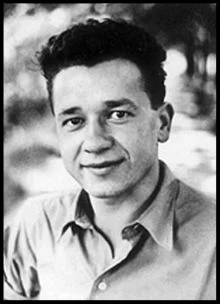
Author Tadeusz Borowski.
Lessons:
1) Hope Is A Double-Edged Sword
“It is hope that breaks down family ties, makes mothers renounce their children, or wives sell their bodies for bread, or husbands to kill. It is hope that compels a man to hold on to one more day of life, because that day may be the day of liberation.”
Borowski writes that although the prisoners were aware they were living in hell, they longed for a better world and hung on to that idea. Hope helped many prisoners hang out to life and not quit even though they didn’t know if they’d ever make it out of the concentration camps.
That hope is also what made wives sell their bodies for bread and husbands to kill; because they believed tomorrow may be the day of liberation.
However, Borowski says that hope had a dark side.
People didn’t want to give up hope when they’ve heard most people would end up in the gas chambers. Even while walking with hundreds of others towards the chambers, people still believed they were going someplace else other than the gas chambers.
They weren’t.
Hundreds, and later on thousands, of people, were sent to the gas chambers to be killed every hour. At its peak, Auschwitz alone killed 2,000-3,000 people every hour.
“It is camp law: people going to their death must be deceived to the very end” (pg 37) writes Borowski.
The majority of those people never rebelled, never attempted escape, and never fought back. They hoped for a better tomorrow, but for many, it never came.

Prisoners at the Dachau concentration camp. Borowski was held here and at Auschwitz.
2) Nazis Ran Concentration Camps Like An Assembly Line
“A number tattooed on it to save on dog tags, with just enough sleep at night to work during the day, and just enough time to eat. And just enough food so it will not die wastefully.
”
As Borowski writes, prisoners were given tattoos instead of dog tags to save money and got just enough sleep and food to survive. Everything was done in an assembly line method to maximize efficiency. The Nazis applied this strategy in the worst way possible, to kill as many people as efficiently as possible.
The Nazis rallied Jews and other ‘lesser races’ into train carts and shipped them to concentration camps. They overfilled the carts on purpose because if the people died from heat exhaustion or suffocation, it contrinbuted to their final goal.
Once at the camps, people were advised to leave their luggage in the correct pile. This way the Nazis didn’t have to spend time organizing the items. The prisoners were split up into two groups, those that could work and those that couldn’t.
The non-workers were told they were going to take a ‘shower’ and asked to undress and put their clothing and personal belongings in a pile. Again, it was easier for the guards to have the prisoners organize their own items than it would have been for the guards to organize the items from each dead prisoner.
The prisoners were collectively gassed and for maximum efficiency, furnaces were built in the same building as the gas chambers so bodies would not have to be carried far for disposal.
The Nazis then used the ashes to “fertilize the fields or fill in the ponds” (pg 131). Then, the process started over again.

Prisoners sort their belongings before being led to the gas chambers.
3) Nazi Guards Were Blind To Their Actions
““O Gott, mein Gott, was hab’ ich getan, dass ich so leiden muss?”, which means–O God, my God, what have I done to deserve such suffering?
”
This quote is from the story “The Death of Schillinger” who was the chief commander of Auschwitz. In the story, new prisoners are told to strip naked, including the women. One attractive naked woman caught the eye of Schillinger and he took her hand in hopes of having his way with her.
However, the woman grabs a handful of gravel and throws it in his face. Schillinger cries out in pain and drops his revolver; the woman then picks it up and fires several shots into him.
The entire crowd of naked prisoners goes wild and the S.S. guards beat the prisoners with clubs and drive them into the gas chambers. They then lock the doors and yell at the other guards to administer the gas.
The guards then go back to Schillinger and carry him to a car. As they are doing so, Schillinger is asking God what he did to deserve such suffering.
The story ends with the narrator talking about a prisoner revolt that occurred not too long ago. The prisoners managed to cut the barbed-wire fence and attempted to escape the camp, but the S.S. guards turned on the machine guns and killed every person without exception.
The guards that worked in these camps never thought that they were doing anything wrong. Stealing, raping and killing people became normal for the Nazis. They believed they were doing the right thing and that they didn’t deserve to get attacked by prisoners, even when they were on the edge of death.
Borowski sums it up quite well, “That man didn’t understand even to the very end...What strange irony of fate.”

Concentration camp prisoners at Dachau.
Conclusion:
“This Way for the Gas, Ladies and Gentlemen” by Tadeusz Borowski is a hard book to talk or even write about. Although the book is technically fiction, it is with no doubt based on Borowski’s personal experience in the concentration camps.
He spent two years there and saw unimaginable horrors. Children taken from mothers and led to gas chambers, young women being raped, men murdering one another, and more. Borowski manages to transport readers into the shoes of not just one Auschwitz prisoner, but many.
That is what makes this book so challenging to read. It’s only 180 pages but it took me two weeks to read. Why would anyone want to put themselves in such a horrible place?
I think it’s to remember what occurred in the past and to make sure these horrors are never repeated. Yes, reading the book is hard, but think about how hard life was for camp prisoners. Reading this book will give you a better understanding of what happened in the camps and will make you a hundred times more grateful for the life you have now.
Read it. Remember it. And make sure it never happens again.
Rating: 5/5 stars
If you’re interested in reading this book, click here or on the image below.

If you liked “This Way for the Gas, Ladies and Gentlemen” I'd recommend reading "Man’s Search for Meaning" by Viktor Frankl.
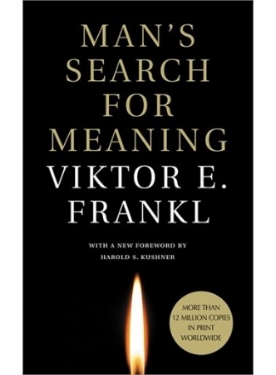
Please consider supporting our site here or signing up for our monthly newsletter here. Thank you!
Reader freebies:
Try Audible and get two FREE audiobooks!
Get a FREE month of unlimited kindle reading and listening here!

"The Aquariums of Pyongyang" by Chol-Hwan & Rigoulot
Pages: 238
For: People interested in learning about life in North Korea, concentration camps, and stories of survival
Lesson: Learn how one man spent ten years in a North Korean concentration camp, escaped and lived to tell his story
Summary:
“The Aquariums of Pyongyang” by Kang Chol-hwan and Pierre Rigoulot is a memoir that reveals the truth about North Korea’s concentration camps, government and life inside the hermit kingdom.
Author Chol-hwan was born in 1968 in Pyongyang, North Korea. At age 9, he was sent, along with his family, to Yodok Concentration Camp after his grandfather was accused of treason. He spent 10 years in the prison camp. Inside, he suffered from brutal living conditions, starvation and hard labor. To survive he had to eat whatever he could, including rats, insects and worms. As a child at camp, he witnessed unimaginable horrors and saw both children and adults die from work accidents and public executions.
After being released, Mr. Kang was suspected of illegally listening to South Korean radio stations and decided to escape to North Korea. He crossed into China in 1992 and eventually reached South Korea. In 2000, he published the autobiographical “The Aquariums of Pyongyang.”
Pierre Rigoulot is a journalist, historian, and human rights activist. He is the author of numerous books on the history of political repression and contributed the North Korean chapter to the bestselling “The Black Book of Communism.”

Authors Kang Chol-hwan (left) and Pierre Rigoulot.
1) North Korea is filled with police, Informants & surveillance
“In North Korea, a country of 22 million, the police survey every aspect of the citizenry’s life. No travel without authorization. No news that’s not vetted first. A single, mandated ideology, exalting self-sufficiency–even when calling for international aid. Extensive prisons and camps scattered throughout the country. Its economy, modeled after Stalin’s Soviet Union–controlled, centralized, collectivized.”
When I read this quote, “The Gulag Archipelago” by Aleksandr Solzhenitsyn popped into my mind, and it turns out these two books have a lot in common. Both authors talk about the constant state of surveillance and policing in their countries.
Chol-hwan writes that “Since North Korea has always maintained that war is imminent and that enemies are everywhere...little surprise, then, that our school buildings were under twenty-four-hour surveillance” (pg 64).
Even after being released from the concentration camp, Chol-hwan and his family were constantly being watched, by both security agents and “ubiquitous snitches, who were just as plentiful on the outside as they had been in the camp. Everyone in North Korea, of course, is under surveillance; as for former prisoners, ours was just a little tighter” (pg 162).
Just as in the Soviet Russia where Solzhenitsyn said one in four people were informants, Chol-hwan writes “informants were at every turn. There was no one to confide in, no way to tell who was who” (pg 77). Chol-hwan continues by saying that within a few months, he had developed a sixth sense–a snitched radar if you will.
He also says that prisoners were usually picked for the job of being an informant without being asked for his or her opinion and in most cases, the person is not proud of having that job. It took Chol-hwan some time to realizes that these snitches were more victims of the systems rather than agents of voluntary evil.

Political prison camps throughout North Korea (source).
2) Education in North Korea is Radically different from the West
“Training the revolution’s little soldiers was given first priority. Like students everywhere in the world...we studied arithmetic, drawing, music, performed gymnastics, and so on. But above all, we were taught about the morals of communism and the history of the revolution of Kim Il-Sung and Kim Jong-il.”
In addition to learning about communism and the history of the revolution, Chol-Hwan and his classmates were demanded to learn ‘important dates’ such as on what hour and day their leader was born and which speeches he gave on certain dates.
Chol-hwan and his friends were taught that “Kim Il-sung and Kim Jong-il were perfect beings, untarnished by any base human function.” He goes on to say that “I was convinced, as we all were, that neither of them urinated or defecated” (pg 3).
“I had been made to believe–and indeed wanted to believe–that the Democratic People’s Republic of Korea was the best country in the world. I looked up to Kim Il-sung as a god.”
For afterschool activities, students could join the Pupil’s Red Army, where students were given fake machine guns and learned how to form ranks and march. In high school, students were taught how to hide from enemy planes, memorized emergency air-raid instructions and how to steer the population to the nearest air-raid station.
However, once Chol-hwan entered the concentration camps, things got much worse. Teachers often beat the students for almost any reason. One teacher, sometimes punished his students by making them stand naked in the courtyard all day with their hands behind their backs. Another form of punishment was latrine duty where students had to empty and clean the septic tanks for a week.
Chol-hwan remembers an event when an instructor beat up a student so savagely that the student wobbled when he tried to stand up and fell into a septic tank. The student was so weak after being punched and kicked by the instructor, that he couldn’t get out of the tank. None of the students helped the poor kid, and after a long struggle, the student finally managed to crawl out. However, even when he got out, no one came to help him wash up or bandage his wounds. A few days later the student died.
When the student’s mother came to see the teacher, the teacher replied by saying her son deserved the punishment he got and that he wasn’t responsible for the child's death. Chol-hwan remembers that same teacher saying “Since your parents are counter-revolutionaries, they deserve to die, and you, their children, along with them” (pg 68).

Chol-hwan meets to President George W. Bush to discuss human rights abuses in North Korea.
3) A Strong Will Is Needed To Survive The Camps
“The key was to take advantage of the fall, when fruit and vegetables could still be found, to consume like bears in hibernation, eating enough to get through winter and fight through spring. That’s the most important thing I learned in school.”
Chol-hwan goes on to say that he didn’t learn that from his teachers, but rather from his fellow students, some of whom had been in the camp for close to three years. They also told him that to survive, he should steal corn and soybeans during the fall and save them for winter and spring.
The author and his classmates would eat whatever they could find in the camps. This included frogs and their eggs, salamanders, and rats...lots of rats. Since they reproduced so quickly, rats were the only food product in the camp that was never in short supply.
Chol-hwan writes that fighting malnutrition was more punishing than mistreatment by the guards, likely because guards would strike fast and quick while hunger was slow and lasted for days if not weeks.
To survive in the camps, Chol-hwan had to develop a strong will to live. He says that the more he rubbed shoulders with death, “the more I desired to stay alive, no matter the cost” (pg 103). He adds that he developed “a savage will to live” and although he was faced with constant hunger, cruelty from the guards and horrendous work conditions, his desire to live remained strong and he went on to survive life in the camp.
4) Corruption is rampant in North Korea
“North Korea is a total sham. Officially, it outlaws private business, but in the shadows it lets it thrive. Since there are hardly any markets, merchants warehouse their Chinese products at home and sell them to their neighbors and acquaintances. This farce is the only thing preventing the bankruptcy of the North Korean state and the pauperization of its citizenry.”
Throughout the book, Chol-hwan gives several examples of corruption in North Korea and how both residents and government authorities turn a blind eye to the matter.
When Chol-hwan’s family members from Japan came to visit North Korea, the government would have Security Force agents monitor the family to make sure no mention of the camps were made. However, Chol-hwan writes that if he wanted to have a private discussion, he “only needed to give the agent a little money to go for a walk” (pg 181).
Chol-hwan even had a connection with a certain Security Force agent that “usually took care of my bureaucratic needs in exchange for gifts and loans”. He goes on to say that the agents enjoyed sending people back to the camps and that “Gifts were the only way to keep the agents at bay, and by this point the gifts had to be both lavish and plentiful” (pg 184).
Not only could gifts buy agents, it could also buy judges.
Chol-hwan’s friend once ran over a group of soldiers while speeding in a car going 70 mph. He was then arrested and sentenced to death but was released after serving three months in prison. Chol-hwan writes that with the aid of refrigerators, color televisions, and large envelopes of cash, his friend was able to bribe the judge and get the case dismissed.

Chol-hwan talks about his time in North Korea's gulags.
5) Even concentration camps can be somewhat nostalgic
“I think I was actually afraid of leaving that place, of no longer seeing those mountain ridges all around me. Deep down, I had come to love them. They had been the bars of my prison and the framework of my life. They were my suffering and my being, bound indissolubly together.”
This was one of the most shocking parts of the book. In all of the books I’ve read about concentration and POWs camps, no one said they felt sad about leaving the camp. But for Chol-hwan I think it was different because he literally grew up in the Yodok concentration camp. He was sent to the camp at 9 years old and spent 10 years of his life there.
The camp contained many of his childhood memories.
He goes on to write, “My most poignant memories were attached to the place where I had suffered the most. It was a strange, complicated feeling, for Yodok was still a hellish, inhuman place” (pg 159).
Upon further contemplation, Chol-hwan identifies that “the day-to-day struggle for life at camp number 15 was no cause for nostalgic sentimentality” but “I was going to miss the places, the people, the friendships, the shared moments” (pg 159).
BONUS: North Korea’s National Soccer Team Was Sent To Camps

The 1966 North Korean soccer team.
Yes, you read that right.
Chol-hwan writes that he met Park Seung-jin–a North Korean soccer player who played in the 1966 FIFA World Cup–at the Yodok concentration who told him the story of the 1966 World Cup in England.
At the tournament, the North Korean team won 1-0 against Italy and the players went out on a wild drinking binge to celebrate their victory. The players drank long into the night and were seen out in public with some girls.
Two days later, the team hadn’t fully recovered and lost 5-3 to Portugal.
Upon arriving in Korea, the whole team–except for one player who was sick and stayed in the hotel that night–was sent to the camps. Chol-hwan writes that by the time he arrived at Yodok, the former soccer player had already been there almost twelve years.
The worst part is that he was still there when Chol-hwan left the camp. Meaning he was in a concentration camp for over 20 years. That’s 240 months of hell for losing one soccer game...
Conclusion:
“The Aquariums of Pyongyang” (2001) by Chol-Hwan and Rigoulot is an incredibly insightful book that reveals the truth about life in North Korea and its concentration camps. Overall, this book is packed with interesting stories and lessons. It’s well-written and the 230 or so pages fly by. There aren’t any dull moments and the author even manages to sprinkle humor throughout the book.
One of the most mind-numbing parts of this book is that the author was sent to the camps as a child and spent ten years of his life there. He literally grew up in the camps.
Most of us have fond memories of our childhood home, playing with kids in the neighborhood and going to school. Chol-Hwan had the same experiences, but his childhood took place in the Yodok concentration camp of North Korea.
Although I’ve read other books about concentration camps, this book offered new insights and a unique look into life in North Korea and how the state functions. The book also teaches readers how propaganda, education, and surveillance are all controlled by the state and used to keep North Korean leaders in power. Readers will also learn about the extreme corruption and poverty in the country.
Concentration camps are a horrible creation. Whether it is a Nazi, Soviet, or North Korean camp, it should not exist. I’m not suggesting we go fly to North Korea to protest or go to war with the country, but as Chol-Hwan writes in his book, the first thing we can all do is educate ourselves about the truth of North Korea and spread the facts about the country to as many people as possible.
People can also help by supporting Chol-hwan’s charity North Korea Strategy Center, that’s focused on providing a platform for North Korean voices. Their programs empower North Koreans within the country with access to information, while supporting defectors outside of North Korea with leadership development programs and international support networks.
Rating: 5/5 stars
If you're interested in getting the book, click on the book below!

- Book: “The Aquariums of Pyongyang”
- Pages: 238
- For: People interested in learning about life in North Korea, concentration camps, and stories of survival
- Lesson: Learn how one man spent ten years in a North Korean concentration camp, escaped and lived to tell his story
If you enjoyed "The Aquariums of Pyongyang" I recommend reading "The Forgotten Highlander" by Alistair Urquhart. Click on the book below to learn more.

If you enjoyed this article, consider supporting our site or signing up for our monthly newsletter. Thank you!
Reader freebies:
Enjoying A&B?
Consider donating to keep the site up and running!