Top 10 Favorite Books of 2017
A lot of reading was done in 2017, in fact, I’ve managed to read 35 books. Here are my top ten favorite books of 2017 (in no particular order), enjoy!
A lot of reading was done in 2017, in fact, I managed to read 35 books. Most of the books were great, but a select few were truly amazing. These books were engaging, informative, and insightful. Here are my top ten favorite books of 2017 (in no particular order), enjoy!
10)

Book: "Zero To One" by Peter Thiel
Pages: 224
For: Anyone interested in creating or investing in startups, and understanding what successful startups have in common
Lesson: Gain a new perspective on business, learn what makes certain startups successful while others fail
9)

Book: "How To Win Friends & Influence People" by Dale Carnegie
Pages: 288
For: People interested in making a good first impression and building social relationships
Lesson: Learn how to become a great conversationalist, build social bonds, and communicate your ideas in a positive manner
8)

Book: "What Every BODY Is Saying" by Joe Navarro
Pages: 272
For: Anyone interested in psychology and wants to understand people's true thoughts and intentions
Lesson: Learn the meaning of body language and people's true feelings from an ex-FBI recognized expert on nonverbal behavior
7)

Book: "Grit" by Angela Duckworth
Pages: 352
For: People interested in learning about the traits and mindset needed to become successful in life
Lesson: Learn how people can become successful in life regardless of talent or I.Q., and the traits that help people accomplish incredible achievements
6)

Book: "Mindset" by Carol Dweck
Pages: 320
For: Anyone who wants to learn how to realize their own potential to the fullest
Lesson: Learn about the different mindsets of people and how you can change your mindset to fulfill your potential from one of the world's leading researchers in the field of motivation
5)

Book: "The War Of Art" by Steven Pressfield
Pages: 190
For: Anyone who is in a creative career or wishes to become a professional in a creative field
Lesson: Tips and advice on how to defeat fear and self-doubt and achieve your creative goals
4)

Book: "The Subtle Art Of Not Giving A F*ck" by Mark Manson
Pages: 224
For: Anyone interested in self-development or seeking a new perspective on life
Lesson: Embrace your faults, define your values and purpose and live a fulfilling life
3)

Book: "Trust Me I'm Lying" by Ryan Holiday
Pages: 352
For: Anyone interested in learning about the truth about online media
Lesson: Learn how online media, such as blogs, can be easily manipulated, how fake news spreads, and how corporations take advantage of the news
2)

Book: "How To Read Literature Like A Professor" by Thomas Foster
Pages: 336
For: Anyone interested in learning how to interpret literature and its deeper meanings
Lesson: Learn how to properly read and interpret literature to understand the deeper meaning behind literary devices such as setting, symbols, themes and more.
1)

Book: "Tools of Titans" by Tim Ferriss
Pages: 736
For: There is something for everyone in this book
Lesson: Learn the stories and strategies to success from billionaires, famous authors, professional athletes, business leaders, and icons.
Thank you for reading. If you're looking for more book recommendations, click here!





"On Writing Well" by William Zinsser
- Book: "On Writing Well" by William Zinsser
- For: Anyone who wants to improve their writing
- Lesson: Learn how to write better
- Book: "On Writing Well" by William Zinsser
- Pages: 336
- Lesson: Learn how to write better
- For: Anyone who wants to improve their writing
Most people that know English can read and speak the language with ease but almost everyone has trouble when it comes to writing.
But whether you’re a businessman, politician or high school student, it is important to know how to write well so that you can express yourself, communicate clearly, and make sure people read what you’ve written.
This is what William Zinsser teaches in his book “On Writing Well,” which has sold millions of copies.
Zinsser worked at The New York Tribune and at Yale where he taught students how to write. By the end of his career, he had written 15 books.

Author William Zinsser
So what lessons can we learn from Zinsser’s book?
The first part of the book begins by teaching the principles of good writing. Just like in sports, before you want to play the game, you must learn the rules to it.
The principles include learning how to make your writing simple, free of clutter, and which words you should use and avoid.
“You must know what the essential tools are and what job they were designed to do.”
One way to accomplish this is by studying famous writers.

Ernest Hemingway and Leo Tolstoy
“Make a habit of reading what is being written today and what has been written by earlier masters…and trying to figure out how they did it. ”
In part two of the book, Zinsser shares lessons on writing in unity, having a good lead and ending, and writing with proper grammar and punctuation.
Zinsser writes that “the most important sentence in any article is the first one. If it doesn’t induce the reader to proceed to the second sentence, your article is dead” (Page 55).
When it comes time to end the piece Zinsser writes, “if you presented all the facts and made the point you want to make, look for the nearest exit” (Page 66).
The third part of the book is focused on specific forms. Here Zinsser teaches readers how to write about people you’re interviewing, places you’re traveling to and writing about yourself in a memoir.
When writing a travel piece Zinsser advises readers to not ask the tourists what they think of the attraction, but instead ask those who work there or the locals. The tourists visiting have only been there for a few hours or days, but the people who live there have been there for years or sometimes decades.
“By interviewing local men and women…I tapped into one of the richest veins waiting for any writer.”
Zinsser also goes into detail on how to write about science, business, art, sports, and humor.
When writing about movies, books or art, Zinsser believes only people who love the medium should review it.
“The reader deserves a movie buff who will bring along a reservoir of knowledge, passion and prejudice. It’s not necessary for the critic to like every film; criticism is only one person’s opinion. But he should go to every movie wanting to like it. If he is more often disappointed than pleased, it’s because the film has failed to live up to its best possibilities.”
In the last part of the book, Zinsser gives advice on how to find your voice, face the fear and enjoyment of being a writer, and what it means to be a nonfiction writer.
To find your voice, Zinsser tells readers to once again, study great writers.
“Don’t worry that by imitating them you’ll lose your own voice and your own identity. Soon enough you will shed those skins and become who you are supposed to become.”
And when it comes to being an excellent nonfiction writer, one must chase their interests.
“If a subject interests you, go after it, even if it’s in the next county or the next state or the next country. It’s not going to come looking for you.”
Overall, whether you’re a student, scientist, or businessman, Zinsser’s book can help everyone become a better writer!

If you enjoyed this article, consider supporting our site or signing up for our monthly newsletter. Thank you!
Reader freebies:

"The Storytelling Animal" by Jonathan Gothschall
- Book: "The Storytelling Animal" by Jonathan Gothschall
- Pages: 272
- For: People that are interested in English, history, or psychology
- Lesson: Learn the purpose of why humans tell stories
- Book: "The Storytelling Animal" by Jonathan Gothschall
- Pages: 272
- Lesson: Learn the purpose of why humans tell stories
- For: People that are interested in English, history, or psychology
Human beings are animals, and like all animals, they've evolved to become as strong and fit as possible. To survive, early humans had to find new methods of hunting and gathering food. Some humans developed tools such as daggers and spears to improve their success in hunting. Others learned to farm and produce crops.
But why did humans develop the ability to tell stories instead of continuing to focus all their energy on tasks that would lead to more food?
Wouldn’t it make more sense that early humans would spend as much time as possible gathering food, building shelter, and reproducing instead of spending time telling stories? So far, no scientist has found the ability of storytelling in any other animal species aside from humans.
So why do humans tell stories? This is the question writer Johnathan Gottschall answers in his book, “The Storytelling Animal.”
Gottschall says that people are addicted to stories, even when sleeping, the mind continues to tell stories in the form of a dream.
This is because humans have evolved to crave story. It allows listeners to simulate worlds so that they may live better in this one. Stories give pleasure and instructions to the audience. It is a device that helps people escape from the boredom and brutality of real life.
Stories can be used to teach the next generation by passing down critical information in an entertaining method. The audience enters the story as the protagonist and is able to learn from the character’s achievements and mistakes, without taking any action themselves.
Stories also help bond communities. Each country has its own folk tales, myths, and legends. Each religion has a story of its deity and how the world was created. Story is a form of social glue that brings people together around common values.
As with all great tools, there is a darker use for stories. Gottschall writes about how some religions have followers who become extremists because they believe in a certain story. Other individuals, like Hitler, used stories to spread propaganda throughout Germany and used his storytelling ability to convince an entire country that Jews were an inferior race.
While stories have evolved over the centuries, it still plays a large role in people’s lives. Stories can be found in books, movies, plays, newspapers, video games and more. As time goes on, the way stories are told will continue to change but the purpose of stories will not.
If you're interested in reading the book, click below!

If you enjoyed this article, consider supporting our site or signing up for our monthly newsletter. Thank you!
Reader freebies:

"Made To Stick" by Chip & Dan Heath
Book Review: Made To Stick by Chip & Dan Heath
Book Review: 'Made to Stick' by Chip Heath & Dan Heath
In today’s world, it seems that urban legends, conspiracy theories, and gossip spread effortlessly, while the truth has a difficult time catching up.
Important ideas such as discoveries in medicine, technology, and politics, often have a harder time reaching the public. Why do some ideas thrive while others die, is the question authors Chip Heath and Dan Heath attempt to answer in their book ‘Made to Stick.’

Authors Chip & Dan Heath
The book serves as a guide that shares the six key qualities needed to make an idea or story stick. These six qualities are simplicity, unexpectedness, concreteness, credibility, emotional, stories. Better known in the book as S.U.C.C.E.S.
The first principle is simplicity. An idea must be stripped down to its core and be both simple and profound. The message should be similar to a proverb. A short statement that a person could spend a lifetime learning to follow, such as, the ones who are crazy enough to change the world are the ones that do.
The second principle is unexpectedness. One method is to use surprise and tell the readers something they weren’t expecting. But, for the idea to endure, one must generate interest and curiosity. This can be done by beginning a story with a mystery, so that the audience has to stay along for the ride until the end.
The third principle is concreteness. Ideas should have concrete images and words. This requires communicating in a universal language and avoiding the ‘curse of knowledge.’ This occurs when a person is highly trained in one area and assumes everyone she is speaking to is an expert in the same space. For example, a CFO explaining the company’s tax savings in detail to a group of people who don't have a background in accounting.

The fourth principle is credibility. People are more likely to believe an idea if it comes from a credible source. This can require live examples or data and statistics. It also helps to be a person of authority, or have external credibility from an organization.
The fifth principle is emotional. For an idea to stick, it must create a strong feeling with the person. One method for doing so is by creating empathy for specific individuals. Associate the idea with things people already like and appeal to their self-interest. This is why charities tell people their donations will go to helping this one girl named Delu, instead of towards the entire country Rwanda.
The final principle is stories. Stories embody most of the SUCCES framework. A story should be simple and concrete, have an element of surprise, and evoke strong emotions.
For each key principle, the Heath brothers provide a case study of a story before and after applying the SUCCES framework. Readers can see how stories differ and apply the knowledge to their own cause.
Whether a person is a researcher, journalist, or any other occupation, if there is an important idea that people should know about, applying the six principles from this book will transform the way people communicate ideas.
If you're interested in read this book, click below!

If you enjoyed this article, consider supporting our site or signing up for our monthly newsletter. Thank you!
Reader freebies:

"David and Goliath" by Malcolm Gladwell
Book Review: David and Goliath by Malcolm Gladwell.
Book Review: 'David and Goliath' by Malcolm Gladwell
In the classic biblical tale of David and Goliath, most people interpret the battle as an underdog story of a feeble shepherd against a gigantic warrior. The young shepherd defeats the mighty warrior with only a stone and sling. Since then, the story has come to represent battles between underdogs and giants.
Almost everyone believes that David’s victory was miraculous. But, Malcolm Gladwell disagrees.
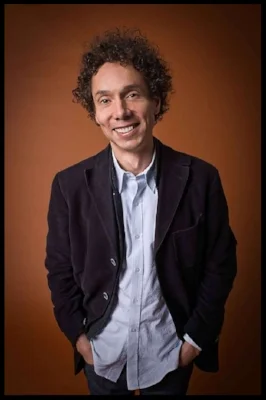
Author Malcolm Gladwell
In his book “David and Goliath,” Gladwell challenges how people view obstacles and disadvantages, and shows how sometimes a person’s perceived weaknesses can actually be their greatest strength.
Gladwell starts his book by reexamining the fight between David and Goliath. Gladwell argues that David actually had the upper hand in the fight for a variety of reasons.
First, David had used a sling, a weapon which can hurl rocks at incredible speeds and hit targets up to two hundred yards away. David had experience with the sling, as this was his weapon of choice for fighting off lions and bears. David also had no armor, so he could move quickly and freely without any additional weight slowing him down.
Goliath, Gladwell argues, was at a disadvantage because of his weight and choice of weapon. Goliath was wearing a full suit of armor, which meant an additional hundred pounds that he had to carry, and a sword. Goliath wasn’t expecting a long-distance fight, he was prepared for close-range combat.

Gladwell goes through several examples of ‘disadvantages’ such as dyslexia, race, and loss of parents, and shows how certain individuals actually attribute their success in life to their disadvantages.
Just as there are times when a perceived weakness can actually be a strength, there are times when an advantage can actually be a disadvantage.
To make his point, Gladwell using the example of a student pursuing a STEM major at Harvard.
Most people would believe that getting into an elite and prestigious school such as Harvard, instead of a liberal arts school such as Hartwick, to pursue a STEM major would be an advantage, but Gladwell has the statistics to prove otherwise.
Gladwell found that although the bottom third of Harvard students had higher SAT scores than the top third of Hartwick students, the Harvard students had a lower likelihood of getting a STEM degree.
The SAT scores of the bottom third of Harvard students was 581, compared to the top third of Hartwick students which had a score of 569. Yet, only 15.4% of those Harvard students graduated with a science degree compared to 55% of the Hartwick students.
After pondering on these results, Gladwell realized that it isn’t how smart a student is, but how smart they feel relative to their fellow classmates.
Gladwell goes on to another study that shows that the best students from mediocre schools were almost always more likely to be hired than good students from the very best schools.
The world can be a complicated and complex place, sometimes one’s greatest weakness can be their greatest strength and vice versa. Although challenging, Gladwell’s book does a compelling job of explaining these phenomena through the use of history, psychology, and powerful storytelling.
Thank you for reading. If you're interested in reading the book, click below!

If you enjoyed this article, consider supporting our site or signing up for our monthly newsletter. Thank you!
Reader freebies:

"You Are A Writer" by Jeff Goins
Book Review: You Are a Writer by Jeff Goins
Each person has a story, whether that be their life story or a fiction story that they thought of as a kid. However, most of these stories are never heard because few people choose the grueling and difficult career path of being a writer. But, for those that are looking for inspiration or motivation on their journey, Jeff Goins’ book You Are A Writer, is here to help.
At roughly 130 pages long, Goins book is incredibly short. But in the case of this book, less really is more. Goins cuts out any unnecessary information and only keeps what readers will find to be helpful.

Author Jeff Goins
Goins starts the book by saying that the world is filled with closest artists and authors–people who want to pursue a creative craft but are afraid they will fail. To overcome this, one must believe in themselves and start acting like the person they’re supposed to be. Goins writes that before anyone else will believe in you, you must first believe in yourself.
A person must declare themselves a writer and accept the fact that although they are starting from the bottom as a beginner, they will have the opportunity to grow and make their craft into something great, if they are willing to put in the time and work.
Once a person proclaims themselves a writer, the next step is, unsurprisingly, to start writing. However, this doesn’t mean waiting till one feels motivated or inspired. It means, writing every single day, without excuses.
Just as professional weightlifters workout every day, writers must do the same. As with all muscles, even creative ones, the muscle gets stronger the more one practices.
Goins writes that there will be pain in the beginning. There will be days when you don’t want to write, and there will be days when have almost no time, but good writers must practice.
Professional writers take the time to write, craft and edit their piece until it is right. Then they spend hours or days revising it. Finally, they must be able to take criticism and feedback in a positive light, and use it to make their work better.
This may be harsh advice to people who believe that the first thing they write, is usually the best thing they write. However, Goins says this is a myth. To put it plainly, “All first drafts suck, so get over it already.”
The genius part, Goins writes, is in the editing process. It is a constant cycle of writing, getting feedback, and rewriting. Every word counts. If a writer is simply trying to fill the page with unnecessary words, they are wasting the reader’s time.
To be a great writer, one must write with passion, says Goins. Passion is contagious and helps make the work deep and true. Not only does it make the writer’s work better, it will help create a connection with readers. Once readers feel a connection, they will slowly spread the writer’s message and soon a community will be formed.
To spread their message, a writer needs a platform. This can be anything from a blog to a newspaper column or social media site. From there, writers should work on their craft by posting often and seeking feedback. There’s no such thing as an overnight success, so instead of expecting a book deal right away, writers should focus on gradually building up their community of fans over time.
Having published several books and become a regular contributor to several magazines, Goins gives examples of ways writers can pitch their work for to magazines and guest blogs. Most writers shouldn’t be surprised if they get rejected. Goin notes that this happens to all writers without exception.
In fact, early in his career, Stephen King kept his rejection letters and pinned them above his writing desk. Each “no” helps a writer build thick skill, and over time getting rejected will have little effect on a person.
Overall, Jeff Goins gives readers a practical guide to becoming a writer, improving their writing, and getting published. Now all that is left is for you to start.

If you enjoyed this article, consider supporting our site or signing up for our monthly newsletter. Thank you!
Reader freebies:

"Purple Cow" by Seth Godin
Book Review: Purple Cow by Seth Godin
One of the first things students learn from a marketing course are the 4 Ps–product, price, promotion, and placement. However, marketing expert Seth Godin says that people are missing the most important P of all: the Purple Cow.
Godin uses the metaphor of a cow to represent companies in the business world. Cows, after you’ve seen a couple, become boring. Go to any farm and you’ll see plenty of black and brown cows. After a while, people start to ignore and lose interest in cows because they all look alike.

Author Seth Godin
Even if a farmer spent a massive amount of money on advertising to tell people he has cows on his farm, not many people would be interested in visiting because the majority of people have seen a cow before.
The same can be said for companies. Today there are more companies than ever before and the traditional method of marketing isn’t working anymore. Before, companies would simply invest advertising dollars into mass market channels such as print and television, and it would reach everyone.
However, today with the internet and mobile phones, everyone’s attention is divided. Godin argues that instead of companies pouring their money into advertising, it could be put to better use by using it to create more innovative products.
For example, if there is a purple cow on the farm, this is something new and exciting. The same can be said for businesses. Consumers in today’s world have more choices than ever before. This overwhelming amount of options means companies must have a remarkable and interesting product in order grab people’s attention and stand out from the competition.

Godin notes that launching Purple Cows can be risky, but big risks often lead to big payoffs. Small changes often go unnoticed by consumers.
Eventually, even the companies that produce a consistent stream of Purple Cows will have one that flops. Amazon became a Purple Cow when it became one of the first companies to offer free shipping for such a large selection of goods. Yet, when Amazon launched its Fire Phone, the product flopped.
Most companies as they grow, seek safety and aim to eliminate as much risk from their business as they can. A marketer in a company may be less inclined to try a radical idea if he knows that failure in the product will result in him being fired.
Yet, by playing it safe, they reduce their chances of creating a Purple Cow and thus increase their chances of being lost in the noise. Indeed, it’s an interesting paradox that companies and especially marketers should be aware of.
Godin writes that if you look at the market-leading companies today, you’ll notice that many of them owe their dominance to a Purple Cows they marketed years ago. This holds true for companies such as Apple which created the iPod–a unique product that the market and consumers have never seen before.
Throughout the book, Godin offers practical tips to ‘remarkabalize’ a company’s brand through innovation. He does this by providing a series of questions to the reader and examples of how even the most boring products, like salt, having managed to be innovative.
In today’s world, the only way to cut through the hyper-clutter of products and advertising is to create something new, unique and remarkable – like a purple cow.

If you enjoyed this article, consider supporting our site or signing up for our monthly newsletter. Thank you!
Reader freebies:

"What Every BODY Is Saying" by Joe Navarro
Book Review: What Every BODY Is Saying by Joe Navarro
Book Review: What Every BODY Is Saying by Joe Navarro
Have you ever been in a situation where you wished you had telepathic powers and could read the other person’s mind? Almost everyone has. Perhaps this happened to you at a job interview, or on a first date. We all wish we knew how the person across from us really felt at that time. Although the ability to read minds is impossible, we can do the second-best thing, read body language.
Having spent 25 years as an FBI counterintelligence special agent and supervisor specializing in nonverbal communications, Joe Navarro provides an insightful guide to reading body language in his book, “What Every BODY Is Saying.”

Author Joe Navarro
In each chapter of his book, Navarro describes a different section of the body and analyzes the meaning behind each nonverbal movement. Navarro covers everything from simple eye movements to shifts made by the whole body.
In addition to defining nonverbal cues, Navarro provides readers with images to better understand certain gestures as well as stories of real-world examples where having the ability to read body language greatly increased Navarro’s knowledge of the situation.
Throughout the book, Navarro also tackles common misconceptions about body language. For instance, most people believe that the face is the most honest body part and the prime location to look for nonverbal signals that reflect an individual’s true feelings.
However, this is incorrect. This is because most people, when trying to hide their true intentions, consciously attempt to alter their facial expressions. Although it may not seem clear at first, Navarro gives an excellent explanation to prove his point.
People lie with their faces because that is what they’ve been taught since childhood. Kids are taught to put on a happy face and give a warm greeting to their relatives, even though they may dislike them. People even give compliments to individuals who can show no facial expression by saying they have a great poker face.
When gauging a person’s true feelings, most people start at the top of the body (the face) and work their way down. While most folks believe this to be a great strategy, it’s an ineffective method.
Having conducted countless interviews for the FBI, Navarro is convinced that the proper way to gauge a person’s true feelings, is to start by looking at the legs and to work their way up.
Navarro writes that before humans learned to communicate verbally, they spoke with their body, with the legs usually being that first body part to speak. If there was a threat, the legs would start to turn away from the danger. If there was something we attractive, such as food or a mate, the legs would turn toward the object of desire.
Having the ability to understand body language can be an incredibly useful tool in one’s life. It’s applicable to various scenarios including everything from job interviews, to first dates, to network events.
It’s true that certain gestures may have a different meaning among cultures, holding two fingers up in a V shape means peace in some cultures and victory in others, but the vast majority of nonverbal cues have the same universal meaning.
If the popular saying, “Human communication is 20 percent verbal and 80 percent nonverbal,” is even approximately accurate, Navarro’s book is definitely one worth checking out.
To get the book, click the link below!
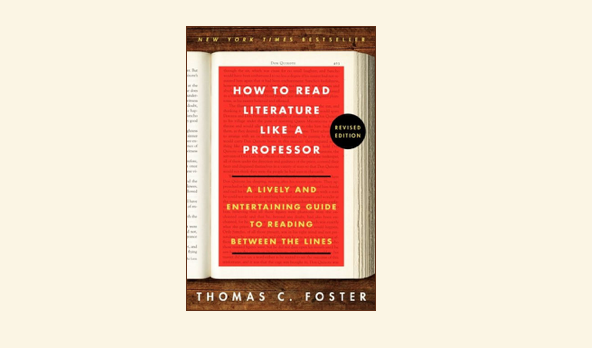
"How To Read Literature Like A Professor" by Thomas Foster
Book Review: How To Read Literature Like A Professor by Thomas C. Foster
Book Review: How To Read Literature Like A Professor by Thomas C. Foster
By the time students reach high school or college, they’ve taken several years of English courses and are able to speak, write, and read the language with ease. Yet, many students still have trouble reading classic literature and most readers often miss out on the deeper literary meaning of the story.
To help readers understand and enjoy literature, Thomas Foster, an English professor with more than thirty years of experience and expertise, has written How to Read Literature Like a Professor.

Author Thomas C. Foster
The book serves as an entertaining guide that introduces readers to literary basics, including symbols, themes, and settings–that provides readers with the tools to better understand literature.
Foster notes that no literature is completely original; the truth is that all literature grows out of other literature. There are certain works of writing that almost all authors have read, such as Shakespeare, the Bible, and the Odyssey.
Authors are inspired by these famous works, and often draw on these texts for inspiration for their own stories, sometimes consciously and other times subconsciously.
Foster advises readers to look for glimpses of familiar stories and ask what the two texts have in common.
To find an example of inspiration from a famous work one can look at Ernest Hemingway’s novel, The Old Man and The Sea (1952).
Hemingway writes about an old and poor fisherman that hasn’t had much luck but remains a good and pure man. The man goes on a three-day fishing trip during which he puts up with a great deal of suffering and injuries while attempting to hook a large fish. When he returns to port, he goes to bed and lays his arms out in the position of crucifixion. The next morning, people see his great fish and start to believe in the fisherman’s skill once again.
Hemingway has a more subtle narrative, but it’s clear to see that the fisherman is a Christ-like figure. Foster points out that almost all text in literature can have a deeper meaning.
Take seasons and weather for example. More often than not, if an author tells readers it is a warm summer day, she is saying that to help convey a specific message.
Foster writes that spring is associated with youth and childhood, summer with romance and adulthood, fall with decline and middle age, and winter with resentment and old age. This is especially important to look for in short works such as poems and short stories to gain a better understanding of the author’s work.
However, Foster notes that sometimes readers have to be careful of a certain event because it may have more than one meaning. Rain in a story can be either a rebirth through baptism or destruction through floods.
Snow can blanket the forest and make it beautiful, but it can also create blizzards that make the world a cold and deadly place.
Towards the end of the book, Professor Foster encourages readers to use what they learned and put their knowledge to the test by analyzing a short story. Foster then asks readers to compare their notes to his own and points out several of the hidden meanings that readers may have missed.
Foster’s book serves as a wonderful nonfiction literary guide that aids readers and students in their engagement with literature.
In the famous poem Divine Comedy, Dante has Virgil to guide him through his journey; for readers of literature, we have Thomas Foster.
If you'd like to get the book, click the button below!
If you enjoyed this article, consider supporting our site or signing up for our monthly newsletter. Thank you!
Reader freebies:

"Zero To One" by Peter Thiel
Book Review: Zero To One by Peter Thiel
Book Review: Zero To One by Peter Thiel
Peter Thiel is known as one of the most controversial individuals in Silicon Valley due to his unique perspective on business. However, Thiel has the credentials to back up his views; he co-founded two well-known companies, PayPal and Palantir, and made early investments in Facebook, SpaceX, and LinkedIn.

Peter Thiel
Thiel describes his thoughts on business and startups in his book “Zero to One.” His book has received praise from well-known entrepreneurs such as Mark Zuckerberg and Elon Musk, and has even become a required reading in several Baruch classes.
The book’s title refers to the idea of going from nothing to something, or from zero to one. Thiel starts the book by breaking up progress into two sections, vertical and horizontal. Ideally, it would be better to start a company that focuses on vertical progress, making something new, instead of horizontal progress which is copying something that already works.
Too often entrepreneurs create a business around incremental improvements on an already existing product. Making a faster or cheaper typewriter won’t change the world, but building a word processor like Microsoft Word will.
Throughout the book, Thiel provides readers with tips on what to look for when building a startup, how to grow a business, and what successful companies have in common.
Some of his theories may seem unorthodox at first, but Thiel uses data and facts to make a convincing argument.
In business classes, students are taught the benefits of the “first mover advantage.”
If a company is the first to market, it can capture significant market share while competitors scramble to get started.
But, Thiel argues, that being the first mover is not enough. Instead, companies should focus on being the last mover–that is making the last great development in a market.
There were social media networks that had first mover advantage, such as Myspace, but Facebook was able to make a better product and has overtaken Myspace in users and revenue several times over.
Similarly, Yahoo built its search engine in 1995, a whole three years before Google. Yet today, the vast majority of individuals use Google.
Another one of Thiel’s beliefs is that monopolies, for the most part, are good.
Having little to no competition allows a company to become profitable and build market share, eventually becoming a monopoly. In Thiel’s mind, a monopoly can be good because it provides a steady stream of revenue and motivates the company to keep innovating to maintain its profits.
The book uses Google as an example. The firm has a monopoly on search because it has a better product than Bing or Yahoo. Of course, individuals are free to use other searches, but they choose not to.
Google, meanwhile, wants to keep its profits so it constantly works on improving its products. Their large profits also allow them to be innovative and invest in other ventures such as driverless cars, Android, and artificial intelligence.
Thiel’s ideas may seem unconventional at first, but just by looking back on the last ten years, one will find that the best ideas often are often viewed as bizarre at first. Sharing a ride with a stranger or an apartment with one is an odd idea, but these beliefs have created multi-billion dollar startups we now know today as Uber and Airbnb.
Sometimes it takes a radical idea, to build a revolutionary company.
If you'd like to read the book, click the link below!
If you enjoyed this article, consider supporting our site or signing up for our monthly newsletter. Thank you!
Reader freebies:
Enjoying A&B?
Consider donating to keep the site up and running!